Kam Shapiro - Böcker
Visar alla böcker från författaren Kam Shapiro. Handla med fri frakt och snabb leverans.
4 produkter
4 produkter
1 209 kr
Skickas inom 10-15 vardagar
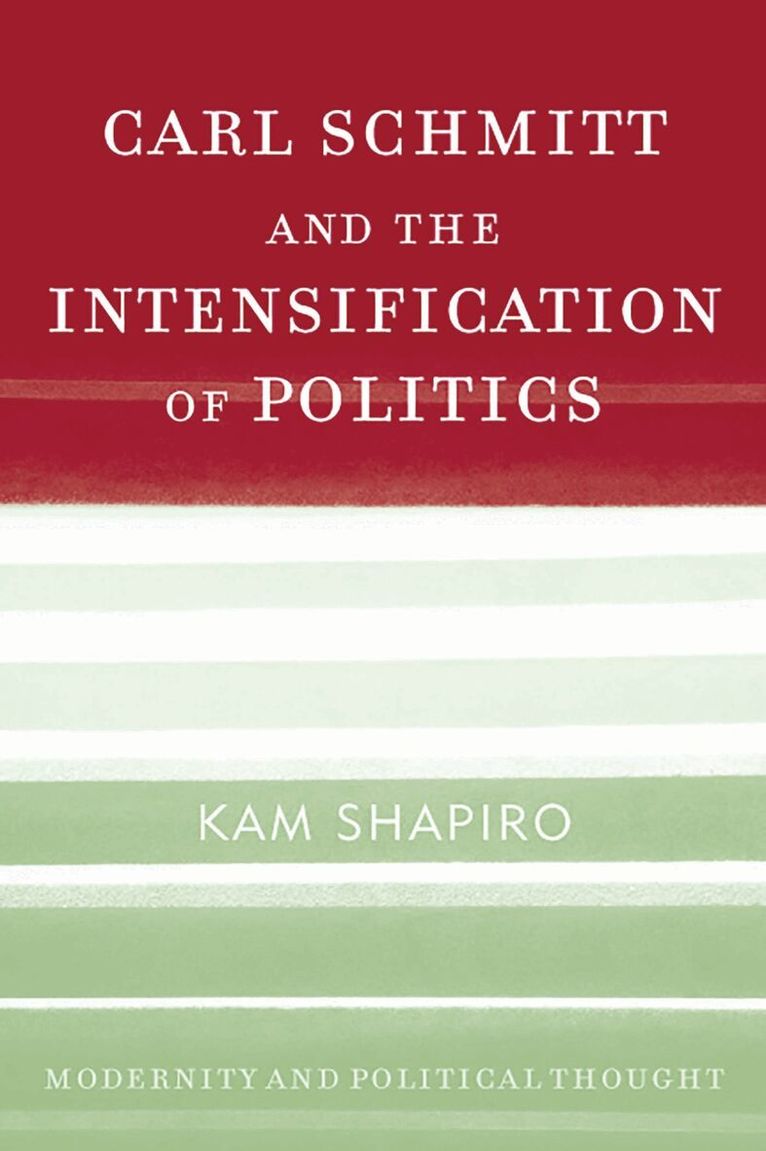
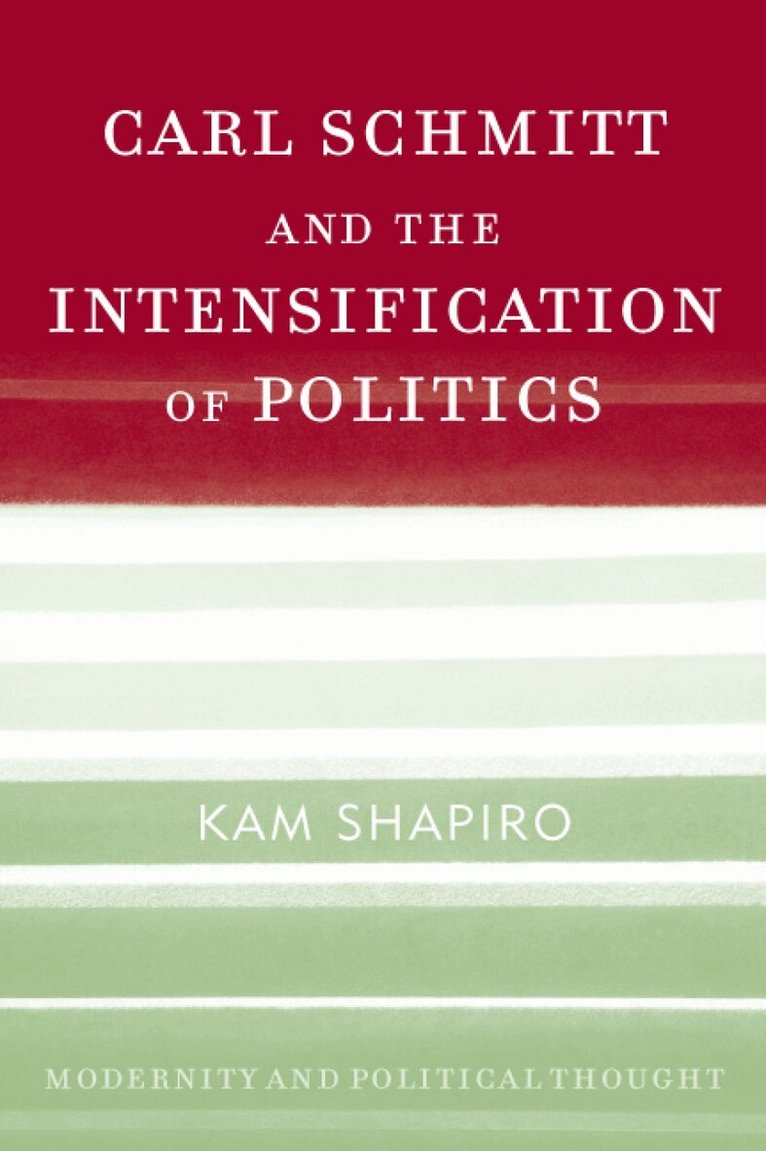
This book explores Carl Schmitt's efforts to distinguish sources of sovereignty and political identity in an age of rapid and volatile social change. In Schmitt writings, Shapiro finds a dynamic conception of the relationship between political power and social form, organic traditions and their strategic deployment. As these writings indicate, the political constitution of a sovereign people involves the channeling of attachments and antagonisms of various kinds. The book explicates this process as it appears in changing contexts, following Schmitt's turn from Catholic politics to secular nationalism, and finally beyond the nation-state during and after the Second World War. These shifts in Schmitt's approach reflect a general intensification of politics as its grounds are rendered increasingly fluid and volatile by accelerated movements of finance, warfare and communication. The result is a both a transformation in the practice of government - requiring flexible and rapid adjustments to changes across the globe - and in the nature of legitimacy, whereby an ethos of belief grounded in relatively stable cultural and social rituals is supplanted by a more fluid and mobile pathos of identification.
572 kr
Skickas inom 5-8 vardagar
This book explores Carl Schmitt's efforts to distinguish sources of sovereignty and political identity in an age of rapid and volatile social change. In Schmitt writings, Shapiro finds a dynamic conception of the relationship between political power and social form, organic traditions and their strategic deployment. As these writings indicate, the political constitution of a sovereign people involves the channeling of attachments and antagonisms of various kinds. The book explicates this process as it appears in changing contexts, following Schmitt's turn from Catholic politics to secular nationalism, and finally beyond the nation-state during and after the Second World War. These shifts in Schmitt's approach reflect a general intensification of politics as its grounds are rendered increasingly fluid and volatile by accelerated movements of finance, warfare and communication. The result is a both a transformation in the practice of government - requiring flexible and rapid adjustments to changes across the globe - and in the nature of legitimacy, whereby an ethos of belief grounded in relatively stable cultural and social rituals is supplanted by a more fluid and mobile pathos of identification.
1 791 kr
Skickas inom 10-15 vardagar
Sovereign Nations, Carnal States is an extraordinarily synthetic intellectual tour de force. Kam Shapiro uses the body as a lens to focus on often-overlooked dimensions of modern sovereignty. He provides a novel perspective on one of the most important problems in contemporary political theory: the conflict between the demands of political sovereignty, exemplified in the nation-state, and the economic and cultural dislocations of modern society. It is often assumed that classical political theory conceives of the body as an instrument subordinated to a rational subject. In contrast, Shapiro argues that thinkers from Augustine to Hegel and Carl Schmitt have conceptualized the body as a resource to supplement standard modes of political affiliation and moral agency.Drawing on critical readings of Augustine, Derrida, Hegel, Schmitt, and Benjamin, Shapiro develops what he refers to as a "political somatics." The author is preoccupied by the way desire and habit are the conditions of possibility for meaningful political affiliation, but he also shows how they constantly risk being held hostage to contingency. Both, he concludes, are important resources for democratic politics. Shapiro marshals both historical and contemporary philosophical accounts of embodiment in order to explain an important contemporary political question: How is the nation-state able to cohere as a functioning political unit despite internal differences and the vagaries of the market?
546 kr
Skickas inom 10-15 vardagar
Sovereign Nations, Carnal States is an extraordinarily synthetic intellectual tour de force. Kam Shapiro uses the body as a lens to focus on often-overlooked dimensions of modern sovereignty. He provides a novel perspective on one of the most important problems in contemporary political theory: the conflict between the demands of political sovereignty, exemplified in the nation-state, and the economic and cultural dislocations of modern society. It is often assumed that classical political theory conceives of the body as an instrument subordinated to a rational subject. In contrast, Shapiro argues that thinkers from Augustine to Hegel and Carl Schmitt have conceptualized the body as a resource to supplement standard modes of political affiliation and moral agency.Drawing on critical readings of Augustine, Derrida, Hegel, Schmitt, and Benjamin, Shapiro develops what he refers to as a "political somatics." The author is preoccupied by the way desire and habit are the conditions of possibility for meaningful political affiliation, but he also shows how they constantly risk being held hostage to contingency. Both, he concludes, are important resources for democratic politics. Shapiro marshals both historical and contemporary philosophical accounts of embodiment in order to explain an important contemporary political question: How is the nation-state able to cohere as a functioning political unit despite internal differences and the vagaries of the market?