Karabekir Akkoyunlu - Böcker
Visar alla böcker från författaren Karabekir Akkoyunlu. Handla med fri frakt och snabb leverans.
7 produkter
7 produkter
616 kr
Skickas inom 10-15 vardagar
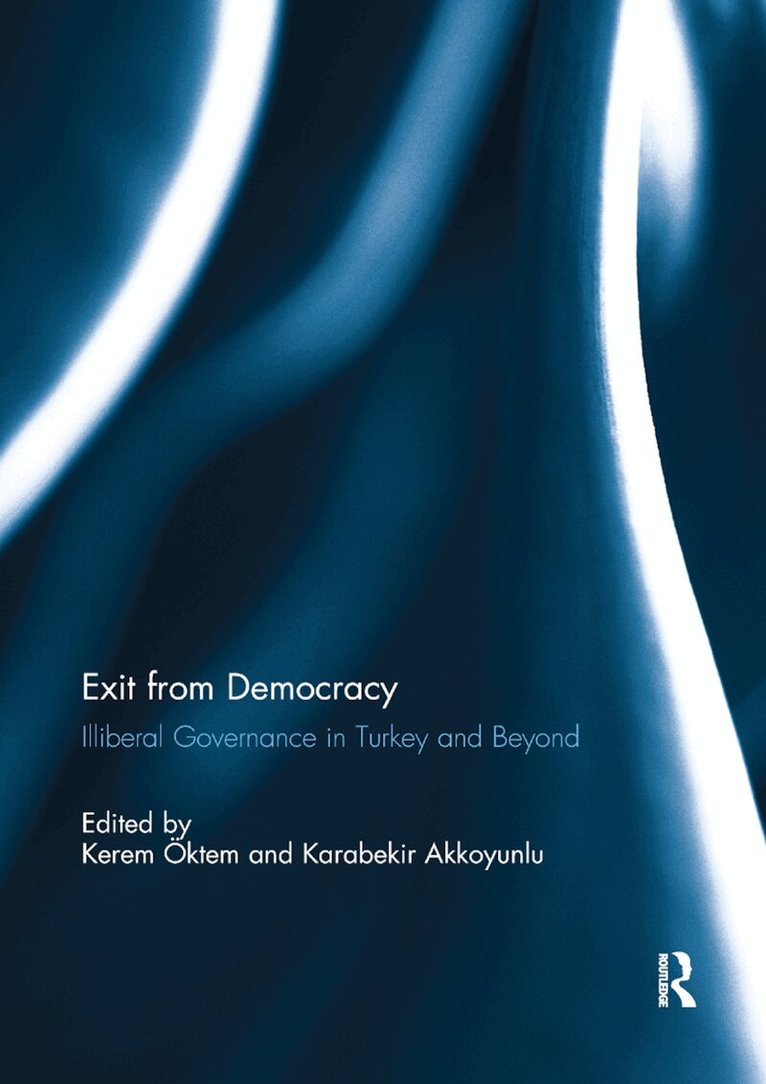
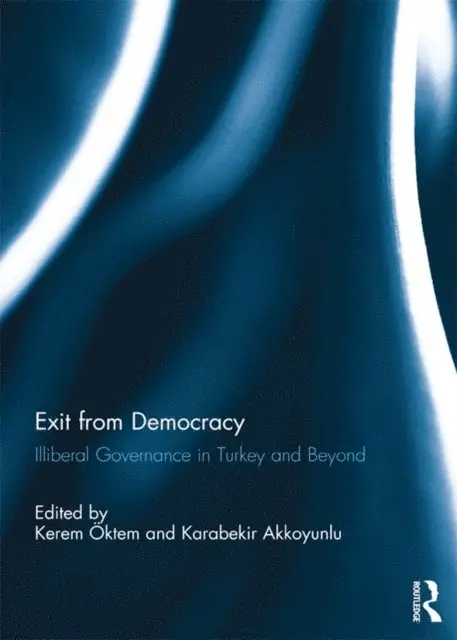
Democratic government is facing unprecedented challenges at a global scale. Yet, Turkey's descent into conflict, crisis and autocracy is exceptional. Only a few years ago, the country was praised as a successful Muslim-majority democracy and a promising example of sustainable growth. In Turkey’s Exit from Democracy, the contributors argue that President Recep Tayyip Erdoğan and the Justice and Development Party government have now effectively abandoned the realm of democratic politics by attempting regime change with the aim to install a hyper-presidentialist system. Examining how this power grab comes at the tail end of more than a decade of seemingly democratic politics, the contributors also explore the mechanisms of de-democratization through two distinctive, but interrelated angles: A set of comparative analyses explores illiberal forms of governance in Turkey, Russia, Southeast Europe and Latin America. In-depth studies analyse how Turkey's society has been reshaped in the image of a patriarchal habitus and how consent has been fabricated through religious, educational, ethnic and civil society policies. Despite this comprehensive authoritarian shift, the result is not authoritarian consolidation, but a deeply divided and contested polity. Analysing an early example of democratic decline and authoritarian politics, this volume is relevant well beyond the confines of regional studies. Turkey exemplifies the larger forces of de-democratization at play globally. Turkey’s Exit from Democracy provides the reader with generalizable insights into these transformative processes. These chapters were originally published as a special issue in Southeast European and Black Sea Studies.
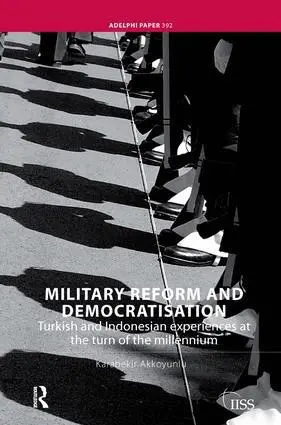
Military Reform and Democratisation
Turkish and Indonesian Experiences at the Turn of the Millennium
Häftad, Engelska, 2007
413 kr
Skickas inom 10-15 vardagar
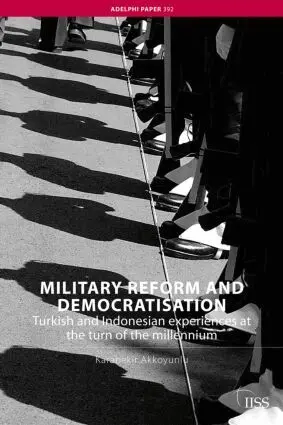
There is no recipe for democratisation that can be readily applied to all countries. Every country presents unique factors that influence the fate of its democratic reforms, which must therefore be evaluated within their specific socio-political, cultural and historical context. Building on this premise, this paper examines military reform and democratisation through the experiences of Turkey and Indonesia, two democratising countries with predominantly Muslim populations, secular regimes, and militaries that are deeply involved in politics. The paper strives to explain why both the Turkish and Indonesian militaries, which have developed a sense of ownership over the state, may be wary of democratic change; how 'the people' perceive the military's traditional role in society; and in which direction societal and military attitudes towards democratic reform have been moving over the years. In relating these domestic observations to various external factors, it seeks to identify the regional and global trends, events and actors that promote and obstruct the development of substantive democracy in each country, and to draw broader lessons for the study of democratisation and military reform.
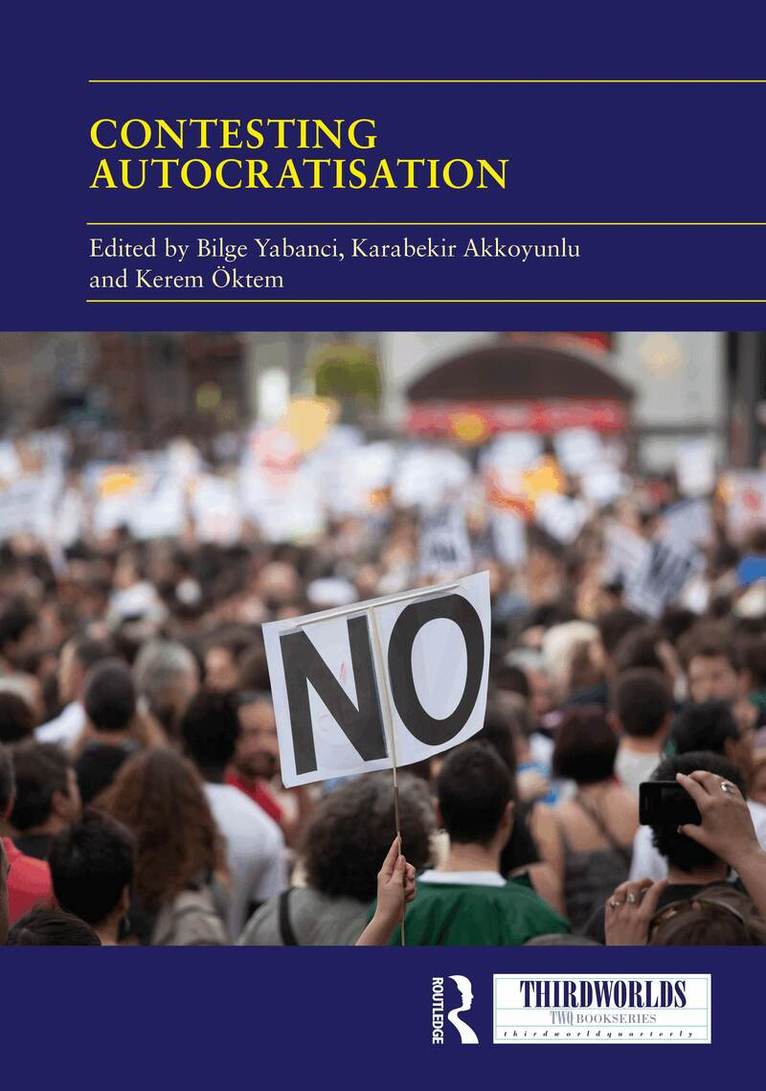
Contesting Autocratisation
Actors and Institutions of Democratic Resistance in a Global Perspective
Inbunden, Engelska, 2025
2 103 kr
Skickas inom 10-15 vardagar
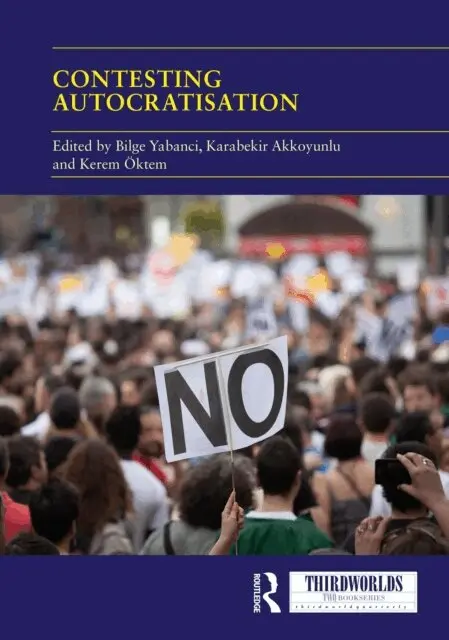
While authoritarianism continues to gain ground globally, this book offers a global and nuanced perspective into how, when, and where autocratisation may be contested and sometimes reversed. Drawing on rich case studies from across Africa, Asia, Latin America, and Southeastern Europe, the chapters in this book map the actors and institutions of resistance, ranging from political parties and bureaucrats to social movements and transnational alliances. Rather than offering a binary view of success or failure of opposition and resistance, this book adopts a dynamic, process-driven approach, considering the conditions under which resistance emerges, adapts, and persists even in shrinking civic and political spaces.Whether through informal bureaucratic defiance, legal mobilisation, elite rivalries, transnational alliances, strategic litigation, or protest coalitions, these strategies reveal the agency of opposition actors navigating complex and often hostile terrains. These diverse experiences force us to rethink resistance as an ongoing, collective effort rather than a single moment of reversal.This volume spans multiple disciplines, including political science, sociology, international relations, and legal studies, making it essential reading for students, scholars, and policymakers to understand how resistance emerges, evolves, and endures in the face of authoritarian resurgence.The chapters in this book were originally published as a special issue of Third World Quarterly.
Military Reform and Democratisation
Turkish and Indonesian Experiences at the Turn of the Millennium
Inbunden, Engelska, 2017
2 441 kr
Skickas inom 10-15 vardagar
There is no recipe for democratisation that can be readily applied to all countries. Every country presents unique factors that influence the fate of its democratic reforms, which must therefore be evaluated within their specific socio-political, cultural and historical context. Building on this premise, this paper examines military reform and democratisation through the experiences of Turkey and Indonesia, two democratising countries with predominantly Muslim populations, secular regimes, and militaries that are deeply involved in politics. The paper strives to explain why both the Turkish and Indonesian militaries, which have developed a sense of ownership over the state, may be wary of democratic change; how 'the people' perceive the military's traditional role in society; and in which direction societal and military attitudes towards democratic reform have been moving over the years. In relating these domestic observations to various external factors, it seeks to identify the regional and global trends, events and actors that promote and obstruct the development of substantive democracy in each country, and to draw broader lessons for the study of democratisation and military reform.
2 103 kr
Skickas inom 10-15 vardagar
Democratic government is facing unprecedented challenges at a global scale. Yet, Turkey's descent into conflict, crisis and autocracy is exceptional. Only a few years ago, the country was praised as a successful Muslim-majority democracy and a promising example of sustainable growth. In Turkey’s Exit from Democracy, the contributors argue that President Recep Tayyip Erdoğan and the Justice and Development Party government have now effectively abandoned the realm of democratic politics by attempting regime change with the aim to install a hyper-presidentialist system. Examining how this power grab comes at the tail end of more than a decade of seemingly democratic politics, the contributors also explore the mechanisms of de-democratization through two distinctive, but interrelated angles: A set of comparative analyses explores illiberal forms of governance in Turkey, Russia, Southeast Europe and Latin America. In-depth studies analyse how Turkey's society has been reshaped in the image of a patriarchal habitus and how consent has been fabricated through religious, educational, ethnic and civil society policies. Despite this comprehensive authoritarian shift, the result is not authoritarian consolidation, but a deeply divided and contested polity. Analysing an early example of democratic decline and authoritarian politics, this volume is relevant well beyond the confines of regional studies. Turkey exemplifies the larger forces of de-democratization at play globally. Turkey’s Exit from Democracy provides the reader with generalizable insights into these transformative processes. These chapters were originally published as a special issue in Southeast European and Black Sea Studies.
Guardianship and Democracy in Iran and Turkey
Tutelary Consolidation, Popular Contestation
Inbunden, Engelska, 2024
1 817 kr
Skickas inom 3-6 vardagar
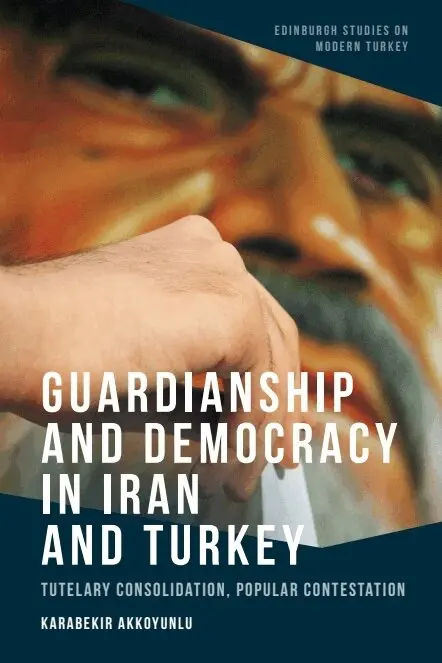
This book offers the first comparative study of the foundations, consolidation and contestation of regime guardianship in the Islamic Republic of Iran and the Republic of Turkey. For decades, the military in Turkey and the clergy in Iran acted as the guardians of Ataturk and Khomeini's ideological legacies. At the turn of the 21st century rising popular actors in both countries started challenging the tutelary control of the state and society. While in Turkey the clash between the Kemalist guardians and their Islamist-led rivals resulted in a victory for the latter, although not for democracy, in Iran, traditionalist guardians were able to thwart popular challenges to their authority at the expense of the regime's democratic legitimacy. How was guardianship established, consolidated and contested in these republics with seemingly inimical founding ideologies? Why did it unravel in Turkey but survive in the Islamic Republic in the early 2010s? And what do these power struggles and their outcomes tell us about political contestation in tutelary hybrid regimes?
Guardianship and Democracy in Iran and Turkey
Tutelary Consolidation, Popular Contestation
Häftad, Engelska, 2026
496 kr
Skickas inom 3-6 vardagar
This book offers the first comparative study of the foundations, consolidation and contestation of regime guardianship in the Islamic Republic of Iran and the Republic of Turkey. For decades, the military in Turkey and the clergy in Iran acted as the guardians of Atatürk and Khomeini’s ideological legacies. At the turn of the 21st century rising popular actors in both countries started challenging the tutelary control of the state and society. While in Turkey the clash between the Kemalist guardians and their Islamist-led rivals resulted in a victory for the latter, although not for democracy, in Iran, traditionalist guardians were able to thwart popular challenges to their authority at the expense of the regime’s democratic legitimacy. How was guardianship established, consolidated and contested in these republics with seemingly inimical founding ideologies? Why did it unravel in Turkey but survive in the Islamic Republic in the early 2010s? And what do these power struggles and their outcomes tell us about political contestation in tutelary hybrid regimes?