Katerina Hadjimatheou - Böcker
Visar alla böcker från författaren Katerina Hadjimatheou. Handla med fri frakt och snabb leverans.
2 produkter
2 produkter
1 316 kr
Skickas inom 5-8 vardagar
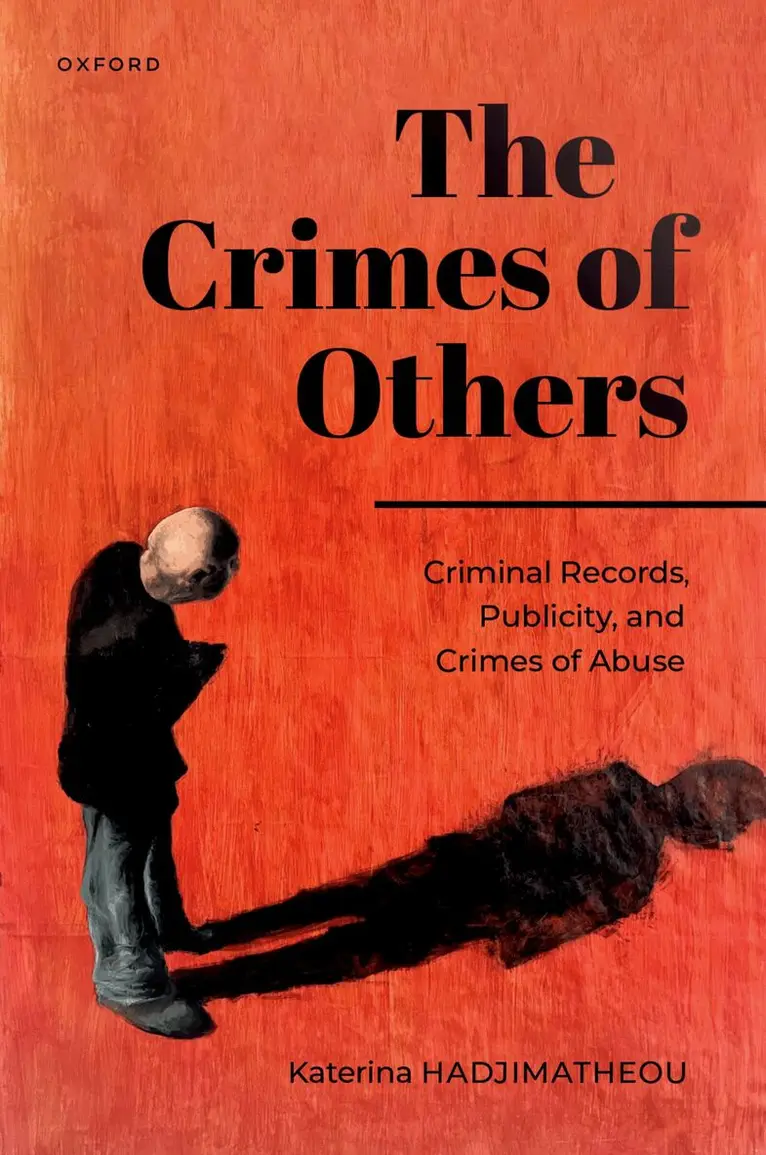
Do we have a right to know about each other's criminal past? And if so, just how publicly accessible should criminal records be? Does publicity serve an important purpose in fulfilling the public's right to know about who amongst their fellow citizens is dangerous or has violated collective moral norms? Does it provide transparency in criminal justice, the just punishment of the guilty, and the protection of the vulnerable from serial perpetrators? Or does it stigmatize people as dangerous or untrustworthy for life, so that those who have made mistakes in the past are still paying for them long after they have served their time? How should we design our laws and policies to reconcile or balance these apparently competing demands of (criminal) justice? The Crimes of Others: Criminal Records, Publicity, and Abuse draws on philosophical and legal theory as well as new empirical evidence about the impacts of criminal records to address these questions. Katerina Hadjimatheou argues that there is no general right of citizens to know about each other's criminal records; instead, there are limited rights to know, which differ according to the status or role of the person claiming such a right, the nature of the crime in question, and the purpose for which the right is asserted. Notably, the book asserts that disclosures of criminal records to prevent harm are often justified when the risk relates to predatory crimes and crimes of abuse. The reasons relate to the distinctive features of such crimes, in particular their serial nature, the widespread impunity with which they are committed, and the special role of secrecy, lies, and silencing in their perpetration. The Crimes of Others offers the first rigorous and systematic analysis of the normative aspects of public access to criminal records, providing a coherent set of criteria for the disclosure of criminal records that can be drawn upon to answer the question: when, to whom, and on what grounds should different kinds of information about the criminality of others be available? In doing so, it lays the groundwork for fairer and more effective policies and practices for a digital age.This is an open access title available under the terms of a CC BY-NC-ND 4.0 International licence. It is free to read on Oxford Scholarship Online and offered as a free PDF download from OUP and selected open access locations.
2 723 kr
Skickas inom 10-15 vardagar
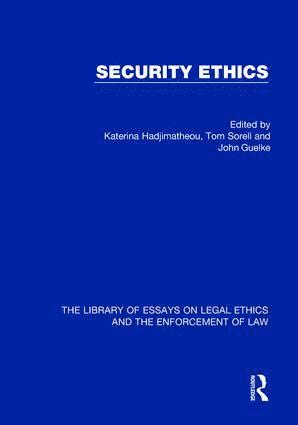
Governments often act in the name of security to protect their citizenries. For example by legislation or by the recruitment and employment of large numbers of armed personnel to detect and prosecute violent crime, or via engagements in military interventions to repel or pre-empt foreign attacks. These practices are often taken to have strong moral justifications. The value of security is linked to the value of life and the disvalue of violence and injury, and all of these are central both to theoretical accounts of and common sense views about the difference between right and wrong. The essays in this volume seek to increase our understanding of state action in the name of security and take a range of viewpoints and approaches. Some articles attempt to delimit the concept of security, or dispute attempted delimitations; some consider security as a 'good' and ask what sort of good it is, and how valuable; whilst others consider the relation between state action in the name of security and state action in the name of other goods, notably liberty, or consider ethical issues in health security, climate security and cybersecurity. Overall, this collection of essays shows how appeals by governments to the value of security have grown out of relatively recent events and processes at a global level, such as the response to pandemics, the acceleration of climate change, and counter-terrorism. The volume features an introductory essay and forms part of a five-volume series on legal ethics and the enforcement of law.