• Fri frakt över 249 kr
  • •
  • Snabba leveranser
  • •
  • Billiga böcker
Kundservice

Du är på sajten för privatpersoner.

Företag, bibliotek eller offentlig verksamhet?

Du handlar på classic.bokus.com, där alla dina funktioner finns intakta.
Till classic.bokus.com
Bokus logotyp. Gå till startsidan.
  • Erbjudanden
  • Nyheter
  • Student
  • Topplistor
  • Barn & ungdom
  • Bokus Play
  • E-böcker
  • Pocketböcker
  • Spel & pussel

10% studentrabatt med kod TERM26

Sidfot

Mina sidor

    Hjälp

    • Kundservice
    • Vanliga frågor och svar
    • Frakt och leverans
    • Retur vid ångerrätt
    • Reklamera vara
    • Betalning
    • Köpvillkor
    • Allmänna villkor
    • Information om webbplatsens tillgänglighet

    Om Bokus

    • Om oss
    • Pressrum
    • För studenter
    • För företag
    • För bibliotek och offentlig verksamhet
    • För leverantörer
    • Hållbarhet

    Populärt

    • Aktuella erbjudanden
    • Presentkort
    • Studentlitteratur
    • Nya böcker
    • Topplistor
    • Signerade böcker
    • Engelska böcker

    Inspiration

    • Boktips
    • BookTok
    • Populära bokserier
    • Barnbokskaraktärer
    • Populära författare
    Logotyp för Bokus
    Följ oss på Facebook (extern länk)Följ oss på Instagram (extern länk)Följ oss på YouTube (extern länk)Följ oss på TikTok (extern länk)
    bokus @ CookiesAnpassa cookiesIntegritetspolicyKöpvillkor
    Till Citymail hemsida (extern länk)Till Budbee hemsida (extern länk)Till Postnord hemsida (extern länk)Till Schenker hemsida (extern länk)Till Early Bird hemsida (extern länk)Till Walleys hemsida (extern länk)
    1. Juridik
    2. Rättsvetenskap
    3. Juridik: metod och teori

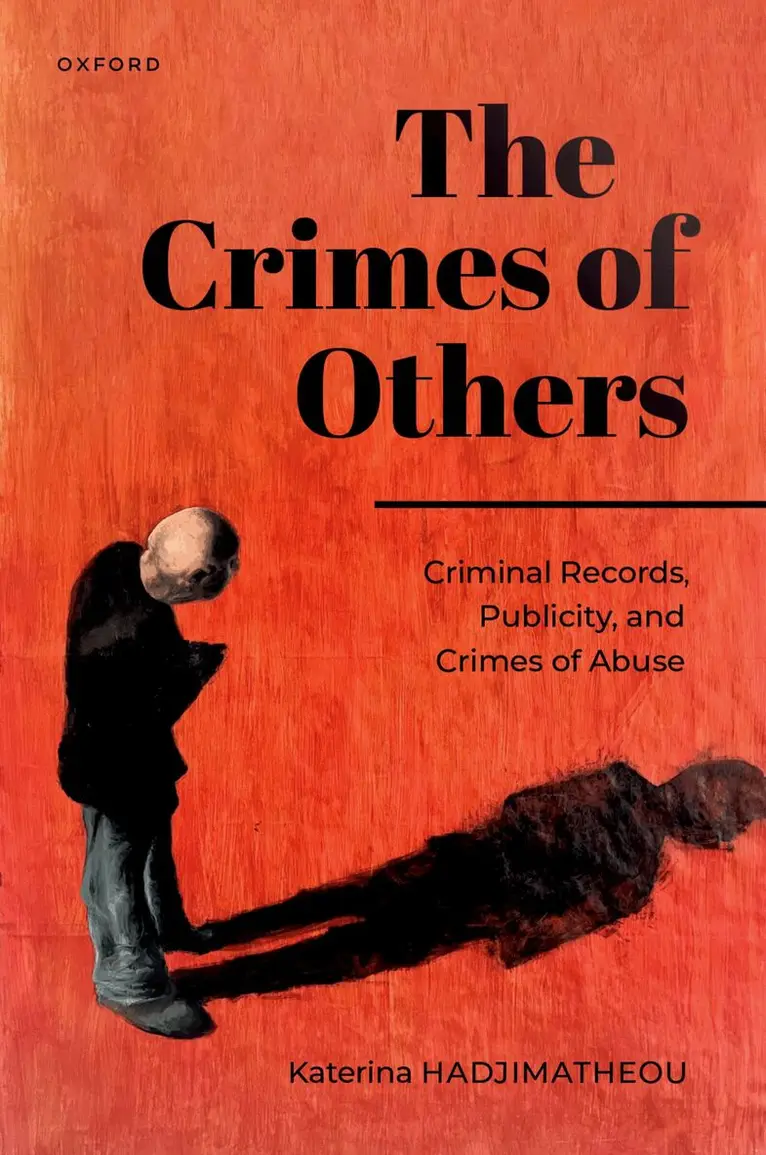
    The Crimes of Others

    Criminal Records, Publicity, and Crimes of Abuse

    AvKaterina Hadjimatheou

    Inbunden, Engelska, 2026

    Del i serien Studies in Penal Theory and Philosophy

    1 340 kr

    Beställningsvara. Skickas inom 5-8 vardagar. Fri frakt över 249 kr.

    Beskrivning

    Do we have a right to know about each other's criminal past? And if so, just how publicly accessible should criminal records be? Does publicity serve an important purpose in fulfilling the public's right to know about who amongst their fellow citizens is dangerous or has violated collective moral norms? Does it provide transparency in criminal justice, the just punishment of the guilty, and the protection of the vulnerable from serial perpetrators? Or does it stigmatize people as dangerous or untrustworthy for life, so that those who have made mistakes in the past are still paying for them long after they have served their time? How should we design our laws and policies to reconcile or balance these apparently competing demands of (criminal) justice? The Crimes of Others: Criminal Records, Publicity, and Abuse draws on philosophical and legal theory as well as new empirical evidence about the impacts of criminal records to address these questions. Katerina Hadjimatheou argues that there is no general right of citizens to know about each other's criminal records; instead, there are limited rights to know, which differ according to the status or role of the person claiming such a right, the nature of the crime in question, and the purpose for which the right is asserted. Notably, the book asserts that disclosures of criminal records to prevent harm are often justified when the risk relates to predatory crimes and crimes of abuse. The reasons relate to the distinctive features of such crimes, in particular their serial nature, the widespread impunity with which they are committed, and the special role of secrecy, lies, and silencing in their perpetration. The Crimes of Others offers the first rigorous and systematic analysis of the normative aspects of public access to criminal records, providing a coherent set of criteria for the disclosure of criminal records that can be drawn upon to answer the question: when, to whom, and on what grounds should different kinds of information about the criminality of others be available? In doing so, it lays the groundwork for fairer and more effective policies and practices for a digital age.This is an open access title available under the terms of a CC BY-NC-ND 4.0 International licence. It is free to read on Oxford Scholarship Online and offered as a free PDF download from OUP and selected open access locations.

    Produktinformation

    • Utgivningsdatum:2026-02-17
    • Mått:165 x 242 x 23 mm
    • Vikt:457 g
    • Format:Inbunden
    • Språk:Engelska
    • Serie:Studies in Penal Theory and Philosophy
    • Antal sidor:208
    • Förlag:OUP OXFORD
    • ISBN:9780198925118

    Utforska kategorier

    • Juridik: metod och teori inom Juridik
    • Juristyrken inom Juridik
    • Straffprocessrätt inom Juridik

    Mer om författaren

    Katerina Hadjimatheou is a philosopher and criminologist and a Senior Lecturer at the University of Essex. She is interested in the philosophy of criminal justice, police ethics, data ethics and research ethics, the policing of abuse crimes, undercover policing, and surveillance. Her work has been funded by the European Commission, British Academy, ESRC, and Home Office, amongst others. She has served on ethics committees for the UK's National Crime Agency, London's Metropolitan Police Service, and the College of Policing for England and Wales.

    Recensioner i media

    Taking an interdisciplinary approach - political, legal, philosophical - Hadjimatheou produces a compelling justification for providing criminal histories in targeted cases, namely in the case of predatory criminal activity, to allow those who may be harmed to protect themselves. ... This is a well-reasoned work which seeks to tread a fine line between rehabilitation and public protection.

    Innehållsförteckning

    • 1: The Right to Know and Criminal Records 2: The Harms and Wrongs of Public Criminal Records: A Matter of Human Flourishing 3: Are Criminal Records an Intrinsically Public Matter? Political Theory and The Publicness of Crime 4: Transparency, Accountability, Open Justice, and Public Facts 5: Public Criminal Records and Just Punishment 6: Sharing Criminal Records to Prevent Harm 7: Disclosing Criminal Records to Protect People from Predatory Crimes and Crimes of Abuse 8: Defending a Limited Right to Know 1: The Right to Know and Criminal Records 2: The Harms and Wrongs of Public Criminal Records: A Matter of Human Flourishing 3: Are Criminal Records an Intrinsically Public Matter? Political Theory and The Publicness of Crime 4: Transparency, Accountability, Open Justice, and Public Facts 5: Public Criminal Records and Just Punishment 6: Sharing Criminal Records to Prevent Harm 7: Disclosing Criminal Records to Protect People from Predatory Crimes and Crimes of Abuse 8: Defending a Limited Right to Know