Studies in Penal Theory and Philosophy – serie
Visar alla böcker i serien Studies in Penal Theory and Philosophy. Handla med fri frakt och snabb leverans.
20 produkter
20 produkter
Inbunden, Engelska, 2016
440 kr
Skickas inom 5-8 vardagar
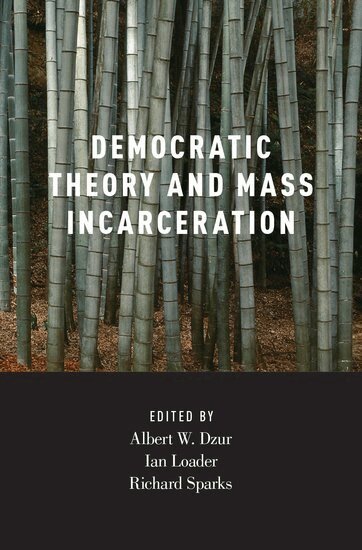
The United States leads the world in incarceration, and the United Kingdom is persistently one of the European countries with the highest per capita rates of imprisonment. Yet despite its increasing visibility as a social issue, mass incarceration - and its inconsistency with core democratic ideals - rarely surfaces in contemporary Anglo-American political theory. Democratic Theory and Mass Incarceration seeks to overcome this puzzling disconnect by deepening the dialogue between democratic theory and punishment policy. This collection of original essays initiates a multi-disciplinary discussion among philosophers, political theorists, and criminologists regarding ways in which contemporary democratic theory might begin to think beyond mass incarceration. Rather than viewing punishment as a natural reaction to crime and imprisonment as a sensible outgrowth of this reaction, the volume argues that crime and punishment are institutions that reveal unmet demands for public oversight and democratic influence. Chapters explore theoretical paths towards de-carceration and alternatives to prison, suggest ways in which democratic theory can strengthen recent reform movements, and offer creative alternatives to mass incarceration. Democratic Theory and Mass Incarceration offers guideposts for critical thinking about incarceration, examining ways to rebuild crime control institutions and create a healthier, more just society.
Inbunden, Engelska, 2018
1 136 kr
Skickas inom 5-8 vardagar
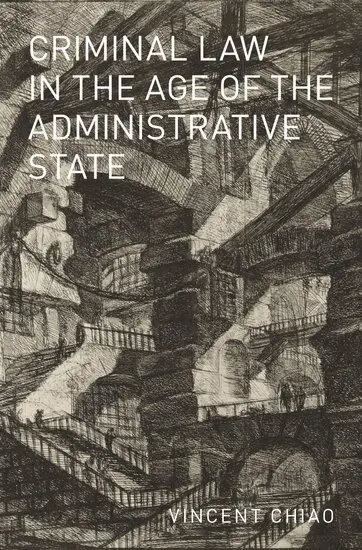
What is the criminal law for? One influential answer is that the criminal law vindicates pre-political rights and condemns wrongdoing. On this account, the criminal law has an intrinsic subject matter-certain types of moral wrongdoing-and it provides a distinctive response to that wrongdoing, namely condemnatory punishment. In Criminal Law in the Age of the Administrative State, Vincent Chiao offers an alternative, public law account. What the criminal law is for, Chiao suggests, is sustaining social cooperation with public institutions. Consequently, we only have reason to support the use of the criminal law insofar as its use is consistent with our reasons for valuing the social order established by those institutions. By starting with the political morality of public institutions rather than the interpersonal morality of private relationships, this account shows how the criminal law is continuous with the modern administrative and welfare state, and why it is answerable to the same political virtues.Chiao sketches a democratic egalitarian account of those virtues, one that is loosely consequentialist, egalitarian but not equalizing, and centered on a form of freedom-effective access to central capabilities-as its currency of evaluation. From this point of view, the role of the criminal law is to help public institutions create a society in which each person can lead a life as a peer among peers. Chiao shows how a democratic egalitarian approach to criminal justice provides a fresh perspective on a range of contemporary problems, from mass incarceration to overcriminalization, due process and the collateral consequences of a criminal conviction.
Inbunden, Engelska, 2018
851 kr
Skickas inom 5-8 vardagar
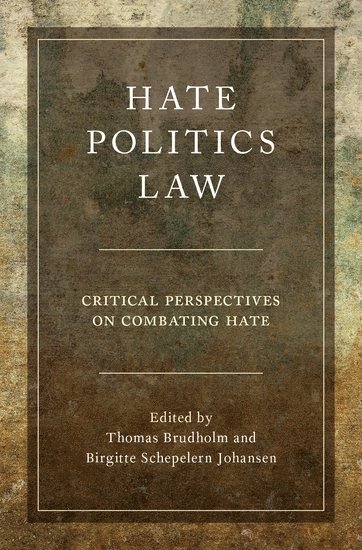
References to hate have become ubiquitous in the modern response to group defamation and violence in liberal democracies. Whether expressed in speech, acted out in criminal conduct, or seen as the fuel of terror and extremism, hate is persistently considered a vice, an evil, and a threat to the modern liberal democracy. But what exactly is at stake when societies oppose hate?In Hate, Politics, Law: Critical Perspectives on Combating Hate, Thomas Brudholm and Birgitte Schepelern Johansen have gathered a group of distinguished scholars who offer a critical exploration and assessment of the basic assumptions, ideals, and agendas behind the modern fight against hate. They explore these issues and provide a range of explanatory and normative perspectives on the awkward relationship between hate and liberal democracy, as expressed, for example, through anti-hate speech and anti-hate crime initiatives. The volume further examines the presuppositions and ideological roots of fighting hate, as well as its blind spots and limits. It also includes discussions on the definition and meaning of hate, the longer and broader history of the concept of hate, and when and why fighting hatred became politically salient. While most research on hate crime is written and published in order to prevent and combat hate, Hate, Politics, Law takes a much-needed theoretical, historical, and exploratory approach to hatred.
Inbunden, Engelska, 2016
1 452 kr
Skickas inom 5-8 vardagar
The notion that an individual accused of a crime is presumed innocent until proven guilty is one of the cornerstones of the American criminal justice system. However, the presumption of innocence creates a number of practical and theoretical issues, particularly regarding pre-trial and post-trial processes. In Taming the Presumption of Innocence, Richard L. Lippke argues that the presumption of innocence should be contained to the criminal trial. Beyond the realm of the trial, legal professionals, investigators, and the general public should carry out their respective roles in the criminal justice process without making any presumptions about guilt or innocence whatsoever. Rather than eschewing the significance of the presumption of innocence, the book defends its role within its proper context, the criminal trial. According to Lippke, other aspects of the criminal justice system such as investigation, lawmaking, and treatment of ex-offenders should be conducted in such a way that reflects the fallibility and unpredictability of the system without involving the issue of presumed guilt or innocence. Lippke dispels the idea that the presumption of innocence can be used to remedy some of the current issues in the practice of criminal justice, and instead proposes engaging in deeper, more substantive reforms of the American criminal justice system. The first monograph dedicated exclusively to the presumption of innocence, Taming the Presumption of Innocence will be an ideal text for students and scholars of criminology, criminal justice, and legal theory.
Inbunden, Engelska, 2017
1 432 kr
Skickas inom 5-8 vardagar
Most people assume that criminal offenders have only been convicted of a single crime. However, in reality almost half of offenders stand to be sentenced for more than one crime.The high proportion of multiple crime offenders poses a number of practical and theoretical challenges for the criminal justice system. For instance, how should courts punish multiple offenders relative to individuals who have been sentenced for a single crime? How should they be punished relative to each other? Sentencing for Multiple Crimes discusses these questions from the perspective of several legal theories. This volume considers questions such as the proportionality of the crimes committed, the temporal span between the crimes, and the relationship between theories about the punitive treatment of recidivists and multiple offenders. Contributors from around the world and in the fields of legal theory, philosophy, and psychology offer their perspectives to the volume. A comprehensive examination of the dynamics involved with sentencing multiple offenders has the potential to be a powerful tool for legal scholars and professionals, particularly given the practical importance of the topic and the relative dearth of research about punishment of multiple offense cases.
Inbunden, Engelska, 2020
1 136 kr
Skickas inom 5-8 vardagar
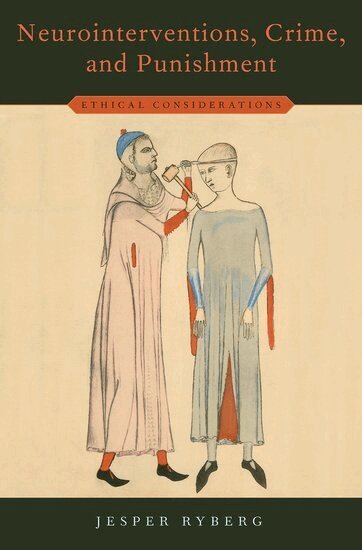
Advances in new neuroscientific research tools and technologies have not only led to new insight into the processes of the human brain, they have also refined and provided genuinely new ways of modifying and manipulating the human brain. The aspiration of such interventions is to affect conative, cognitive, and affective brain processes associated with emotional regulation, empathy, and moral judgment. Can the use of neuroscientific technologies for influencing the human functioning brain as a means of preventing offenders from engaging in future criminal conduct be justified? In Neurointerventions, Crime, and Punishment, Jesper Ryberg considers various ethical challenges surrounding this question. More precisely, he provides a framework for considering neuroethical issues within the criminal justice system and examines a set of procedures which the criminal justice system relies on to deal with criminal offending. To do this, Ryberg addresses the following questions, among others: Is it morally acceptable to offer more lenient sentences to offenders in return for participation in neuroscientific treatment programs? Or would such offers be unacceptably coercive? Is it possible to administer neurointerventions as a type of punishment? Would it be acceptable for physicians to participate in the administration of neurointerventions on offenders? What is the moral significance of the sordid history of brain interventions for the present or future use of such treatment options? As rehabilitation comes back into fashion after many decades and as neuroscientific knowledge and technology advance rapidly, these intricate and controversial topics become increasingly more urgent. Ryberg argues that many of the in-principle objections to neuroscientific treatment are premature, but given the way criminal justice systems currently function, such treatment methods should not be put into practice.
Inbunden, Engelska, 2019
851 kr
Skickas inom 5-8 vardagar
Criminal disenfranchisement-the practice of restricting electoral rights following criminal conviction-is the only surviving electoral restriction of adult, mentally competent citizens in contemporary democracies. Despite the strong devotion to the principle of universal suffrage, criminal offenders are still routinely deprived of active and passive franchise, while the justifications for such limitations remain elusive and incoherent. In Punishment and Citizenship, Milena Tripkovic develops an empirical and normative account of criminal disenfranchisement. Starting from historical precedents of such restrictions and examining the current policies of a number of European countries, Tripkovic argues that while criminal disenfranchisement is considered a form of punishment, it should instead be viewed as a citizenship sanction imposed when a citizen fails to perform their role as a member of a political community. In order to determine the justifications of disenfranchisement, Tripkovic explores various citizenship ideals and examines whether criminal offenders comply with the expectations that are posed before them. After developing a theoretical framework of citizenship duties, Tripkovic concludes that very few criminal offenders fail to satisfy fundamental citizenship conditions and exhaustive voting restrictions cannot ultimately be justified.A comprehensive assessment of criminal disenfranchisement, Punishment and Citizenship offers concrete policy suggestions to determine the limited circumstances under which electoral rights could justifiably be withheld from criminal offenders.
Inbunden, Engelska, 2020
772 kr
Skickas inom 5-8 vardagar
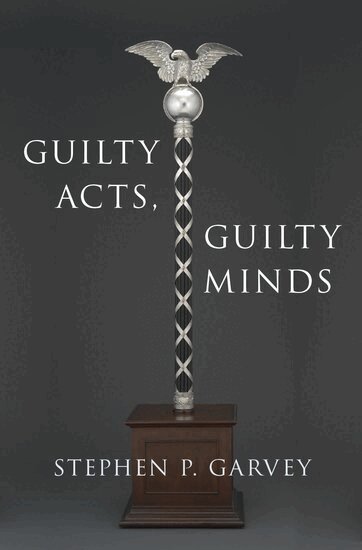
When someone commits a crime, what are the limits on a state's authority to define them as worthy of blame, and thus liable to punishment? This book answers that question, building on two ideas familiar to criminal lawyers: actus reus and mens rea, usually translated as "guilty act" and "guilty mind."In Guilty Acts, Guilty Minds, Stephen P. Garvey proposes an understanding of actus reus and mens rea as limits on the authority of a state, and in particular the authority of a democratic state, to ascribe guilt to those accused of crime. Garvey argues that actus reus and mens rea are necessary conditions for legitimate state punishment. Drawing on the work of political philosophers, moral philosophers, and criminal law theorists, Garvey provides clear explanations of how these concepts apply to a wide variety of cases. The book charges readers to consider practical examples and ask: whatever you believe regarding the justice of the rules, did the state act within the scope of its legitimate authority when it enacted those rules into law? Based on extensive research, this book presents a new theory in which the concepts of actus reus and mens rea mark the limits of state power rather than simply describe the elements of a crime. Making the compelling distinction between legitimacy and justice, Guilty Acts, Guilty Minds provides an important perspective on the limits of state authority.
Inbunden, Engelska, 2022
1 376 kr
Skickas inom 5-8 vardagar
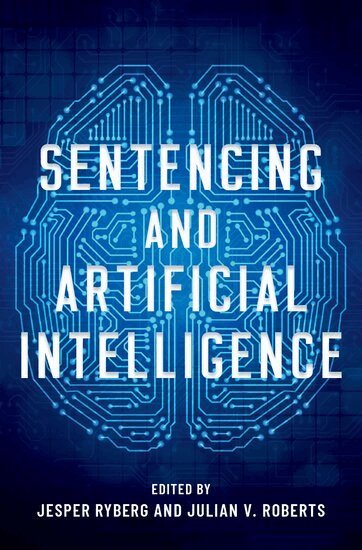
The first collective work devoted exclusively to the ethical and penal theoretical considerations of the use of artificial intelligence at sentencingIs it morally acceptable to use artificial intelligence (AI) in the determination of sentences on those who have broken the law? If so, how should such algorithms be used--and what are the consequences?Jesper Ryberg and Julian V. Roberts bring together leading experts to answer these questions. Sentencing and Artificial Intelligence investigates to what extent, and under which conditions, justice and the social good may be promoted by allocating parts of the most important task of the criminal court--that of determining legal punishment--to computerized sentencing algorithms. The introduction of an AI-based sentencing system could save significant resources and increase consistency across jurisdictions. But it could also reproduce historical biases, decrease transparency in decision-making, and undermine trust in the justice system. Dealing with a wide-range of pertinent issues including the transparency of algorithmic-based decision-making, the fairness and morality of algorithmic sentencing decisions, and potential discrimination as a result of these practices, this volume offers avaluable insight on the future of sentencing.
Inbunden, Engelska, 2026
1 088 kr
Skickas inom 5-8 vardagar
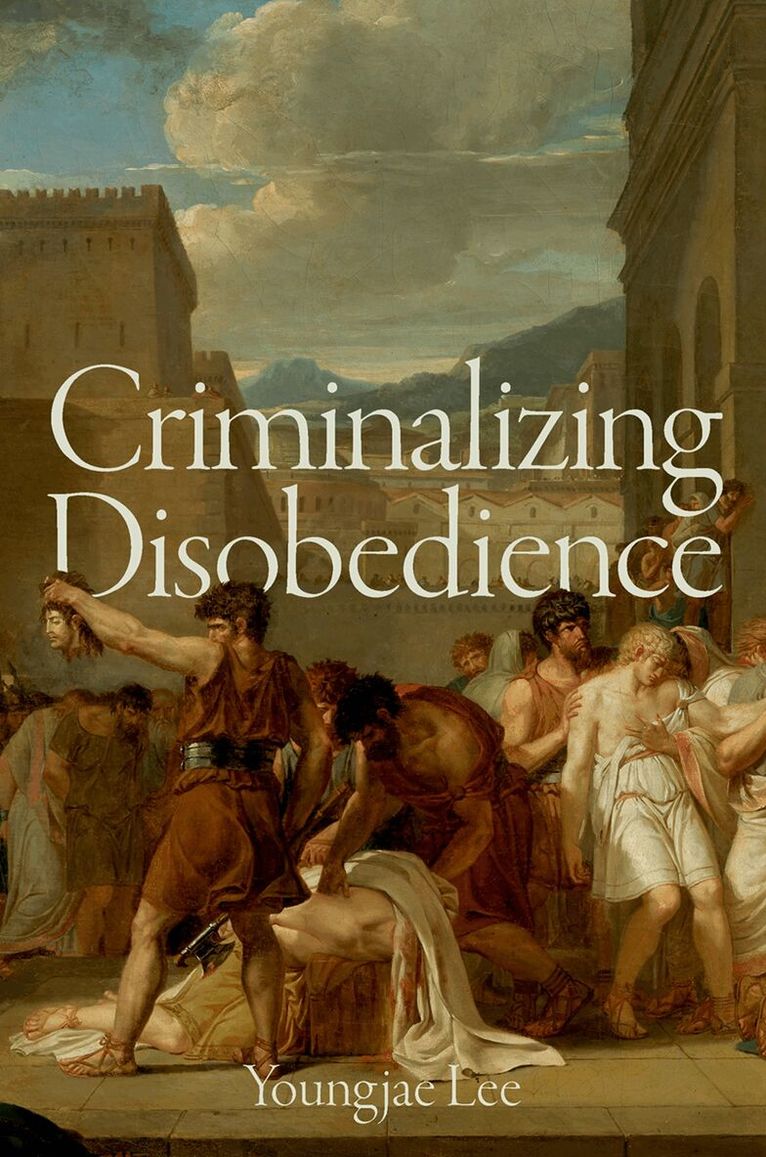
Many laws penalize conduct not because it is inherently wrongful but because the government has prohibited it. Criminalizing Disobedience examines this important yet underexplored aspect of modern criminal law. Such "disobedience offenses" include: administration of justice crimes (contempt, obstruction of justice, perjury); failure-to-assist crimes (hindering prosecution, receiving stolen property, money laundering, failure to register or to report); regulatory offenses (involving, for example, environmental, drug, or medical device laws); preventive offenses (attempt, possession of weapons or drugs); and national security offenses (treason, espionage, export control and sanctions violations). What unifies these otherwise disparate offenses is that their core wrong lies in noncompliance with legal directives, not in unjustifiably harming or endangering others. The principal reason to refrain from such conduct is simply that the government has said not to do it. By contrast, laws against, say, murder or rape prohibit conduct that is morally wrongful even in the absence of legal prohibition.This book addresses the important normative and conceptual questions these laws raise: How should disobedience be understood? Is it blameworthy to disobey the state? In what ways does the state criminalize and punish disobedience? What should be the limits to the state's power to demand obedience and punish disobedience?Criminalizing Disobedience explores these questions across a range of legal domains and develops a philosophically sophisticated framework for evaluating such laws. In the process, it sheds new light on longstanding questions of political obligation, criminalization, and punishment. It will be of interest to scholars of criminal law, the administrative state, law and philosophy, and political philosophy.
Inbunden, Engelska, 2024
928 kr
Skickas inom 5-8 vardagar
Over ten million people are incarcerated throughout the world, even though punishment theorists have struggled for centuries to morally justify the practice. Theorists usually address criminal justice under abstract, idealized conditions that assume away real-world uncertainty. We don't have time, however, to wait for a perfect moral theory, and the history of philosophy suggests we will never find it.Punishment for the Greater Goodexamines the justification of punishment in the here and now, recognizing that we lack certainty about matters of both fact and value.Retributivists believe offenders deserve punishment because of their wrongdoing. They treat deserved punishment as intrinsically valuable. Adam Kolber argues that retributivism is too incomplete as a theory to address punishment at present and that the widely popular notion of proportional punishment at its core is both elusive and often undesirable.Rather than seeking retribution, we should reduce total societal suffering by deterring crime, incapacitating dangerous people, and hopefully rehabilitating them. Though this consequentialist approach has fallen out of favor in recent decades, Kolber argues that it is better suited to addressing punishment in the here and now than the approach commonly taken by retributivists. If consequentialism successfully justifies punishment, then contrary to some carceral abolitionists, at least some incarceration under some conditions is justified today. While we will rarely know how to punish for the greatest good, wecanseek to punish for the greater good.
Inbunden, Engelska, 2026
1 297 kr
Skickas inom 5-8 vardagar
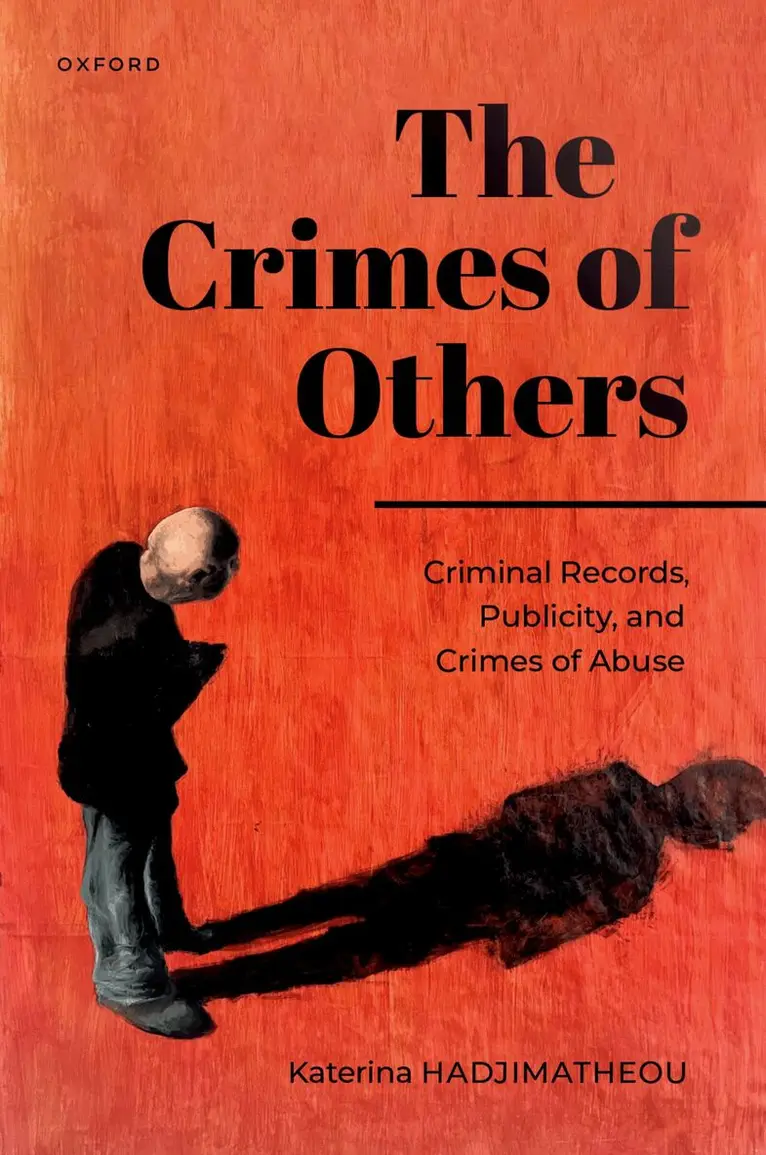
Do we have a right to know about each other's criminal past? And if so, just how publicly accessible should criminal records be? Does publicity serve an important purpose in fulfilling the public's right to know about who amongst their fellow citizens is dangerous or has violated collective moral norms? Does it provide transparency in criminal justice, the just punishment of the guilty, and the protection of the vulnerable from serial perpetrators? Or does it stigmatize people as dangerous or untrustworthy for life, so that those who have made mistakes in the past are still paying for them long after they have served their time? How should we design our laws and policies to reconcile or balance these apparently competing demands of (criminal) justice? The Crimes of Others: Criminal Records, Publicity, and Abuse draws on philosophical and legal theory as well as new empirical evidence about the impacts of criminal records to address these questions. Katerina Hadjimatheou argues that there is no general right of citizens to know about each other's criminal records; instead, there are limited rights to know, which differ according to the status or role of the person claiming such a right, the nature of the crime in question, and the purpose for which the right is asserted. Notably, the book asserts that disclosures of criminal records to prevent harm are often justified when the risk relates to predatory crimes and crimes of abuse. The reasons relate to the distinctive features of such crimes, in particular their serial nature, the widespread impunity with which they are committed, and the special role of secrecy, lies, and silencing in their perpetration. The Crimes of Others offers the first rigorous and systematic analysis of the normative aspects of public access to criminal records, providing a coherent set of criteria for the disclosure of criminal records that can be drawn upon to answer the question: when, to whom, and on what grounds should different kinds of information about the criminality of others be available? In doing so, it lays the groundwork for fairer and more effective policies and practices for a digital age.This is an open access title available under the terms of a CC BY-NC-ND 4.0 International licence. It is free to read on Oxford Scholarship Online and offered as a free PDF download from OUP and selected open access locations.
Inbunden, Engelska, 2026
1 477 kr
Skickas inom 5-8 vardagar
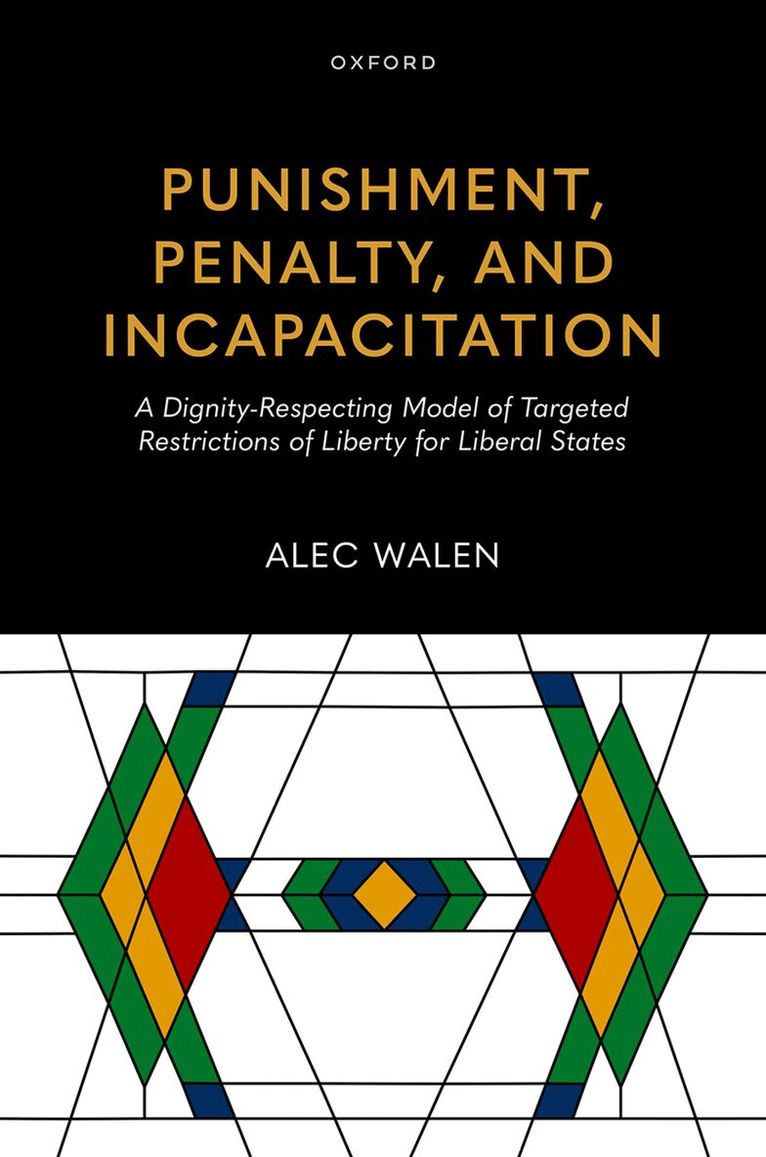
Detention is among the most controversial and complex powers a state can exercise over an individual, raising the fundamental question: how can a liberal state justify restricting the liberty of certain individuals for the security of others, while still upholding the dignity of those whose freedom is curtailed?Punishment, Penalty, and Incapacitation seeks to answer that question by distinguishing four types of justification for targeted restrictions of liberty: deserved punishment, forfeiture of rights, enforceable duties to self-restrict, and lack of accountability. This book maintains that targeted restrictions of liberty must appeal to one of the four justifications listed above, and that each type of justification imposes characteristic limits on the way restrictions can operate. Drawing on a wide range of legal and political sources, this book offers a foundational inquiry into the theory of detention and other targeted limits on liberty, and develops a rigorous model for their justification in liberal democratic states.
Inbunden, Engelska, 2018
736 kr
Skickas inom 5-8 vardagar
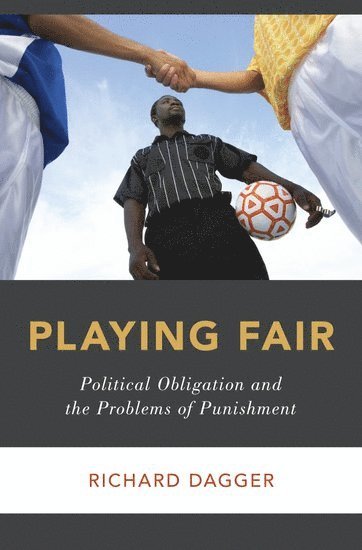
While much has been written on both political obligation and the justification of punishment, there has been little sustained effort to link the two. In Playing Fair, Richard Dagger aims to fill this gap and provide a unified theory of political obligation and the justification of punishment that takes its bearings from the principle of fair play. To do this, he first establishes the principle of fair playthe idea that people in a cooperative venture have obligations to one another to shoulder a fair share of the burdens because they receive a fair share of the benefits of cooperationas the basis of political obligation. Dagger then argues that the members of a reasonably just polity have an obligation to obey its laws because they have an obligation of reciprocity, or fair play, to one another. This theory of political obligation provides answers to fundamental and still debated questions about how to justify punishment, who has the right to carry it out, and how much to punish. Playing Fair brings two long-standing concerns of political and legal philosophy together to rebut those who deny the possibility of a general obligation to obey the law, to defend the link between political authority and obligation, and to establish the proper scope of criminal law.
Inbunden, Engelska, 2019
883 kr
Skickas inom 5-8 vardagar
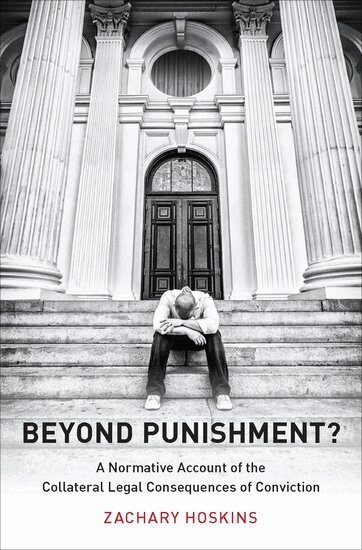
People convicted of crimes are subject to a criminal sentence, but they also face a host of other restrictive legal measures: Some are denied access to jobs, housing, welfare, the vote, or other goods. Some may be deported, may be subjected to continued detention, or may have their criminal records made publicly accessible. These measures are often more burdensome than the formal sentence itself. In Beyond Punishment?, Zachary Hoskins offers a philosophical examination of these burdensome legal measures, called collateral legal consequences. Drawing on resources in moral, legal, and political philosophy, Hoskins analyzes the various kinds of collateral consequences imposed in different legal systems and the important moral challenges they raise. Can collateral legal consequences ever be justified as forms of criminal punishment or as civil measures? Hoskins contends that, considered as forms of punishment, such restrictions should be constrained by considerations of proportionality and offender reform. He also argues that they may in a limited range of cases be permissible as risk-reductive civil measures. Whether considered as criminal punishment or civil measures, however, collateral legal consequences are justifiable in a far narrower range of cases than we find in current legal practice.Considering just how pervasive collateral legal consequences have become and their dramatic effects on offenders' lives, Beyond Punishment? sheds valuable light on whether these restrictive measures are ever morally justified.
Inbunden, Engelska, 2013
1 088 kr
Skickas inom 5-8 vardagar
What are the most important purposes of punishment, in general and in particular cases? What makes just sentencing? These eternal questions are very difficult to answer because traditional as well as emerging sentencing purposes often conflict. Retributive and non-retributive institutions and intuitions of justice are both deeply-rooted and each equally hard to ignore. There is no generally accepted or well-elaborated theory to guide and evaluate recent or proposed sentencing changes, and most of the major books on sentencing theory are outdated. There is a compelling need for a new sentencing model. In Just Sentencing, Richard Frase describes and defends a hybrid sentencing model that integrates theory and practice--blending and balancing both the competing principles of retribution and rehabilitation and the procedural concern of weighing rules against discretion. Frase lays out a sentencing reform model based on the theory of limiting retributivism. The theory accommodates retributive values--especially the human-rights-based need to limit maximum sanction severity--along with crime-control goals such as deterrence, incapacitation, rehabilitation, and moral education. It also promotes efficiency and provides sufficient flexibility to incorporate victim and community participation, local values and resource limitations, and restorative justice programs. Frase presents his significantly expanded version of the limiting retributive model and distinguishes it from versions proposed by others. Next, he demonstrates the practical feasibility and widespread support for this approach by showing how it has been successfully implemented in Minnesota, while also identifying the less developed limiting retributive elements found in almost all Western countries. The final part of the book identifies and attempts to resolve the model's most important theoretical and practical challenges, and suggest further improvements. Just Sentencing is the first book in over forty years to present a fully developed punishment theory which incorporates both utilitarian and retributive sentencing purposes.
Inbunden, Engelska, 2012
788 kr
Skickas inom 5-8 vardagar
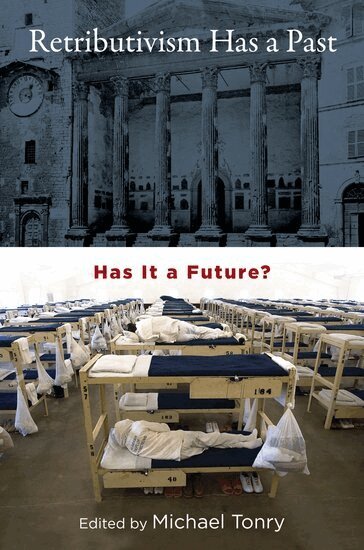
The fundamental contrast between the ideas that punishment is morally justified because people have behaved wrongly (retributivist) and that punishment is morally justified only when it has good consequences (consequentialist/utilitarian) has long existed and most likely always will. Beginning in the 1960s and 1970s, retributivist ways of thinking became much more influential than they had been for the preceding century, but it is clear now that no paradigm shift from consequentialist to retributivist ideas occurred, and that thinking about punishment is in a period of flux. Retributivism Has a Past: Has It a Future? reconsiders the extent of its resurgence and its current prospects. Essays by major figures in punishment theory, law, and philosophy and many prominent younger contributors to these debates engage with contemporary ideas about restorative justice, therapeutic jurisprudence, rehabilitation of offenders, and mandatory punishments that are difficult to reconcile with retributive analytical frameworks. It is crucial to understand why and when individuals can be deprived of their property, their liberty, and their lives in the pursuit of collective interests, and this book grapples anew with contemporary debates over these perennial questions.
Inbunden, Engelska, 2012
959 kr
Skickas inom 5-8 vardagar
Focusing contemporary democratic theory on the neglected topic of punishment, Punishment, Participatory Democracy, and the Jury argues for increased civic engagement in criminal justice as an antidote to the American penal state. Albert W. Dzur considers how the jury, rather than merely expressing unreflective public opinion, may serve as a participatory institution that gathers and utilizes citizen's juridical capabilities. In doing so, the book resists trends in criminal justice scholarship that blame increases in penal severity on citizen participation and rejects political theorists' longstanding skepticism of lay abilities. Dzur distinguishes constructive citizen involvement that takes responsibility for public problems from a mass politics mobilized superficially around single issues. This more positive view of citizen action, which was once a major justification for the jury trial, is now also manifest in the restorative justice movement, which has incorporated lay people into community boards and sentencing circles. Both jury trials and restorative justice programs, Dzur explains, are examples of rational disorganization, in which lay citizen action renders a process less efficient yet also contributes valuable qualities such as attunement, reflectiveness, and full-bodied communication. While restorative justice programs and participatory policy forums such as citizens' juries have become attractive to reformers, traditional juries have suffered a steep and troubling decline. Punishment, Participatory Democracy, and the Jury advocates a broader role for jurors in the criminal courts and more widespread use of jury trials. Though no panacea for a political culture grown too comfortable with criminalization and incarceration, participatory institutional designs that rationally disorganize punishment practices and slow down criminal justice can increase civic responsibility and public awareness about the need to find alternative paths forward for America's broken penal system.
Inbunden, Engelska, 2014
930 kr
Skickas inom 5-8 vardagar
Should public opinion determine--or even influence--sentencing policy and practice? Should the punishment of criminal offenders reflect what the public regards as appropriate? These deceptively simple questions conceal complex theoretical and methodological challenges to the administration of punishment. In the West, politicians have often answered these questions in the affirmative; penal reforms have been justified with direct reference to the attitudes of the public. This is why the contention that politicians should bridge the gap between the public and criminal justice practice has widespread resonance. Criminal law scholars, for their part, have often been more reluctant to accept public input in penal practice, and some have even held that the idea of consulting public opinion constitutes a populist approach to punishment. The purpose of this book is to examine the moral significance of public opinion for penal theory and practice. For the first time in a single volume the editors, Jesper Ryberg and Julian V. Roberts, have assembled a number of respected criminologists, philosphers, and legal theorists to address the various aspects of why and how public opinion should be reflected in the way the criminal justice system deals with criminals. The chapters address the myriad complexities surrounding this issue by first weighing the justifications for incorporating public views into punishment practices and then considering the various ways this might be achieved through juries, prosecutors, restoratifve justice programs, and other means.
Inbunden, Engelska, 2020
1 328 kr
Skickas inom 5-8 vardagar
In The Metamorphosis of Criminal Justice, Jacqueline S. Hodgson focuses on the potentially radical and fundamental changes taking place within criminal justice in Britain and in France and the ways that these are driven by wider domestic, European or international concerns. This metamorphosis away from established values and practices is eroding what were once regarded as core rights and freedoms in the name of efficiency, security, and justice to victims. Beginning with a comparative analysis of adversarial and inquisitorial procedural values and traditions, and an examination of broad trends in domestic and European criminal justice, Hodgson then discusses how the roles of prosecution and defense have been re-shaped in different ways in both jurisdictions--both in the text of the law and in their practices. The final section considers how systems within different procedural traditions adapt to address, or provide a remedy for, systemic flaws that produce wrongful convictions and in particular, the role of the defense in these procedures. By adopting an empirical and comparative approach, this book explores the nature and reach of these trends and the ways that they challenge and disrupt criminal processes and values.