• Fri frakt över 249 kr
  • •
  • Snabba leveranser
  • •
  • Billiga böcker
Kundservice

Du är på sajten för privatpersoner.

Företag, bibliotek eller offentlig verksamhet?

Du handlar på classic.bokus.com, där alla dina funktioner finns intakta.
Till classic.bokus.com
Bokus logotyp. Gå till startsidan.
  • Erbjudanden
  • Nyheter
  • Student
  • Topplistor
  • Barn & ungdom
  • Bokus Play
  • E-böcker
  • Pocketböcker
  • Spel & pussel

10% studentrabatt med kod TERM26

Sidfot

Mina sidor

    Hjälp

    • Kundservice
    • Vanliga frågor och svar
    • Frakt och leverans
    • Retur vid ångerrätt
    • Reklamera vara
    • Betalning
    • Köpvillkor
    • Allmänna villkor
    • Information om webbplatsens tillgänglighet

    Om Bokus

    • Om oss
    • Pressrum
    • För studenter
    • För företag
    • För bibliotek och offentlig verksamhet
    • För leverantörer
    • Hållbarhet

    Populärt

    • Aktuella erbjudanden
    • Presentkort
    • Studentlitteratur
    • Nya böcker
    • Topplistor
    • Signerade böcker
    • Engelska böcker

    Inspiration

    • Boktips
    • BookTok
    • Populära bokserier
    • Barnbokskaraktärer
    • Populära författare
    Logotyp för Bokus
    Följ oss på Facebook (extern länk)Följ oss på Instagram (extern länk)Följ oss på YouTube (extern länk)Följ oss på TikTok (extern länk)
    bokus @ CookiesAnpassa cookiesIntegritetspolicyKöpvillkor
    Till Citymail hemsida (extern länk)Till Budbee hemsida (extern länk)Till Postnord hemsida (extern länk)Till Schenker hemsida (extern länk)Till Early Bird hemsida (extern länk)Till Walleys hemsida (extern länk)
    1. Juridik
    2. Rättsvetenskap
    3. Kriminologi: juridiska aspekter

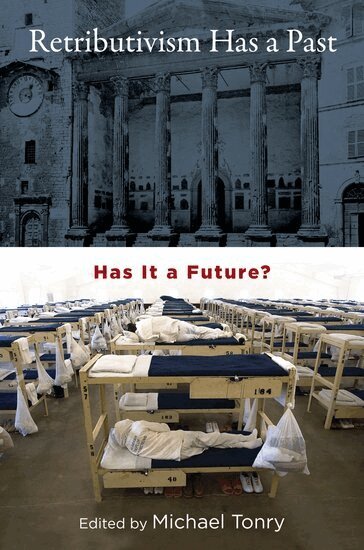
    Retributivism Has a Past

    Has It a Future?

    AvMichael Tonry

    Inbunden, Engelska, 2012

    Del i serien Studies in Penal Theory and Philosophy

    1 353 kr

    Beställningsvara. Skickas inom 5-8 vardagar. Fri frakt över 249 kr.

    Beskrivning

    The fundamental contrast between the ideas that punishment is morally justified because people have behaved wrongly (retributivist) and that punishment is morally justified only when it has good consequences (consequentialist/utilitarian) has long existed and most likely always will. Beginning in the 1960s and 1970s, retributivist ways of thinking became much more influential than they had been for the preceding century, but it is clear now that no paradigm shift from consequentialist to retributivist ideas occurred, and that thinking about punishment is in a period of flux. Retributivism Has a Past: Has It a Future? reconsiders the extent of its resurgence and its current prospects. Essays by major figures in punishment theory, law, and philosophy and many prominent younger contributors to these debates engage with contemporary ideas about restorative justice, therapeutic jurisprudence, rehabilitation of offenders, and mandatory punishments that are difficult to reconcile with retributive analytical frameworks. It is crucial to understand why and when individuals can be deprived of their property, their liberty, and their lives in the pursuit of collective interests, and this book grapples anew with contemporary debates over these perennial questions.

    Produktinformation

    • Utgivningsdatum:2012-01-05
    • Mått:236 x 163 x 33 mm
    • Vikt:499 g
    • Format:Inbunden
    • Språk:Engelska
    • Serie:Studies in Penal Theory and Philosophy
    • Antal sidor:304
    • Förlag:OUP USA
    • ISBN:9780199798278

    Utforska kategorier

    • Kriminologi: juridiska aspekter inom Juridik
    • Straffprocessrätt inom Juridik
    • Juridik: metod och teori inom Juridik

    Mer om författaren

    Michael Tonry is Professor of Law and Public Policy, University of Minnesota Law School, and Senior Fellow at the Netherlands Institute for the Study of Crime and Law Enforcement, Free University Amsterdam.

    Recensioner i media

    "Writings on theories of punishment are legion, but this volume has a distinct freshness--a group of top international scholars with varying perspectives have been encouraged to explore the interfaces between philosophies of punishment and contemporary penal practices. Nothing is taken for granted. Drug courts, 'three strikes and you're out' laws, and sentences lengthened for public protection are all vital issues of public policy that receive scrutiny in thisvolume. While the title of the volume refers to retributivism, the essays themselves are not confined to discussions of the future of desert theory: they explore the future place of restorativejustice, incapacitation and other rationales, and examine challenges to the basic tenets of desert theory. The intellectual freshness of this volume should make it a focus of study and argument for years to come." --Andrew Ashworth, Vinerian Professor of English Law, University of Oxford"Retributivism Has a Past is an important book that both reconsiders the past and may well reconfigure the future of criminal punishment. Michael Tonry's grand introductory essay examines retributivism's resurgence in light of actual practices, especially in the United States. Each of the essays by other major figures in punishment theory, law, and philosophy critically examines a variety of theories of punishment, old and new. Many of the essays,including several by prominent younger contributors to these debates, engage contemporary theories and concepts of restorative justice, therapeutic jurisprudence, rehabilitation of offenders, and mandatorypunishments. Most newer approaches are difficult to reconcile, both in theory and in practice, with retributive understandings of criminal justice." --Kate Stith, Lafayette S. Foster Professor, Yale Law School"...an important discussion of retributivism, both [in] theory and practice. It is a must read for punishment theorists. The discussion of both theoretical and practical features of retributivism gives the book a wider scope than the philosophical literature and this is a welcome development." -- Stephen Kershnar, Journal of Moral Philosophy

    Innehållsförteckning

    • Preface ; One: Can Twenty-first Century Punishment Policies be Justified in Principle? ; Michael Tonry, University of Minnesota ; Two: What Does Wrongdoing Deserve? ; John Kleinig, CUNY ; Three: Is Twenty-first Century Punishment Post-Desert? ; Matt Matravers, York University ; Four: Responsibility, Restoration, and Retribution ; R. A. Duff, University of Minnesota ; Five: Punishment and Desert-adjusted Utilitarianism ; Jesper Ryberg, Roskilde University, Copenhagen ; Six: The Future of State Punishment: The Role of Public Opinion in Sentencing ; Julian V. Roberts, Oxford University ; Seven: A Political Theory of Imprisonment for Public Protection ; Peter Ramsay, London School of Economics ; Eight: Terror as a Theory of Punishment ; Alice Ristroph, Seton Hall University ; Nine: Can Above-desert Penalties Be Justified by Competing Deontological Theories? ; Richard S. Frase, University of Minnesota ; Ten: Never Mind the Pain; It's a Measure! Justifying Measures as Part of the Dutch Bifurcated System of Sanctions ; Jan de Keijser, University of Leiden ; Eleven: Retributivism, Proportionality, and the Challenge of the Drug Court Movement ; Douglas Husak, Rutgers University ; Twelve: Drug Treatment Courts as Communicative Punishment ; Michael M. O'Hear, Marquette University ; Thirteen: Reflections on Punishment Futures: The Desert-Model Debate and the Importance of the Criminal Law Context ; Andreas von Hirsch, Cambridge University