Katharina Von Kellenbach – författare
Visar alla böcker från författaren Katharina Von Kellenbach. Handla med fri frakt och snabb leverans.
9 produkter
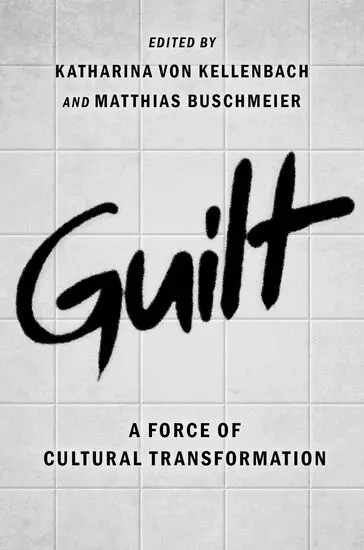
Guilt
A Force of Cultural Transformation
Av Katharina Von Kellenbach, Matthias Buschmeier
Häftad, 2022
488 kr
Lägg i varukorg
Across the globe guilt has become a contentious issue in discussions over historical accountability and reparation for past injustices. Guilt has become political, and it assumes a highly visible place in the public sphere and academic debate in fields ranging from cultural memory, to transitional …
CrossCurrents: Difficult Dialogues—Explorations at the Intersection of Religious Pluralism and Christian-Jewish Dialogue
Volume 62, Number 3, September 2012
Häftad, 2012
219 kr
Lägg i varukorg
CrossCurrents connects the wisdom of the heart with the life of the mind and the experiences of the body. The journal is operated through its parent organization, the Association for Public Religion and Intellectual Life (APRIL), an interreligious network of academics, activists, artists, and …
Guilt
A Force of Cultural Transformation
Av Matthias Buschmeier, Katharina von Kellenbach
E-bok, 2021
391 kr
Lägg i varukorg
Across the globe guilt has become a contentious issue in discussions over historical accountability and reparation for past injustices. Guilt has become political, and it assumes a highly visible place in the public sphere and academic debate in fields ranging from cultural memory, to transitional …
Guilt
A Force of Cultural Transformation
Av Matthias Buschmeier, Katharina von Kellenbach
E-bok, 2021
391 kr
Lägg i varukorg
Across the globe guilt has become a contentious issue in discussions over historical accountability and reparation for past injustices. Guilt has become political, and it assumes a highly visible place in the public sphere and academic debate in fields ranging from cultural memory, to transitional …
Mark of Cain
Guilt and Denial in the Post-War Lives of Nazi Perpetrators
E-bok, 2013
697 kr
Lägg i varukorg
The Mark of Cain fleshes out a history of conversations that contributed to Germany''s coming to terms with a guilty past. Katharina von Kellenbach draws on letters exchanged between clergy and Nazi perpetrators, written notes of prison chaplains, memoirs, sermons, and prison publications to …
The Mark of Cain
Guilt and Denial in the Post-War Lives of Nazi Perpetrators
Inbunden, 2013
1005 kr
Lägg i varukorg
The Mark of Cain fleshes out a history of conversations that contributed to Germany's coming to terms with a guilty past. Katharina von Kellenbach draws on letters exchanged between clergy and Nazi perpetrators, written notes of prison chaplains, memoirs, sermons, and prison publications to …
Mark of Cain
Guilt and Denial in the Post-War Lives of Nazi Perpetrators
E-bok, 2013
697 kr
Lägg i varukorg
The Mark of Cain fleshes out a history of conversations that contributed to Germany''s coming to terms with a guilty past. Katharina von Kellenbach draws on letters exchanged between clergy and Nazi perpetrators, written notes of prison chaplains, memoirs, sermons, and prison publications to …
Anti-Judaism in Feminist Religious Writings
Häftad, 1994
618 kr
Lägg i varukorg
This work is the first comprehensive study of anti-Judaism in feminist religious writings. Katharina von Kellenbach provides a critical evaluation of how Judaism has been depicted in major American and West German feminist theologies, including the writings of Rosemary Radford Ruether, Carol …
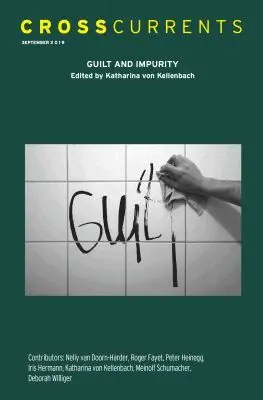
CrossCurrents: Guilt and Impurity
Volume 69, Number 3, September 2019
Häftad, 2019
218 kr
Lägg i varukorg
CrossCurrents connects the wisdom of the heart with the life of the mind and the experiences of the body. The journal is operated through its parent organization, the Association for Public Religion and Intellectual Life (APRIL), an interreligious network of academics, activists, artists, and …