Katherine Anne Porter – författare
Visar alla böcker från författaren Katherine Anne Porter. Handla med fri frakt och snabb leverans.
20 produkter
20 produkter
Häftad, Engelska, 2023
196 kr
Skickas
Häftad, Engelska, 2011
168 kr
Skickas
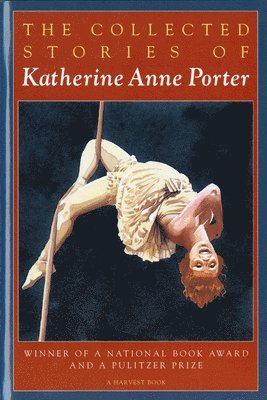
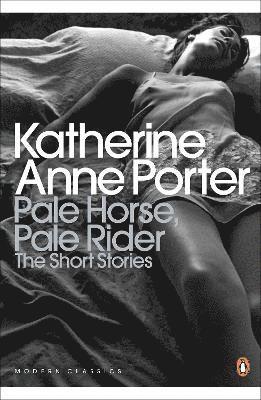
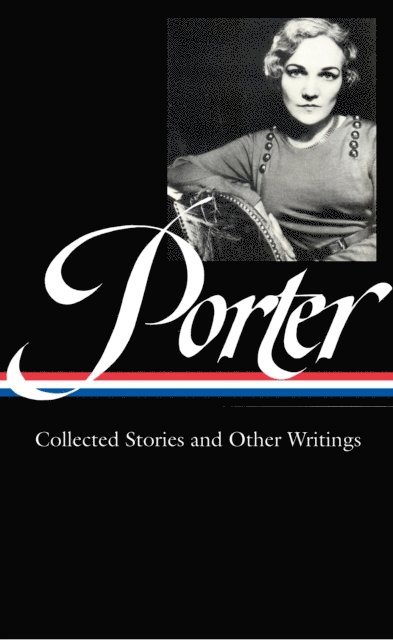
From the gothic Old South to revolutionary Mexico, few writers have evoked such a multitude of worlds, both exterior and interior, as powerfully as Katherine Anne Porter. This collection gathers together the best of her Pulitzer Prize-winning short fiction, including 'Pale Horse, Pale Rider', where a young woman lies in a fever during the influenza epidemic, her childhood memories mingling with fears for her fiancé on his way to war, and 'Noon Wine', a haunting story of tragedy and scandal on a small dairy farm in Texas. In all of the compelling stories collected here, harsh and tragic truths are expressed in prose both brilliant and precise.
Häftad, Engelska, 1979
282 kr
Skickas inom 3-6 vardagar
Häftad, Engelska, 1955
249 kr
Skickas inom 3-6 vardagar
Häftad, Engelska, 1993
372 kr
Skickas inom 10-15 vardagar
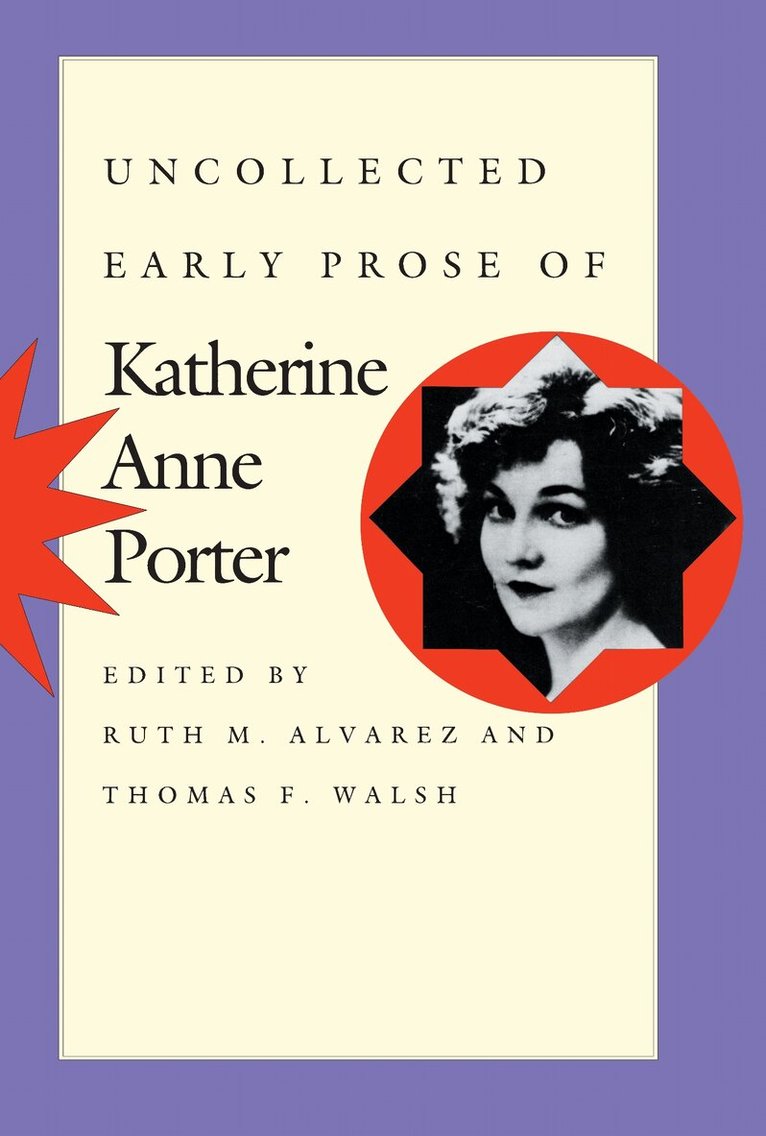
This volume brings together twenty-nine pieces dating from before 1932, none of which appeared in Porter's collected works and many of which are published here for the first time. Both fiction and essays are covered. All these pieces belong to Porter's apprenticeship as a creative writer. Thus, they offer new insights into her artistic development and her relationship with Mexico, a place that, as she later said, "influenced everything I did afterward."
Häftad, Engelska, 1984
192 kr
Skickas inom 5-8 vardagar
Häftad, Engelska, 2008
482 kr
Skickas inom 5-8 vardagar
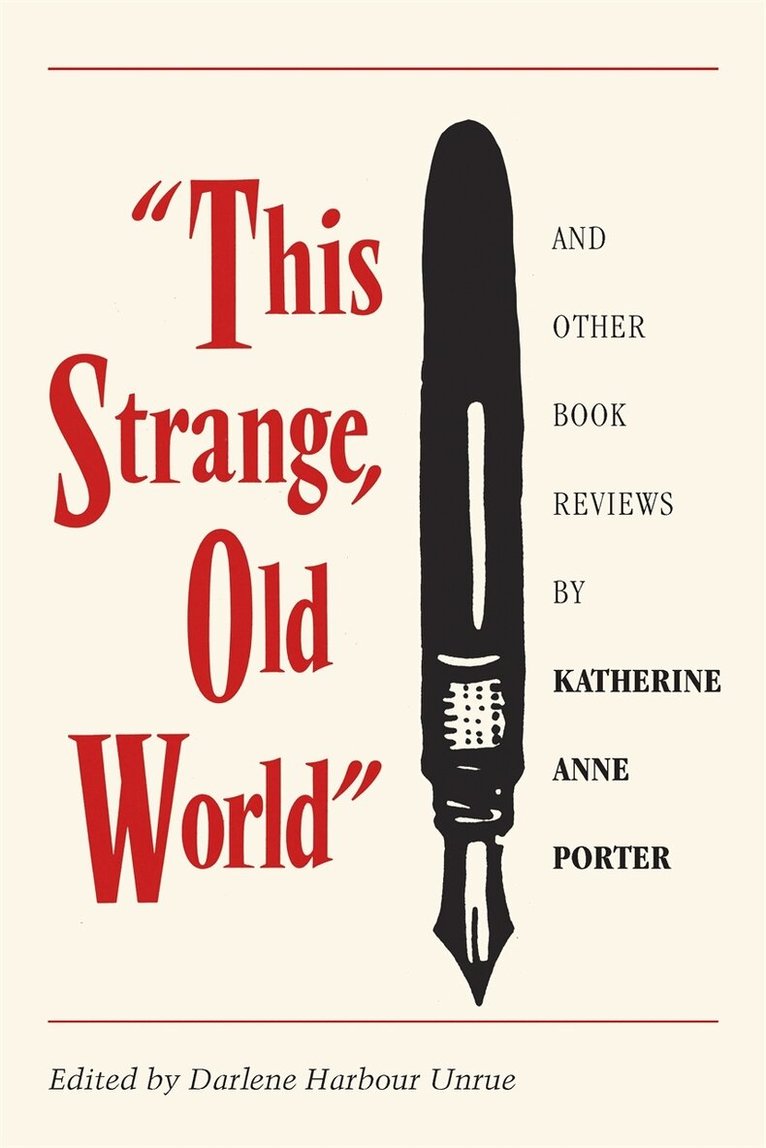
Between 1920 and 1958 Katherine Anne Porter published more than sixty-five book review, many of which are now largely inaccessible. Although several such pieces have appeared in earlier collections of Porter's nonfiction writings, never have so many of Porter's reviews—nearly fifty—been made available in a single volume. Collectively the review reveal Porter's opinions on topics ranging from the nature of art and the place of the artist in politics and society to feminism and the role of female artists. Particularly evident in the reviews are the critical principles that guided her own work as well as her judgments of the works of other writers.In her introductory essay Darlene Harbour Unrue provides important biographical information on Porter, traces her career as a reviewer, and links critical assumptions in the reviews to the themes and techniques of Porter's fiction. Other scholars as well have regarded Porter's critical reviews as valuable tools both for analyzing the fiction and for constructing a portrait of Porter the artist, primarily because Porter produced so little fiction (three collections of short stories and novellas, Flowering Judas, The Leaning Tower, and Pale Horse, Pale Rider, and a novel, Ship of Fools). In the preface to the first collection of her nonfiction writings, The Days Before, Porter herself urged readers to look closely at her nonfiction, for there they would discover "the shape, direction, and connective tissue of a continuous, central interest and preoccupation of a lifetime."Most of the reviews—which appeared in such publications as the New York Herald Tribune, the New York Times, the Nation, and New Masses—she apparently undertook for financial reasons, but occasionally she would agree to review a friend's latest offering. She published no reviews after the success of her best-selling novel, Ship of Fools.Porter's scope as a reviewer was impressively broad. Because she lived in Mexico City during the revolution, had known Diego Rivera, and had studied "primitive" Mexican art, she was often called on to review books on Mexican art and on the revolution. Porter also reviewed many books by or about women. Her reviews of the Short Novels of Colette and Katharine Anthony's translation of Catherine the Great's memoirs are particularly noteworthy for her comments about women artists and her expression of admiration for women who flout traditional roles.These collected reviews illustrate the evolution of one of the most important American writers of the twentieth century and will interest not only Porter scholars but also anyone who appreciates her fiction.
Häftad, Engelska, 1987
373 kr
Skickas inom 10-15 vardagar
Inbunden, Engelska, 2022
431 kr
Skickas inom 5-8 vardagar
Häftad, Engelska, 2022
293 kr
Skickas inom 5-8 vardagar
Inbunden, Engelska, 2023
370 kr
Skickas inom 5-8 vardagar
Häftad, Engelska, 2023
214 kr
Skickas inom 5-8 vardagar
Häftad, Engelska, 2025
185 kr
Skickas inom 5-8 vardagar
Inbunden, Engelska, 2026
328 kr
Skickas inom 5-8 vardagar
Häftad, Engelska, 2026
271 kr
Skickas inom 5-8 vardagar
E-bok
Engelska, 2015154 kr
Läs direkt efter köp
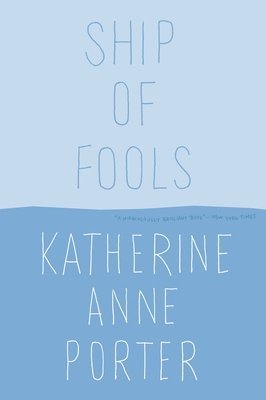
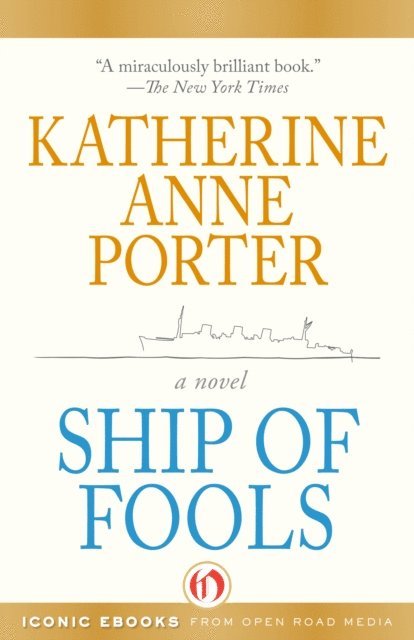
This “dazzling” National Book Award finalist set aboard an ocean liner in 1931 reflects the passions and prejudices that sparked World War II (San Francisco Chronicle). August 1931. An ocean liner bound for Germany sets out from the Mexican port city of Veracruz. The ship’s first-class passengers include an idealistic young American painter and her lover; a Spanish dance troupe with a sideline in larceny; an elderly German couple and their fat, seasick bulldog; and a boisterous band of Cuban medical students. As the Vera journeys across the Atlantic, the incidents and intrigues of several dozen passengers and crew members come into razor-sharp focus. The result is a richly drawn portrait of the human condition in all its complexity and a mesmerizing snapshot of a world drifting toward disaster. Written over a span of twenty years and based on the diary Katherine Anne Porter kept during a similar ocean voyage, Ship of Fools was the bestselling novel of 1962 and the inspiration for an Academy Award–winning film starring Vivien Leigh. It is a masterpiece of American literature as captivating today as when it was first published more than a half century ago. This ebook features an illustrated biography of Katherine Anne Porter, including rare photos from the University of Maryland Libraries.
Inbunden, Engelska, 2012
1 295 kr
Skickas inom 10-15 vardagar
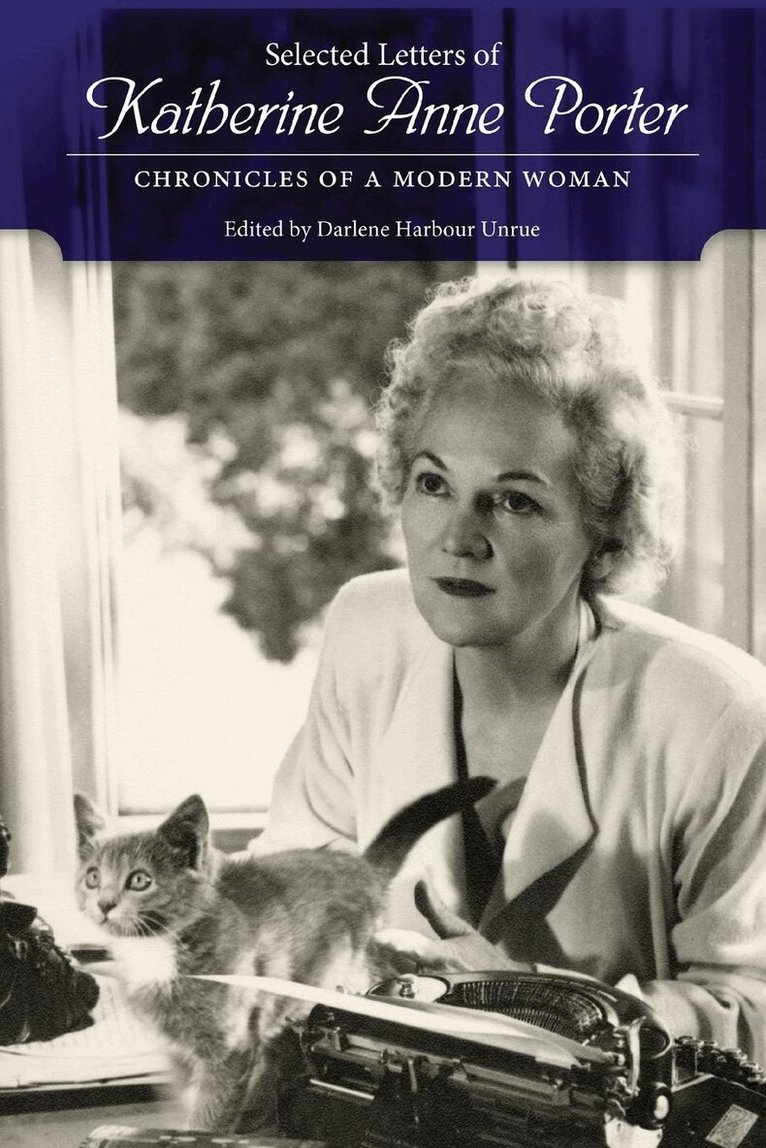
Katherine Anne Porter (1890-1980) produced a relatively small body of fiction, but she wrote thousands and thousands of letters. The present selection of 135 unexpurgated letters, written to seventy-four different persons, begins with a 1916 letter written from a tuberculosis sanatorium in Texas and ends with a 1979 letter dictated to an unnamed nursing-home attendant in Maryland. Different from any previous selection, this body of letters does not omit Porter's frank criticism of fellow writers and spans her entire life. Within that circumscription is the chronicle of Porter, a twentieth-century woman searching for love while she struggles to become the writer she is sure she can be. Porter's letters vividly showcase the twentieth century as the writer observes it from her historical vantage points--tuberculosis sanatoria and the influenza pandemic of 1918; the leftist community in Greenwich Village in the 1920s; the Mexican cultural revolution of the 1920s and early 1930s; the expatriate community in Paris in the 1930s; the rise of Nazism in Europe between the World Wars; the Second World War and its concomitant suppression of civil liberties; Hollywood and the university circuit as a haven for financially strapped writers in the 1940s and 1950s; the Cold War and its competition for supremacy in space; the Women's Rights and the Civil Rights movements; and the evolution and demise of literary modernism.
Häftad, Engelska, 2014
402 kr
Skickas inom 10-15 vardagar
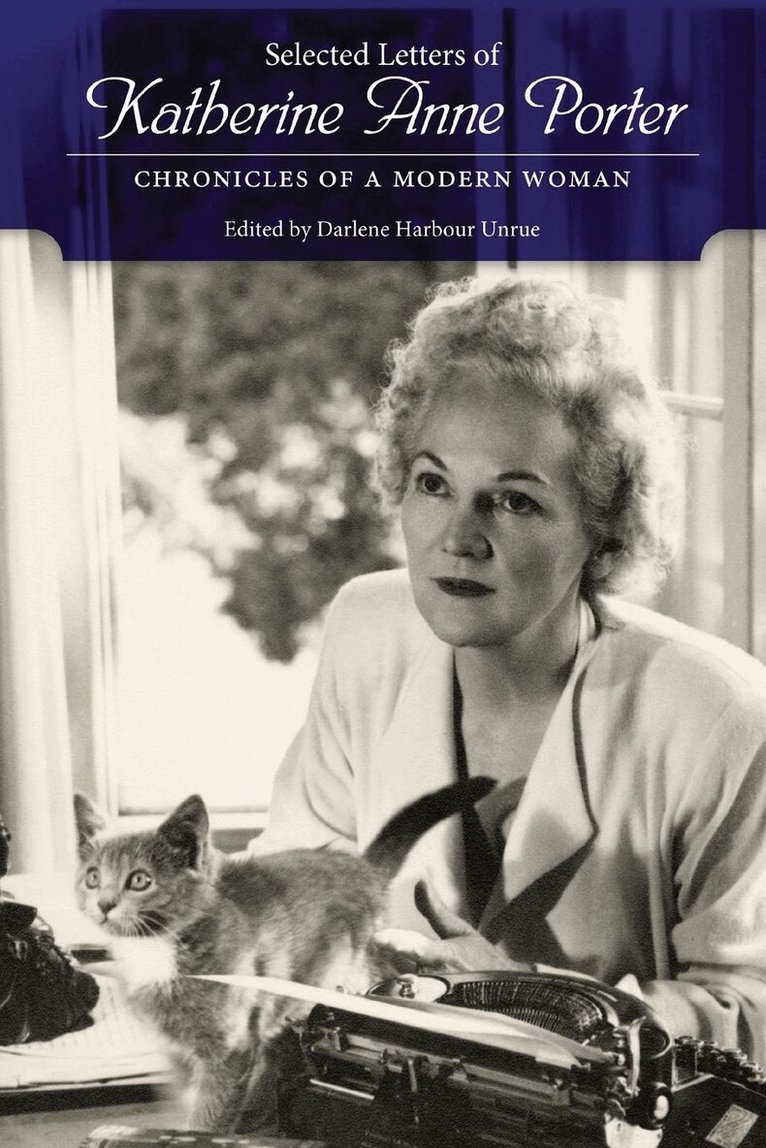
Katherine Anne Porter (1890-1980) produced a relatively small body of fiction, but she wrote thousands and thousands of letters. The present selection of 135 unexpurgated letters, written to seventy-four different persons, begins with a 1916 letter written from a tuberculosis sanatorium in Texas and ends with a 1979 letter dictated to an unnamed nursing-home attendant in Maryland. Different from any previous selection, this body of letters does not omit Porter's frank criticism of fellow writers and spans her entire life. Within that circumscription is the chronicle of Porter, a twentieth-century woman searching for love while she struggles to become the writer she is sure she can be. Porter's letters vividly showcase the twentieth century as the writer observes it from her historical vantage points--tuberculosis sanatoria and the influenza pandemic of 1918; the leftist community in Greenwich Village in the 1920s; the Mexican cultural revolution of the 1920s and early 1930s; the expatriate community in Paris in the 1930s; the rise of Nazism in Europe between the World Wars; the Second World War and its concomitant suppression of civil liberties; Hollywood and the university circuit as a haven for financially strapped writers in the 1940s and 1950s; the Cold War and its competition for supremacy in space; the Women's Rights and the Civil Rights movements; and the evolution and demise of literary modernism.
Engelska, 2023
204 kr
Skickas inom 5-8 vardagar
Häftad, Engelska, 1994
160 kr
Tillfälligt slut
Novelist, short-story writer, winner of the National Book Award and the Pulitzer Prize, Katherine Anne Porter is one of America’s most respected and enduring literary figures. Upon her death in 1980 at the age of ninety, she left behind thousands of letters, from which Isabel Bayley, Porter’s close friend for over twenty-five years and her literary archivist, selected the best. The book was conceived as a whole,” Bayley explains. The letters will carry you, if you wish to read in sequence, from point to point during her major working years, 1930 to 1963. Little bridges form from idea to idea, from theme to theme.” One of Porter’s themes was an outrage born of unfair politics, and her words are as fresh today as when they were written: What has discouraged me,” she writes in 1957, is simply the fact that from Mussolini onFranco, Hitler, Tito, Peron, Batista, Trujillo, in a rapidly descending scale to Nasser, our government has without fail backed and supported, in completely criminal collusion, every foul and stinking political dictator in turn as they rise, with the hypocritical excuse that these are all anti-Communist.’” And in 1947 she asks the kind of question that underlies the finest of her writing: Man cannotoh why can he not? This to me is the riddle of the universeface the truth of his own motives.”The list of Porter’s correspondents reads like a Who’s Who of twentieth-century letters: Marianne Moore, Ezra Pound, Eleanor Clark, James Stern, Cleanth Brooks, Malcolm Cowley, Allen Tate, Caroline Gordon, Josephine Herbst, Hart Crane, Monroe Wheeler, Glenway Wescott, Eudora Welty, John Malcolm Brinnin. She tells Edith Sitwel she treasures her anthology of poetry as something to take to Heaven with me if I ever get there; or maybe to bootleg into Hell to soften the penalty of having to read the Beat Generation.” In a 1935 letter to Robert Penn Warren, one of her closest friends, she writes, I have on hand, trying to finish it, a fairly long story which I call Pale Horse and Pale Rider’ though I may find another title. What are your limits as to space for a short story?” For Porter her lettersto friends, family, publishers, editors, loverswere vital links between the past and the present, a validation of time spent and an inspiration for the future: her twelve-page ship’s journal, written in the form of a letter on a voyage from Mexico to Germany in 1931, became the basis for Ship of Fools, completed thirty years later.Katherine Anne Porter saw letters as continuity, a story that no longer belonged to the teller: . . . mss. and notes and journals and letters arrived from Saratoga Springs the other day, and reading some of it over I find the past much more continuous, which I had begun to doubt. . . . Things just accumulated, and behold, it had become history . . . to be sorted and used as part of a story. I don’t know that story any more than you do, especially not the end, and we will never see it, and I think it not very important whether we do or don’t. . . . It doesn’t belong to us anyway.”