Kathleen Stassen Berger – författare
Visar alla böcker från författaren Kathleen Stassen Berger. Handla med fri frakt och snabb leverans.
12 produkter
12 produkter
900 kr
Skickas inom 7-10 vardagar
Loose-Leaf Version for Invitation to the Lifespan (Canadian Edition) & Launchpad Online Card (6 Month)
Häftad, Engelska, 2014
1 996 kr
Kommande
Loose-Leaf Version for Invitation to the Life Span 3e & Launchpad Solo for Developing Lives (Six-Months Online)
Häftad, Engelska, 2017
2 016 kr
Kommande
Loose-Leaf Version for Developing Person Through Childhood & Adolescence 10e & Launchpad Solo for Developing Lives (Six-Months Online)
Häftad, Engelska, 2017
2 834 kr
Kommande
Invitation to the Life Span 3e & Launchpad Solo for Developing Lives (Six-Months Online) [With eBook]
Inbunden, Engelska, 2017
3 365 kr
Kommande
Invitation to the Lifespan (Canadian Version) & Launchpad Online Card (6 Month) [With eBook]
Häftad, Engelska, 2014
3 365 kr
Kommande
Developing Person Through Lifespan & Launchpad 6 Month Online Card [With eBook]
Häftad, Engelska, 2014
3 988 kr
Kommande
Developing Person Through the Life Span 9e P & Launchpad for Berger's Developing Person Through the Life Span 9e (Six Month Access)
Inbunden, Engelska, 2014
3 720 kr
Kommande
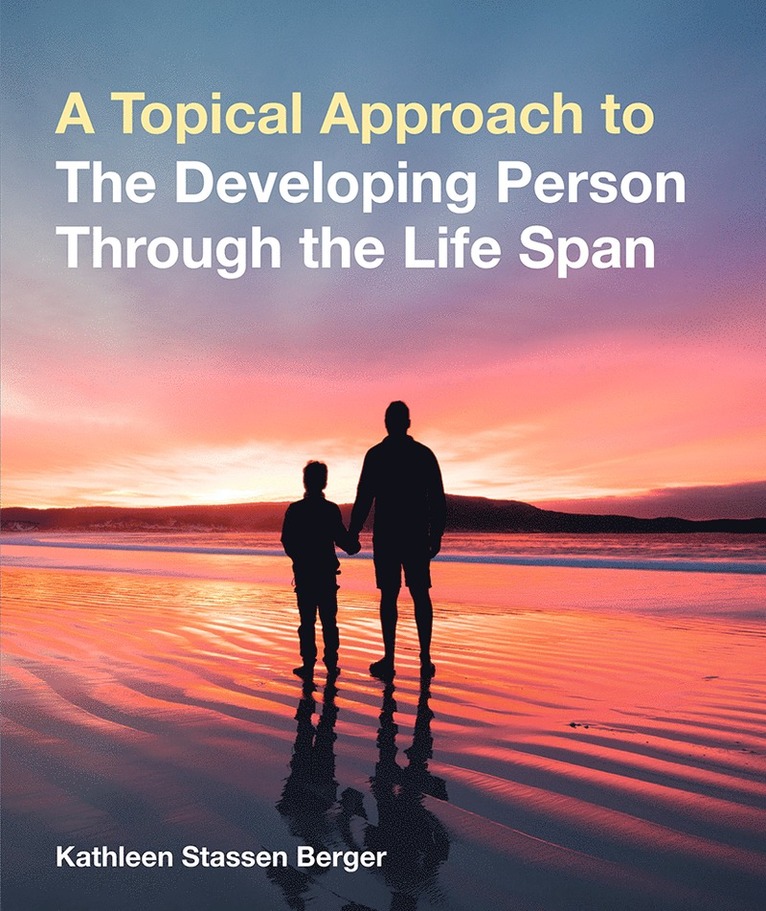
A Topical Approach to the Developing Person Through the Life Span & Reef (Six-Months Access) [With Access Code]
Häftad, Engelska
3 579 kr
Tillfälligt slut
461 kr
Skickas inom 10-15 vardagar
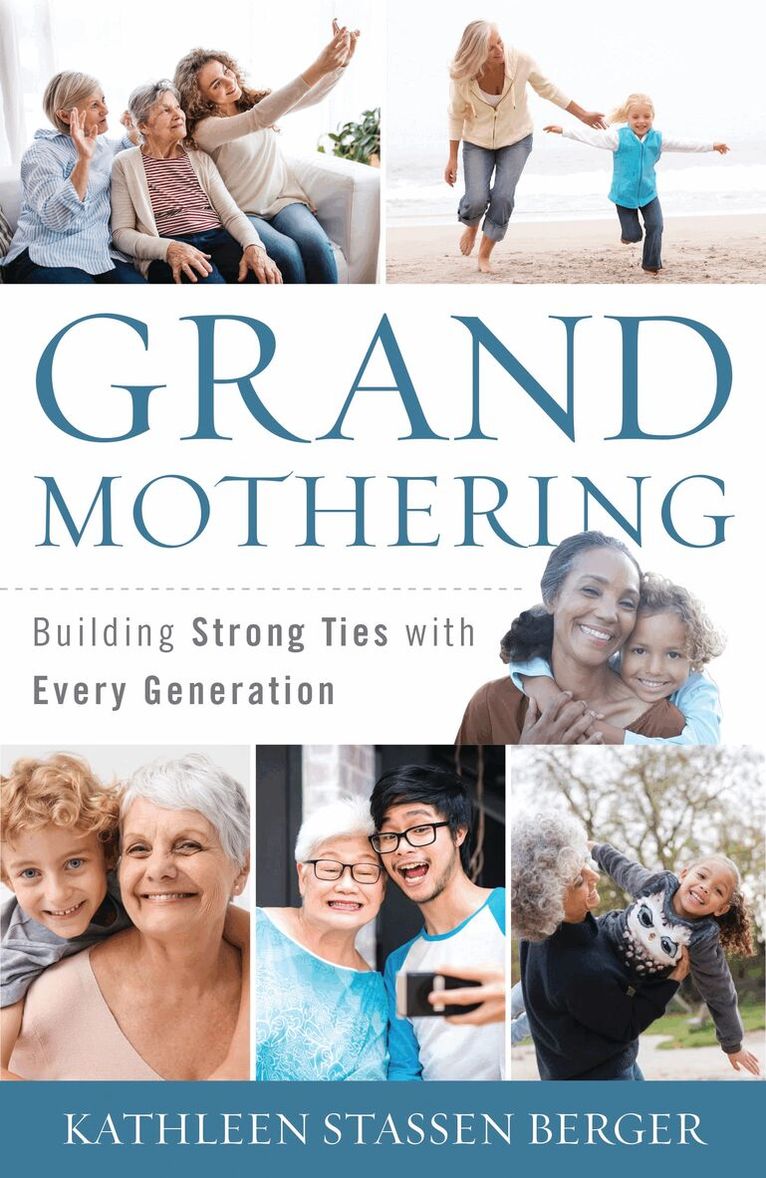
Contemporary grandmothers are often marginalized from extended family life because social institutions and grandmothers themselves do not understand that they could be vital for working parents, for overactive children, for suicidal youth, indeed for many of the problems of modern grandchildren. The genetics and hormones of older women have designed them to be vital family members, with patience and perspective that come with age and experience. In addition, biology helps directly via menopause. The grandmother hypothesis explains that human women, unlike almost any other living creature, experience decades of life after menopause, in order to make grandmothers available to their descendants. Here, Kathleen Berger explores he role of grandmothers in the lives of their grandchildren. She uses real life examples to illustrate how grandmothers can best integrate themselves into the lives of their children’s families without overstepping. She explores the particular needs of each stage of childhood as they relate to grandmother involvement and input. Before a child is born, grandmothers need to attend to building a strong relationship with the future parents. In infancy, attachment and feeding are crucial. In early childhood, grandmothers need to follow the parent’s lead, remembering that a parental alliance is essential. In childhood, children need to be safe but not isolated, and both bullies and victims benefit from a grandmother’s support and assistance. In adolescence and emerging adulthood, grandmothers need to build direct connections and not avoid the difficult topics of sex, drugs, death, disease, and money. Throughout, elders need to learn technology, insuring that it fosters, not impedes relationships. Problems in relationships are explained honestly and with insight. Among these are issues when three generations share a home, when parents get divorced, and when grandchildren rebel against parental authority. Throughout the work, both the joy and the complications of effective grandmothering are described. Whether you’re a biological grandmother, a trusted step-grandmother, or just a warm and trusted older woman with young ones in your life, you can be a vital force in the lives of future generations.

277 kr
Skickas inom 10-15 vardagar
Contemporary grandmothers are often marginalized from extended family life because social institutions and grandmothers themselves do not understand that they could be vital for working parents, for overactive children, for suicidal youth, indeed for many of the problems of modern grandchildren. The genetics and hormones of older women have designed them to be vital family members, with patience and perspective that come with age and experience. In addition, biology helps directly via menopause. The grandmother hypothesis explains that human women, unlike almost any other living creature, experience decades of life after menopause, in order to make grandmothers available to their descendants. Here, Kathleen Berger explores he role of grandmothers in the lives of their grandchildren. She uses real life examples to illustrate how grandmothers can best integrate themselves into the lives of their children’s families without overstepping. She explores the particular needs of each stage of childhood as they relate to grandmother involvement and input. Before a child is born, grandmothers need to attend to building a strong relationship with the future parents. In infancy, attachment and feeding are crucial. In early childhood, grandmothers need to follow the parent’s lead, remembering that a parental alliance is essential. In childhood, children need to be safe but not isolated, and both bullies and victims benefit from a grandmother’s support and assistance. In adolescence and emerging adulthood, grandmothers need to build direct connections and not avoid the difficult topics of sex, drugs, death, disease, and money. Throughout, elders need to learn technology, insuring that it fosters, not impedes relationships. Problems in relationships are explained honestly and with insight. Among these are issues when three generations share a home, when parents get divorced, and when grandchildren rebel against parental authority. Throughout the work, both the joy and the complications of effective grandmothering are described. Whether you’re a biological grandmother, a trusted step-grandmother, or just a warm and trusted older woman with young ones in your life, you can be a vital force in the lives of future generations.