Kathrin Glüer - Böcker
Visar alla böcker från författaren Kathrin Glüer. Handla med fri frakt och snabb leverans.
3 produkter
3 produkter
394 kr
Skickas inom 5-8 vardagar
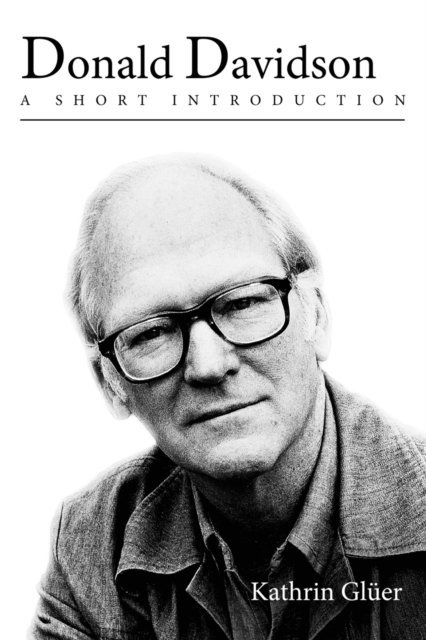
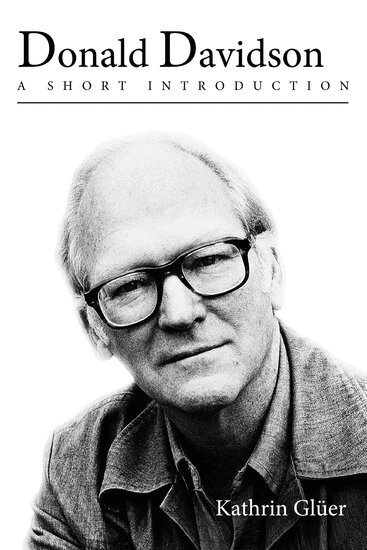
Donald Davidson was one of the 20th Century's deepest analytic thinkers. He developed a systematic picture of the human mind and its relation to the world, an original and sustained vision that exerted a shaping influence well beyond analytic philosophy of mind and language. At its center is an idea of minded creatures as essentially rational animals: Rational animals can be interpreted, their behavior can be understood, and the contents of their thoughts are, in principle, open to others. The combination of a rigorous analytic stance with aspects of humanism so distinctive of Davidsonian thought finds its maybe most characteristic expression when this central idea is brought to bear on the relation of the mental to the physical: Davidson defended the irreducibility of its rational nature while acknowledging that the mental is ultimately determined by the physical.Davidson made contributions of lasting importance to a wide range of topics -- from general theory of meaning and content over formal semantics, the theories of truth, explanation, and action, to metaphysics and epistemology. His writings almost entirely consist of short, elegant, and often witty papers. These dense and thematically tightly interwoven essays present a profound challenge to the reader.This book provides a concise, systematic introduction to all the main elements of Davidson's philosophy. It places the theory of meaning and content at the very center of his thought. By using interpretation, and the interpreter, as key ideas it clearly brings out the underlying structure and unified nature of Davidson's work. Kathrin Glüer carefully outlines his principal claims and arguments, and discusses them in some detail. The book thus makes Davidson's thought accessible in its genuine depth, and acquaints the reader with the main lines of discussion surrounding it.
2 176 kr
Skickas inom 10-15 vardagar
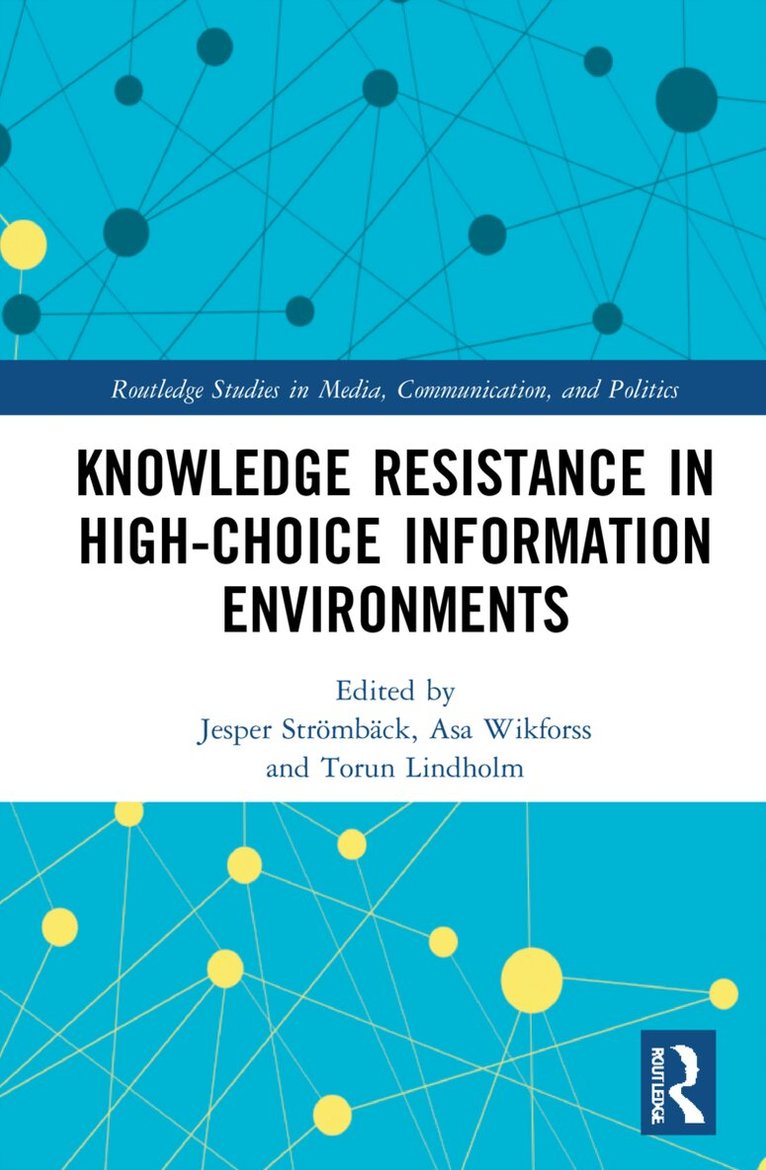
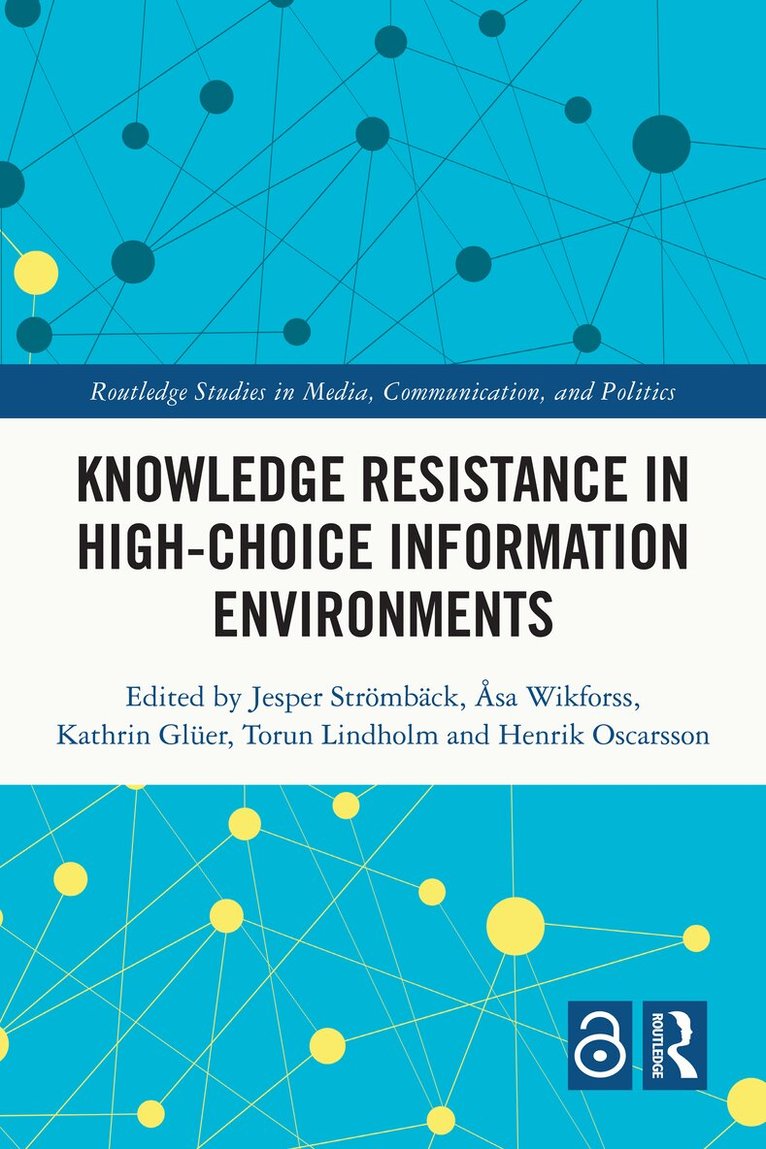
This book offers a truly interdisciplinary exploration of our patterns of engagement with politics, news, and information in current high-choice information environments. Putting forth the notion that high-choice information environments may contribute to increasing misperceptions and knowledge resistance rather than greater public knowledge, the book offers insights into the processes that influence the supply of misinformation and factors influencing how and why people expose themselves to and process information that may support or contradict their beliefs and attitudes. A team of authors from across a range of disciplines address the phenomena of knowledge resistance and its causes and consequences at the macro- as well as the micro-level. The chapters take a philosophical look at the notion of knowledge resistance, before moving on to discuss issues such as misinformation and fake news, psychological mechanisms such as motivated reasoning in processes of selective exposure and attention, how people respond to evidence and fact-checking, the role of political partisanship, political polarization over factual beliefs, and how knowledge resistance might be counteracted. This book will have a broad appeal to scholars and students interested in knowledge resistance, primarily within philosophy, psychology, media and communication, and political science, as well as journalists and policymakers.The Open Access version of this book, available at www.taylorfrancis.com, has been made available under a Creative Commons Attribution-Non Commercial-No Derivatives 4.0 license.
539 kr
This book offers a truly interdisciplinary exploration of our patterns of engagement with politics, news, and information in current high-choice information environments. Putting forth the notion that high-choice information environments may contribute to increasing misperceptions and knowledge resistance rather than greater public knowledge, the book offers insights into the processes that influence the supply of misinformation and factors influencing how and why people expose themselves to and process information that may support or contradict their beliefs and attitudes. A team of authors from across a range of disciplines address the phenomena of knowledge resistance and its causes and consequences at the macro- as well as the micro-level. The chapters take a philosophical look at the notion of knowledge resistance, before moving on to discuss issues such as misinformation and fake news, psychological mechanisms such as motivated reasoning in processes of selective exposure and attention, how people respond to evidence and fact-checking, the role of political partisanship, political polarization over factual beliefs, and how knowledge resistance might be counteracted. This book will have a broad appeal to scholars and students interested in knowledge resistance, primarily within philosophy, psychology, media and communication, and political science, as well as journalists and policymakers.The Open Access version of this book, available at www.taylorfrancis.com, has been made available under a Creative Commons Attribution-Non Commercial-No Derivatives 4.0 license.