Kathryn Walkiewicz - Böcker
Visar alla böcker från författaren Kathryn Walkiewicz. Handla med fri frakt och snabb leverans.
3 produkter
3 produkter
272 kr
Skickas inom 10-15 vardagar
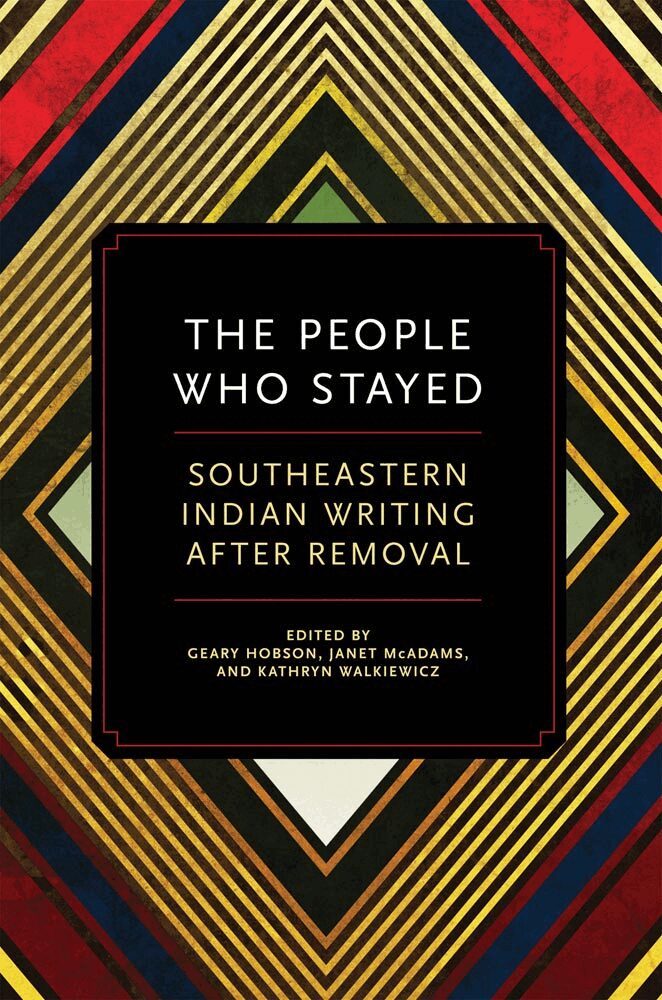
The two-hundred-year-old myth of the ""vanishing"" American Indian still holds some credence in the American Southeast, the region from which tens of thousands of Indians were relocated after passage of the Indian Removal Act in 1830. Yet, as the editors of this volume amply demonstrate, a significant Indian population remained behind after those massive relocations.The first anthology to focus on the literary work of Native Americans who trace their ancestry to ""people who stayed"" in southeastern states after 1830, this volume represents every state and every genre, including short stories, excerpts from novels, poetry, essays, plays, and even Web postings. Although most works are contemporary, the collection covers the entire post-Removal era. Some of the contributors are well known, while others have only recently emerged as important literary voices.All of the writers in The People Who Stayed affirm their Indian ancestry, though many live outside the Southeast today. As this anthology demonstrates, indigenous Southeastern writing engages the local and the global, the traditional and the modern. While many speak to the prospects and perils of acculturation, all the writers bear witness to the ways, oblique or straightforward, that they and their families continue to honor their Indian identities despite the legacy of removal.In an introduction to the volume and in headnotes on each contributor, the editors provide historical context and literary insight on the diversity of writing and lived experiences found in these pages. All readers, from students to scholars, will gain newfound understanding of the literature - and the human experience - of Native people of the American Southeast.
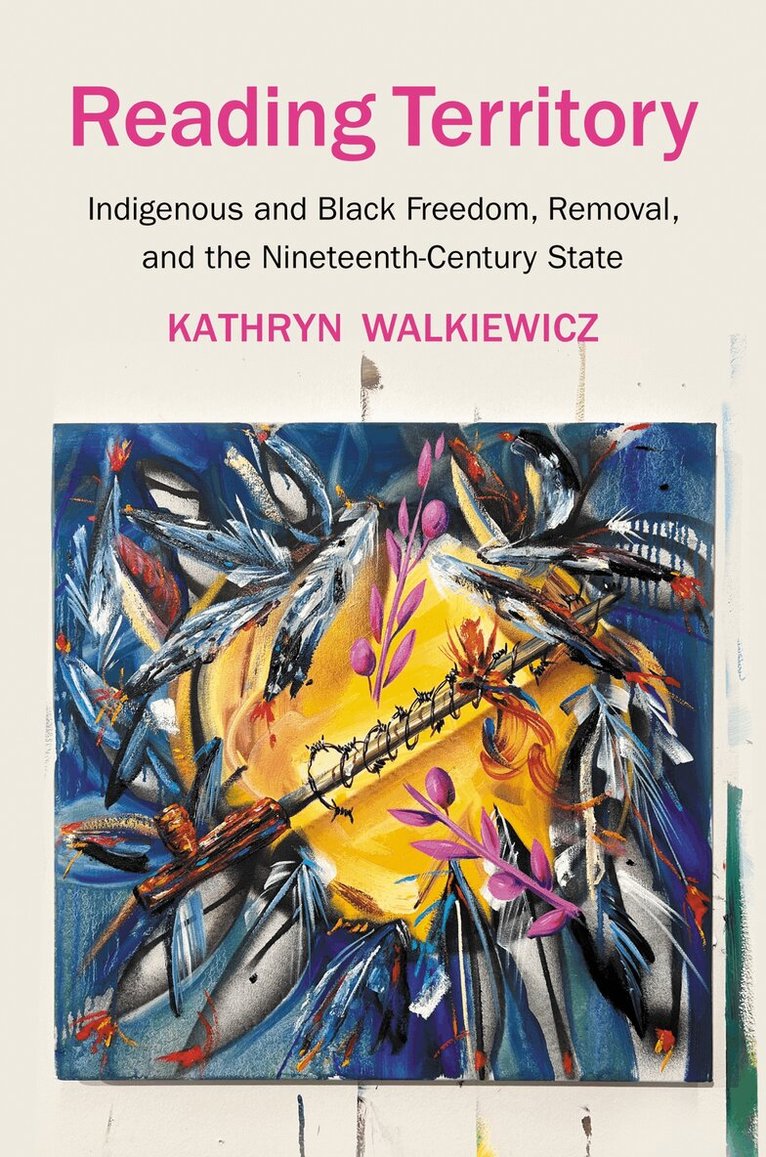
Reading Territory
Indigenous and Black Freedom, Removal, and the Nineteenth-Century State
Inbunden, Engelska, 2023
1 213 kr
Skickas inom 10-15 vardagar
The formation of new states was an essential feature of US expansion throughout the long nineteenth century, and debates over statehood and states' rights were waged not only in legislative assemblies but also in newspapers, maps, land surveys, and other forms of print and visual culture. Assessing these texts and archives, Kathryn Walkiewicz theorizes the logics of federalism and states' rights in the production of US empire, revealing how they were used to imagine states into existence while clashing with relational forms of territoriality asserted by Indigenous and Black people. Walkiewicz centers her analysis on statehood movements to create the places now called Georgia, Florida, Kansas, Cuba, and Oklahoma. In each case she shows that Indigenous dispossession and anti-Blackness scaffolded the settler-colonial project of establishing states' rights. But dissent and contestation by Indigenous and Black people imagined alternative paths, even as their exclusion and removal reshaped and renamed territory. By recovering this tension, Walkiewicz argues we more fully understand the role of state-centered discourse as an expression of settler colonialism. We also come to see the possibilities for a territorial ethic that insists on thinking beyond the boundaries of the state.
Reading Territory
Indigenous and Black Freedom, Removal, and the Nineteenth-Century State
Häftad, Engelska, 2023
420 kr
Skickas inom 10-15 vardagar
The formation of new states was an essential feature of US expansion throughout the long nineteenth century, and debates over statehood and states' rights were waged not only in legislative assemblies but also in newspapers, maps, land surveys, and other forms of print and visual culture. Assessing these texts and archives, Kathryn Walkiewicz theorizes the logics of federalism and states' rights in the production of US empire, revealing how they were used to imagine states into existence while clashing with relational forms of territoriality asserted by Indigenous and Black people.Walkiewicz centers her analysis on statehood movements to create the places now called Georgia, Florida, Kansas, Cuba, and Oklahoma. In each case she shows that Indigenous dispossession and anti-Blackness scaffolded the settler-colonial project of establishing states' rights. But dissent and contestation by Indigenous and Black people imagined alternative paths, even as their exclusion and removal reshaped and renamed territory. By recovering this tension, Walkiewicz argues we more fully understand the role of state-centered discourse as an expression of settler colonialism. We also come to see the possibilities for a territorial ethic that insists on thinking beyond the boundaries of the state.