Keally McBride - Böcker
Visar alla böcker från författaren Keally McBride. Handla med fri frakt och snabb leverans.
4 produkter
4 produkter
598 kr
Skickas inom 5-8 vardagar
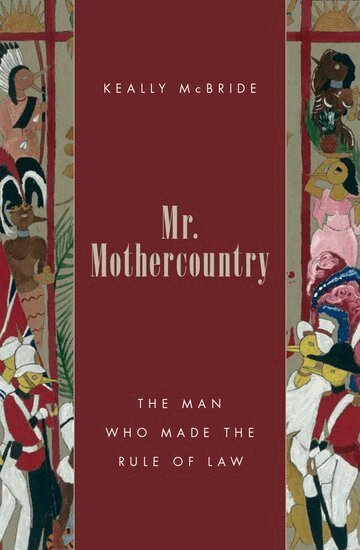
Today, every continent retains elements of the legal code distributed by the British empire. The British empire created a legal footprint along with political, economic, cultural and racial ones. One of the central problems of political theory is the insurmountable gap between ideas and their realization. Keally McBride argues that understanding the presently fraught state of the concept of the rule of law around the globe relies upon understanding how it was first introduced and then practiced through colonial administration--as well as unraveling the ideas and practices of those who instituted it. The astonishing fact of the matter is that for thirty years, between 1814 and 1844, virtually all of the laws in the British Empire were reviewed, approved or discarded by one individual: James Stephen, disparagingly known as "Mr. Mothercountry." Virtually every single act that was passed by a colony made its way to his desk, from a levy to improve sanitation, to an officer's pay, to laws around migration and immigration, and tariffs on products. Stephen, great-grandfather of Virginia Woolf, was an ardent abolitionist, and he saw his role as a legal protector of the most dispossessed. When confronted by acts that could not be overturned by reference to British law that he found objectionable, he would make arguments in the name of the "natural law" of justice and equity. He truly believed that law could be a force for good and equity at the same time that he was frustrated by the existence of laws that he saw as abhorrent. In Mr. Mothercountry, McBride draws on original archival research of the writings of Stephen and his descendants, as well as the Macaulay family, two major lineages of legal administrators in the British colonies, to explore the gap between the ideal of the rule of law and the ways in which it was practiced and enforced. McBride does this to show that there is no way of claiming that law is always a force for good or simply an ideological cover for oppression. It is both. Her ultimate intent is to illuminate the failures of liberal notions of legality in the international sphere and to trace the power disparities and historical trajectories that have accompanied this failure. This book explores the intertwining histories of colonial power and the idea of the rule of law, in both the past and the present, and it asks what the historical legacy of British Colonialism means for how different groups view international law today.
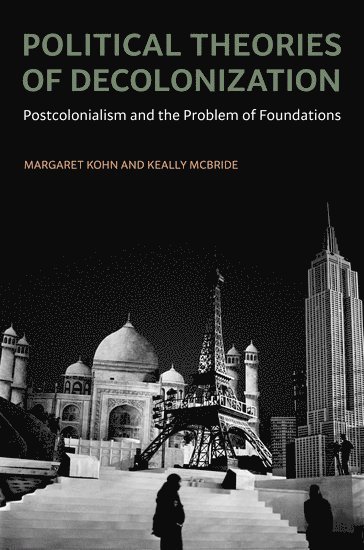
Political Theories of Decolonization
Postcolonialism and the Problem of Foundations
Inbunden, Engelska, 2011
1 989 kr
Skickas inom 5-8 vardagar
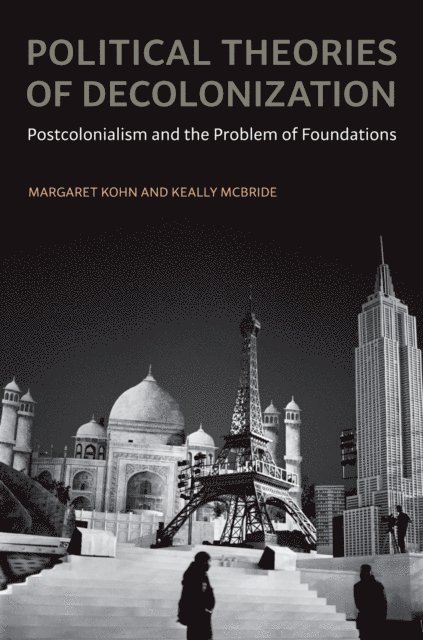
Recent scholarship in political theory has focused on the treatment of colonialism in the writings of canonical thinkers such as Locke, Burke, Mill, Diderot, Tocqueville, Smith, and Kant, revealing the extent to which the subject of colonialism and imperialism dominated the minds of great thinkers as the colonial project took place. While such scholarship provides fascinating insight into the possible problems of enlightenment thought, it tends to ignore the voices of thinkers who spoke from the position of the colonized. Political Theories of Decolonization will fill a gap in postcolonial political critique by serving as an introduction to theorists who struggled with the question of how to found a new political order when the existing ideas and institutions were implicated in a history of domination. Looking at the writings of Gandhi, Ngugi, al-Afghani, and Mariategui, among several others, the authors aim to explain how the work of these thinkers engage in thematic continuities--constituting "postcolonial political thought"--and add to liberal democratic understandings of political power, as well as illuminate how many of the central questions of political theory are imaginatively explored by postcolonial writers.
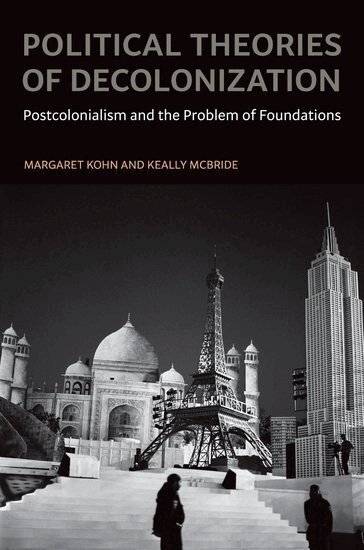
Political Theories of Decolonization
Postcolonialism and the Problem of Foundations
Häftad, Engelska, 2011
438 kr
Skickas inom 5-8 vardagar
Recent scholarship in political theory has focused on the treatment of colonialism in the writings of canonical thinkers such as Locke, Burke, Mill, Diderot, Tocqueville, Smith, and Kant, revealing the extent to which the subject of colonialism and imperialism dominated the minds of great thinkers as the colonial project took place. While such scholarship provides fascinating insight into the possible problems of enlightenment thought, it tends to ignore the voices of thinkers who spoke from the position of the colonized. Political Theories of Decolonization will fill a gap in postcolonial political critique by serving as an introduction to theorists who struggled with the question of how to found a new political order when the existing ideas and institutions were implicated in a history of domination. Looking at the writings of Gandhi, Ngugi, al-Afghani, and Mariategui, among several others, the authors aim to explain how the work of these thinkers engage in thematic continuities--constituting "postcolonial political thought"--and add to liberal democratic understandings of political power, as well as illuminate how many of the central questions of political theory are imaginatively explored by postcolonial writers.
281 kr
Skickas inom 7-10 vardagar
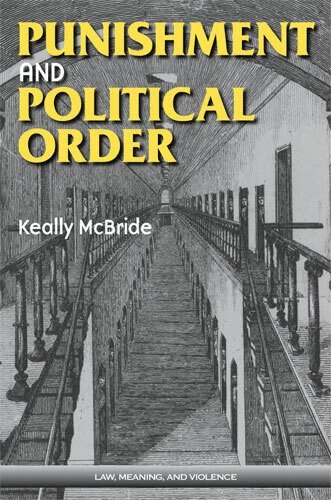
Most of us think of punishment as an ugly display of power. But punishment also tells us something about the ideals and aspirations of a people and their government. How a state punishes reveals whether or not it is confident in its own legitimacy and sovereignty. Punishment and Political Order examines the questions raised by the state’s exercise of punitive power—from what it is about human psychology that desires sanction and order to how the state can administer pain while calling for justice. Keally McBride's book demonstrates punishment's place at the core of political administration and the stated ideals of the polity."From start to finish this is a terrific, engaging book. McBride offers a fascinating perspective on punishment, calling attention to its utility in understanding political regimes and their ideals. She succeeds in reminding us of the centrality of punishment in political theory and, at the same time, in providing a framework for understanding contemporary events. I know of no other book that does as much to make the subject of punishment so compelling."—Austin Sarat, Amherst College"Punishment and Political Order will be welcome reading for anyone interested in understanding law in society, punishment and political spectacle, or governing through crime control. This is a clear, accessible, and persuasive examination of punishment—as rhetoric and reality. Arguing that punishment is a complex product of the social contract, this book demonstrates the ways in which understanding the symbolic power and violence of the law provides analytical tools for examining the ideological function of prison labor today, as well as the crosscutting and contingent connections between language and identity, legitimation and violence, sovereignty and agency more generally."—Bill Lyons, Director, Center for Conflict Management, University of Akron"Philosophical explorations of punishment have often stopped with a theory of responsibility. McBride's book moves well beyond this. It shows that the problem of punishment is a central issue for any coherent theory of the state, and thus that punishment is at the heart of political theory. This is a stunning achievement."—Malcolm M. Feeley, University of California at BerkeleyKeally McBride is Assistant Professor of Politics at the University of San Francisco.