Keith L. Nelson - Böcker
Visar alla böcker från författaren Keith L. Nelson. Handla med fri frakt och snabb leverans.
6 produkter
6 produkter
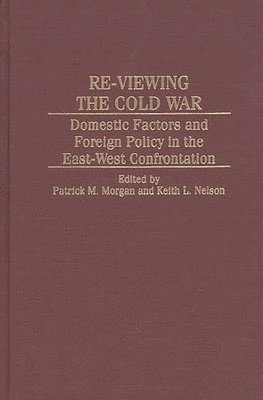
Re-Viewing the Cold War
Domestic Factors and Foreign Policy in the East-West Confrontation
Inbunden, Engelska, 2000
1 039 kr
Skickas inom 10-15 vardagar
A cooperative effort by a number of historians and political scientists, this essay collection focuses on the important connection between domestic affairs and foreign relations during the Cold War. The case studies treat phases of both the Soviet and American experiences and involve contributions by two Russian scholars, three Americans, a German, a Swede, and an Israeli.This collection is particularly timely and signficant because of the surprising way the Cold War ended, making clear that domestic developments can overthrow even the most potent foreign policies and undermine longstanding assumptions about the primacy of international factors. A provocative essay collection, this will be of interest to diplomatic historians and Soviet Affairs specialists, scholars, and students.
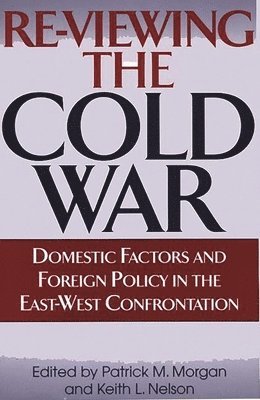
Re-Viewing the Cold War
Domestic Factors and Foreign Policy in the East-West Confrontation
Häftad, Engelska, 2000
489 kr
Skickas inom 10-15 vardagar
A cooperative effort by a number of historians and political scientists, this essay collection focuses on the important connection between domestic affairs and foreign relations during the Cold War. The case studies treat phases of both the Soviet and American experiences and involve contributions by two Russian scholars, three Americans, a German, a Swede, and an Israeli.This collection is particularly timely and signficant because of the surprising way the Cold War ended, making clear that domestic developments can overthrow even the most potent foreign policies and undermine longstanding assumptions about the primacy of international factors. A provocative essay collection, this will be of interest to diplomatic historians and Soviet Affairs specialists, scholars, and students.
219 kr
Skickas inom 7-10 vardagar
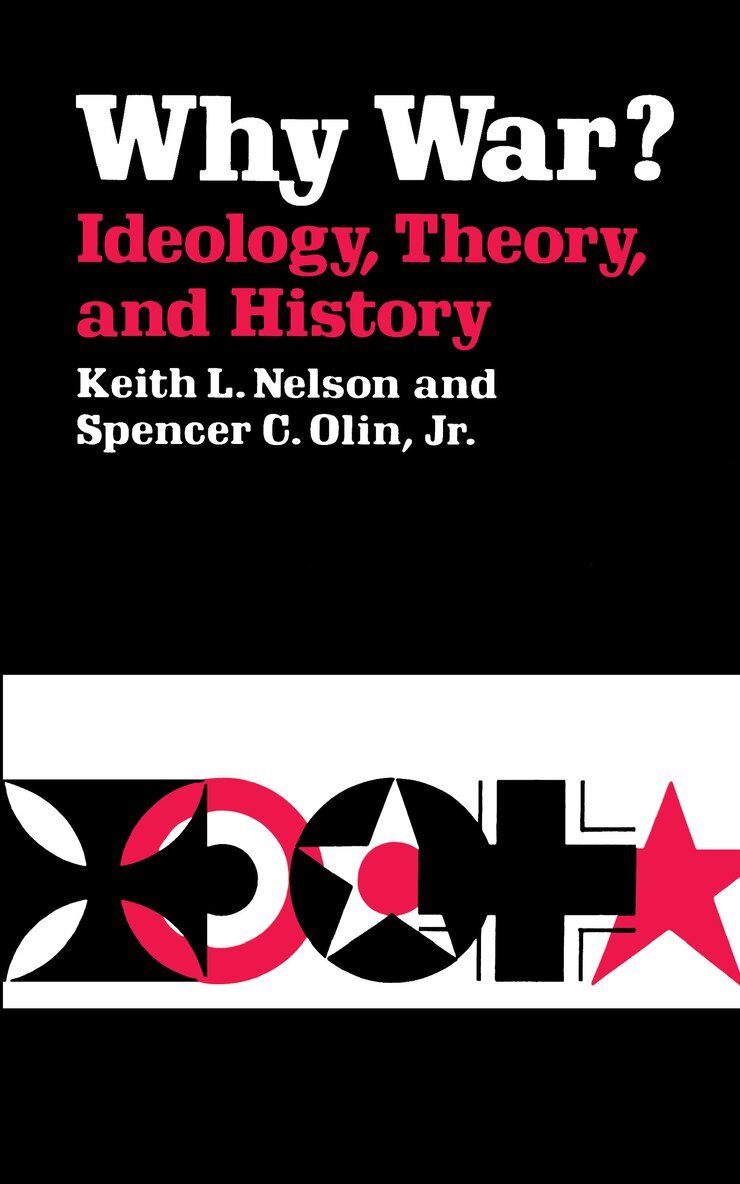
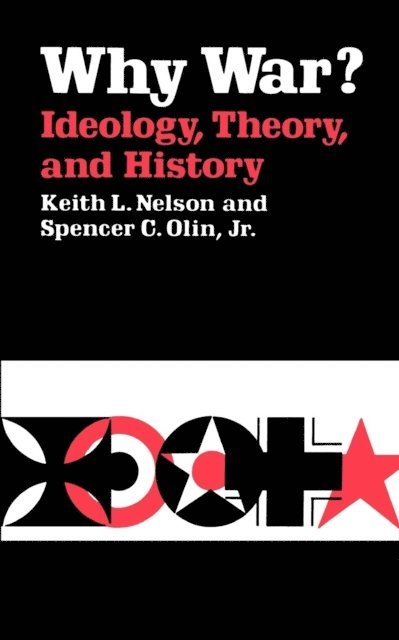
"Instead of proposing another theory of war, their goal is a more modest one of raising the theoretical consciousness of historians. Specifically, they argue that 'ideology does influence theory, historians do have ideologies as well as theories ...about which they are not always conscious or consistent, and we can better understand, compare, and evaluate what historians are saying when we comprehend their ideological and theoretical perspectives.' They attempt then, to classify historical interpretations of war according to their ideological/ theoretical orientations, however covert." (Perspective). "Nelson and Olin ...are concerned with enhancing history's social utility by advancing its capacity to produce generalizations that can explain or predict events and are subject to empirical testing. Their exploration of historical generalization focuses on an issue itself of the highest importance, the causes of war; but their aim is also to create a model for historical generalization applicable to other issues. They argue that to understand generalizations in history, one must recognize their roots in theory, and that historians' theories in turn proceed from their own ideologies.To demonstrate, they survey theories about the causes of war that have come out of conservative, liberal, and radical ideologies...any historian will profit from this rigorous approach to the problem." (Choice). "Learned and suggestive, this book clarifies much of what is already known, and points toward new ways of understanding." (Library Journal).
835 kr
Skickas inom 3-6 vardagar
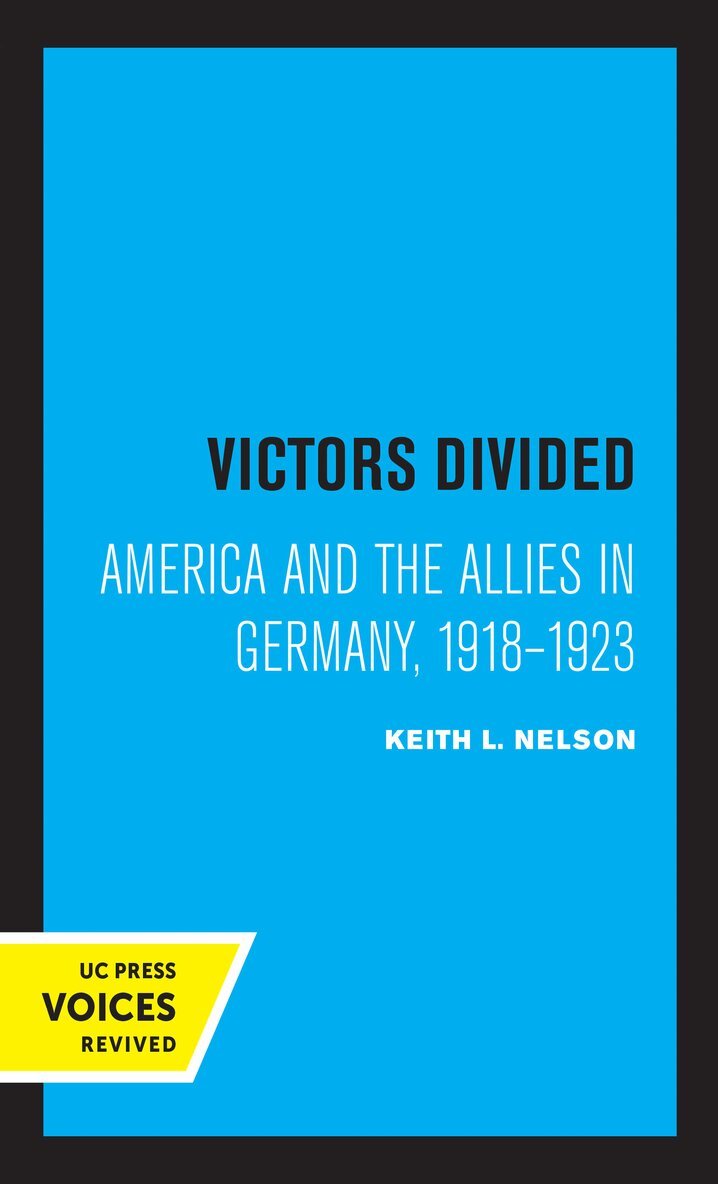
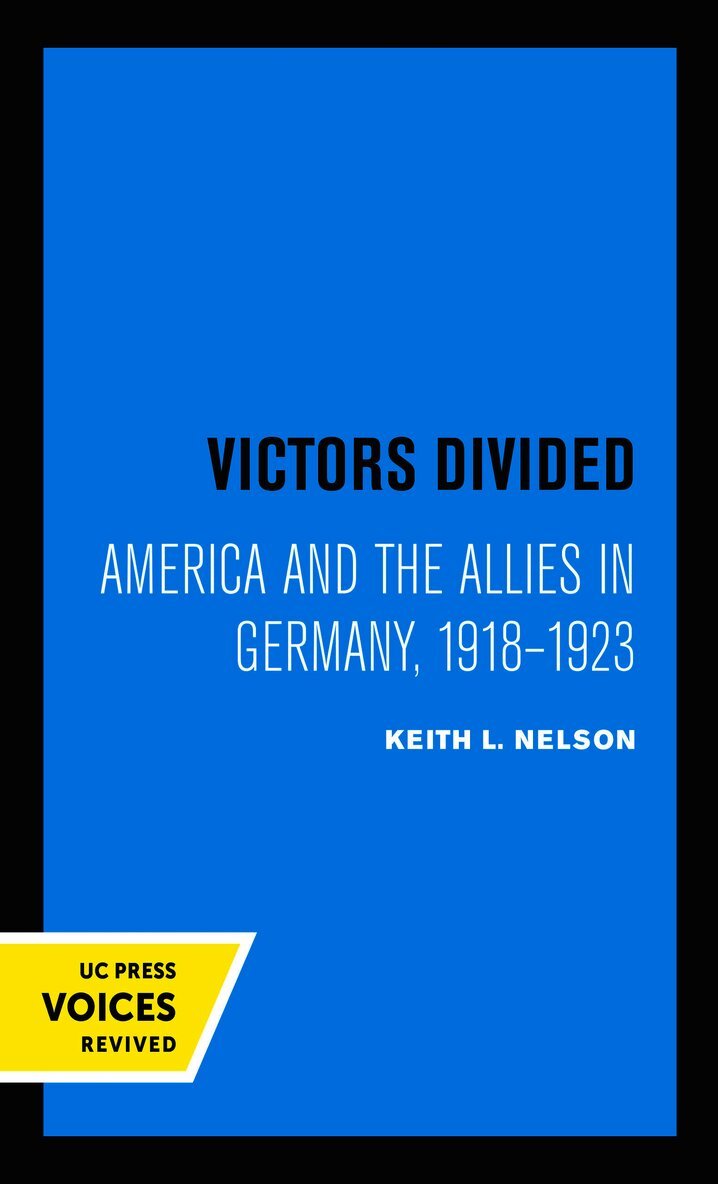
Victors Divided: America and the Allies in Germany, 1918–1923 by Keith L. Nelson reexamines the United States’ first military occupation of Germany and the ways it shaped both American foreign policy and the fragile European peace after World War I. Moving beyond the familiar debates over the League of Nations or the rise of economic imperialism, Nelson argues that American leaders were centrally concerned with restoring “normal” liberal order in Europe. That project was hampered by conflicting aims among the Allies, domestic political setbacks at home, and Americans’ own reluctance to recognize how deeply the war had destabilized the old order.At the heart of the story is the American occupation of the Rhineland, established almost by accident and prolonged as much to restrain France as to discipline Germany. Though Americans initially regarded the deployment as an “unnecessary necessity,” the presence of U.S. troops soon proved indispensable in moderating the occupation, balancing French ambitions, and stabilizing a precarious regional peace. Nelson situates this episode within broader efforts—from Wilson’s abortive security guarantees to the Harding administration’s Washington Conference and the Dawes Plan—that sought, with mixed success, to re-integrate Germany into the international community. By restoring attention to this neglected occupation, Victors Divided reveals how Americans groped toward international responsibility in the years after 1918 and how their ambivalence both limited and defined their influence on Europe’s postwar settlement.This title is part of UC Press's Voices Revived program, which commemorates University of California Press’s mission to seek out and cultivate the brightest minds and give them voice, reach, and impact. Drawing on a backlist dating to 1893, Voices Revived makes high-quality, peer-reviewed scholarship accessible once again using print-on-demand technology. This title was originally published in 1975.
1 513 kr
Skickas inom 3-6 vardagar
Victors Divided: America and the Allies in Germany, 1918–1923 by Keith L. Nelson reexamines the United States’ first military occupation of Germany and the ways it shaped both American foreign policy and the fragile European peace after World War I. Moving beyond the familiar debates over the League of Nations or the rise of economic imperialism, Nelson argues that American leaders were centrally concerned with restoring “normal” liberal order in Europe. That project was hampered by conflicting aims among the Allies, domestic political setbacks at home, and Americans’ own reluctance to recognize how deeply the war had destabilized the old order.At the heart of the story is the American occupation of the Rhineland, established almost by accident and prolonged as much to restrain France as to discipline Germany. Though Americans initially regarded the deployment as an “unnecessary necessity,” the presence of U.S. troops soon proved indispensable in moderating the occupation, balancing French ambitions, and stabilizing a precarious regional peace. Nelson situates this episode within broader efforts—from Wilson’s abortive security guarantees to the Harding administration’s Washington Conference and the Dawes Plan—that sought, with mixed success, to re-integrate Germany into the international community. By restoring attention to this neglected occupation, Victors Divided reveals how Americans groped toward international responsibility in the years after 1918 and how their ambivalence both limited and defined their influence on Europe’s postwar settlement.This title is part of UC Press's Voices Revived program, which commemorates University of California Press’s mission to seek out and cultivate the brightest minds and give them voice, reach, and impact. Drawing on a backlist dating to 1893, Voices Revived makes high-quality, peer-reviewed scholarship accessible once again using print-on-demand technology. This title was originally published in 1975.
525 kr
Skickas inom 7-10 vardagar
Originally published in 1995. In the early 1970s, largely as a result of the debilitating struggle in Vietnam, the United States began to reassess and redefine its basic approach to East-West relations. At the same time, the Soviet Union was awakening to the liabilities that a continuing and unregulated state of hostility would impose on its own internal and external agenda. Keith Nelson details the circumstances and traces the steps that led to the first significant accommodation and easing of tension between the superpowers during the Cold War. "In this important study, Keith Nelson explains the detente period in an imaginative, convincing, and impressively scholarly manner. Although there have been scores of books and memoirs on the subject, none have done the job quite like Nelson's. In particular, he has used post-glasnost Russian memoirs and monographs—and, especially, his own interviews with such key players as Dobrynin and Arbatov—to present one of the most intelligent Kremlinological studies I have ever seen." —Melvin Small, Wayne State University