Keith Nelson – författare
Visar alla böcker från författaren Keith Nelson. Handla med fri frakt och snabb leverans.
8 produkter
8 produkter
Häftad, Engelska, 2025
2 437 kr
Kommande
Inbunden, Engelska, 2000
1 079 kr
Skickas inom 10-15 vardagar
A cooperative effort by a number of historians and political scientists, this essay collection focuses on the important connection between domestic affairs and foreign relations during the Cold War. The case studies treat phases of both the Soviet and American experiences and involve contributions by two Russian scholars, three Americans, a German, a Swede, and an Israeli.This collection is particularly timely and signficant because of the surprising way the Cold War ended, making clear that domestic developments can overthrow even the most potent foreign policies and undermine longstanding assumptions about the primacy of international factors. A provocative essay collection, this will be of interest to diplomatic historians and Soviet Affairs specialists, scholars, and students.
Häftad, Engelska, 2000
507 kr
Skickas inom 10-15 vardagar
A cooperative effort by a number of historians and political scientists, this essay collection focuses on the important connection between domestic affairs and foreign relations during the Cold War. The case studies treat phases of both the Soviet and American experiences and involve contributions by two Russian scholars, three Americans, a German, a Swede, and an Israeli.This collection is particularly timely and signficant because of the surprising way the Cold War ended, making clear that domestic developments can overthrow even the most potent foreign policies and undermine longstanding assumptions about the primacy of international factors. A provocative essay collection, this will be of interest to diplomatic historians and Soviet Affairs specialists, scholars, and students.
E-bok
PDF, Engelska, 2000511 kr
Läs direkt efter köp
A cooperative effort by a number of historians and political scientists, this essay collection focuses on the important connection between domestic affairs and foreign relations during the Cold War. The case studies treat phases of both the Soviet and American experiences and involve contributions by two Russian scholars, three Americans, a German, a Swede, and an Israeli.This collection is particularly timely and signficant because of the surprising way the Cold War ended, making clear that domestic developments can overthrow even the most potent foreign policies and undermine longstanding assumptions about the primacy of international factors. A provocative essay collection, this will be of interest to diplomatic historians and Soviet Affairs specialists, scholars, and students.
Häftad, Engelska, 1998
145 kr
Skickas inom 5-8 vardagar
Häftad, Engelska, 2011
549 kr
Skickas inom 10-15 vardagar
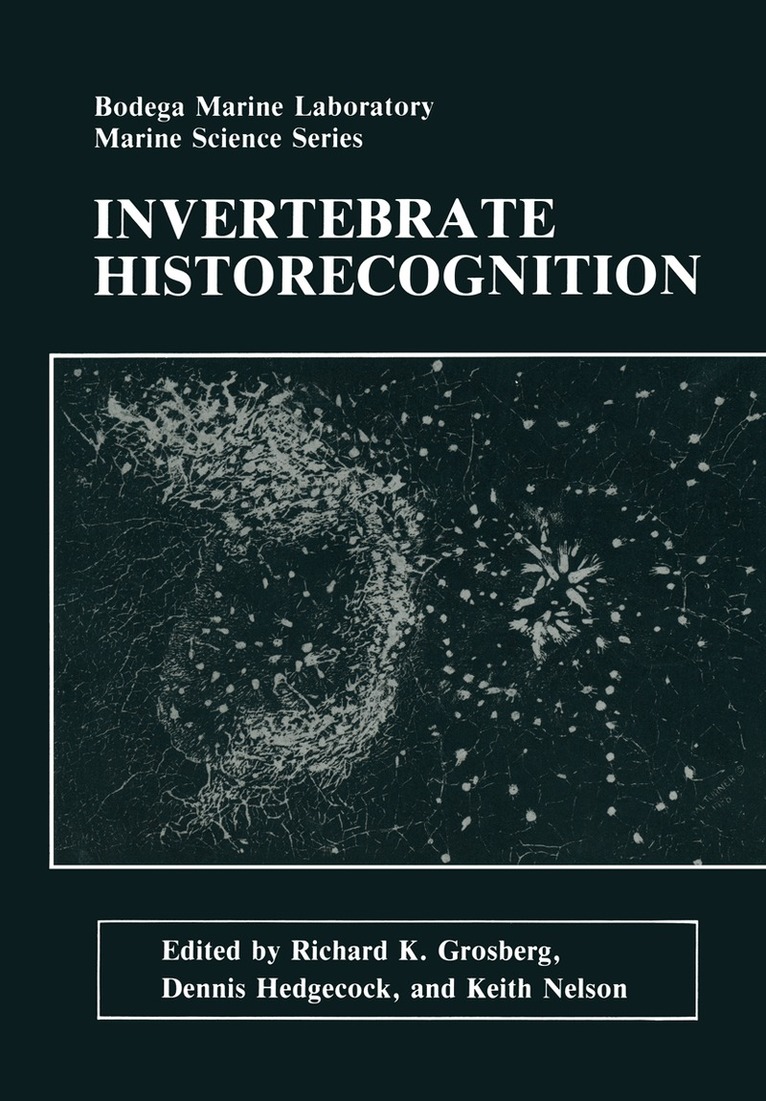
Historecognition, broadly defined, spans the processes responsible for the regulation of the genetic integrity of self in the face of conspecific (allogeneic) and heterospecific (xenogeneic) nonself. The existence of precise historecognition systems in the invertebrates can be traced back to Bancroft's discovery in 1903 of ,strain specific regulation of colony fusion in the compound ascidian Botryllus schlosseri, and Wilson's report in 1907 of species-specific sponge re-aggregation. Despite this provocative history, invertebrate historecognition remained largely unexplored for over half a century, while studies of vertebrate immune systems prospered. Then, in the 1970's, interest in invertebrate his tore cognition grew once again, this time cast largely in terms of understanding the mechanisms and evolutionary history of vertebrate immunity. From our current understanding of vertebrate immunity and invertebrate historecognition, three generalizations about their relationships can be drawn. First, despite substantial knowledge about the genetics and molecular biology of cell recognition in the context of vertebrate immunity and to a lesser extent of invertebrate historecognition, the evolutionary relationships between invertebrate self/nonself recognition and vertebrate immune systems remain obscure. Second, although vertebrate allograft recognition is of dubious functional significance itself (because intergenotypic cellular contacts are unusual, except during fertilization and pregnancy), natural allografts occur frequently as sedentary invertebrates grow and compete for living space. It is now known that the operation of invertebrate his tore cognition systems can profoundly affect the outcomes of competitive interactions by mediating allogeneic aggressivebehavior and somatic fusion.
E-bok
PDF, Engelska, 2012687 kr
Läs direkt efter köp
Historecognition, broadly defined, spans the processes responsible for the regulation of the genetic integrity of self in the face of conspecific (allogeneic) and heterospecific (xenogeneic) nonself. The existence of precise historecognition systems in the invertebrates can be traced back to Bancroft''s discovery in 1903 of ,strain specific regulation of colony fusion in the compound ascidian Botryllus schlosseri, and Wilson''s report in 1907 of species-specific sponge re-aggregation. Despite this provocative history, invertebrate historecognition remained largely unexplored for over half a century, while studies of vertebrate immune systems prospered. Then, in the 1970''s, interest in invertebrate his tore cognition grew once again, this time cast largely in terms of understanding the mechanisms and evolutionary history of vertebrate immunity. From our current understanding of vertebrate immunity and invertebrate historecognition, three generalizations about their relationships can be drawn. First, despite substantial knowledge about the genetics and molecular biology of cell recognition in the context of vertebrate immunity and to a lesser extent of invertebrate historecognition, the evolutionary relationships between invertebrate self/nonself recognition and vertebrate immune systems remain obscure. Second, although vertebrate allograft recognition is of dubious functional significance itself (because intergenotypic cellular contacts are unusual, except during fertilization and pregnancy), natural allografts occur frequently as sedentary invertebrates grow and compete for living space. It is now known that the operation of invertebrate his tore cognition systems can profoundly affect the outcomes of competitive interactions by mediating allogeneic aggressivebehavior and somatic fusion.
E-bok
Engelska, 2021150 kr
Läs direkt efter köp
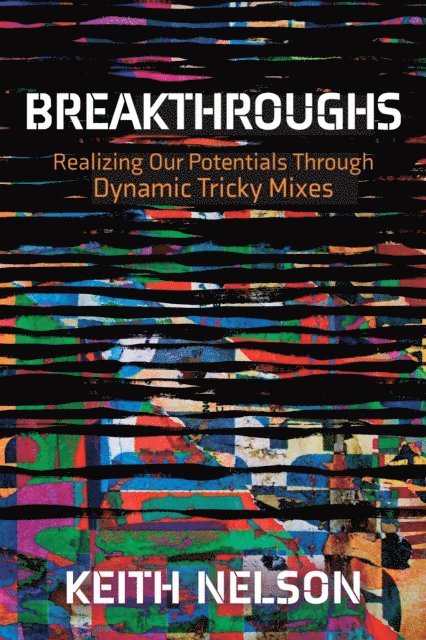
Breakthroughs show readers the world of Tricky Mixes as key pathways to breakthrough advances--estimates of human potential may never be the same again. Dynamic Systems theories and research provide the backbone concepts for Breakthroughs. Yet, readers discover that new Dynamic Mixes reveal untapped human potential in everyday situations not just in rigorous scientific studies. Individuals, small groups, and large organizations often get "stuck" in their progress by failing to respect and explore the complex interacting factors impacting their situations. Breakthroughs present countless examples which reveal that variants of the same dynamic processes underlie being stuck, versus progressing at modest rates, or advancing at turbo speeds. These examples and events are drawn from research with Keith E. Nelson’s colleagues plus many independent labs around the world, as well as from first-person episodes of many kinds and from many sources. New cross-domain explorations and new insights propel readers into much higher levels of creativity, innovation, rapid learning, social problem solving, curiosity, and life balance. The Dynamic Tricky Mix perspective in most contexts helps shake up and improve paths toward solutions. In times of crisis, as in the Covid-19 pandemic, it becomes especially important to bring this kind of thinking to bear.