Keith M. Murphy - Böcker
Visar alla böcker från författaren Keith M. Murphy. Handla med fri frakt och snabb leverans.
4 produkter
4 produkter
1 597 kr
Skickas inom 10-15 vardagar
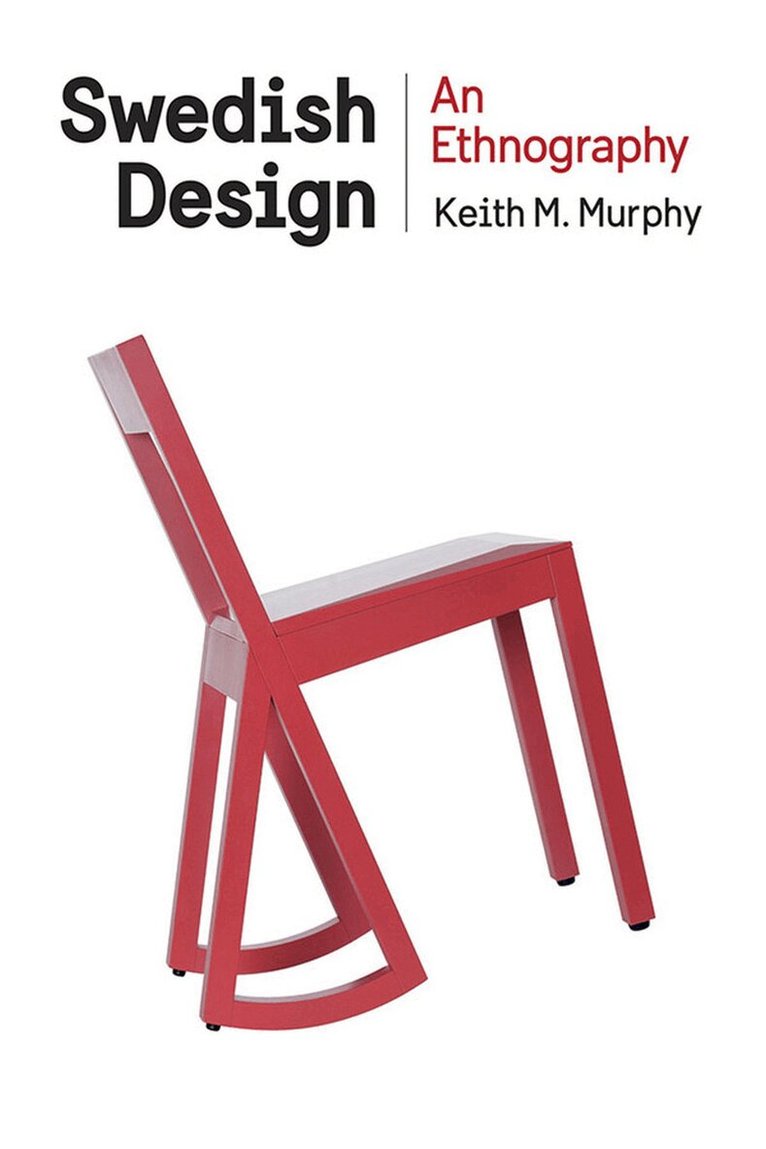
Swedish designers are noted for producing distinctive and elegant forms; their furniture and household goods have an especially loyal following around the world. Design in Sweden has more than just an aesthetic component, however. Since at least the late nineteenth century, Swedish politicians and social planners have viewed design as a means for advocating and enacting social change and pushing for a more egalitarian social organization. In this book, Keith M. Murphy examines the special relationship between politics and design in Sweden, revealing in particular the cultural meanings this relationship holds for Swedish society.Over the course of fourteen months of research in Stockholm and at other sites, Murphy conducted in-depth interviews with various players involved in the Swedish design industry—designers, design instructors, government officials, artists, and curators—and observed several different design collectives in action. He found that for Swedes design is never socially or politically neutral. Even for common objects like furniture and other household goods, design can be labeled "responsible," "democratic," or "ethical"— descriptors that all neatly resonate with the traditional moral tones of Swedish social democracy. Murphy also considers the example of Ikea and its power to politicize perceptions of the everyday world. More broadly, his book serves as a model for an anthropological approach to the study of design practice, one that accounts for the various ways in which order is purposefully and meaningfully imposed by designers on the domains of human life, and the consequences those impositions have on the social worlds in which they are embedded.
377 kr
Skickas inom 10-15 vardagar
Swedish designers are noted for producing distinctive and elegant forms; their furniture and household goods have an especially loyal following around the world. Design in Sweden has more than just an aesthetic component, however. Since at least the late nineteenth century, Swedish politicians and social planners have viewed design as a means for advocating and enacting social change and pushing for a more egalitarian social organization. In this book, Keith M. Murphy examines the special relationship between politics and design in Sweden, revealing in particular the cultural meanings this relationship holds for Swedish society.Over the course of fourteen months of research in Stockholm and at other sites, Murphy conducted in-depth interviews with various players involved in the Swedish design industry—designers, design instructors, government officials, artists, and curators—and observed several different design collectives in action. He found that for Swedes design is never socially or politically neutral. Even for common objects like furniture and other household goods, design can be labeled "responsible," "democratic," or "ethical"— descriptors that all neatly resonate with the traditional moral tones of Swedish social democracy. Murphy also considers the example of Ikea and its power to politicize perceptions of the everyday world. More broadly, his book serves as a model for an anthropological approach to the study of design practice, one that accounts for the various ways in which order is purposefully and meaningfully imposed by designers on the domains of human life, and the consequences those impositions have on the social worlds in which they are embedded.
752 kr
Skickas inom 10-15 vardagar
Toward an Anthropology of the Will is the first book that systematically explores volition from an ethnographically informed anthropological point of view. While philosophers have for centuries puzzled over the degree to which individuals are "free" to choose how to act in the world, anthropologists have either assumed that the will is a stable, constant fact of the human condition or simply ignored it. Although they are usually quite comfortable discussing the relationship between culture and cognition or culture and emotion, anthropologists have not yet focused on how culture and volition are interconnected. The contributors to this book draw upon their unique insights and research experience to address fundamental questions, including: What forms does the will take in culture? How is willing experienced? How does it relate to emotion and cognition? What does imagination have to do with willing? What is the connection between morality, virtue, and willing? Exploring such questions, the book moves beyond old debates about "freedom" and "determinacy" to demonstrate how a richly nuanced anthropological approach to the cultural experience of willing can help shape theories of social action in the human sciences.
684 kr
Skickas inom 3-6 vardagar
The chapters in this captivating volume demonstrate the importance and power of design and the ubiquitous and forceful effects it has on human life within the study of anthropology. The scholars explore the interactions between anthropology and design through a cross-disciplinary approach, and while their approaches vary in how they specifically consider design, they are all centered around the design-and-anthropology relationship. The chapters look at anthropology for design, in which anthropological methods and concepts are mobilized in the design process; anthropology of design, in which design is positioned as an object of ethnographic inquiry and critique; and design for anthropology, in which anthropologists borrow concepts and practices from design to enhance traditional ethnographic forms. Collectively, the chapters argue that bringing design and anthropology together can transform both fields in more than one way and that to tease out the implications of using design to reimagine ethnography--and of using ethnography to reimagine design--we need to consider the historical specificity of their entanglements.