• Fri frakt över 249 kr
  • •
  • Snabba leveranser
  • •
  • Billiga böcker
Kundservice

Du är på sajten för privatpersoner.

Företag, bibliotek eller offentlig verksamhet?

Du handlar på classic.bokus.com, där alla dina funktioner finns intakta.
Till classic.bokus.com
Bokus logotyp. Gå till startsidan.
  • Erbjudanden
  • Nyheter
  • Student
  • Topplistor
  • Barn & ungdom
  • Bokus Play
  • E-böcker
  • Pocketböcker
  • Spel & pussel

10% rabatt på allt med kod NYSTART10 →

Sidfot

Mina sidor

    Hjälp

    • Kundservice
    • Vanliga frågor och svar
    • Frakt och leverans
    • Retur vid ångerrätt
    • Reklamera vara
    • Betalning
    • Köpvillkor
    • Allmänna villkor
    • Information om webbplatsens tillgänglighet

    Om Bokus

    • Om oss
    • Pressrum
    • För studenter
    • För företag
    • För bibliotek och offentlig verksamhet
    • För leverantörer
    • Hållbarhet

    Populärt

    • Aktuella erbjudanden
    • Presentkort
    • Studentlitteratur
    • Nya böcker
    • Topplistor
    • Signerade böcker
    • Engelska böcker

    Inspiration

    • Boktips
    • BookTok
    • Populära bokserier
    • Barnbokskaraktärer
    • Populära författare
    Logotyp för Bokus
    Följ oss på Facebook (extern länk)Följ oss på Instagram (extern länk)Följ oss på YouTube (extern länk)Följ oss på TikTok (extern länk)
    bokus @ CookiesAnpassa cookiesIntegritetspolicyKöpvillkor
    Till Citymail hemsida (extern länk)Till Budbee hemsida (extern länk)Till Postnord hemsida (extern länk)Till Schenker hemsida (extern länk)Till Early Bird hemsida (extern länk)Till Walleys hemsida (extern länk)
    1. Samhälle och politik
    2. Samhälle och kultur
    3. Kultur och medier
    4. Kulturvetenskap

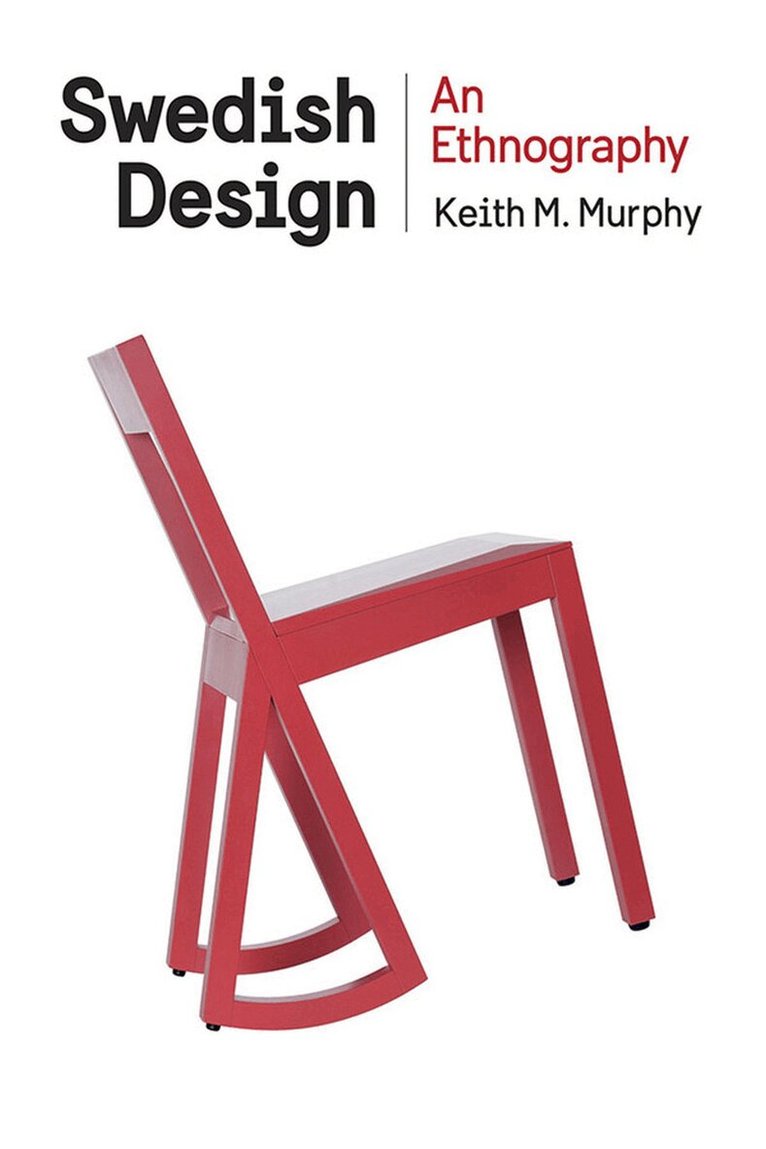
    Swedish Design

    An Ethnography

    AvKeith M. Murphy

    Inbunden, Engelska, 2015

    Del i serien Expertise: Cultures and Technologies of Knowledge

    966 kr

    Beställningsvara. Skickas inom 10-15 vardagar. Fri frakt över 249 kr.

    Fler format och utgåvor

    Häftad

    393 kr

    Beskrivning

    Swedish designers are noted for producing distinctive and elegant forms; their furniture and household goods have an especially loyal following around the world. Design in Sweden has more than just an aesthetic component, however. Since at least the late nineteenth century, Swedish politicians and social planners have viewed design as a means for advocating and enacting social change and pushing for a more egalitarian social organization. In this book, Keith M. Murphy examines the special relationship between politics and design in Sweden, revealing in particular the cultural meanings this relationship holds for Swedish society.Over the course of fourteen months of research in Stockholm and at other sites, Murphy conducted in-depth interviews with various players involved in the Swedish design industry—designers, design instructors, government officials, artists, and curators—and observed several different design collectives in action. He found that for Swedes design is never socially or politically neutral. Even for common objects like furniture and other household goods, design can be labeled "responsible," "democratic," or "ethical"— descriptors that all neatly resonate with the traditional moral tones of Swedish social democracy. Murphy also considers the example of Ikea and its power to politicize perceptions of the everyday world. More broadly, his book serves as a model for an anthropological approach to the study of design practice, one that accounts for the various ways in which order is purposefully and meaningfully imposed by designers on the domains of human life, and the consequences those impositions have on the social worlds in which they are embedded.

    Produktinformation

    • Utgivningsdatum:2015-04-16
    • Mått:152 x 229 x 25 mm
    • Vikt:907 g
    • Format:Inbunden
    • Språk:Engelska
    • Serie:Expertise: Cultures and Technologies of Knowledge
    • Antal sidor:264
    • Förlag:Cornell University Press
    • ISBN:9780801453298

    Utforska kategorier

    • Kulturvetenskap inom Samhälle och politik
    • Antropologi inom Samhälle och politik
    • Designböcker inom Kultur

    Mer om författaren

    Keith M. Murphy is Associate Professor of Anthropology at the University of California, Irvine. He is coeditor of Toward an Anthropology of the Will.

    Recensioner i media

    For anyone who has taught the history of 20th-century design and had a student ask, 'How can a chair be political?' this book will help answer that question. It is not a typical design history text—there are no large color images of landmark chairs or textiles and no evolutionary account of historically significant designers. Instead, Murphy (anthropology, UC Irvine) draws out how ordinary objects within the built environment embody Sweden's social democratic ideology: that is, the way Swedes use design to structure the everyday world they live and move about in.(CHOICE) Swedish Design: An Ethnography will be of interest to scholars and graduate students in anthropology, sociology, design studies, and the history of design as well as scholars engaged in design research. Murphy provides the reader with an approach to carrying out anthropology of design, outlining thematic areas for consideration; insodoing, heoffers an invaluable resource for researchers and students with interests in design and its wider social political relations, interaction analysis, and anthropological approaches to understanding the relation between the political, design processes and practices.(H-Net) Keith M. Murphy is an anthropology professor at the University of California, Irvine, and if his field seems far removed from Scandinavian furniture, he apporaches the subject in relation to Swedish social welfare programs and democratic socialist ideals. The lamps and tables furnishing our homes and owrkplaces, in other words, are a 'means for managing well-being in everyday life.'(Shepherd Express)

    Innehållsförteckning

    • Introduction: Disentangling Swedish Design1. The Diagram of Swedish Design2. Building the Beautiful Home3. In the Design World4. In the Studio5. Displays of ForceConclusion: Designing a Social CosmologyNotesReferencesIndex