Keith T. Poole - Böcker
Visar alla böcker från författaren Keith T. Poole. Handla med fri frakt och snabb leverans.
6 produkter
6 produkter
516 kr
Skickas inom 5-8 vardagar
730 kr
Skickas inom 10-15 vardagar
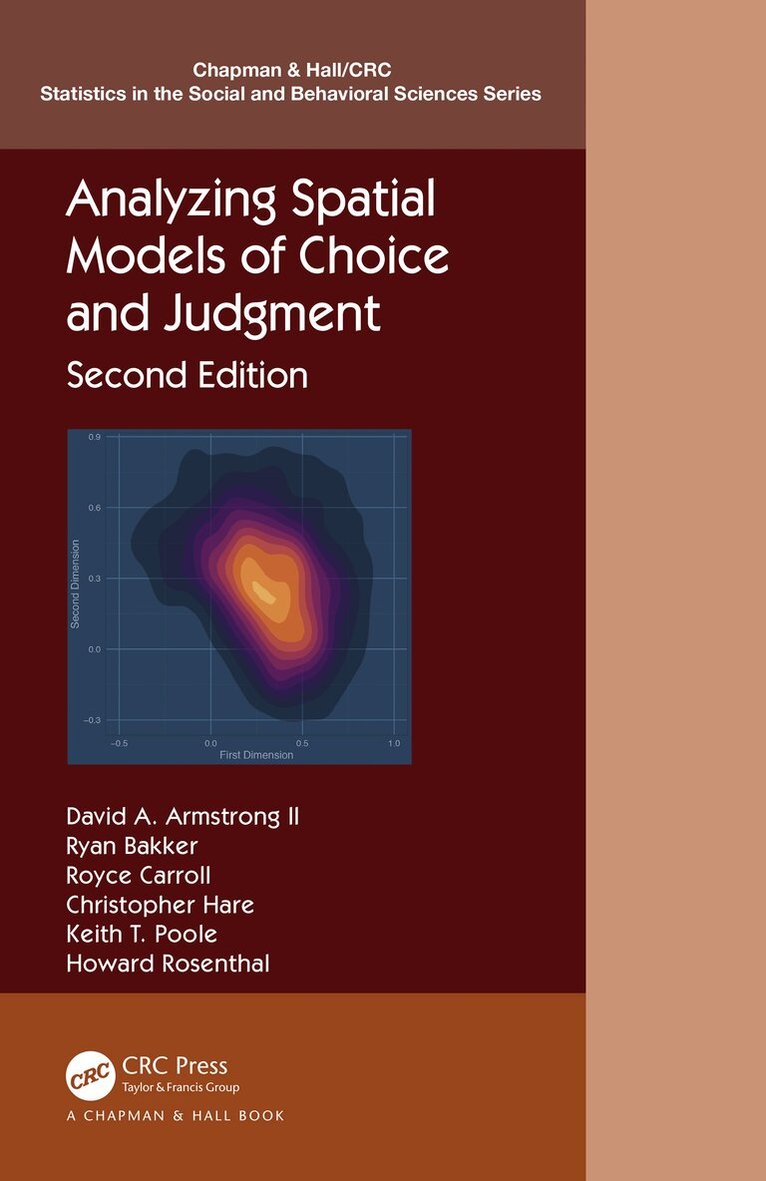
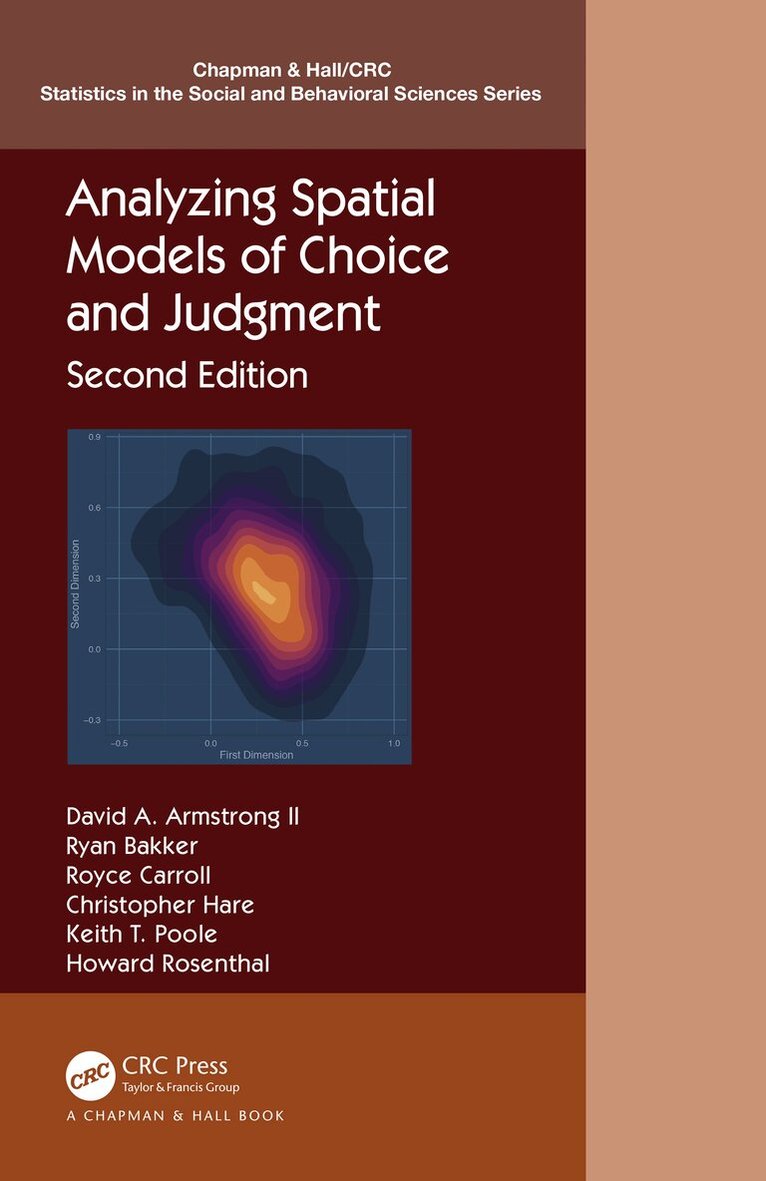
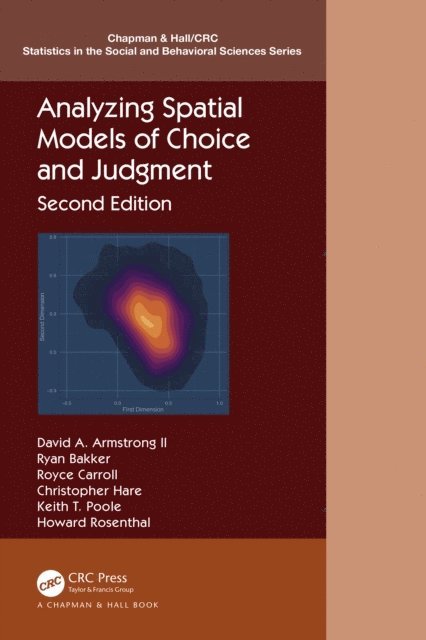
With recent advances in computing power and the widespread availability of preference, perception and choice data, such as public opinion surveys and legislative voting, the empirical estimation of spatial models using scaling and ideal point estimation methods has never been more accessible.The second edition of Analyzing Spatial Models of Choice and Judgment demonstrates how to estimate and interpret spatial models with a variety of methods using the open-source programming language R.Requiring only basic knowledge of R, the book enables social science researchers to apply the methods to their own data. Also suitable for experienced methodologists, it presents the latest methods for modeling the distances between points. The authors explain the basic theory behind empirical spatial models, then illustrate the estimation technique behind implementing each method, exploring the advantages and limitations while providing visualizations to understand the results. This second edition updates and expands the methods and software discussed in the first edition, including new coverage of methods for ordinal data and anchoring vignettes in surveys, as well as an entire chapter dedicated to Bayesian methods. The second edition is made easier to use by the inclusion of an R package, which provides all data and functions used in the book. David A. Armstrong II is Canada Research Chair in Political Methodology and Associate Professor of Political Science at Western University. His research interests include measurement, Democracy and state repressive action. Ryan Bakker is Reader in Comparative Politics at the University of Essex. His research interests include applied Bayesian modeling, measurement, Western European politics, and EU politics. Royce Carroll is Professor in Comparative Politics at the University of Essex. His research focuses on measurement of ideology and the comparative politics of legislatures and political parties. Christopher Hare is Assistant Professor in Political Science at the University of California, Davis. His research focuses on ideology and voting behavior in US politics, political polarization, and measurement. Keith T. Poole is Philip H. Alston Jr. Distinguished Professor of Political Science at the University of Georgia. His research interests include methodology, US political-economic history, economic growth and entrepreneurship. Howard Rosenthal is Professor of Politics at NYU and Roger Williams Straus Professor of Social Sciences, Emeritus, at Princeton. Rosenthal’s research focuses on political economy, American politics and methodology.
410 kr
Skickas inom 7-10 vardagar
This book presents a simple geometric model of voting as a tool to analyze parliamentary roll call data. Each legislator is represented by one point and each roll call is represented by two points that correspond to the policy consequences of voting Yea or Nay. On every roll call each legislator votes for the closer outcome point, at least probabilistically. These points form a spatial map that summarizes the roll calls. In this sense a spatial map is much like a road map because it visually depicts the political world of a legislature. The closeness of two legislators on the map shows how similar their voting records are, and the distribution of legislators shows what the dimensions are. These maps can be used to study a wide variety of topics including how political parties evolve over time, the existence of sophisticated voting and how an executive influences legislative outcomes.
1 034 kr
Skickas inom 7-10 vardagar
This book presents a simple geometric model of voting as a tool to analyze parliamentary roll call data. Each legislator is represented by one point and each roll call is represented by two points that correspond to the policy consequences of voting Yea or Nay. On every roll call each legislator votes for the closer outcome point, at least probabilistically. These points form a spatial map that summarizes the roll calls. In this sense a spatial map is much like a road map because it visually depicts the political world of a legislature. The closeness of two legislators on the map shows how similar their voting records are, and the distribution of legislators shows what the dimensions are. These maps can be used to study a wide variety of topics including how political parties evolve over time, the existence of sophisticated voting and how an executive influences legislative outcomes.
255 kr
Skickas inom 7-10 vardagar
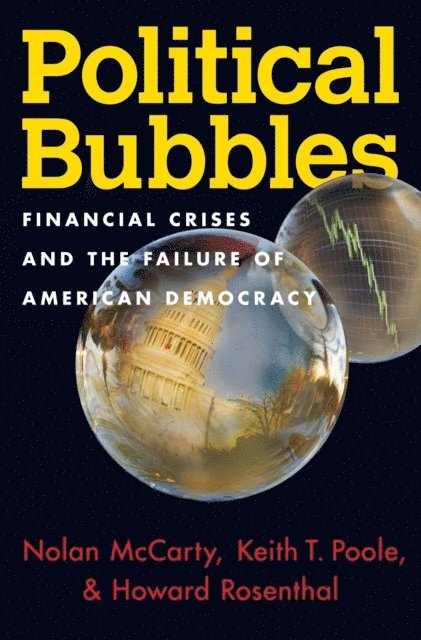
Behind every financial crisis lurks a "political bubble"--policy biases that foster market behaviors leading to financial instability. Rather than tilting against risky behavior, political bubbles--arising from a potent combination of beliefs, institutions, and interests--aid, abet, and amplify risk. Demonstrating how political bubbles helped create the real estate-generated financial bubble and the 2008 financial crisis, this book argues that similar government oversights in the aftermath of the crisis undermined Washington's response to the "popped" financial bubble, and shows how such patterns have occurred repeatedly throughout US history. The authors show that just as financial bubbles are an unfortunate mix of mistaken beliefs, market imperfections, and greed, political bubbles are the product of rigid ideologies, unresponsive and ineffective government institutions, and special interests. Financial market innovations--including adjustable-rate mortgages, mortgage-backed securities, and credit default swaps--become subject to legislated leniency and regulatory failure, increasing hazardous practices.The authors shed important light on the politics that blinds regulators to the economic weaknesses that create the conditions for economic bubbles and recommend simple, focused rules that should help avoid such crises in the future. The first full accounting of how politics produces financial ruptures, Political Bubbles offers timely lessons that all sectors would do well to heed.
2 103 kr
Skickas inom 10-15 vardagar
With recent advances in computing power and the widespread availability of preference, perception and choice data, such as public opinion surveys and legislative voting, the empirical estimation of spatial models using scaling and ideal point estimation methods has never been more accessible.The second edition of Analyzing Spatial Models of Choice and Judgment demonstrates how to estimate and interpret spatial models with a variety of methods using the open-source programming language R.Requiring only basic knowledge of R, the book enables social science researchers to apply the methods to their own data. Also suitable for experienced methodologists, it presents the latest methods for modeling the distances between points. The authors explain the basic theory behind empirical spatial models, then illustrate the estimation technique behind implementing each method, exploring the advantages and limitations while providing visualizations to understand the results. This second edition updates and expands the methods and software discussed in the first edition, including new coverage of methods for ordinal data and anchoring vignettes in surveys, as well as an entire chapter dedicated to Bayesian methods. The second edition is made easier to use by the inclusion of an R package, which provides all data and functions used in the book. David A. Armstrong II is Canada Research Chair in Political Methodology and Associate Professor of Political Science at Western University. His research interests include measurement, Democracy and state repressive action. Ryan Bakker is Reader in Comparative Politics at the University of Essex. His research interests include applied Bayesian modeling, measurement, Western European politics, and EU politics. Royce Carroll is Professor in Comparative Politics at the University of Essex. His research focuses on measurement of ideology and the comparative politics of legislatures and political parties. Christopher Hare is Assistant Professor in Political Science at the University of California, Davis. His research focuses on ideology and voting behavior in US politics, political polarization, and measurement. Keith T. Poole is Philip H. Alston Jr. Distinguished Professor of Political Science at the University of Georgia. His research interests include methodology, US political-economic history, economic growth and entrepreneurship. Howard Rosenthal is Professor of Politics at NYU and Roger Williams Straus Professor of Social Sciences, Emeritus, at Princeton. Rosenthal’s research focuses on political economy, American politics and methodology.