Kelli I. Stajduhar - Böcker
Visar alla böcker från författaren Kelli I. Stajduhar. Handla med fri frakt och snabb leverans.
4 produkter
4 produkter
1 057 kr
Tillfälligt slut
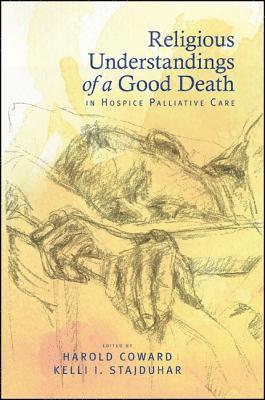
Explores how religious understandings of death are experienced in hospice care.Winner of the 2012 AJN (American Journal of Nursing) Book of the Year Award in the Hospice and Palliative Care category In the 1960s, English physician and committed Christian Cicely Saunders introduced a new way of treating the terminally ill that she called "hospice care." Emphasizing a holistic and compassionate approach, her model led to the rapid growth of a worldwide hospice movement. Aspects of the early hospice model that stressed attention to the religious dimensions of death and dying, while still recognized and practiced, have developed outside the purview of academic inquiry and consideration. Meanwhile, global migration and multicultural diversification in the West have dramatically altered the profile of contemporary hospice care. In response to these developments, this volume is the first to critically explore how religious understandings of death are manifested and experienced in palliative care settings.Contributors discuss how a "good death" is conceived within the major religious traditions of Christianity, Islam, Hinduism, Judaism, Buddhism, Chinese religion, and Aboriginal spirituality. A variety of real-world examples are presented in case studies of a Buddhist hospice center in Thailand, Ugandan approaches to dying with HIV/AIDS, Punjabi extended-family hospice care, and pediatric palliative care. The work sheds new light on the significance of religious belief and practice at the end of life, at the many forms religious understanding can take, and at the spiritual pain that so often accompanies the physical pain of the dying person.
402 kr
Tillfälligt slut
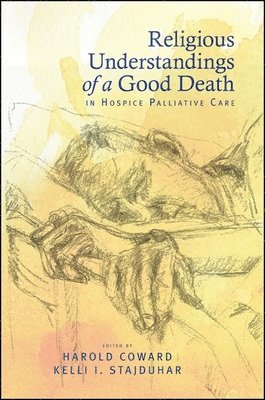
Explores how religious understandings of death are experienced in hospice care.Winner of the 2012 AJN (American Journal of Nursing) Book of the Year Award in the Hospice and Palliative Care category In the 1960s, English physician and committed Christian Cicely Saunders introduced a new way of treating the terminally ill that she called "hospice care." Emphasizing a holistic and compassionate approach, her model led to the rapid growth of a worldwide hospice movement. Aspects of the early hospice model that stressed attention to the religious dimensions of death and dying, while still recognized and practiced, have developed outside the purview of academic inquiry and consideration. Meanwhile, global migration and multicultural diversification in the West have dramatically altered the profile of contemporary hospice care. In response to these developments, this volume is the first to critically explore how religious understandings of death are manifested and experienced in palliative care settings.Contributors discuss how a "good death" is conceived within the major religious traditions of Christianity, Islam, Hinduism, Judaism, Buddhism, Chinese religion, and Aboriginal spirituality. A variety of real-world examples are presented in case studies of a Buddhist hospice center in Thailand, Ugandan approaches to dying with HIV/AIDS, Punjabi extended-family hospice care, and pediatric palliative care. The work sheds new light on the significance of religious belief and practice at the end of life, at the many forms religious understanding can take, and at the spiritual pain that so often accompanies the physical pain of the dying person.
1 057 kr
Tillfälligt slut
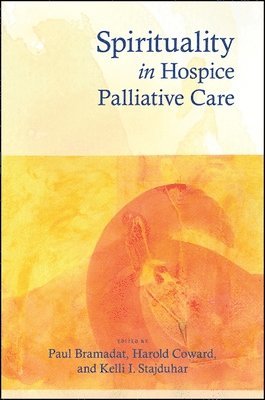
Explores the end-of-life spiritual needs of people who do not identify with traditional religions.This groundbreaking book addresses the spiritual aspect of hospice care for those who do not fit easily within traditional religious beliefs and categories. A companion volume to Religious Understandings of a Good Death in Hospice Palliative Care, this work also advocates for renewed attention to the spiritual, the often overlooked element of hospice care. Drawing on data from clinical case studies, new sociological research, and the perspectives of agnostics, atheists, those who emphasize the spiritual rather than institutional dimensions of a traditional religion, and the rapidly growing cohort of those who describe themselves as spiritual-but-not-religious, the contributors to this volume interpret the shift from predominantly Christian-based pastoral services to a new approach to "the spiritual" shaped by the increasing diversity of Western societies and new understandings of the nature of secular society. How do we speak of this "spirituality?" How do we use it in a way that enables caregivers to assist patients? Clinicians and policy makers will appreciate the book's practical recommendations regarding staff roles, training, and resource allocation. General readers will be moved by the persuasive call for greater religious and spiritual literacy at every level of health care in order to respond to the full spectrum of human needs in life and in death.
382 kr
Tillfälligt slut
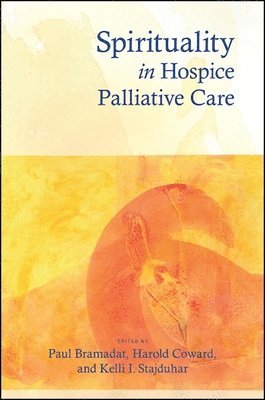
Explores the end-of-life spiritual needs of people who do not identify with traditional religions.This groundbreaking book addresses the spiritual aspect of hospice care for those who do not fit easily within traditional religious beliefs and categories. A companion volume to Religious Understandings of a Good Death in Hospice Palliative Care, this work also advocates for renewed attention to the spiritual, the often overlooked element of hospice care. Drawing on data from clinical case studies, new sociological research, and the perspectives of agnostics, atheists, those who emphasize the spiritual rather than institutional dimensions of a traditional religion, and the rapidly growing cohort of those who describe themselves as spiritual-but-not-religious, the contributors to this volume interpret the shift from predominantly Christian-based pastoral services to a new approach to "the spiritual" shaped by the increasing diversity of Western societies and new understandings of the nature of secular society. How do we speak of this "spirituality?" How do we use it in a way that enables caregivers to assist patients? Clinicians and policy makers will appreciate the book's practical recommendations regarding staff roles, training, and resource allocation. General readers will be moved by the persuasive call for greater religious and spiritual literacy at every level of health care in order to respond to the full spectrum of human needs in life and in death.