Kenichi Aoki - Böcker
Visar alla böcker från författaren Kenichi Aoki. Handla med fri frakt och snabb leverans.
6 produkter
6 produkter
1 632 kr
Skickas inom 10-15 vardagar
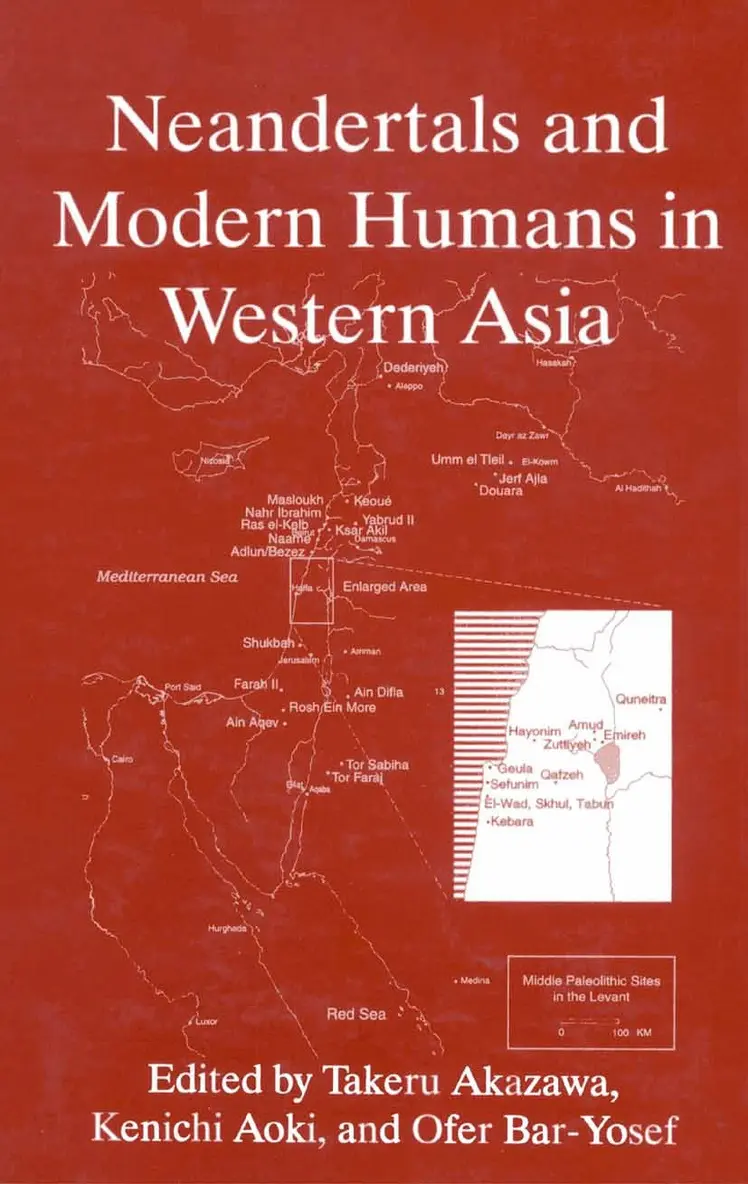
In this fascinating volume, the Middle Paleolithic archaeology of the Middle East is brought to the current debate on the origins of modern humans. These collected papers gather the most up-to-date archaeological discoveries of Western Asia - a region that is often overshadowed by African or European findings - but the only region in the world where both Neandertal and early modern human fossils have been found. The collection includes reports on such well known cave sites as Kebara, Hayonim, and Qafzeh, among others. The information and interpretations available here are a must for any serious researcher or student of anthropology or human evolution.
1 632 kr
Skickas inom 10-15 vardagar
In this fascinating volume, the Middle Paleolithic archaeology of the Middle East is brought to the current debate on the origins of modern humans. These collected papers gather the most up-to-date archaeological discoveries of Western Asia - a region that is often overshadowed by African or European findings - but the only region in the world where both Neandertal and early modern human fossils have been found. The collection includes reports on such well known cave sites as Kebara, Hayonim, and Qafzeh, among others. The information and interpretations available here are a must for any serious researcher or student of anthropology or human evolution.
Dynamics of Learning in Neanderthals and Modern Humans Volume 1
Cultural Perspectives
Inbunden, Engelska, 2014
538 kr
Skickas inom 10-15 vardagar
This volume presents the first of two proceedings from the International Conference on the Replacement of Neanderthals by Modern Humans, which took place in Tokyo in November 2012. Focussing on a highly innovative working hypothesis called the ‘learning hypothesis’, which attempts to explain the replacement as a result of differences in the learning abilities of these two hominid populations, the conference served as the latest multidisciplinary discussion forum on this intriguing Palaeoanthropological issue. The present volume reports on outcomes of the conference in three major sections. Part 1 provides an archaeological overview of the processes of replacement/assimilation of Neanderthals by modern humans. Part 2 consists of archaeological and ethnographic case studies exploring evidence of learning behaviours in prehistoric and modern hunter-gatherer societies. Part 3 presents a collection of papers that directly contributes to the definition, validation and testing of the learninghypothesis in terms of population biology and evolutionary theory. A total of 18 papers in this volume make available to readers unique cultural perspectives on mechanisms of the replacement/assimilation of Neanderthals by modern humans and suggested relationships between these mechanisms and different learning strategies.
554 kr
Skickas inom 10-15 vardagar
This volume is motivated by the desire to explain why Neanderthals were replaced by modern humans, in terms of cultural differences between the two (sub-) species. It provides up-to-date coverage on the theory of cultural evolution as is being used by anthropologists, archaeologists, biologists and psychologists to decipher hominin cultural change and diversity during the Palaeolithic. The contributing authors are directly involved in this effort and the material presented includes novel approaches and findings. Chapters explain how learning strategies in combination with social and demographic factors (e.g., population size and mobility patterns) predict cultural evolution in a world without the printing press, television or the Internet. Also addressed is the inverse problem of how learning strategies may be inferred from actual trajectories of cultural change, for example as seen in the North American Palaeolithic. Mathematics and statistics, a sometimes necessary part of theory, are explained in elementary terms where they appear, with details relegated to appendices. Full citations of the relevant literature will help the reader to further pursue any topic of interest.
554 kr
Skickas inom 10-15 vardagar
This volume is motivated by the desire to explain why Neanderthals were replaced by modern humans, in terms of cultural differences between the two (sub-) species. It provides up-to-date coverage on the theory of cultural evolution as is being used by anthropologists, archaeologists, biologists and psychologists to decipher hominin cultural change and diversity during the Palaeolithic. The contributing authors are directly involved in this effort and the material presented includes novel approaches and findings. Chapters explain how learning strategies in combination with social and demographic factors (e.g., population size and mobility patterns) predict cultural evolution in a world without the printing press, television or the Internet. Also addressed is the inverse problem of how learning strategies may be inferred from actual trajectories of cultural change, for example as seen in the North American Palaeolithic. Mathematics and statistics, a sometimes necessary part of theory, are explained in elementary terms where they appear, with details relegated to appendices. Full citations of the relevant literature will help the reader to further pursue any topic of interest.
Dynamics of Learning in Neanderthals and Modern Humans Volume 1
Cultural Perspectives
Häftad, Engelska, 2016
554 kr
Skickas inom 10-15 vardagar
This volume presents the first of two proceedings from the International Conference on the Replacement of Neanderthals by Modern Humans, which took place in Tokyo in November 2012. Focussing on a highly innovative working hypothesis called the ‘learning hypothesis’, which attempts to explain the replacement as a result of differences in the learning abilities of these two hominid populations, the conference served as the latest multidisciplinary discussion forum on this intriguing Palaeoanthropological issue. The present volume reports on outcomes of the conference in three major sections. Part 1 provides an archaeological overview of the processes of replacement/assimilation of Neanderthals by modern humans. Part 2 consists of archaeological and ethnographic case studies exploring evidence of learning behaviours in prehistoric and modern hunter-gatherer societies. Part 3 presents a collection of papers that directly contributes to the definition, validation and testing of the learninghypothesis in terms of population biology and evolutionary theory. A total of 18 papers in this volume make available to readers unique cultural perspectives on mechanisms of the replacement/assimilation of Neanderthals by modern humans and suggested relationships between these mechanisms and different learning strategies.