Kenneth J. Northcott - Böcker
Visar alla böcker från författaren Kenneth J. Northcott. Handla med fri frakt och snabb leverans.
6 produkter
6 produkter
839 kr
Skickas inom 7-10 vardagar
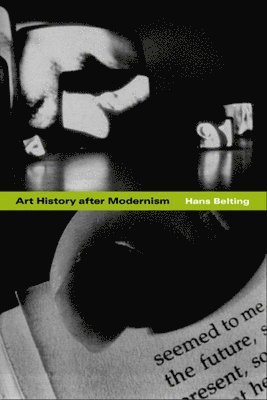
"Art history after modernism" does not only mean that art looks different today; it also means that our discourse on art has taken a different direction, if it is safe to say it has taken a direction at all. So begins Hans Belting's iconoclastic reconsideration of art and art history at the end of the millennium, which builds upon his earlier volume "The End of the History of Art?". "Known for his striking and original theories about the nature of art", according to the "Economist", Belting here examines how art is made, viewed and interpreted today. Arguing that contemporary art has burst out of the frame that art history had built for it, Belting calls for an entirely new approach to thinking and writing about art. He moves effortlessly between contemporary issues - the rise of global and minority art and its consequences for Western art history, installation and video art, and the troubled institution of the art museum - and questions central to art history's definition of itself, such as the distinction between high and low culture, art criticism versus art history, and the invention of modernism in art history.48 black and white images illustrate the text, perfectly reflecting the state of contemporary art. With "Art History After Modernism", Belting retains his place as one of the most original thinkers working in the visual arts today.
279 kr
Skickas inom 7-10 vardagar
"Art history after modernism" does not only mean that art looks different today; it also means that our discourse on art has taken a different direction, if it is safe to say it has taken a direction at all.So begins Hans Belting's brilliant, iconoclastic reconsideration of art and art history at the end of the millennium, which builds upon his earlier and highly successful volume, The End of the History of Art?. "Known for his striking and original theories about the nature of art," according to the Economist, Belting here examines how art is made, viewed, and interpreted today. Arguing that contemporary art has burst out of the frame that art history had built for it, Belting calls for an entirely new approach to thinking and writing about art. He moves effortlessly between contemporary issues—the rise of global and minority art and its consequences for Western art history, installation and video art, and the troubled institution of the art museum—and questions central to art history's definition of itself, such as the distinction between high and low culture, art criticism versus art history, and the invention of modernism in art history. Forty-eight black and white images illustrate the text, perfectly reflecting the state of contemporary art.With Art History after Modernism, Belting retains his place as one of the most original thinkers working in the visual arts today.
146 kr
Skickas inom 7-10 vardagar
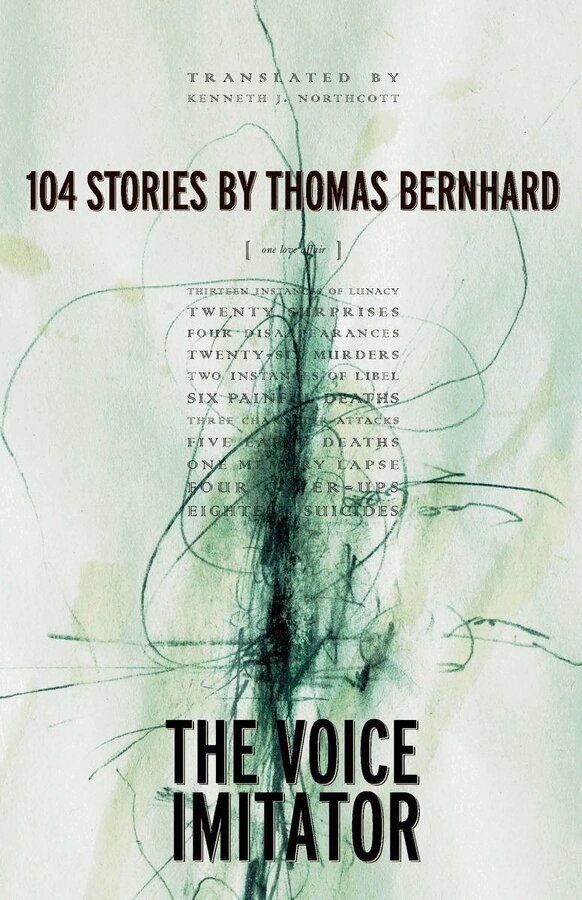
The Austrian playwright, novelist, and poet Thomas Bernhard (1931-89) is acknowledged as among the major writers of our times. At once pessimistic and exhilarating, Bernhard's work depicts the corruption of the modern world, the dynamics of totalitarianism, and the interplay of reality and appearance.In this stunning translation of The Voice Imitator, Bernhard gives us one of his most darkly comic works. A series of parable-like anecdotes—some drawn from newspaper reports, some from conversation, some from hearsay—this satire is both subtle and acerbic. What initially appear to be quaint little stories inevitably indict the sterility and callousness of modern life, not just in urban centers but everywhere. Bernhard presents an ordinary world careening into absurdity and disaster. Politicians, professionals, tourists, civil servants—the usual victims of Bernhard's inspired misanthropy—succumb one after another to madness, mishap, or suicide. The shortest piece, titled "Mail," illustrates the anonymity and alienation that have become standard in contemporary society: "For years after our mother's death, the Post Office still delivered letters that were addressed to her. The Post Office had taken no notice of her death."In his disarming, sometimes hilarious style, Bernhard delivers a lethal punch with every anecdote. George Steiner has connected Bernhard to "the great constellation of Kafka, Musil, and Broch," and John Updike has compared him to Grass, Handke, and Weiss. The Voice Imitator reminds us that Thomas Bernhard remains the most caustic satirist of our age.
358 kr
Skickas inom 7-10 vardagar
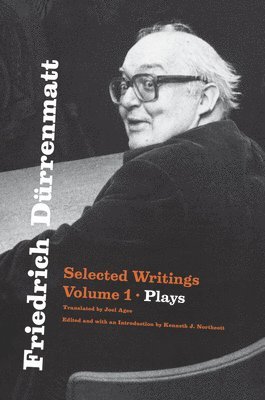
The Swiss writer Friedrich Dürrenmatt (1921–90) was one of the most important literary figures of the second half of the twentieth century. During the years of the cold war, arguably only Beckett, Camus, Sartre, and Brecht rivaled him as a presence in European letters. Yet outside Europe, this prolific author is primarily known for only one work, The Visit. With these long-awaited translations of his plays, fictions, and essays, Dürrenmatt becomes available again in all his brilliance to the English-speaking world. Dürrenmatt’s concerns are timeless, but they are also the product of his Swiss vantage during the cold war: his key plays, gathered in the first volume of Selected Writings, explore such themes as guilt by passivity, the refusal of responsibility, greed and political decay, and the tension between justice and freedom. In The Visit, for instance, an old lady who becomes the wealthiest person in the world returns to the village that cast her out as a young woman and offers riches to the town in exchange for the life of the man, now its mayor, who once disgraced her. Joel Agee’s crystalline translation gives a fresh lease to this play, as well as four others: The Physicists, Romulus the Great, Hercules and the Augean Stables, and The Marriage of Mr. Mississippi. Dürrenmatt has long been considered a great writer—but one unfairly neglected in the modern world of letters. With these elegantly conceived and expertly translated volumes, a new generation of readers will rediscover his greatest works.
238 kr
Skickas inom 7-10 vardagar
These translations of Friedrich Dürrenmatt’s plays introduce the writer to a new generation of readers.The Swiss writer Friedrich Dürrenmatt (1921–90) was one of the most important literary figures of the second half of the twentieth century. During the years of the cold war, arguably only Beckett, Camus, Sartre, and Brecht rivaled him as a presence in European letters. Yet outside Europe, this prolific author is primarily known for only one work, The Visit. Dürrenmatt’s concerns are timeless, but they are also the product of his Swiss vantage during the cold war: his key plays, gathered in the first volume of Selected Writings, explore such themes as guilt by passivity, the refusal of responsibility, greed and political decay, and the tension between justice and freedom. In The Visit, for instance, an old lady who becomes the wealthiest person in the world returns to the village that cast her out as a young woman and offers riches to the town in exchange for the life of the man, now its mayor, who once disgraced her. Joel Agee’s crystalline translation gives a fresh lease to this play, as well as four others: The Physicists, Romulus the Great, Hercules and the Augean Stables, and The Marriage of Mr. Mississippi.Dürrenmatt has long been considered a great writer, but one unfairly neglected in the modern world of letters. With these elegantly conceived and expertly translated volumes, a new generation of readers will rediscover his greatest works.
238 kr
Skickas inom 7-10 vardagar
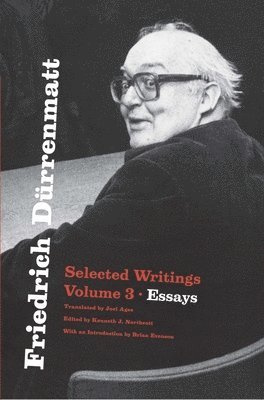
These translations of Friedrich Dürrenmatt’s essays introduce the writer to a new generation of readers.The Swiss writer Friedrich Dürrenmatt (1921–90) was one of the most important literary figures of the second half of the twentieth century. During the years of the cold war, arguably only Beckett, Camus, Sartre, and Brecht rivaled him as a presence in European letters. Yet outside Europe, this prolific author is primarily known for only one work, The Visit. With these long-awaited translations of his plays, fictions, and essays, Dürrenmatt becomes available again in all his brilliance to the English-speaking world. Dürrenmatt’s essays, gathered in this third volume of Selected Writings, are among his most impressive achievements. Their range alone is astonishing: he wrote with authority and charm about art, literature, philosophy, politics, and the theater. The selections here include Dürrenmatt’s best-known essays, such as “Theater Problems” and “Monster Essay on Justice and Law,” as well as the notes he took on a 1970 journey in America (in which he finds the United States “increasingly susceptible to every kind of fascism”). This volume also includes essays that shade into fiction, such as “The Winter War in Tibet,” a fantasy of a third world war waged in a vast subterranean labyrinth—a Plato’s Cave allegory rewritten for our own troubled times. Dürrenmatt has long been considered a great writer, but one unfairly neglected in the modern world of letters. With these elegantly conceived and expertly translated volumes, a new generation of readers will rediscover his greatest works.