Kerry Dean Carso - Böcker
Visar alla böcker från författaren Kerry Dean Carso. Handla med fri frakt och snabb leverans.
6 produkter
6 produkter
366 kr
Tillfälligt slut
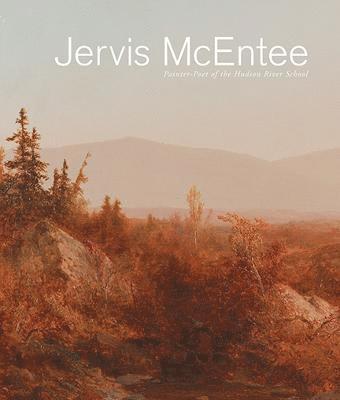
Redefines McEntee's place in the history of nineteenth-century American landscape painting.Jervis McEntee presents new scholarship and color reproductions that redefine McEntee's place in the history of nineteenth-century American landscape painting. The lead essay by exhibition curator Lee A. Vedder makes the case that McEntee was far more than a painter of somber late fall landscapes. He set his own course, absorbing influences of his fellow Hudson River school painters including Frederic Church, Sanford Gifford, and Asher B. Durand, while also responding to the atmospheric painting of J. M. W. Turner, the trauma of the Civil War, and the shifts in American tastes to French Barbizon painting and Impressionism. Additional essays expand the scope of McEntee scholarship. Kerry Dean Carso presents the influence of the landscape and industrial development of Rondout (later Kingston), New York, McEntee's native city. David Schuyler reappraises the art and career of this fascinating artist, who played such a pivotal role in the art and culture of his day. The catalogue also includes reprints of key texts from the rare memorial publication Jervis McEntee: American Landscape Painter (1892).
517 kr
Tillfälligt slut
Redefines McEntee's place in the history of nineteenth-century American landscape painting.Jervis McEntee presents new scholarship and color reproductions that redefine McEntee's place in the history of nineteenth-century American landscape painting. The lead essay by exhibition curator Lee A. Vedder makes the case that McEntee was far more than a painter of somber late fall landscapes. He set his own course, absorbing influences of his fellow Hudson River school painters including Frederic Church, Sanford Gifford, and Asher B. Durand, while also responding to the atmospheric painting of J. M. W. Turner, the trauma of the Civil War, and the shifts in American tastes to French Barbizon painting and Impressionism. Additional essays expand the scope of McEntee scholarship. Kerry Dean Carso presents the influence of the landscape and industrial development of Rondout (later Kingston), New York, McEntee's native city. David Schuyler reappraises the art and career of this fascinating artist, who played such a pivotal role in the art and culture of his day. The catalogue also includes reprints of key texts from the rare memorial publication Jervis McEntee: American Landscape Painter (1892).
270 kr
Tillfälligt slut
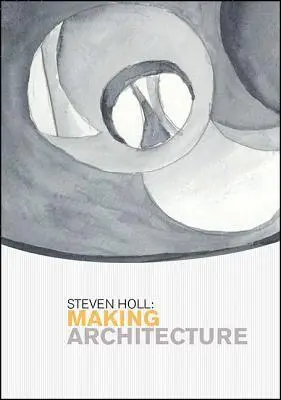
Examines Steven Holl's intricate and distinctive process of making architecture through approximately one hundred models, related sketches and other studies created for nine recent projects.This publication, and the exhibition at the Samuel Dorsky Museum of Art that it accompanies, investigates the architect Steven Holl's unique process of making architecture, the foundation of which is drawing, almost always by hand. The publication includes an extensive critical essay about Steven Holl and his process by exhibition curator Nina Stritzler-Levine, and additional essays by Kerry Dean Carso and Peter Olshavsky. The projects section that follows these chapters includes descriptions of the eleven projects that are the focus of the exhibition; the exhibition checklist, which corresponds with the organization of the installation; and photographs of the installation.
319 kr
Skickas inom 7-10 vardagar
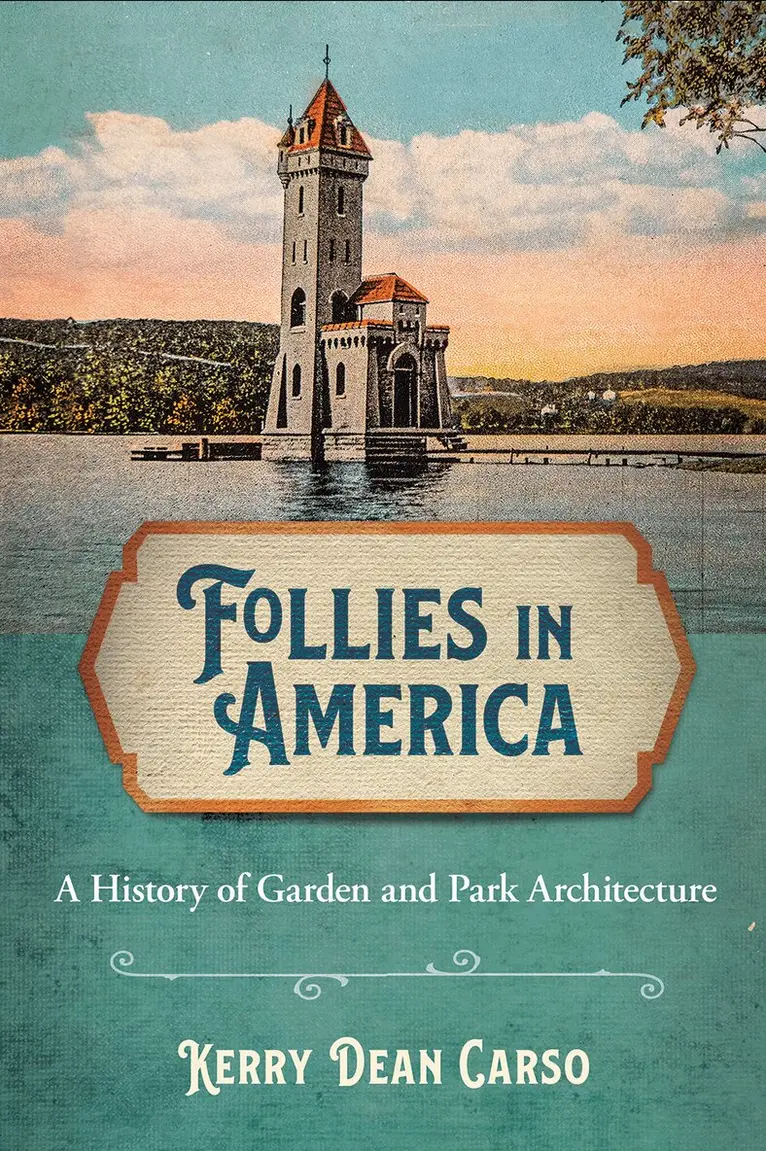
Follies in America examines historicized garden buildings, known as "follies," from the nation's founding through the American centennial celebration in 1876. In a period of increasing nationalism, follies—such as temples, summerhouses, towers, and ruins—brought a range of European architectural styles to the United States. By imprinting the land with symbols of European culture, landscape gardeners brought their idea of civilization to the American wilderness.Kerry Dean Carso's interdisciplinary approach in Follies in America examines both buildings and their counterparts in literature and art, demonstrating that follies provide a window into major themes in nineteenth-century American culture, including tensions between Jeffersonian agrarianism and urban life, the ascendancy of middle-class tourism, and gentility and social class aspirations.
1 169 kr
Skickas inom 5-8 vardagar
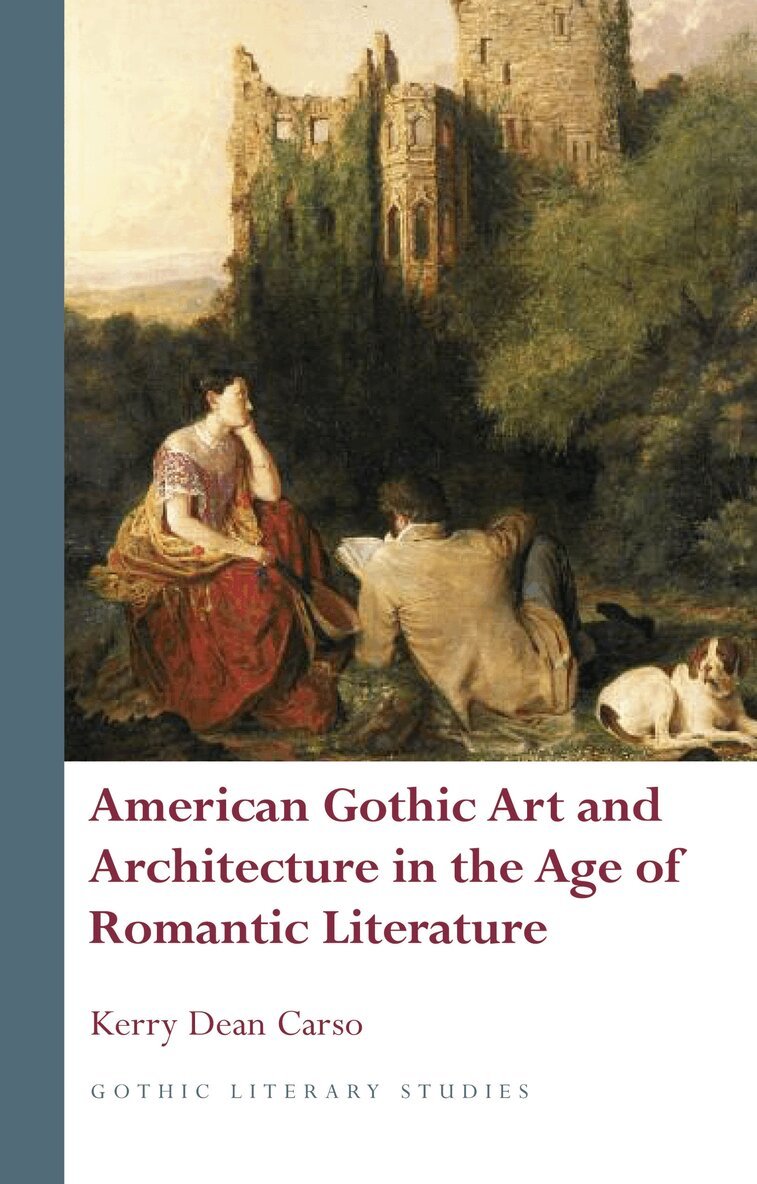
American Gothic Art and Architecture in the Age of Romantic Literature analyses the influence of British Gothic novels and historical romances on American art and architecture in the Romantic era. American artists and architects were among the most avid readers of Gothic fiction, which in turn informed their artistic output. In a period of increasing nationalism, the Gothic Revival architectural style in particular served to legitimise the American landscape with the materiality of European culture. At the core of this book is an analysis of American architecture in the late eighteenth and early nineteenth centuries, an understudied era. Key figures include Thomas Jefferson, Washington Allston, Alexander Jackson Davis, James Fenimore Cooper, Washington Irving, Thomas Cole, Edwin Forrest, and Nathaniel Hawthorne. Hawthorne articulated the subject of this book when he wrote that he could understand Sir Walter Scott's romances better after viewing Scott's Gothic Revival house Abbotsford, and he understood the house better for having read the romances. From the very beginning, the Gothic Revival has been a phenomenon that crosses modern disciplinary boundaries.The groundwork in Gothic literary scholarship allows us to move beyond literature to examine how the Gothic seeps into other forms of artistic creation.This interdisciplinary book investigates the symbiotic relationship between the arts and Gothic literature to reveal new interpretative possibilities.
1 428 kr
Kommande
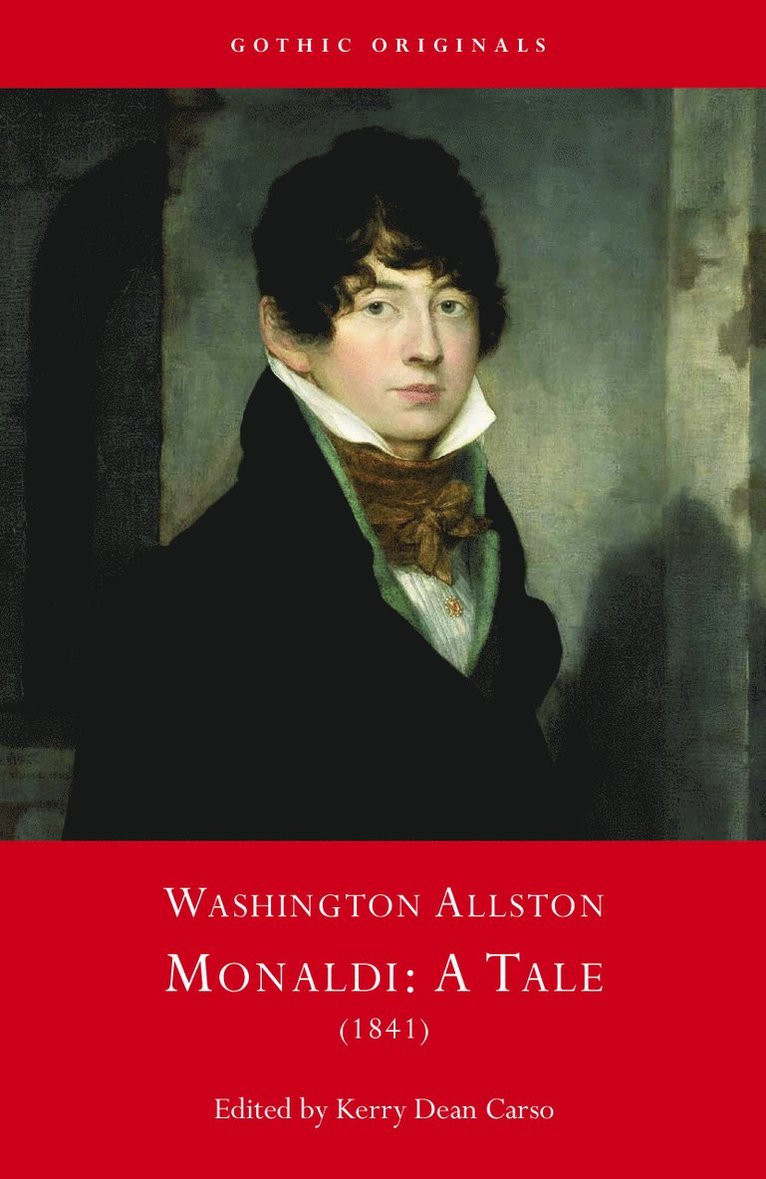
The nineteenth-century American artist Washington Allston bridges the worlds of art and literature in his novel Monaldi: A Tale (1841). Full of Gothic intrigue and suspense, Allston’s novel tells the story of a renowned and idealistic Italian artist named Monaldi, who descends into madness and despair after falling prey to the machinations of his evil poet-friend Maldura and a bandit named Fialto. An introduction to this new edition of Monaldi addresses the Gothic literary qualities of the novel: the frame narrative, the Italian setting (which features a cavern, a monastery, and banditti), sexual transgression, attempted murder, and the Romantic landscape. In his time, Allston achieved fame as a Grand Manner history painter in both Great Britain and the United States, but his novel has received less attention from scholars than his paintings. This new edition draws attention to this semi-forgotten work in the transatlantic Gothic canon.