Kevin Kenerly – författare
316 kr
Lyssna direkt efter köp
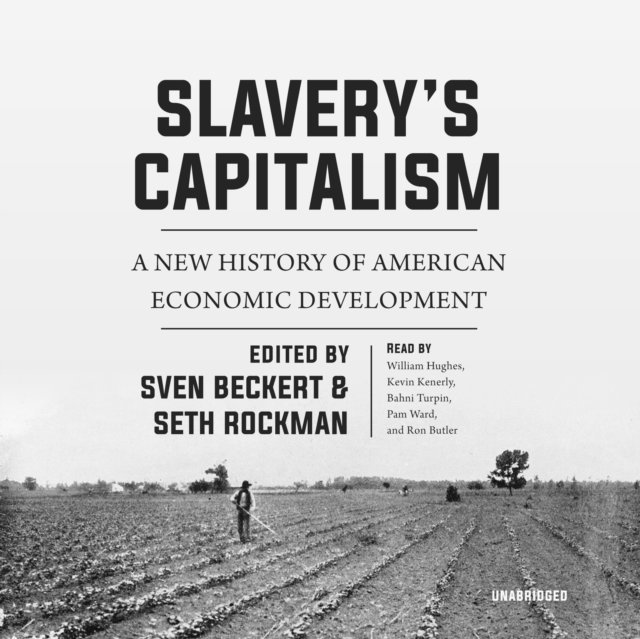
During the nineteenth century, the United States entered the ranks of the world’s most advanced and dynamic economies. At the same time, the nation sustained an expansive and brutal system of human bondage.
This was no mere coincidence. Slavery’s Capitalism argues for slavery’s centrality to the emergence of American capitalism in the decades between the Revolution and the Civil War. According to editors Sven Beckert and Seth Rockman, the issue is not whether slavery itself was or was not capitalist but, rather, the impossibility of understanding the nation’s spectacular pattern of economic development without situating slavery front and center.
American capitalism—renowned for its celebration of market competition, private property, and the self-made man—has its origins in an American slavery predicated on the abhorrent notion that human beings could be legally owned and compelled to work under force of violence.
Drawing on the expertise of sixteen scholars who are at the forefront of rewriting the history of American economic development, Slavery’s Capitalism identifies slavery as the primary force driving key innovations in entrepreneurship, finance, accounting, management, and political economy that are too often attributed to the so-called free market.
Approaching the study of slavery as the originating catalyst for the Industrial Revolution and modern capitalism casts new light on American credit markets, practices of offshore investment, and understandings of human capital. Rather than seeing slavery as outside the institutional structures of capitalism, the essayists recover slavery’s importance to the American economic past and prompt enduring questions about the relationship of market freedom to human freedom.
Contributors: Edward E. Baptist, Sven Beckert, Daina Ramey Berry, Kathryn Boodry, Alfred L. Brophy, Stephen Chambers, Eric Kimball, John Majewski, Bonnie Martin, Seth Rockman, Daniel B. Rood, Caitlin Rosenthal, Joshua D. Rothman, Calvin Schermerhorn, Andrew Shankman, Craig Steven Wilder.
267 kr
Lyssna direkt efter köp
A comprehensive analysis of the key issues of the Black Lives Matter movement, this thought-provoking and compelling anthology features essays by some of the nation’s most influential and respected criminal justice experts and legal scholars.
Contributing authors include Bryan Stevenson, director of the Equal Justice Initiative, NYU Law professor, and author of the New York Times bestseller Just Mercy; Sherrilyn Ifill, president and director-counsel of the NAACP Legal Defense Fund; Jeremy Travis, president of John Jay College of Criminal Justice; and many others.
Policing the Black Man explores and critiques the many ways the criminal justice system impacts the lives of African American boys and men at every stage of the criminal process from arrest through sentencing. Essays range from an explication of the historical roots of racism in the criminal justice system to an examination of modern-day police killings of unarmed black men.
The coauthors discuss and explain racial profiling, the power and discretion of police and prosecutors, the role of implicit bias, the racial impact of police and prosecutorial decisions, the disproportionate imprisonment of black men, the collateral consequences of mass incarceration, and the Supreme Court’s failure to provide meaningful remedies for the injustices in the criminal justice system.
Policing the Black Man is an enlightening listen for anyone interested in the critical issues of race and justice in America.
307 kr
Lyssna direkt efter köp
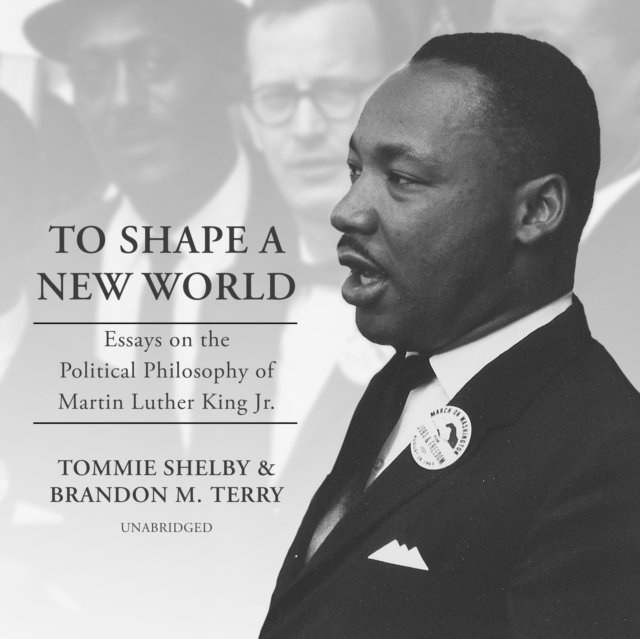
Martin Luther King Jr. may be America’s most revered political figure, commemorated in statues, celebrations, and street names around the world. On the fiftieth anniversary of King’s assassination, the man and his activism are as close to public consciousness as ever. But despite his stature, the significance of King’s writings and political thought remains underappreciated.
In To Shape a New World, Tommie Shelby and Brandon Terry write that the marginalization of King’s ideas reflects a romantic, consensus history that renders the civil rights movement inherently conservative―an effort not at radical reform but at “living up to” enduring ideals laid down by the nation’s founders. On this view, King marshaled lofty rhetoric to help redeem the ideas of universal (white) heroes, but produced little original thought. This failure to engage deeply and honestly with King’s writings allows him to be conscripted into political projects he would not endorse, including the pernicious form of “color blindness” that insists, amid glaring race-based injustice, that racism has been overcome.
Cornel West, Danielle Allen, Martha Nussbaum, Robert Gooding-Williams, and other authors join Shelby and Terry in careful, critical engagement with King’s understudied writings on labor and welfare rights, voting rights, racism, civil disobedience, nonviolence, economic inequality, poverty, love, just-war theory, virtue ethics, political theology, imperialism, nationalism, reparations, and social justice. In King’s exciting and learned work, the authors find an array of compelling challenges to some of the most pressing political dilemmas of our present, and rethink the legacy of this towering figure.
209 kr
Lyssna direkt efter köp
In 2012, The Recovery Letters was launched to host a series of letters online written by people recovering from depression, addressed to those currently affected by a mental health condition.
Addressed to “Dear You,” the inspirational and heartfelt letters provided hope and support to those experiencing depression and were testament that recovery was possible.
Now, for the first time, these letters have been compiled into an anthology for people living with depression and are interspersed with motivating quotes and additional resources as well as new material written specifically for the book
This powerful collection of personal letters from people with first-hand experiences of depression will serve as a comforting resource for anyone on the journey to recovery.