Khumisho Moguerane – författare
Visar alla böcker från författaren Khumisho Moguerane. Handla med fri frakt och snabb leverans.
3 produkter
3 produkter
428 kr
Skickas inom 7-10 vardagar
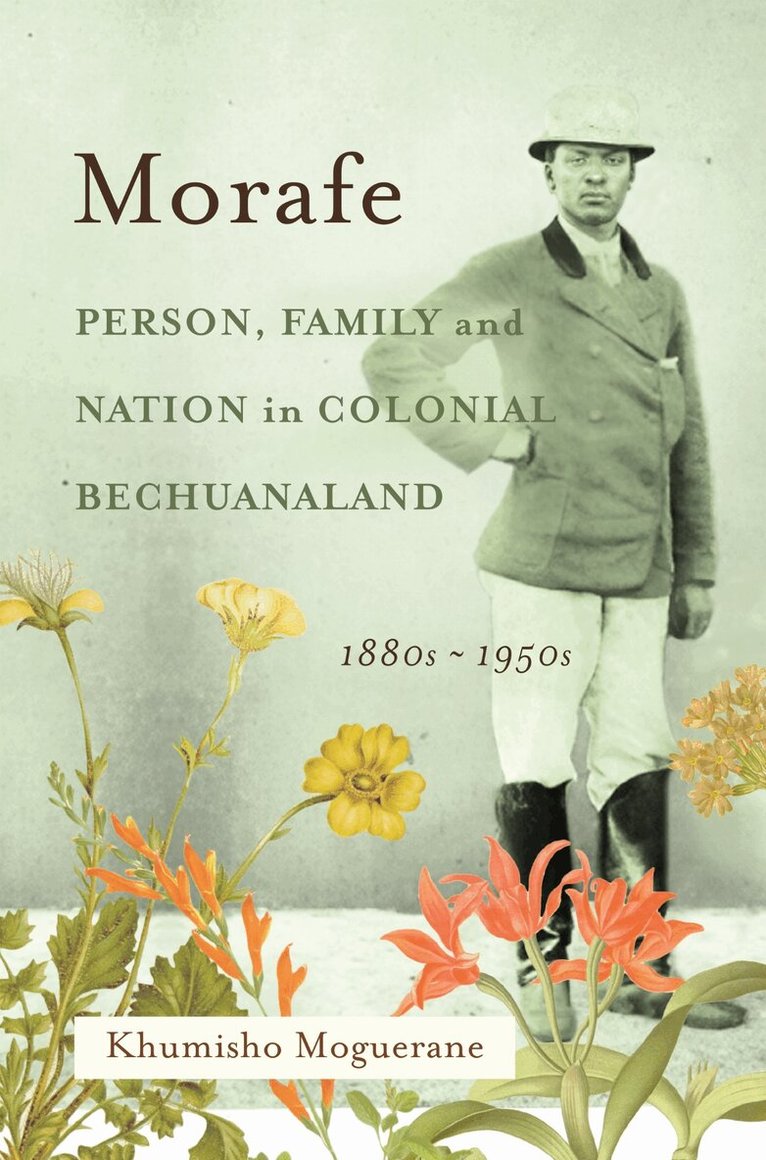
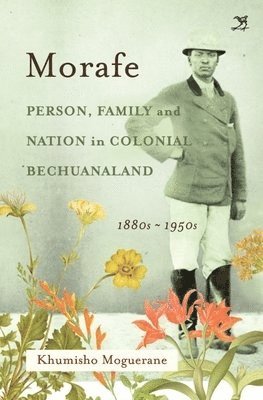
In Morafe, Khumisho Moguerane has written a luminous exploration of two generations of the prominent Molema family. They were “border people” who straddled what would become present-day South Africa and Botswana. The book begins in the 1880s at the frontier of the new British territories of Bechuanaland (North West and Northern Cape provinces) and the Bechuanaland Protectorate (Botswana), where the political boundary between these two territories was negligible and where skin color did not yet necessarily connect with a particular social or political status or affect economic opportunity.Morafe ends in the 1950s, when the political boundary mattered profoundly, dividing two very different colonial dispensations of racial ordering and classification, and two separate traditions of nationalist politics. With this landmark publication, Moguerane reveals that “the nation” is less “out there,” in public institutions and political struggles, and more “in here,” in the everyday drama of personal and ordinary lives.
229 kr
Tillfälligt slut
Morafe is a luminous exploration of two generations of the Molema family. Beginning in the 1880s and ending in the 1950s in Mafikeng, the capital town of the North West province, this is a landmark publication of South African history and biography. The Molemas were 'border people', who then straddled what would become present-day South Africa and Botswana. We begin the story in the 1880s with a frontier setting of 'black', 'white', 'metis' and many others streaming into the new British territories of British Bechuanaland (present-day North West and Northern Cape provinces) and the Bechuanaland Protectorate (present-day Botswana), and where the political boundary between these two territories is negligible. The setting is one where skin colouring did not yet connect with a particular social or political status, nor did it yet really affect economic opportunity. Morafe ends in the 1950s, where the political boundary matters profoundly, dividing two very different colonial dispensations of colonial racial ordering and classification, and two separate traditions of nationalist politics. Khumisho Moguerane recounts how this was not necessarily how people, including members of the South African National Congress in the early twentieth century had conceived of their futures. The setting of empire and colonialism in the late nineteenth and into the early decades of the twentieth century still allowed for possibilities of statehood and nationalist traditions outside of, overlapping and competing with, those that eventually led to two neighbouring, democratic independent nation-states from the 1940s. The book argues that as a chiefly, Christianised and educated family the Molemas - Silas Molema, (b. 1850) and his two sons, Sebopioa and Modiri, and his daughter, Harriet - played a central role in the events and consequences that forged these two countries by the mid-twentieth century. The fifth protagonist in the book is the prodigious and renowned writer, newspaper editor and politician Solomon Plaatje, who was, in many ways, a member of the family. The family history emerges through the interwoven routines of everyday life - marriage, landholding, education, work, devoutness and political offices - intimate routines that show the moral hierarchies of gender and generation amongst a frontier society coming to an awareness of itself as 'Bechuana'. A first for South Africa, a profound and original story, Morafe reveals that the 'nation' is less 'out there' in public institutions and political struggles, but 'in here', in the everyday drama of personal and ordinary lives. Moreover, Morafe provides the first analysis in South Africa that puts the focus on moral lives as foundation to an understanding of nationalist politics in South Africa and Botswana. The Seed is Mine by Charles van Onselen, Thabo Mbeki: A Dream Deferred by Mark Gevisser, The Scramble for Africa by Thomas Pakenham, The Land is Ours by Tembeka Ngcukaitobi are some of the books in the tradition of significant histories and biographies of South Africa.
Land, Law and Chiefs in Rural South Africa
Contested Histories and Current Struggles
Häftad, Engelska, 2021
334 kr
Skickas inom 7-10 vardagar
This edited collection illustrates contestations over land and political authority in South Africa's rural areas, focusing on threats to popular rights and how they are being supported.Who controls the land and minerals in the former Bantustans of South Africa - chiefs, the state or landholders? Disputes are taking place around the ownership of resources, decisions about their exploitation and who should benefit. With respect to all of these issues, the courts have become increasingly important.The contributors to Land, Law and Chiefs in Rural South Africa capture some of these intense contestations over land, law and political authority, focussing on threats to the rights of ordinary people. History and customary law feature strongly in most disputes and succession to chieftaincy is also frequently disputed. Judges have to make decisions in a context where rival claimants to property or office assert their own versions of history and custom. The South African constitution recognizes customary law and the courts are attempting to incorporate and develop this branch of jurisprudence as 'living customary law'. Lawyers, community leaders and academics are called on to assist in researching cases around restitution, land rights and customary law. The chapters in this collection discuss legal cases and policy directions that have evolved since 1994. Some chapters analyze the increasing power of chiefs in the South African rural areas, while others suggest that the courts are giving support to popular rights over land and supporting local democratic processes. Contributors record significant pushback from groups that reject traditional authority. These political tensions are a central theme of the collection and thus serve as vital case studies in furthering our understanding of rights and restitution in South Africa.