Khyati Tripathi - Böcker
Visar alla böcker från författaren Khyati Tripathi. Handla med fri frakt och snabb leverans.
3 produkter
3 produkter
2 325 kr
Kommande
This international collection of evocative autoethnographic essays explores loss, grief, and death through the lived experiences of professionals and individuals intimately connected to end-of-life events.The book offers powerful and evocative reflections on how one's encounters with death and dying impact and frame how we approach and accommodate an understanding of loss and grief. The collection draws together critical autoethnographic narratives from several geographical regions and, significantly, communities of practice associated with loss, grief, and the end of life. Key themes include encountering loss, grief, and death through witnessing; the experience of the presence of absence felt as part of loss across diverse spheres (including public, digital, and imaginary spaces); autoethnography as therapy; the inheritance of the ‘memory of death’, through conversation. Each of the four sections in the volume is followed by a brief response by the editors to help the reader comprehend and contextualise the emotional processes of compiling the volume, alongside a sectional qualitative and quantitative content analysis of the chapters.This is a significant resource for anyone undertaking research, particularly those working in anthropology, critical event studies, death studies, psychology, clinical psychology, and sociology.
635 kr
Kommande
This international collection of evocative autoethnographic essays explores loss, grief, and death through the lived experiences of professionals and individuals intimately connected to end-of-life events.The book offers powerful and evocative reflections on how one's encounters with death and dying impact and frame how we approach and accommodate an understanding of loss and grief. The collection draws together critical autoethnographic narratives from several geographical regions and, significantly, communities of practice associated with loss, grief, and the end of life. Key themes include encountering loss, grief, and death through witnessing; the experience of the presence of absence felt as part of loss across diverse spheres (including public, digital, and imaginary spaces); autoethnography as therapy; the inheritance of the ‘memory of death’, through conversation. Each of the four sections in the volume is followed by a brief response by the editors to help the reader comprehend and contextualise the emotional processes of compiling the volume, alongside a sectional qualitative and quantitative content analysis of the chapters.This is a significant resource for anyone undertaking research, particularly those working in anthropology, critical event studies, death studies, psychology, clinical psychology, and sociology.
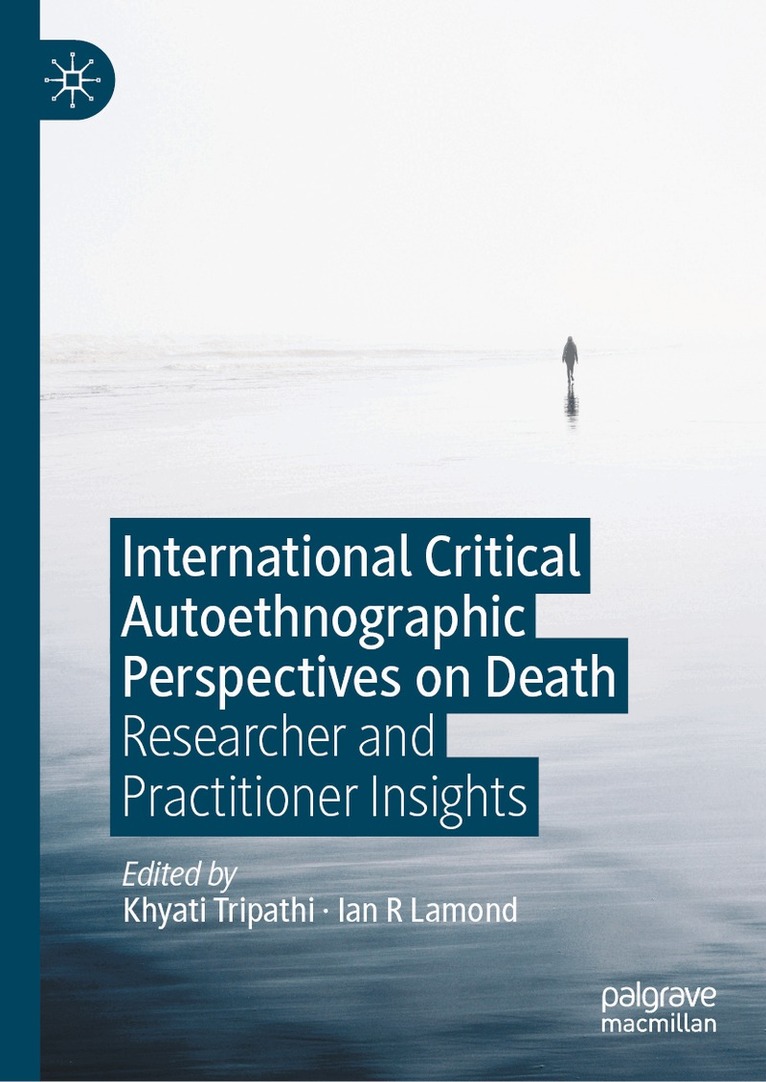
International Critical Autoethnographic Perspectives on Death
Researcher and Practitioner Insights
Inbunden, Engelska, 2026
1 744 kr
Kommande
This edited collection offers a distinctive contribution to death studies by foregrounding analytical autoethnographic narratives from researchers and practitioners actively engaged in the field. Unlike works centred on personal bereavement, it explores the emotional and psychological residue left by prolonged scholarly encounters with death, dying, and end-of-life phenomena. The project’s uniqueness lies in its multidisciplinary scope, international authorship, and integration of creative artifacts alongside textual analysis. It challenges conventional notions of subjectivity in qualitative research, reframing it as a vital, dialogic presence rather than bias. Contributors reflect on their own affective responses—grief, memory, sensory experience—while researching death spaces, death work, and the inheritance of death through ritual and conversation. The collection addresses a gap in scholarship by examining how researchers and practitioners are shaped by their fieldwork, offering therapeutic and introspective insights. Its organization around key thematic areas, and its cultural diversity, make it a valuable resource for scholars across disciplines, most notably death studies and (auto)ethnographic research, and anyone seeking to understand the complex interplay of emotion, memory, and research.