Kim Phillips-Fein - Böcker
Visar alla böcker från författaren Kim Phillips-Fein. Handla med fri frakt och snabb leverans.
10 produkter
10 produkter
422 kr
Skickas inom 5-8 vardagar
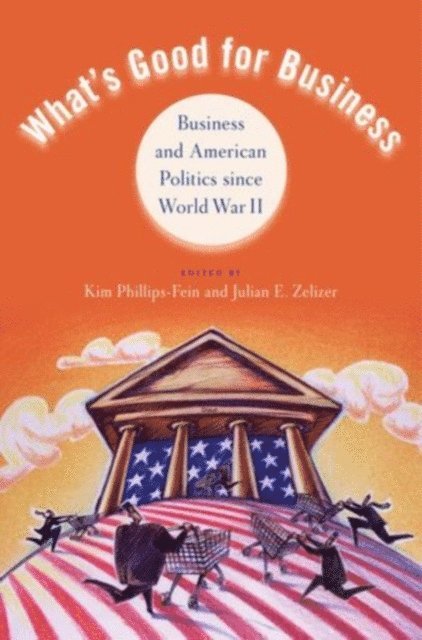
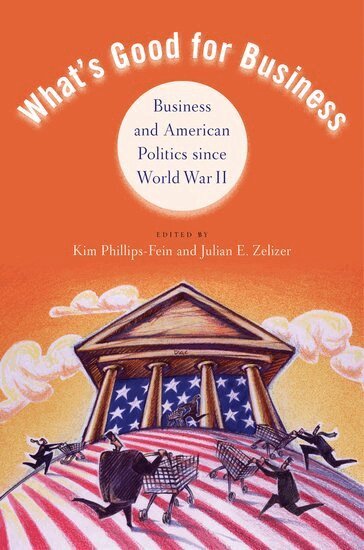
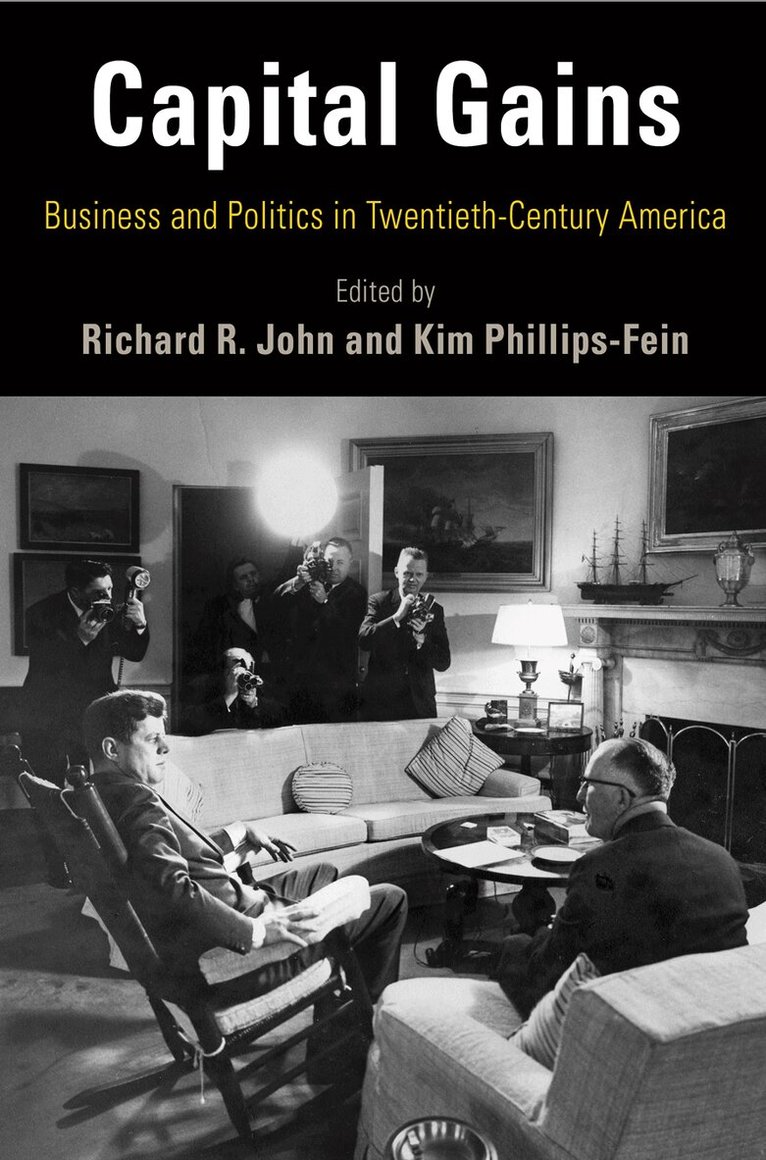
This volume showcases the most exciting new voices in the fields of business and political history. While the media frequently warns of the newfound power of business in the world of politics, the authors in this book demonstrate that business has mobilized to shape public policy and government institutions, as well as electoral outcomes, for decades. Rather than assuming that business influence is inevitable, the chapters explore the complex evolution of this relationship in a wide range of different arenas--from attempts to create a corporate-friendly tax policy and regulations that would work in the interests of particular industries, to local boosterism as a weapon against New Deal liberalism, to the nexus between evangelical Christianity and the oil industry, to the frustrations that business people felt in struggles with public interest groups. The history that emerges show business actors organizing themselves to affect government in myriad ways, sometimes successfully but other times with outcomes far different than they hoped for. The result in an image of American politics that is more complex and contested than it is often thought to be. The essays represent a new trend in scholarship on political economy, one that seeks to break down the barriers that once separated old subfields to offer a vision of the economy as shaped by politics and political life influenced by economic relationships.
903 kr
Skickas inom 5-8 vardagar
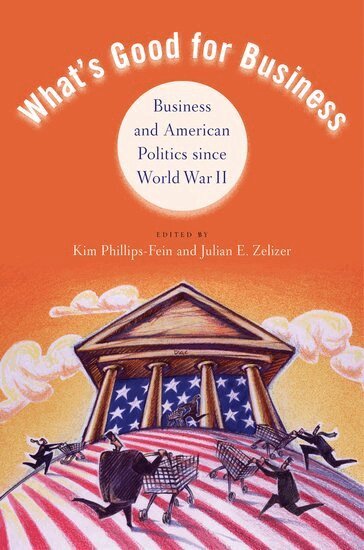
This volume showcases the most exciting new voices in the fields of business and political history. While the media frequently warns of the newfound power of business in the world of politics, the authors in this book demonstrate that business has mobilized to shape public policy and government institutions, as well as electoral outcomes, for decades. Rather than assuming that business influence is inevitable, the chapters explore the complex evolution of this relationship in a wide range of different arenas--from attempts to create a corporate-friendly tax policy and regulations that would work in the interests of particular industries, to local boosterism as a weapon against New Deal liberalism, to the nexus between evangelical Christianity and the oil industry, to the frustrations that business people felt in struggles with public interest groups. The history that emerges show business actors organizing themselves to affect government in myriad ways, sometimes successfully but other times with outcomes far different than they hoped for. The result in an image of American politics that is more complex and contested than it is often thought to be. The essays represent a new trend in scholarship on political economy, one that seeks to break down the barriers that once separated old subfields to offer a vision of the economy as shaped by politics and political life influenced by economic relationships.
162 kr
Tillfälligt slut
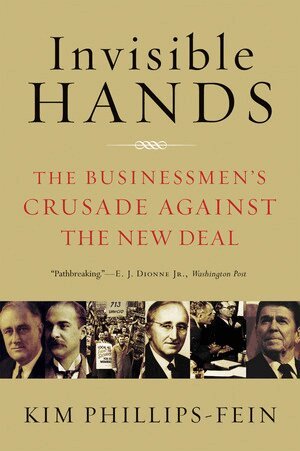
In the wake of the profound economic crisis known as the Great Depression, a group of high-powered individuals joined forces to campaign against the New Deal—not just its practical policies but the foundations of its economic philosophy. The titans of the National Association of Manufacturers and the chemicals giant DuPont, together with little-known men like W. C. Mullendore, Leonard Read, and Jasper Crane, championed European thinkers Friedrich von Hayek and Ludwig von Mises and their fears of the “nanny state.” Through fervent activism, fundraising, and institution-building, these men sought to educate and organize their peers as a political force to preserve their profit margins and the “American way” of doing business. In the public relations department of General Electric, they would find the perfect spokesman: Ronald Reagan.
276 kr
Skickas
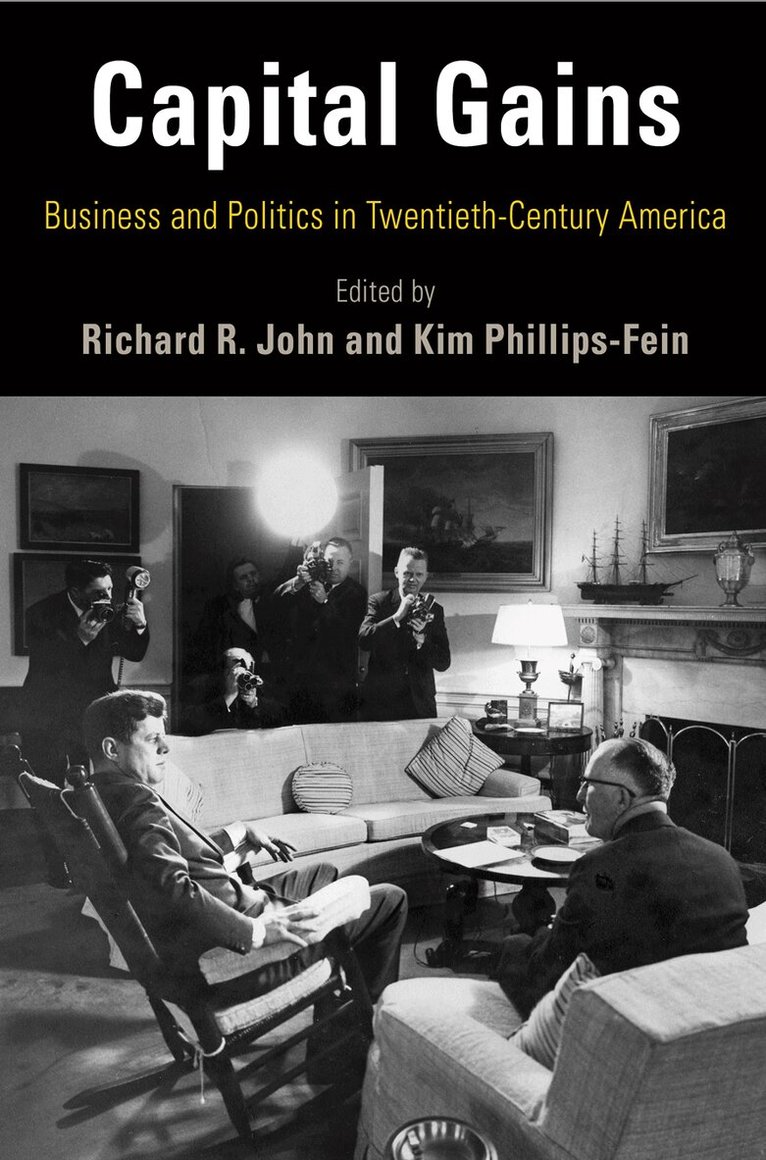
Recent events-the Citizens United Supreme Court decision, the Occupy Wall Street movement, and efforts to increase the minimum wage, among others-have driven a tremendous surge of interest in the political power of business. Capital Gains collects some of the most innovative new work in the field. The chapters explore the influence of business on American politics in the twentieth century at the federal, state, and municipal levels. From corporate spending on city governments in the 1920s to business support for public universities in the postwar period, and from business opposition to the Vietnam War to the corporate embrace of civil rights, the contributors reveal an often surprising portrait of the nation's economic elite.Contrary to popular mythology, business leaders have not always been libertarian or rigidly devoted to market fundamentalism. Before, during, and after the New Deal, important parts of the business world sought instead to try to shape what the state could accomplish and to make sure that government grew in ways that were favorable to them. Appealing to historians working in the fields of business history, political history, and the history of capitalism, these essays highlight the causes, character, and consequences of business activism and underscore the centrality of business to any full understanding of the politics of the twentieth century-and today.Contributors: Daniel Amsterdam, Brent Cebul, Jennifer Delton, Tami Friedman, Eric Hintz, Richard R. John, Pamela Walker Laird, Kim Phillips-Fein, Laura Phillips Sawyer, Elizabeth Tandy Shermer, Eric Smith, Jason Scott Smith, Mark R. Wilson.
1 106 kr
Skickas inom 10-15 vardagar
Recent events-the Citizens United Supreme Court decision, the Occupy Wall Street movement, and efforts to increase the minimum wage, among others-have driven a tremendous surge of interest in the political power of business. Capital Gains collects some of the most innovative new work in the field. The chapters explore the influence of business on American politics in the twentieth century at the federal, state, and municipal levels. From corporate spending on city governments in the 1920s to business support for public universities in the postwar period, and from business opposition to the Vietnam War to the corporate embrace of civil rights, the contributors reveal an often surprising portrait of the nation's economic elite.Contrary to popular mythology, business leaders have not always been libertarian or rigidly devoted to market fundamentalism. Before, during, and after the New Deal, important parts of the business world sought instead to try to shape what the state could accomplish and to make sure that government grew in ways that were favorable to them. Appealing to historians working in the fields of business history, political history, and the history of capitalism, these essays highlight the causes, character, and consequences of business activism and underscore the centrality of business to any full understanding of the politics of the twentieth century-and today.Contributors: Daniel Amsterdam, Brent Cebul, Jennifer Delton, Tami Friedman, Eric Hintz, Richard R. John, Pamela Walker Laird, Kim Phillips-Fein, Laura Phillips Sawyer, Elizabeth Tandy Shermer, Eric Smith, Jason Scott Smith, Mark R. Wilson.
183 kr
Tillfälligt slut
284 kr
Skickas inom 3-6 vardagar
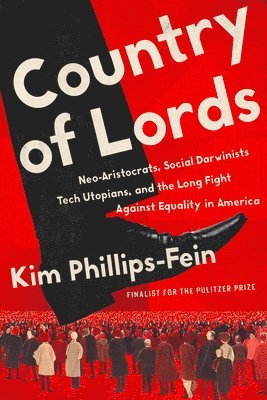
Country of Lords
Neo-Aristocrats, Social Darwinists, Tech Utopians, and the Long Fight against Equality in America
Inbunden, Engelska, 2026
389 kr
Kommande
The story of American history is often told as a hard-won march toward the promise of equality, derived from Thomas Jefferson’s famous proclamation that “all men are created equal.”But this inspiring story obscures a parallel tradition: an enduring and organized argument against equality itself. Again and again, influential Americans have asserted a fundamental inequality among human beings, arguing that the social, economic, and racial hierarchies in which some groups of people rule over others are not only natural but good.In Country of Lords acclaimed historian Kim Phillips-Fein traces this argument for inequality through six vivid archetypes. She discusses the natural aristocrats, such as John Adams, who feared the tumult of too much democracy; the social Darwinists, led by Yale professor William Graham Sumner, who blamed the poor for their own miseries; those who preached a gospel of production, including Henry Ford, who wanted an industrial hierarchy in which the “best” people ruled over compliant inferiors; utilitarian racists who advocated for eugenics and a racial hierarchy; meritocrats like Harvard psychologist Richard Hernstein who described an economic caste system based on “intelligence” in his co-authored book, The Bell Curve; and most recently, technocrats who seem to see themselves as superior because they are closest to the machines destined to outstrip and supplant fallible flesh-and-blood humanity.The anti-egalitarian lineage Phillips-Fein traces is both clear and deeply unsettling. It challenges readers to think about the fragility of the ideal of equality and to reckon with the disturbing arguments of those who have campaigned against it over the past two and a half centuries. Country of Lords is essential reading for anyone trying to make sense of the widening gap between the nation we claim to be and the nation we are becoming.
1 597 kr
Kommande
597 kr
Kommande