Kimon Lycos – författare
Visar alla böcker från författaren Kimon Lycos. Handla med fri frakt och snabb leverans.
7 produkter
Plato on Justice and Power
Reading Book 1 of Plato’s Republic
Av Kimon Lycos
Inbunden, 1987
1093 kr
Lägg i varukorg
Book 1 of Plato's Republic is often treated as a merely negative prelude to the theory of justice presented in the main body of that book. This study argues that, though an introduction to later ideas, Book 1 has its own positive theme and function: to press for the acceptance of a certain …
Plato on Justice and Power
Reading Book I of Plato's Republic
Av Kimon Lycos
Häftad, 1987
463 kr
Lägg i varukorg
Most commentaries on the Republic rush through Book I with embarrassment because the arguments of the participants, including Socrates, are specious. Beginning with Book II, the arguments are brilliant, so why did Plato write Book I? Lycos shows that the function of Book I is to attack the view …
Plato on Justice and Power
Reading Book 1 of Plato’s Republic
Av Kimon Lycos
E-bok, 1987
1501 kr
Lägg i varukorg
Book 1 of Plato''s Republic is often treated as a merely negative prelude to the theory of justice presented in the main body of that book. This study argues that, though an introduction to later ideas, Book 1 has its own positive theme and function: to press for the acceptance of a certain …
Plato on Justice and Power
Reading Book 1 of Plato’s Republic
Av Kimon Lycos
Häftad, 1987
1093 kr
Lägg i varukorg
Book 1 of Plato's Republic is often treated as a merely negative prelude to the theory of justice presented in the main body of that book. This study argues that, though an introduction to later ideas, Book 1 has its own positive theme and function: to press for the acceptance of a certain …
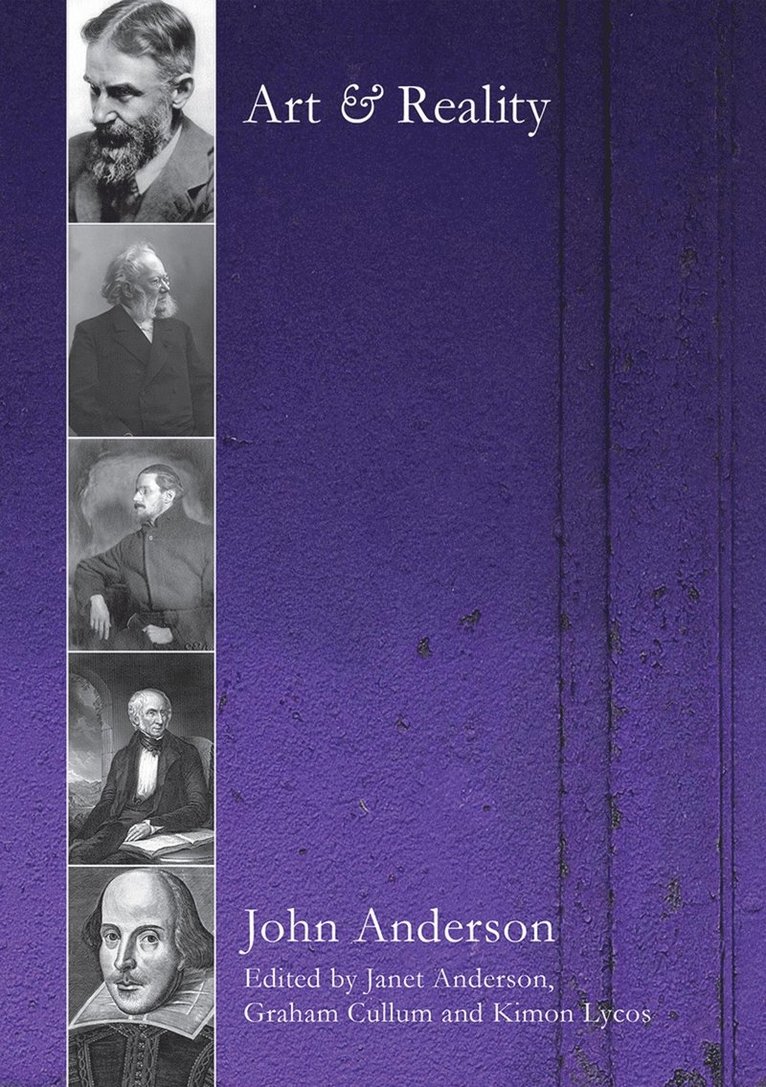
Art and Reality
John Anderson on Literature and Aesthetics
Av John Anderson, Janet Anderson m. fl.
Häftad, 2017
229 kr
Lägg i varukorg
In Art and Reality, John Anderson explores how beauty is experienced and defined. He considers a wide range of topics, from Homer to Dostoevsky and Shakespeare, the Ern Malley hoax and censorship of Ulysses. With rigor and originality, Anderson proposes a philosophical approach to art that can lead …
Olympiodorus: Commentary on Platos Gorgias
Introduction by Harold Tarrant
Av Robin Jackson, Harold Tarrant m. fl.
Inbunden, 1998
3600 kr
Lägg i varukorg
This book provides a translation of the only surving ancient commentary on Plato's Goroias, written by the Alexandrian Platonist Olympiodorus in the sixth century A.D.There are substantial notes on the commentary, which assist the reader to understand the context of Olympiodorus' Platonism, the …
Plato on Justice and Power
Reading Book I of Plato's Republic
Av Kimon Lycos
Inbunden, 1987
1111 kr
Tillfälligt slut
Most commentaries on the Republic rush through Book I with embarrassment because the arguments of the participants, including Socrates, are specious. Beginning with Book II, the arguments are brilliant, so why did Plato write Book I? Lycos shows that the function of Book I is to attack the view …