Kirsten Degel - Böcker
Visar alla böcker från författaren Kirsten Degel. Handla med fri frakt och snabb leverans.
5 produkter
5 produkter
333 kr
Skickas inom 5-8 vardagar
289 kr
Skickas inom 5-8 vardagar
The mother as motif in art and literature, from prehistoric fertility goddesses to the Madonna and Child and beyondUshering us into the world, our mother is our physical and cultural wellspring. Even if she is lost or absent, we are all sons and daughters. Throughout history and across cultures, the role of the mother has shifted, expanding at times and narrowing at others, as traditional family structures are by turns questioned and reinforced. This volume of art and literature on the many representations of the mother figure in art history ranges across religion, music, film and medicine. Excerpts, essays and poems by Marcel Proust, Maggie Nelson, Rachel Cusk, Lydia Davis, Gustave Flaubert, Sylvia Plath and Hans Christian Andersen meditate on motherhood alongside a wealth of visual material. Although the volume’s main focus is on 20th-century and 21st-century art, Mother! Origin of Life reaches back through history to trace artistic motifs from the prehistoric era to Ancient Greece to the Renaissance, noting how contemporary artists continue to tap into such universal themes. Between more than 150 artworks, expert texts and a short anthology of motherhood in literature, this publication reveals how depictions of motherhood in the arts have been linked to broader cultural perceptions.Artists include: Sophie Calle, Mary Cassatt, Rineke Dijkstra, Laure Prouvost, Frida Orubapo, Tracey Emin, Alberto Giacometti, Mary Kelly, René Magritte, Alice Neel and Pablo Picasso.
344 kr
Skickas inom 5-8 vardagar
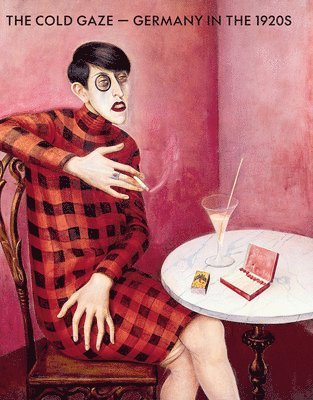
A sweeping journey through the roaring art and culture of the Weimar RepublicAt the center of this volume are the Neue Sachlichkeit (New Objectivity) artists—Otto Dix, George Grosz and Albert Renger-Patzsch—and the groundbreaking photographer August Sander, in particular his famed series People of the 20th Century, which portrayed both prominent and anonymous Germans from all parts of society in a simple and matter-of-fact pictorial style. Sander and the Neue Sachlichkeit artists both pursued an anti-Expressionist aesthetic, embracing social engagement and a rejection of romantic idealism. The Cold Gaze also looks at the extraordinary writers associated with the Weimar Republic, such as Vicki Baum, Bertolt Brecht, Alfred Döblin, Hans Fallada, Erich Kästner and Christopher Isherwood. Further points of focus by a range of contributing writers include Germany’s Americanization during this period; Marcel Breuer’s innovations in furniture design; the invention and ascent of the Futura font; the Weimar cult of technology; and much more.This richly illustrated catalog unfolds a period that was at once euphoric and harsh, an extraordinary moment in modernity birthed in the shadows between two world wars.
476 kr
Skickas inom 3-6 vardagar
Exploring Gertsch’s photorealistic process from paintings to woodblock printsPublished with Deichtorhallen Hamburg.For his photorealistic approach, Swiss artist Franz Gertsch (1930–2022) projected slides onto a large canvas, painting over the image to create a slightly mysterious replica. Later in his career, he took this process a step further by turning his photographic references into woodcuts, a painstaking task that produced breathtakingly lifelike results.
344 kr
Skickas inom 5-8 vardagar
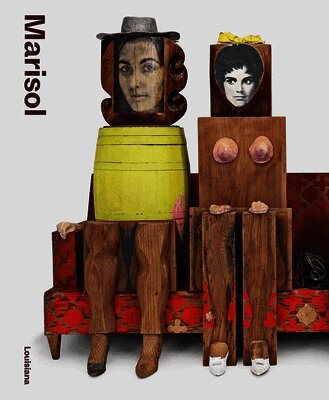
A sweeping retrospective for radical Pop artist Marisol, an enigmatic and overlooked figure of the 1960sMarisol (1930–2016) was one of the most radical and visionary artists of her generation. Combining found objects, plaster casts of her own body, and a singular blend of Pop and folk art, she created large tableaux that were by turns unsettling and humorous, colorful and dark. Her works posed sharp existential questions and made powerful statements on entrenched gender roles and equality. A close friend of Andy Warhol and a fixture in his early experimental films, Marisol enjoyed critical acclaim in the United States during the 1960s. In the following decade, she turned away from Pop toward more overtly political art, challenging the public and critics alike. Undeterred by changing tastes, she pursued an uncompromising practice across sculpture, drawing, printmaking and photography.This book accompanies the first major European presentation of Marisol's work, reclaiming her position as a forgotten classic through a swath of pieces spanning her career. Essays explore her place among female Pop artists, the gendered readings of her sculptures and the remarkable breadth of her creative vision.