K.L. Ngai - Böcker
Visar alla böcker från författaren K.L. Ngai. Handla med fri frakt och snabb leverans.
4 produkter
4 produkter
2 643 kr
Skickas inom 10-15 vardagar
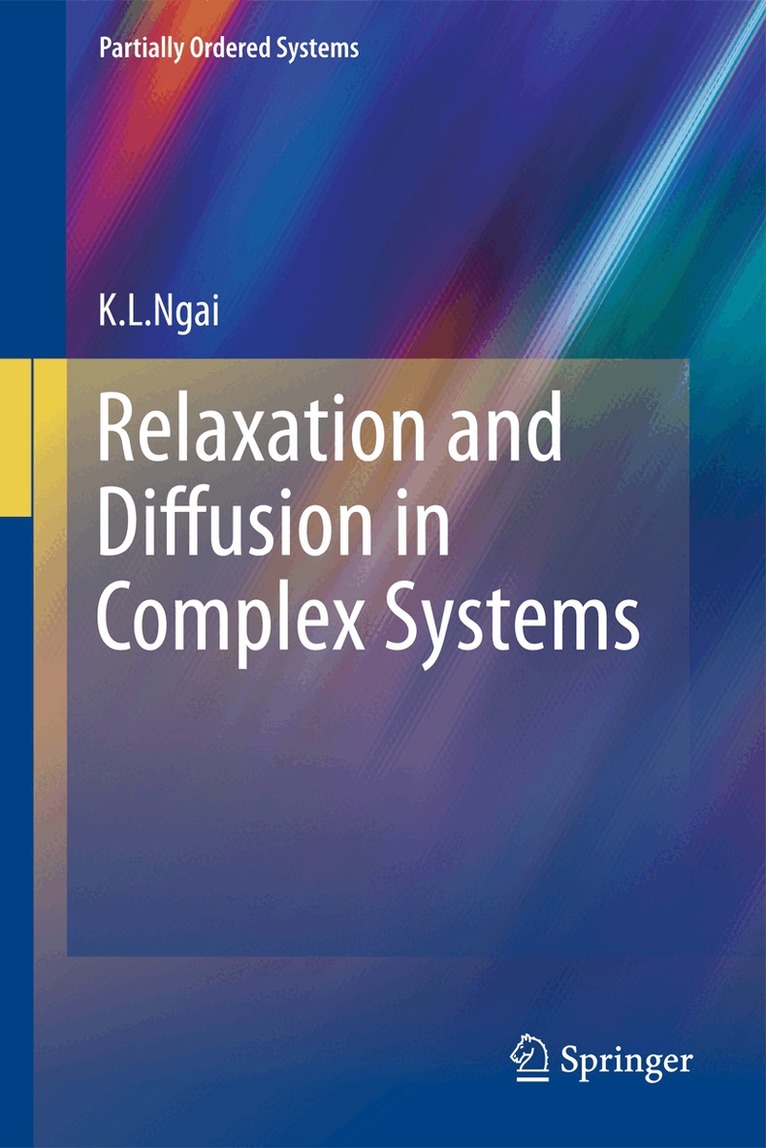
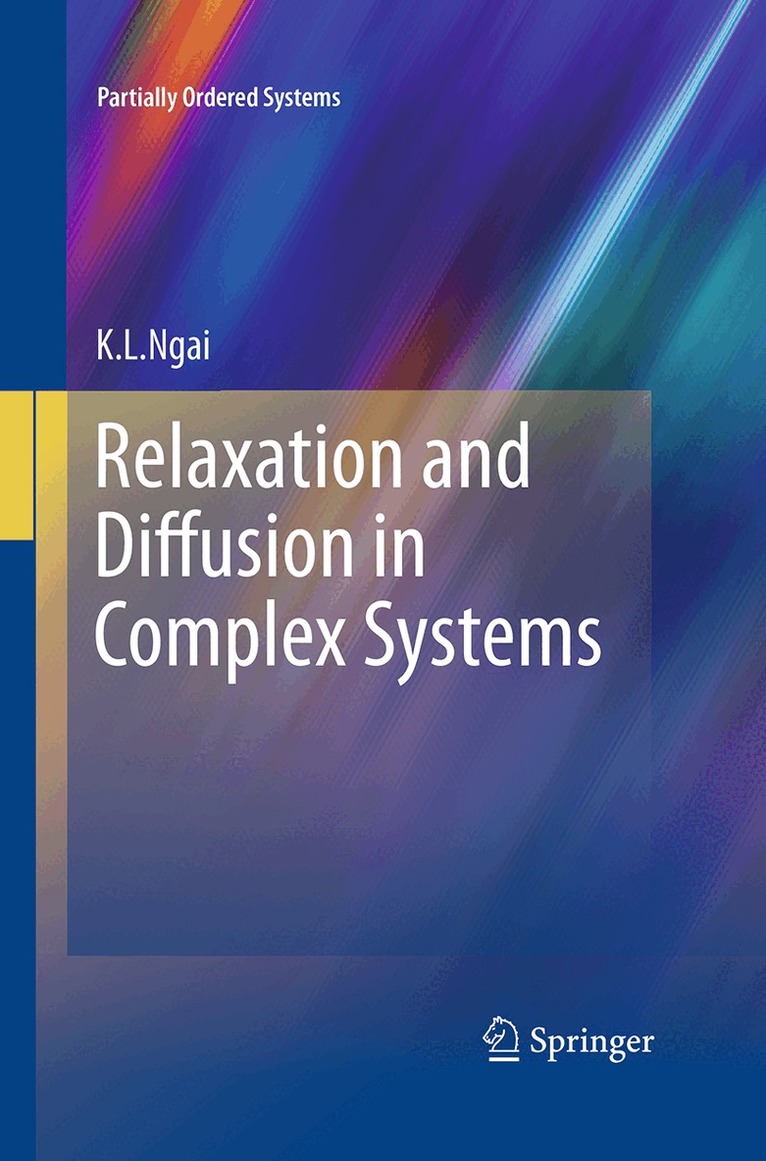
Relaxation and diffusion are general and common phenomena in many branches of condensed matter physics, chemistry and materials sciences. In disordered and partially ordered systems the classes of materials include liquids, colloids, polymers, rubbers, plastic crystals, biomolecules, ceramics, electrolytes, fuel cell materials, molten salts, glasses, and etc. Each class is further subdivided into many different types of materials. For example, glasses vary from metallic glasses, oxide glasses, chalcogenide glasses, polymeric and organic glasses, and each form a separate discipline. In past years research has suffered from undue fragmentation in terms of individual classes of materials. Dr. Ngai was one of the few who recognized the existence of a remarkable universality of relaxation and diffusion properties across the diverse classes of materials, and he suggested that some yet undiscovered fundamental physics is behind this universalityBeginning in 1979 with the publication of two articles in Comment Solid State Physics, Dr. Ngai launched an interdisciplinary study of relaxation and diffusion that has continued to the present. At this time, experimental evidence of universal behavior are plentiful and well substantiated. Dr. Ngai has also created a theoretical framework to characterize, correlate and interpret these universal properties. This book will be of interest to a large number of researchers across many disciplines.
2 643 kr
Skickas inom 10-15 vardagar
For example, glasses vary from metallic glasses, oxide glasses, chalcogenide glasses, polymeric and organic glasses, and each form a separate discipline.
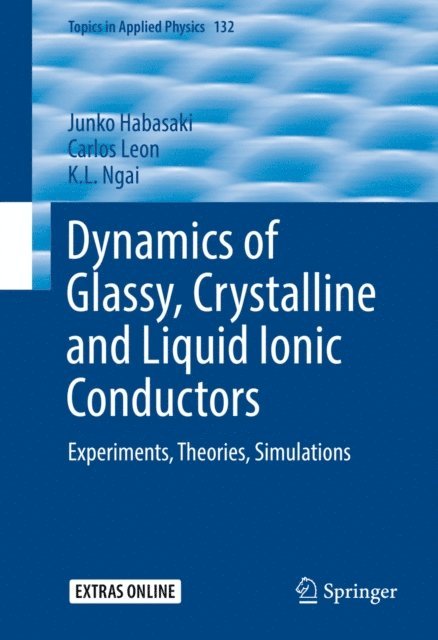
Dynamics of Glassy, Crystalline and Liquid Ionic Conductors
Experiments, Theories, Simulations
Inbunden, Engelska, 2016
1 800 kr
Skickas inom 10-15 vardagar
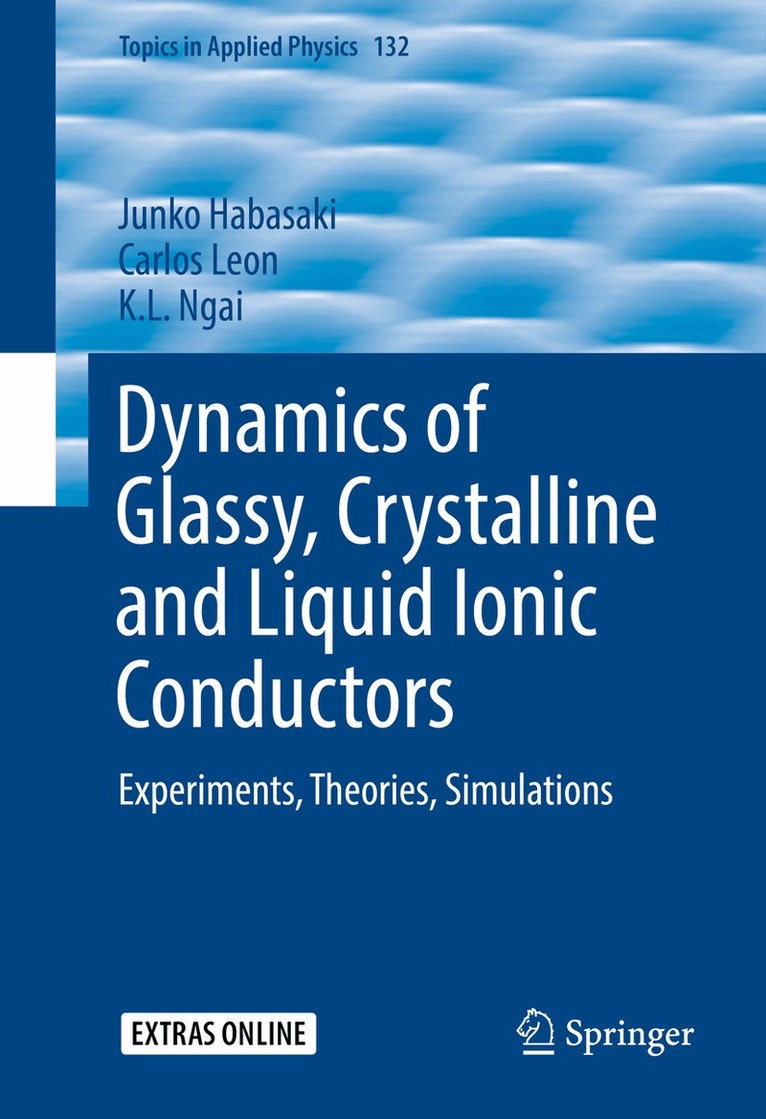
This book discusses the physics of the dynamics of ions in various ionically conducting materials, and applications including electrical energy generation and storage. The experimental techniques for measurements and characterization, molecular dynamics simulations, the theories of ion dynamics, and applications are all addressed by the authors, who are experts in their fields. The experimental techniques of measurement and characterization of dynamics of ions in glassy, crystalline, and liquid ionic conductors are introduced with the dual purpose of introducing the reader to the experimental activities of the field, and preparing the reader to understand the physical quantities derived from experiments. These experimental techniques include calorimetry, conductivity relaxation, nuclear magnetic resonance, light scattering, neutron scattering, and others. Methods of molecular dynamics simulations are introduced to teach the reader to utilize the technique for practical applications to specific problems. The results elucidate the dynamics of ions on some issues that are not accessible by experiments. The properties of ion dynamics in glassy, crystalline and liquid ionic conductors brought forth by experiments and simulations are shown to be universal, i.e. independent of physical and chemical structure of the ionic conductor as long as ion-ion interaction is the dominant factor. Moreover these universal properties of ion dynamics are shown to be isomorphic to other complex interacting systems including the large class of glass-forming materials with or without ionic conductivity.By covering the basic concepts, theories/models, experimental techniques and data, molecular dynamics simulations, and relating them together, Dynamics of Glassy, Crystalline and Liquid Ionic Conductors will be of great interest to many in basic and applied research areas from the broad and diverse communities of condensed matter physicists, chemists, materials scientists and engineers. The book also provides the fundamentals for an introduction to the field and it is written in such a way that can be used for teaching courses either at the undergraduate or graduate level in academic institutions.
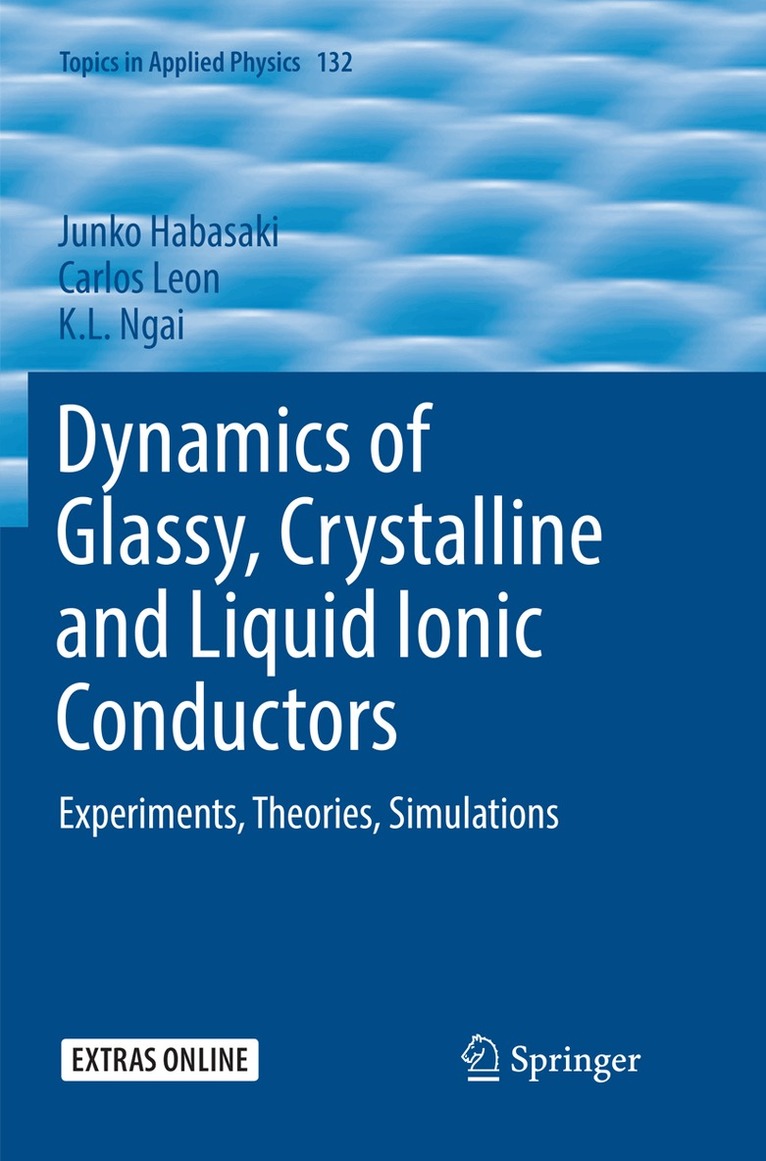
Dynamics of Glassy, Crystalline and Liquid Ionic Conductors
Experiments, Theories, Simulations
Häftad, Engelska, 2018
1 800 kr
Skickas inom 10-15 vardagar
This book discusses the physics of the dynamics of ions in various ionically conducting materials, and applications including electrical energy generation and storage. The experimental techniques for measurements and characterization, molecular dynamics simulations, the theories of ion dynamics, and applications are all addressed by the authors, who are experts in their fields. The experimental techniques of measurement and characterization of dynamics of ions in glassy, crystalline, and liquid ionic conductors are introduced with the dual purpose of introducing the reader to the experimental activities of the field, and preparing the reader to understand the physical quantities derived from experiments. These experimental techniques include calorimetry, conductivity relaxation, nuclear magnetic resonance, light scattering, neutron scattering, and others. Methods of molecular dynamics simulations are introduced to teach the reader to utilize the technique for practical applications to specific problems. The results elucidate the dynamics of ions on some issues that are not accessible by experiments. The properties of ion dynamics in glassy, crystalline and liquid ionic conductors brought forth by experiments and simulations are shown to be universal, i.e. independent of physical and chemical structure of the ionic conductor as long as ion-ion interaction is the dominant factor. Moreover these universal properties of ion dynamics are shown to be isomorphic to other complex interacting systems including the large class of glass-forming materials with or without ionic conductivity.By covering the basic concepts, theories/models, experimental techniques and data, molecular dynamics simulations, and relating them together, Dynamics of Glassy, Crystalline and Liquid Ionic Conductors will be of great interest to many in basic and applied research areas from the broad and diverse communities of condensed matter physicists, chemists, materials scientists and engineers. The book also provides the fundamentals for an introduction to the field and it is written in such a way that can be used for teaching courses either at the undergraduate or graduate level in academic institutions.