Häftad, Engelska, 2016
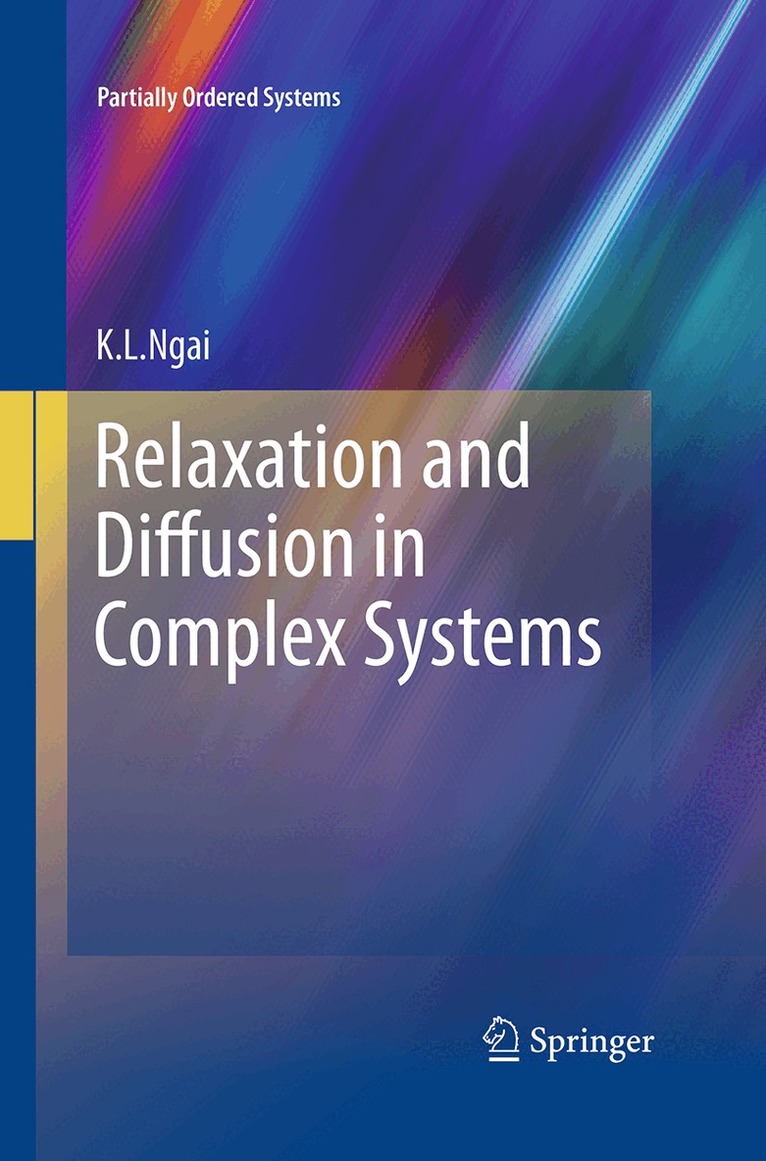
Relaxation and Diffusion in Complex Systems
Av K.L. Ngai
2727 kr
Beställningsvara. Skickas inom 10-15 vardagar. Fri frakt över 249 kr.
Beskrivning
Relaxation and diffusion are general and common phenomena in many branches of condensed matter physics, chemistry and materials sciences. In disordered and partially ordered systems the classes of materials include liquids, colloids, polymers, rubbers, plastic crystals, biomolecules, ceramics, electrolytes, fuel cell materials, molten salts, glasses, and etc. Each class is further subdivided into many different types of materials. For example, glasses vary from metallic glasses, oxide glasses, chalcogenide glasses, polymeric and organic glasses, and each form a separate discipline. In past years research has suffered from undue fragmentation in terms of individual classes of materials. Dr. Ngai was one of the few who recognized the existence of a remarkable universality of relaxation and diffusion properties across the diverse classes of materials, and he suggested that some yet undiscovered fundamental physics is behind this universalityBeginning in 1979 with the publication of two articles in Comment Solid State Physics, Dr. Ngai launched an interdisciplinary study of relaxation and diffusion that has continued to the present. At this time, experimental evidence of universal behavior are plentiful and well substantiated. Dr. Ngai has also created a theoretical framework to characterize, correlate and interpret these universal properties. This book will be of interest to a large number of researchers across many disciplines.
Produktinformation
- Utgivningsdatum: 2016-08-23
- Mått: 155 x 235 x 46 mm
- Vikt: 1 276 g
- Format: Häftad
- Språk: Engelska
- Serie: Partially Ordered Systems
- Antal sidor: 835
- Förlag: Springer-Verlag New York Inc.
- ISBN: 9781493938650
Utforska kategorier
Betyg & recensioner
0 recensioner
Inga recensioner tillgängliga.