Krish Seetah - Böcker
Visar alla böcker från författaren Krish Seetah. Handla med fri frakt och snabb leverans.
4 produkter
4 produkter
994 kr
Skickas inom 10-15 vardagar
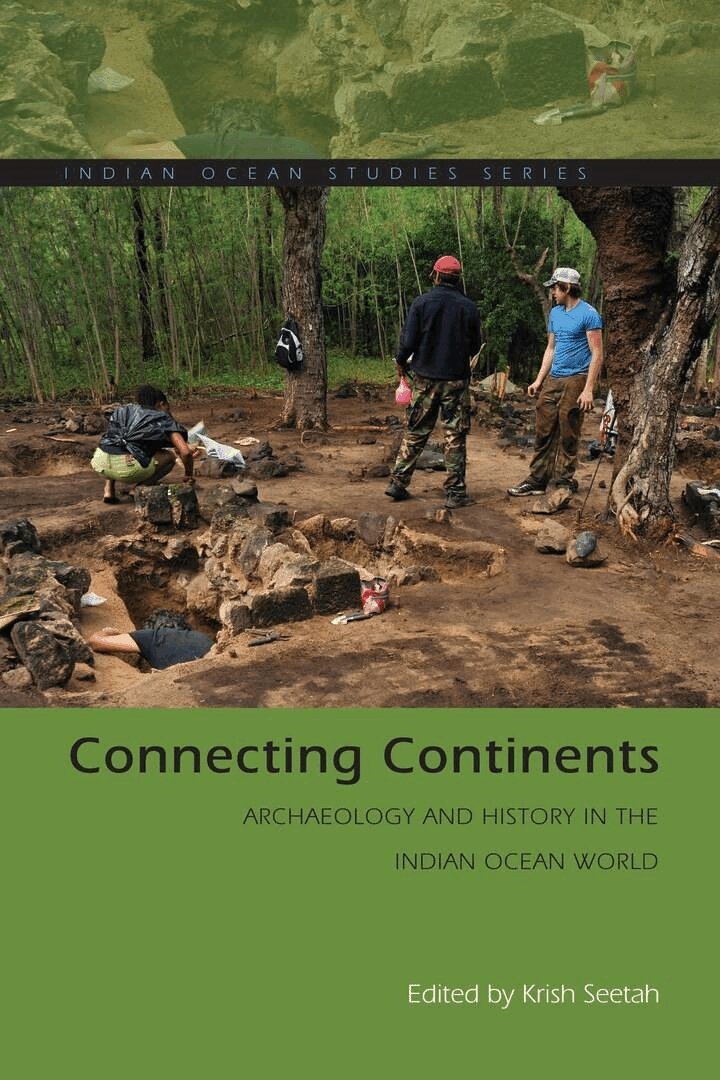
In recent decades, the vast and culturally diverse Indian Ocean region has increasingly attracted the attention of anthropologists, historians, political scientists, sociologists, and other researchers. Largely missing from this growing body of scholarship, however, are significant contributions by archaeologists and consciously interdisciplinary approaches to studying the region's past and present. Connecting Continents addresses two important issues: how best to promote collaborative research on the Indian Ocean world, and how to shape the research agenda for a region that has only recently begun to attract serious interest from historical archaeologists. The archaeologists, historians, and other scholars who have contributed to this volume tackle important topics such as the nature and dynamics of migration, colonization, and cultural syncretism that are central to understanding the human experience in the Indian Ocean basin. This groundbreaking work also deepens our understanding of topics of increasing scholarly and popular interest, such as the ways in which people construct and understand their heritage and can make use of exciting new technologies like DNA and environmental analysis. Because it adopts such an explicitly comparative approach to the Indian Ocean, Connecting Continents provides a compelling model for multidisciplinary approaches to studying other parts of the globe. Contributors: Richard B. Allen, Edward A. Alpers, Atholl Anderson, Nicole Boivin, Diego Calaon, Aaron Camens, Saša Čaval, Geoffrey Clark, Alison Crowther, Corinne Forest, Simon Haberle, Diana Heise, Mark Horton, Paul Lane, Martin Mhando, and Alistair Patterson.
385 kr
Skickas inom 7-10 vardagar
In recent decades, the vast and culturally diverse Indian Ocean region has increasingly attracted the attention of anthropologists, historians, political scientists, sociologists, and other researchers. Largely missing from this growing body of scholarship, however, are significant contributions by archaeologists and consciously interdisciplinary approaches to studying the region's past and present. Connecting Continents addresses two important issues: how best to promote collaborative research on the Indian Ocean world, and how to shape the research agenda for a region that has only recently begun to attract serious interest from historical archaeologists. The archaeologists, historians, and other scholars who have contributed to this volume tackle important topics such as the nature and dynamics of migration, colonization, and cultural syncretism that are central to understanding the human experience in the Indian Ocean basin. This groundbreaking work also deepens our understanding of topics of increasing scholarly and popular interest, such as the ways in which people construct and understand their heritage and can make use of exciting new technologies like DNA and environmental analysis. Because it adopts such an explicitly comparative approach to the Indian Ocean, Connecting Continents provides a compelling model for multidisciplinary approaches to studying other parts of the globe. Contributors: Richard B. Allen, Edward A. Alpers, Atholl Anderson, Nicole Boivin, Diego Calaon, Aaron Camens, Saša Čaval, Geoffrey Clark, Alison Crowther, Corinne Forest, Simon Haberle, Diana Heise, Mark Horton, Paul Lane, Martin Mhando, and Alistair Patterson.
1 282 kr
Skickas inom 7-10 vardagar
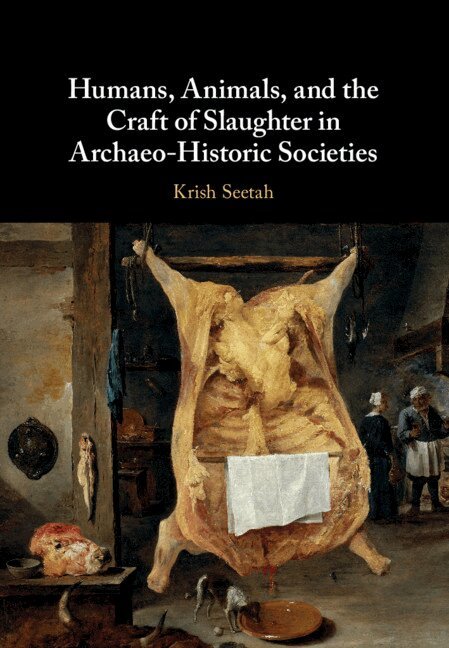
In this book, Krish Seetah uses butchery as a point of departure for exploring the changing historical relationships between animal utility, symbolism, and meat consumption. Seetah brings together several bodies of literature - on meat, cut marks, craftspeople, and the role of craft in production - that have heretofore been considered in isolation from one another. Focusing on the activity inherent in butcher, he describes the history of knowledge that typifies the craft. He also provides anthropological and archaeological case studies which showcase examples of butchery practices in varied contexts that are seldom identified with zooarchaeological research. Situating the relationship between practice, practitioner, material and commodity, this imaginative study offers new insights into food production, consumption, and the craft of cuisine.
1 573 kr
Kommande
This book highlights critical developments in maritime research focusing on transformations brought about by the establishment of the ‘Blue Economy’ as well as the increasing recognition of the value of heritage for contemporary communities. It brings together a collection of chapters that seek to identify, and shape, how the field of maritime archaeology will mature in the coming decades as approaches, technologies, as well as expectations and uses, change and adapt.The book specifically sets out to tackle an interrelated suite of major new topics focused on maritime resources, UNESCO and the impacts of the 2001 Convention on the Protection of the Underwater Cultural Heritage, with an express focus on how maritime heritage can benefit local communities. Intended for an international audience, the book is written in an accessible style, with contributions that provide an in-depth discussion of the trends outlined above for students and researchers working in maritime archaeology and heritage.Chapter 2 is available open access under a Creative Commons Attribution 4.0 International License via link.springer.com.