ku'ualoha ho'omanawanui - Böcker
Visar alla böcker från författaren ku'ualoha ho'omanawanui. Handla med fri frakt och snabb leverans.
3 produkter
3 produkter
326 kr
Skickas inom 7-10 vardagar
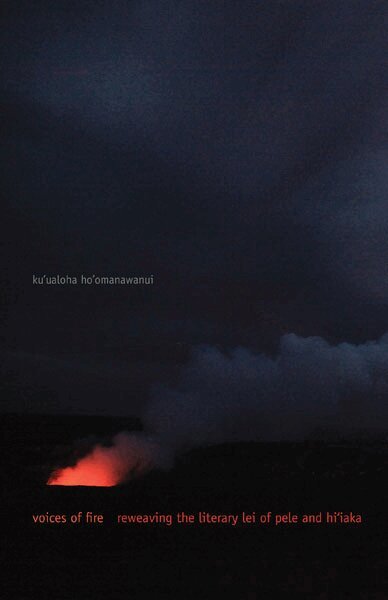
Stories of the volcano goddess Pele and her youngest sister Hi‘iaka, patron of hula, are most familiar as a form of literary colonialism-first translated by missionary descendants and others, then co-opted by Hollywood and the tourist industry. But far from quaint tales for amusement, the Pele and Hi‘iaka literature published between the 1860s and 1930 carried coded political meaning for the Hawaiian people at a time of great upheaval. Voices of Fire recovers the lost and often-suppressed significance of this literature, restoring it to its primary place in Hawaiian culture. Ku‘ualoha ho‘omanawanui takes up mo‘olelo (histories, stories, narratives), mele (poetry, songs), oli (chants), and hula (dances) as they were conveyed by dozens of authors over a tumultuous sixty-eight-year period characterized by population collapse, land alienation, economic exploitation, and military occupation. Her examination shows how the Pele and Hi‘iaka legends acted as a framework for a Native sense of community. Freeing the mo‘olelo and mele from colonial stereotypes and misappropriations, Voices of Fire establishes a literary mo‘okū‘auhau, or genealogy, that provides a view of the ancestral literature in its indigenous contexts. The first book-length analysis of Pele and Hi‘iaka literature written by a Native Hawaiian scholar, Voices of Fire compellingly lays the groundwork for a larger conversation of Native American literary nationalism.
197 kr
Skickas inom 7-10 vardagar
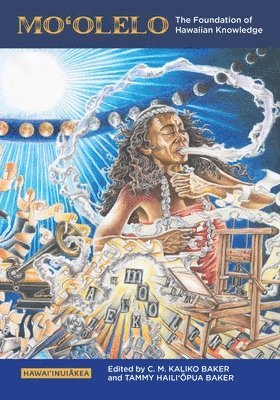
An essential contribution to contemporary Kanaka Maoli (Native Hawaiian) scholarship, Moʻolelo: The Foundation of Hawaiian Knowledge elevates our understanding of the importance of language and narrative to cultural revitalization. Moʻolelo preserve the words, phrases, sentences, idioms, proverbs, and poetry that define Kānaka Maoli. Encompassing narratives, literature, histories, and traditions, moʻolelo are intimately entwined with cultural identity, reciprocal relationships, and the valuing of place, collectively informing and enriching all Hawaiian life. The contributors, all Kanaka Maoli scholars, artists, and advocates from across the Pae ʻĀina o Hawaiʻi (Hawaiian archipelago), all fluent in ʻŌlelo Hawaiʻi (Hawaiian language), describe how moʻolelo constantly inform their linguistic, literary, translation, rhetorical, and performance practices, as well as their political and cultural work. Chapters in ‘Ōlelo Hawaiʻi alternate with chapters in English, with translanguaging appearing when needed.Kamalani Johnson honors Larry Kauanoe Kimura’s commitment to the revitalization of ʻŌlelo Hawaiʻi. Cover artist ʻAhukini Kupihea tells the story of his own creative process and uncovers the layers of meaning behind his artwork. Through careful analysis of nineteenth-century texts, R. Keawe Lopes, Jr., demonstrates the importance of moʻolelo and mele (song/poetic expression) preservation. Hiapo Perriera explores the profound relationship between moʻolelo and the resurgence of kākāʻōlelo (oratory). Kekuhi KealiʻikanakaʻoleoHaililani shares a methodology and praxis for engaging with moʻolelo. Highlighting the ideology of aloha ʻāina embedded in mele, Kahikina de Silva reveals themes of political resistance found in mele about food. Kaipulaumakaniolono Baker examines mele that archive key movements in Hawaiʻi’s history and employs contemporary practices to document current events. Tammy Hailiʻōpua Baker delineates the political implications of drawing on moʻolelo heritage in Kanaka Maoli theatre. kuʻualoha hoʻomanawanui focuses upon moʻolelo found in the politically conscious artwork of Kanaka Maoli wāhine (women) visual artists. Kamaoli Kuwada evaluates the difficulties and benefits of translation and stresses the importance of fluency. C. M. Kaliko Baker further demonstrates how fluency and comprehension of moʻolelo make it possible to retrieve essential empirical data on Hawaiian linguistic practice. Kalehua Krug takes us on his journey of learning to become a kākau mōlī (traditional tattoo artist). The essays together provide rich perspectives for Kānaka Maoli seeking to understand their pasts, to define who they are today, and to set their courses for desired and necessary futures.
432 kr
Skickas inom 7-10 vardagar
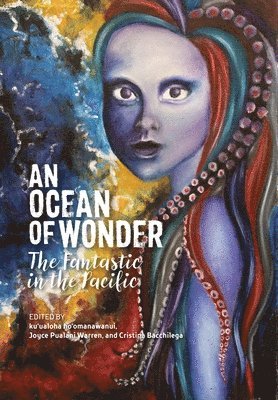
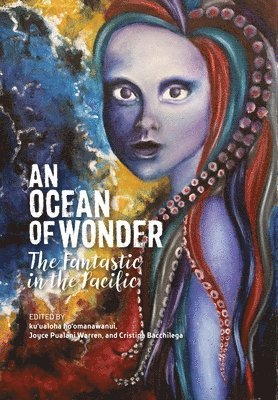
An Ocean of Wonder: The Fantastic in the Pacific brings together fifty writers and artists from across Moananuiākea working in myriad genres across media, ranging from oral narratives and traditional wonder tales to creative writing as well as visual artwork and scholarly essays. Collectively, this anthology features the fantastic as present-day Indigenous Pacific world-building that looks to the past in creating alternative futures, and in so doing reimagines relationships between peoples, environments, deities, nonhuman relatives, history, dreams, and storytelling. Wonder is activated by curiosity, humility in the face of mystery, and engagement with possibilities. We see wonder and the fantastic as general modes of expression that arenot confined to realism. As such, the fantastic encompasses fantasy, science fiction, magic realism, fabulation, horror, fairy tale, utopia, dystopia, and speculative fiction. We include Black, feminist, and queer futurisms, Indigenous wonderworks, Hawaiian moʻolelo kamahaʻo and moʻolelo āiwaiwa, Sāmoan fāgogo, and other non-mimetic genres from specific cultures, because we recognize that their refusal to adopt restrictive Euro-American definitions of reality is whatinspires and enables the fantastic to flourish.As artistic, intellectual, and culturally based expressions that encode and embody Indigenous knowledge, the multimodal moʻolelo in this collection upend monolithic, often exoticizing, and demeaning stereotypes of the Pacific and situate themselves in conversation with critical understandings of the global fantastic, Indigenous futurities, social justice, and decolonial and activist storytelling.In this collection, Oceanic ideas and images surround and connect to Hawaiʻi, which is for the three coeditors, a piko (center); at the same time, navigating both juxtaposition and association, the collection seeks to articulate pilina (relationships) across genres, locations, time, and media and to celebrate the multiplicity and relationality of the fantastic in Oceania.