Kyung-Ja Chun – författare
Visar alla böcker från författaren Kyung-Ja Chun. Handla med fri frakt och snabb leverans.
8 produkter
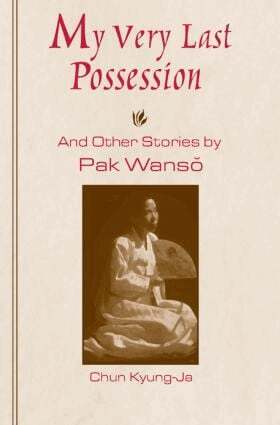
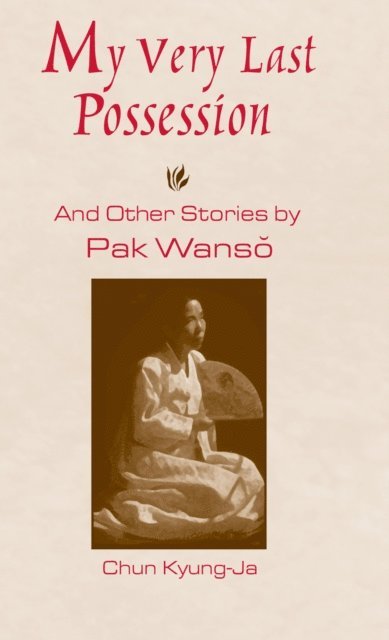
My Very Last Possession and Other Stories
Inbunden, 1999
3535 kr
Lägg i varukorg
An anthology of ten short stories by one of Korea's foremost living writers. Pak Wanso is the author of five novels, including The Naked Tree, and of several best-selling volumes of short prose. Her works have sold millions of copies in Korea, where the public and critics alike have applauded Pak …
Peace Under Heaven: A Modern Korean Novel
A Modern Korean Novel
Av Kyung-Ja Chun, Man-Sik Chae
E-bok, 2015
994 kr
Lägg i varukorg
Originally published in Seoul in 1938, soon after the outbreak of the Pacific War, "Peace Under Heaven" is a satirical novel centering on the household of a Korean landlord during the Japanese colonial occupation. Master Yun, embodying the traditional ambitions of a standard Korean paterfamilias, …
Peace Under Heaven: A Modern Korean Novel
A Modern Korean Novel
Av Kyung-Ja Chun, Man-Sik Chae
E-bok, 2015
1016 kr
Lägg i varukorg
Originally published in Seoul in 1938, soon after the outbreak of the Pacific War, "Peace Under Heaven" is a satirical novel centering on the household of a Korean landlord during the Japanese colonial occupation. Master Yun, embodying the traditional ambitions of a standard Korean paterfamilias, …
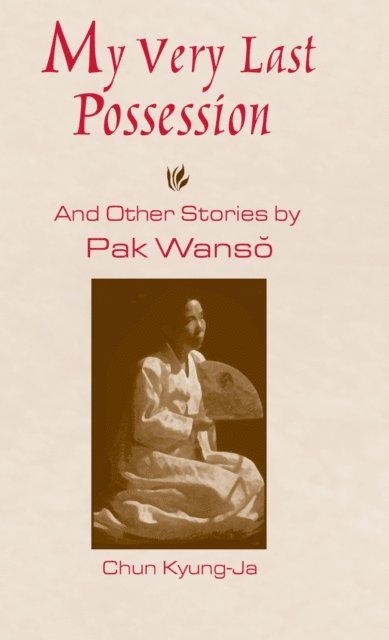
My Very Last Possession and Other Stories
E-bok, 2018
1016 kr
Lägg i varukorg
An anthology of ten short stories by one of Korea''s foremost living writers. Pak Wanso is the author of five novels, including The Naked Tree, and of several best-selling volumes of short prose. Her works have sold millions of copies in Korea, where the public and critics alike have applauded Pak …
My Very Last Possession and Other Stories
E-bok, 2018
994 kr
Lägg i varukorg
An anthology of ten short stories by one of Korea''s foremost living writers. Pak Wanso is the author of five novels, including The Naked Tree, and of several best-selling volumes of short prose. Her works have sold millions of copies in Korea, where the public and critics alike have applauded Pak …
Peace Under Heaven: A Modern Korean Novel
A Modern Korean Novel
Av Man-Sik Chae, Kyung-Ja Chun
Inbunden, 1993
2896 kr
Lägg i varukorg
Originally published in Seoul in 1938, soon after the outbreak of the Pacific War, "Peace Under Heaven" is a satirical novel centering on the household of a Korean landlord during the Japanese colonial occupation. Master Yun, embodying the traditional ambitions of a standard Korean paterfamilias, …
Peace Under Heaven: A Modern Korean Novel
A Modern Korean Novel
Av Man-Sik Chae, Kyung-Ja Chun
Häftad, 1993
864 kr
Lägg i varukorg
Originally published in Seoul in 1938, soon after the outbreak of the Pacific War, "Peace Under Heaven" is a satirical novel centering on the household of a Korean landlord during the Japanese colonial occupation. Master Yun, embodying the traditional ambitions of a standard Korean paterfamilias, …
My Very Last Possession and Other Stories
Häftad, 1999
478 kr
Tillfälligt slut
An anthology of ten short stories by one of Korea's foremost living writers. Pak Wanso is the author of five novels, including The Naked Tree, and of several best-selling volumes of short prose. Her works have sold millions of copies in Korea, where the public and critics alike have applauded Pak …