L. Hens - Böcker
Visar alla böcker från författaren L. Hens. Handla med fri frakt och snabb leverans.
8 produkter
8 produkter
1 593 kr
Skickas inom 10-15 vardagar
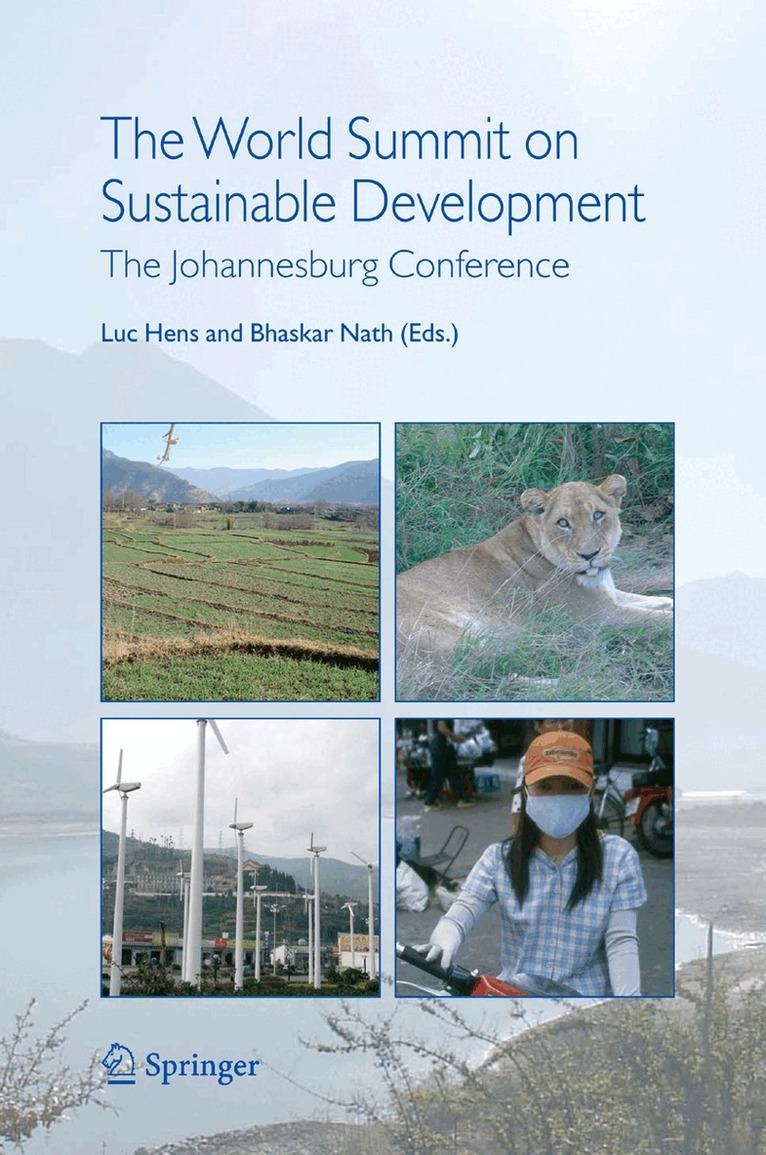
The Johannesburg Earth Summit, which took place in the summer of 2002, confirmed the irreversible nature of the process that is founded upon the concept of Sustainable Development initially given form at Rio de Janeiro ten years earlier. This process is to be welcomed, while at the same time recognising the tremendous work that has taken place in converting this concept into a more concrete vision. The Sustainable Development concept relates to every human activity, covering the social, economic and ecological dimensions, which are often in conflict. Consequently, it is most important to include in research programmes some thought of the way people behave. In theory, the general elements of this inclusion are relatively easily defined. However, assessing the effects of one or another decision on all the interactions between the social, economic and ecological dimensions involves significant difficulties. All the more since we have to recognise, in all modesty, that humanity has not always excelled in the art of forward studies. In fact, the Precautionary Principle was introduced partly as a reaction to the sometimes blind confidence in technology and logic (even if it is sometimes invoked in an exaggerated manner). Nevertheless, the duty to act for the sake of present and future generations is pressing. Throughout history mankind has had to adapt and to innovate. Now, at st the beginning of the 21 century the urgent need for such adaptations is obvious.
2 121 kr
Skickas inom 10-15 vardagar
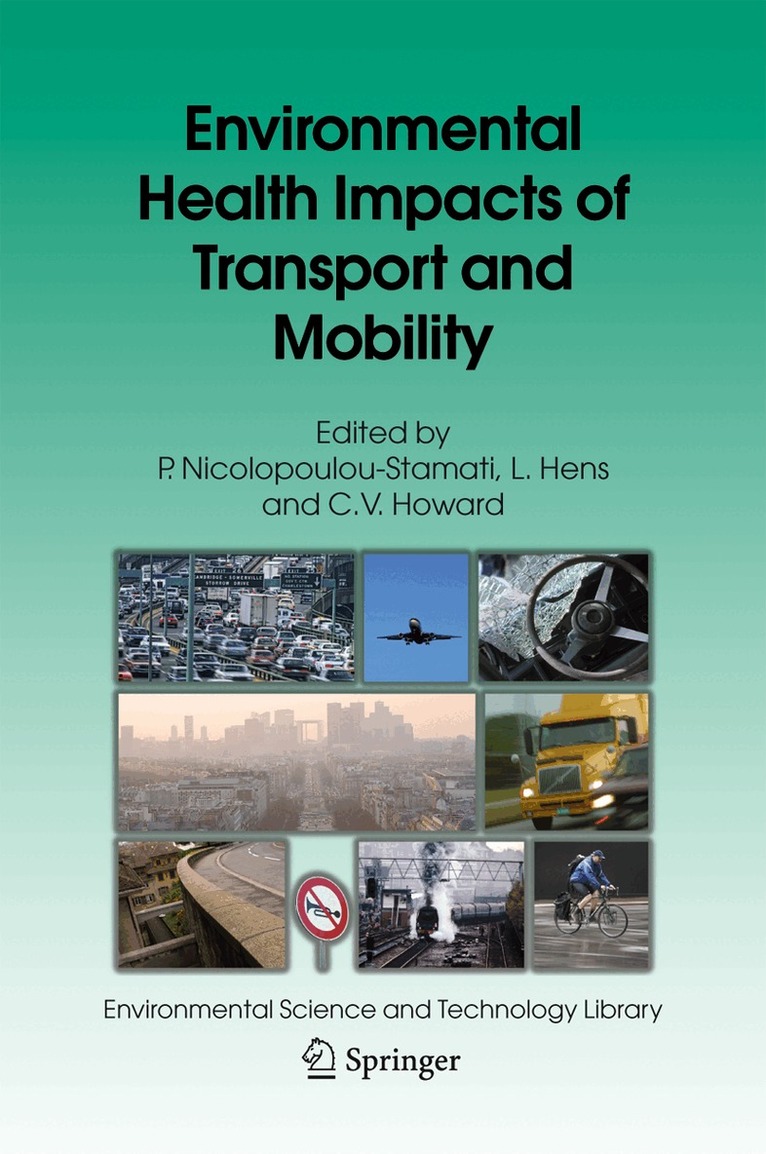
The day I became the Flemish Minister for Mobility in 1999, my region of Flanders was one of the poorest students of the “EU class” for traffic safety. This was in spite of a variety of measures taken by previous governments, to improve traffic and safety because of unsafe driving behaviour and to reduce the emissions of traff- related pollutants. In this context, I focussed on one specific aspect of traffic safety: the number of traffic deaths and injuries on the roads. My intention was to raise a broad societal debate on mobility. It seemed to me that the most complex issue was to convince those people who are most intimately related to their cars, to leave their vehicles at home. After decades with slogans such as “My car, my freedom” it is politically impossible to withdraw this “freedom” on the basis of ecological arguments. I often noticed that although the majority of the population wants a cleaner environment, the same majority is convinced that ‘pollution is caused by others’. Moreover, the most important environmental problems tend to appear only in the long term. In contrast, the numerous, mainly young, victims on the road, among them the dead and the seriously injured youngsters from ‘weekend’ accidents are immediately visible. In 2001, Flanders totalled 848 road-accident deaths, 7725 seriously injured persons and 39070 minor injuries, from a total population of 6 million people. These are only the recorded figures.
2 185 kr
Skickas inom 10-15 vardagar
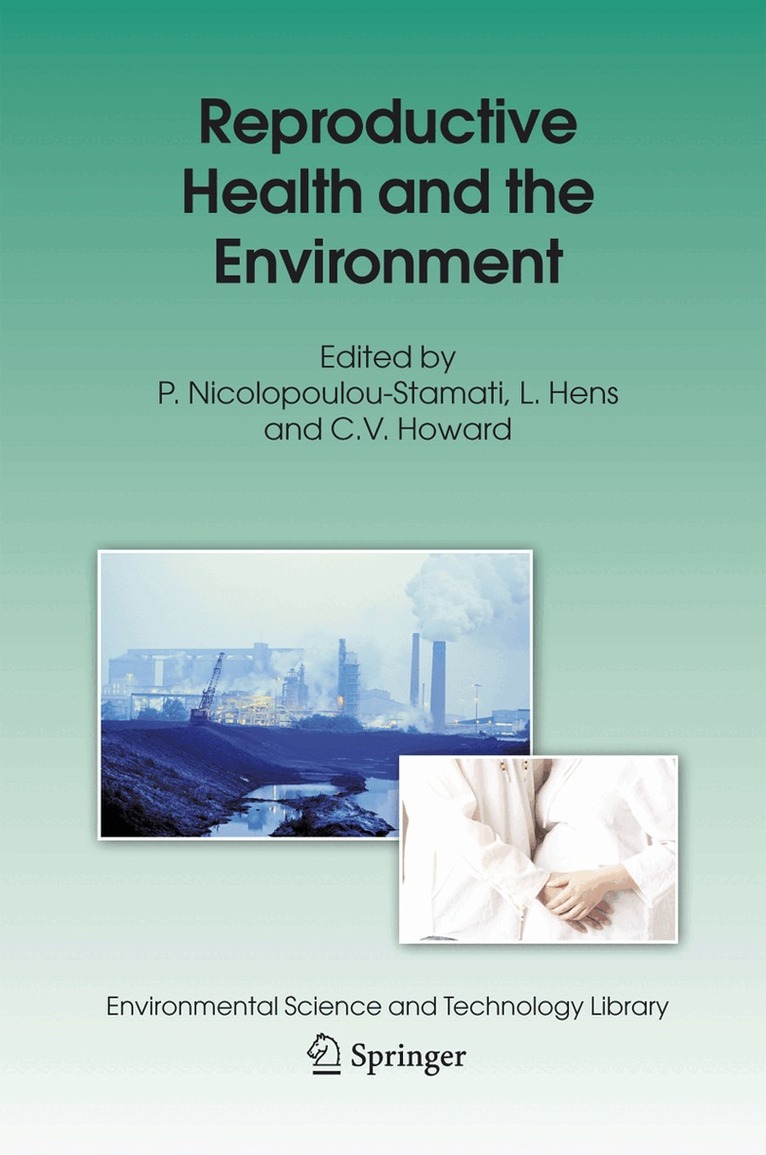
The scope of environmental impact on reproduction is very large. It aims at covering all aspects of reproductive problems and their links to the environment. Therefore, it deals with female and male reproductive impairments, whatever their severity and their sites, gonad or extra-gonad. For women, effects include direct lesions of the oocyte, with possibilities of chromosomal abnormalities but also malformations of the reproductive tract. Reduced fertility and in some cases total infertility may also result from menstrual irregularities, which can at times include anovulatory cycles. Hormonal changes, even in the absence of menstrual irregularities may also lead to decreased fertility. In addition to congenital malformations, other impairments of the reproductive apparatus may occur, as in the polycystic ovarian syndrome or in endometriosis. Finally one can also include effects during pregnancy leading to spontaneous abortion, preterm delivery still birth or altered sex ratio. Impacts on age at menarche and age at menopause lead to a change in the duration of reproductive life.
2 121 kr
Skickas inom 10-15 vardagar
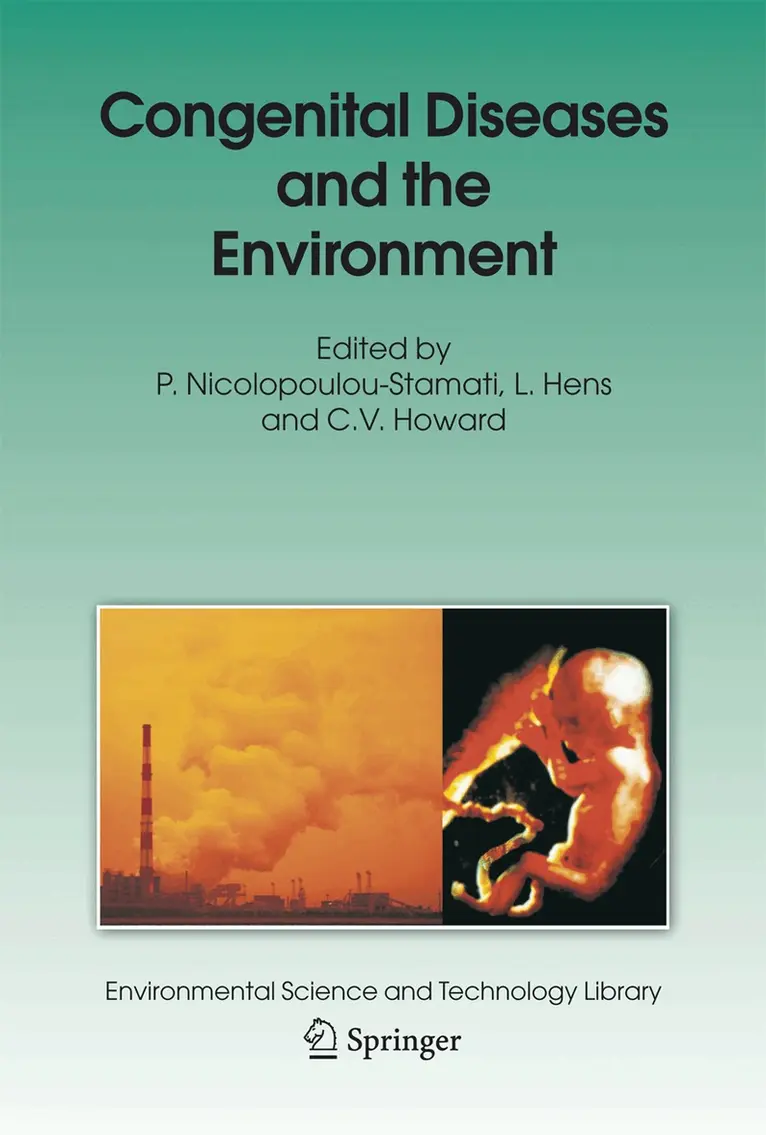
In recent years, increasing attention and resources have been brought to bear on the relationship between the environment and congenital diseases. These diseases were previously thought to be mostly due to genetic causes. Even though the importance of genes as factors in causation is accepted, environmental factors seem to be implicated just as strongly. This book explores some further concepts that have arisen from more recent perceptions of environmental effects and their possible interactions with living systems. Amongst the topics discussed are:-effects of prenatal exposure to toxic chemicals-intra-uterine exposure to drugs-effects of endocrine disrupters-environmental risk and sex ratio in newborns-surveillance of environmental impact-research and policy.Discussion and presentation of old and novel ideas is targeted at developing a more holistic and united perception of the interaction between congenital diseases and the environment.
1 564 kr
Skickas inom 5-8 vardagar
The Johannesburg Earth Summit, which took place in the summer of 2002, confirmed the irreversible nature of the process that is founded upon the concept of Sustainable Development initially given form at Rio de Janeiro ten years earlier. This process is to be welcomed, while at the same time recognising the tremendous work that has taken place in converting this concept into a more concrete vision. The Sustainable Development concept relates to every human activity, covering the social, economic and ecological dimensions, which are often in conflict. Consequently, it is most important to include in research programmes some thought of the way people behave. In theory, the general elements of this inclusion are relatively easily defined. However, assessing the effects of one or another decision on all the interactions between the social, economic and ecological dimensions involves significant difficulties. All the more since we have to recognise, in all modesty, that humanity has not always excelled in the art of forward studies. In fact, the Precautionary Principle was introduced partly as a reaction to the sometimes blind confidence in technology and logic (even if it is sometimes invoked in an exaggerated manner). Nevertheless, the duty to act for the sake of present and future generations is pressing. Throughout history mankind has had to adapt and to innovate. Now, at st the beginning of the 21 century the urgent need for such adaptations is obvious.
2 185 kr
Skickas inom 10-15 vardagar
The day I became the Flemish Minister for Mobility in 1999, my region of Flanders was one of the poorest students of the “EU class” for traffic safety. This was in spite of a variety of measures taken by previous governments, to improve traffic and safety because of unsafe driving behaviour and to reduce the emissions of traff- related pollutants. In this context, I focussed on one specific aspect of traffic safety: the number of traffic deaths and injuries on the roads. My intention was to raise a broad societal debate on mobility. It seemed to me that the most complex issue was to convince those people who are most intimately related to their cars, to leave their vehicles at home. After decades with slogans such as “My car, my freedom” it is politically impossible to withdraw this “freedom” on the basis of ecological arguments. I often noticed that although the majority of the population wants a cleaner environment, the same majority is convinced that ‘pollution is caused by others’. Moreover, the most important environmental problems tend to appear only in the long term. In contrast, the numerous, mainly young, victims on the road, among them the dead and the seriously injured youngsters from ‘weekend’ accidents are immediately visible. In 2001, Flanders totalled 848 road-accident deaths, 7725 seriously injured persons and 39070 minor injuries, from a total population of 6 million people. These are only the recorded figures.
2 185 kr
Skickas inom 10-15 vardagar
The scope of environmental impact on reproduction is very large. It aims at covering all aspects of reproductive problems and their links to the environment. Therefore, it deals with female and male reproductive impairments, whatever their severity and their sites, gonad or extra-gonad. For women, effects include direct lesions of the oocyte, with possibilities of chromosomal abnormalities but also malformations of the reproductive tract. Reduced fertility and in some cases total infertility may also result from menstrual irregularities, which can at times include anovulatory cycles. Hormonal changes, even in the absence of menstrual irregularities may also lead to decreased fertility. In addition to congenital malformations, other impairments of the reproductive apparatus may occur, as in the polycystic ovarian syndrome or in endometriosis. Finally one can also include effects during pregnancy leading to spontaneous abortion, preterm delivery still birth or altered sex ratio. Impacts on age at menarche and age at menopause lead to a change in the duration of reproductive life.
2 185 kr
Skickas inom 10-15 vardagar
In recent years, increasing attention and resources have been brought to bear on the relationship between the environment and congenital diseases. These diseases were previously thought to be mostly due to genetic causes. Even though the importance of genes as factors in causation is accepted, environmental factors seem to be implicated just as strongly. This book explores some further concepts that have arisen from more recent perceptions of environmental effects and their possible interactions with living systems. Amongst the topics discussed are:-effects of prenatal exposure to toxic chemicals-intra-uterine exposure to drugs-effects of endocrine disrupters-environmental risk and sex ratio in newborns-surveillance of environmental impact-research and policy.Discussion and presentation of old and novel ideas is targeted at developing a more holistic and united perception of the interaction between congenital diseases and the environment.