Laura Estill - Böcker
Visar alla böcker från författaren Laura Estill. Handla med fri frakt och snabb leverans.
8 produkter
8 produkter
269 kr
Skickas inom 7-10 vardagar
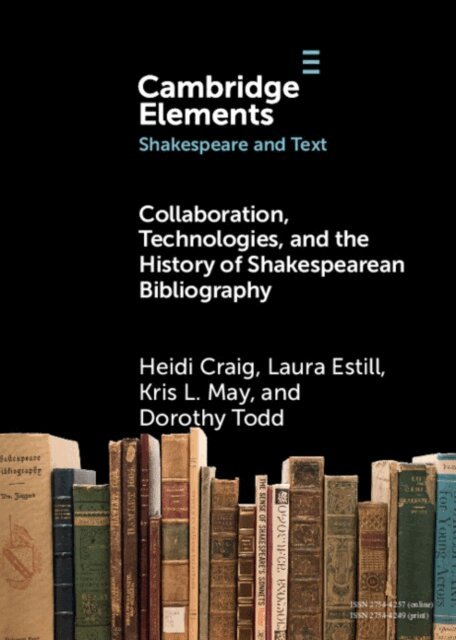
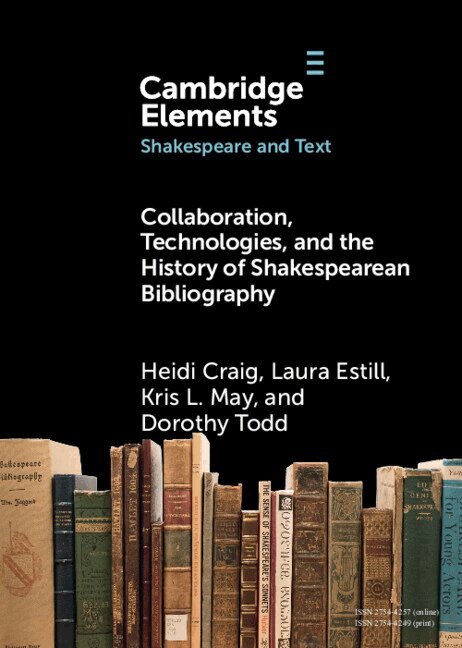
This Element traces the history of Shakespearean bibliography from its earliest days to the present. With an emphasis on how we enumerate and find scholarship about Shakespeare, this Element argues that understanding bibliographies is foundational to how we research Shakespeare. From early modern catalogs of Shakespeare plays, to early bibliographers such as Albert Cohn (1827-1905) and William Jaggard (1868-1947), to present-day digital projects such as the online World Shakespeare Bibliography, this Element underscores how the taxonomic organization, ambit, and media of enumerative Shakespearean bibliography projects directly impact how scholars value and can use these resources. Ultimately, this Element asks us to rethink our assumptions about Shakespearean bibliography by foregrounding the labor, collaboration, technological innovations, and critical decisions that go into creating and sustaining bibliographies at all stages. This title is also available as Open Access on Cambridge Core.
1 771 kr
Skickas inom 10-15 vardagar
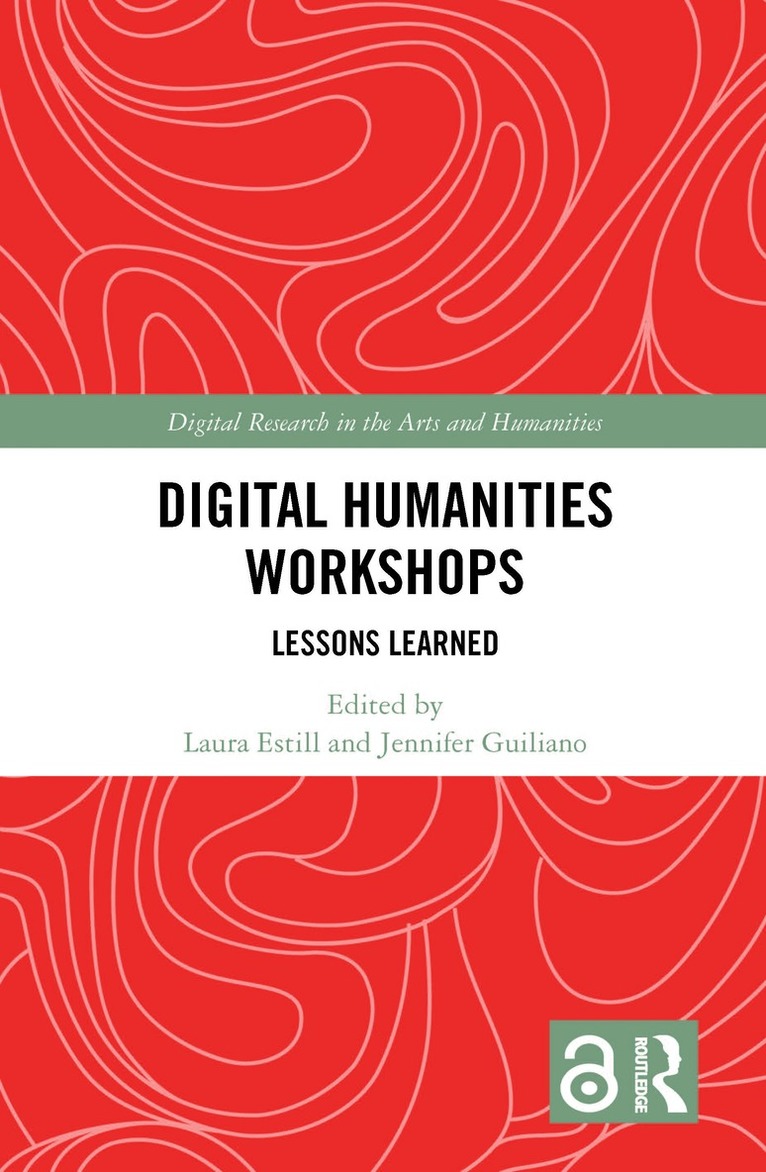
Digital Humanities Workshops is the first volume to focus explicitly on the most common and accessible kind of training in digital humanities (DH): workshops.Drawing together the experiences and expertise of dozens of scholars and practitioners from a variety of disciplines and geographical contexts, the chapters in this collection examine the development, deployment, and assessment of a workshop or workshop series. In the first section, "Where?", the authors seek to situate digital humanities workshops within local, regional, and national contexts. The second section, "Who?", guides readers through questions of audience in relation to digital humanities workshops. In the third and final section, "How?", authors explore the mechanics of such workshops. Taken together, the chapters in this volume answer the important question: why are digital humanities workshops so important and what is their present and future role?Digital Humanities Workshops examines a range of digital humanities workshops and highlights audiences, resources, and impact. This volume will appeal to academics, researchers and postgraduate students, as well as professionals working in the DH field.
564 kr
Skickas inom 10-15 vardagar
Digital Humanities Workshops is the first volume to focus explicitly on the most common and accessible kind of training in digital humanities (DH): workshops.Drawing together the experiences and expertise of dozens of scholars and practitioners from a variety of disciplines and geographical contexts, the chapters in this collection examine the development, deployment, and assessment of a workshop or workshop series. In the first section, "Where?", the authors seek to situate digital humanities workshops within local, regional, and national contexts. The second section, "Who?", guides readers through questions of audience in relation to digital humanities workshops. In the third and final section, "How?", authors explore the mechanics of such workshops. Taken together, the chapters in this volume answer the important question: why are digital humanities workshops so important and what is their present and future role?Digital Humanities Workshops examines a range of digital humanities workshops and highlights audiences, resources, and impact. This volume will appeal to academics, researchers and postgraduate students, as well as professionals working in the DH field.
3 195 kr
Skickas inom 10-15 vardagar
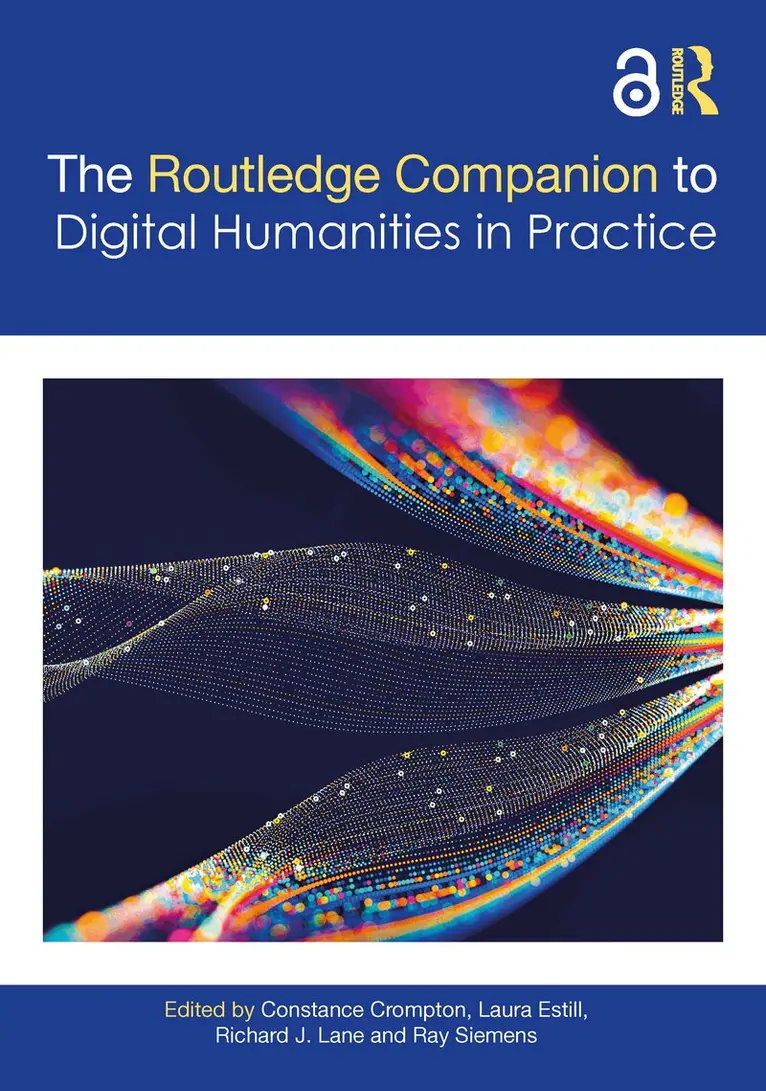
The Companion to Digital Humanities in Practice offers international perspectives on how we teach and research in and with digital humanities today.Building on the foundation of earlier publications that focused on practice in the field, this Companion provides a significant treatment of pertinent issues and contexts, extending breadth and depth, as well as reach, in terms of geographical diversity of topics and contributors. Divided into four sections, each with a high-level practice-oriented focus, the volume covers data; tools and techniques; communication, dissemination, and engagement; and pedagogical practices. Contributors to the volume include both established and emerging scholars. Foregrounding and critically reviewing the emergence and development of standards-based communities of practice, the Companion provides an overview of core competencies; conceptualized case studies; and links to further reading, training materials, and exercises.The Companion to Digital Humanities in Practice will appeal to academics, researchers, and postgraduate students working in DH, literary studies, history, and the humanities more broadly. It should also be of interest to professionals working in DH and galleries, libraries, archives, and museums.The Open Access version of this book, available at www.taylorfrancis.com, has been made available under a Creative Commons Attribution‑Non Commercial‑No Derivatives (CC‑BY‑NC‑ND) 4.0 license.
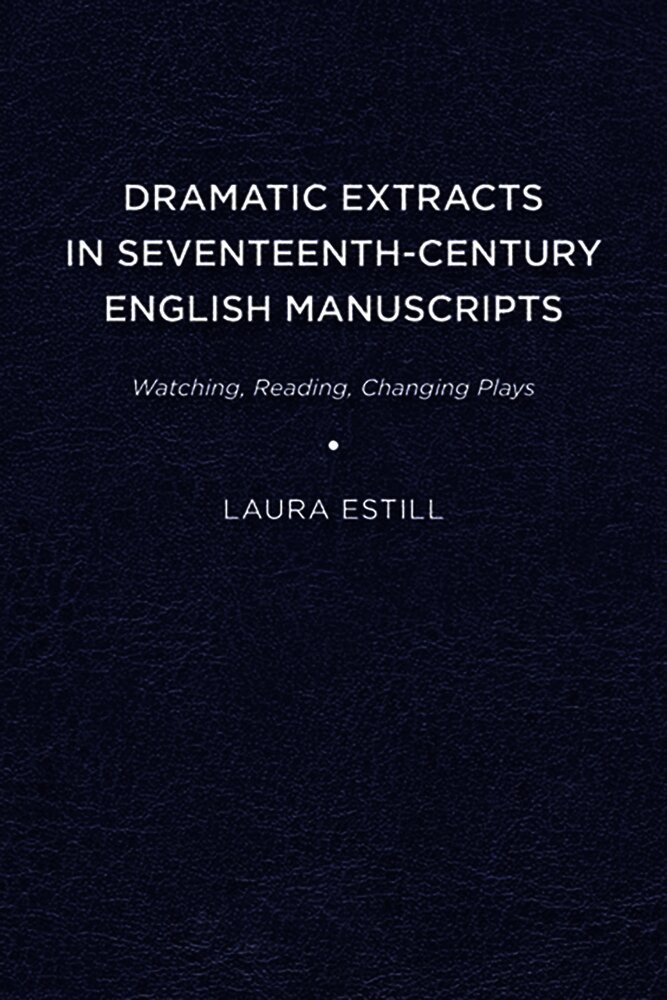
Dramatic Extracts in Seventeenth-Century English Manuscripts
Watching, Reading, Changing Plays
Inbunden, Engelska, 2015
1 286 kr
Skickas inom 11-20 vardagar
Throughout the seventeenth century, early modern play readers and playgoers copied dramatic extracts (selections from plays and masques) into their commonplace books, verse miscellanies, diaries, and songbooks. Dramatic Extracts in Seventeenth-Century English Manuscripts: Watching, Reading, Changing Plays is the first to examine these often overlooked texts, which reveal what early modern audiences and readers took, literally and figuratively, from plays. As this under-examined archival evidence shows, play readers and playgoers viewed plays as malleable and modular texts to be altered, appropriated, and, most importantly, used. These records provide information that is not available in other forms about the popularity and importance of early modern plays, the reasons plays appealed to their audiences, and the ideas in plays that most interested audiences.Tracing the course of dramatic extracting from the earliest stages in the 1590s, through the prolific manuscript circulation at the universities, to the closure and reopening of the theatres, Estill gathers these microhistories to create a comprehensive overview of seventeenth-century dramatic extracts and the culture of extracting from plays. Dramatic Extracts in Seventeenth-Century English Manuscripts: Watching, Reading, Changing Plays explores new archival evidence (from John Milton's signature to unpublished university plays) while also analyzing the popularity of perennial favorites such as Shakespeare's The Tempest. The study of dramatic extracts is the study of particulars: particular readers, particular manuscripts, particular plays or masques, particular historic moments. As D. F. McKenzie puts it, "different readers [bring] the text to life in different ways." By providing careful analyses of these rich source texts, this book shows how active play-viewing and play-reading (that is, extracting) ultimately led to changing the plays themselves, both through selecting and manipulating the extracts and positioning the plays in new contexts. Published by University of Delaware Press. Distributed worldwide by Rutgers University Press.

Dramatic Extracts in Seventeenth-Century English Manuscripts
Watching, Reading, Changing Plays
Häftad, Engelska, 2015
530 kr
Skickas inom 10-15 vardagar
Throughout the seventeenth century, early modern play readers and playgoers copied dramatic extracts (selections from plays and masques) into their commonplace books, verse miscellanies, diaries, and songbooks. Dramatic Extracts in Seventeenth-Century English Manuscripts: Watching, Reading, Changing Plays is the first to examine these often overlooked texts, which reveal what early modern audiences and readers took, literally and figuratively, from plays. As this under-examined archival evidence shows, play readers and playgoers viewed plays as malleable and modular texts to be altered, appropriated, and, most importantly, used. These records provide information that is not available in other forms about the popularity and importance of early modern plays, the reasons plays appealed to their audiences, and the ideas in plays that most interested audiences.Tracing the course of dramatic extracting from the earliest stages in the 1590s, through the prolific manuscript circulation at the universities, to the closure and reopening of the theatres, Estill gathers these microhistories to create a comprehensive overview of seventeenth-century dramatic extracts and the culture of extracting from plays. Dramatic Extracts in Seventeenth-Century English Manuscripts: Watching, Reading, Changing Plays explores new archival evidence (from John Milton's signature to unpublished university plays) while also analyzing the popularity of perennial favorites such as Shakespeare's The Tempest. The study of dramatic extracts is the study of particulars: particular readers, particular manuscripts, particular plays or masques, particular historic moments. As D. F. McKenzie puts it, "different readers [bring] the text to life in different ways." By providing careful analyses of these rich source texts, this book shows how active play-viewing and play-reading (that is, extracting) ultimately led to changing the plays themselves, both through selecting and manipulating the extracts and positioning the plays in new contexts. Published by University of Delaware Press. Distributed worldwide by Rutgers University Press.
601 kr
Skickas inom 7-10 vardagar
A collection of essays considering developing models and new research possibilities in early modern digital studies. Early modern digital studies is a thriving field that draws in strands from publishing, textual studies, digital humanities, and more. Yet it is also rapidly changing. This volume shows that early modern digital studies must be reconsidered from different perspectives as new projects and tools emerge, change, or disappear, and as we make advances into better understanding the past. The chapters in this volume explore how and what we publish (digitally and otherwise), how we value, evaluate, and sustain those publications and digital projects, and how these projects enable us to ask new research questions about early modern literature and culture. This collection does not seek to be a definitive or final state-of-the-field, but rather, a celebration of existing scholarship and an invitation to further scholarship about our ever-evolving practices.
1 781 kr
Skickas inom 5-8 vardagar