Laura Feldt - Böcker
Visar alla böcker från författaren Laura Feldt. Handla med fri frakt och snabb leverans.
6 produkter
6 produkter
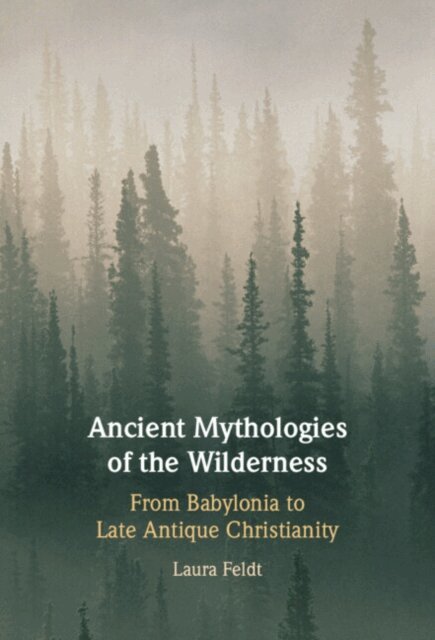
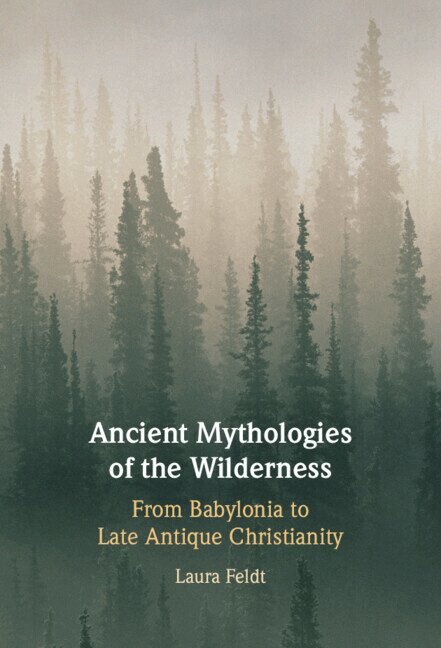
Ancient Mythologies of the Wilderness
Narrative, Nature, and Religious Identity Formation from the Babylonians to the Late Antique Christians
Inbunden, Engelska, 2025
1 192 kr
Skickas inom 7-10 vardagar
Ancient wilderness mythologies have been criticised for their role in forming anthropocentric outlooks on the natural world, and idealising human separateness from the rest of the living world. Laura Feldt here challenges these ideas and presents a new approach to the question of the formative role of ancient wilderness mythologies. Analysing seminal ancient myths from Mesopotamia and ancient Jewish and Christian texts, she argues that these narratives do not idealise the destruction of and dominion over wildlands. Instead, they kindle emotions like awe and wonder at the wild powers of nature. They also provide a critical perspective on human societies and power and help form identities and experiences that resonate with the more-than-human world. Feldt also demonstrates how ancient wilderness mythologies played a decisive role in shaping the history of religions. As a sphere of intense emotion and total devotion, wilderness generates tendencies towards the individualisation and interiorisation of religion.
Wilderness in Mythology and Religion
Approaching Religious Spatialities, Cosmologies, and Ideas of Wild Nature
Inbunden, Engelska, 2012
2 206 kr
Skickas inom 5-8 vardagar
Wilderness is one of the most abiding creations in the history of religions. It has a long and seminal history and is of contemporary relevance in wildlife preservation and climate discourses. Yet it has not previously been subject to scrutiny or theorising from a cross-cultural study of religions perspective. What are the specific relations between the world’s religions and imagined and real wilderness areas? The wilderness is often understood as a domain void of humans, opposed to civilization, but the analyses in this book complicate and question the dualism of previous theoretical grids and offer new perspectives on the interesting multiplicity of the wilderness and religion nexus. This book thus addresses the need for cross-cultural anthropological and history of religions analyses by offering in-depth case studies of the use and functions of wilderness spaces in a diverse range of contexts including, but not limited to, ancient Greece, early Christian asceticism, Old Norse religion, the shamanism-Buddhism encounter in Mongolia, contemporary paganism, and wilderness spirituality in the US. It advances research on religious spatialities, cosmologies, and ideas of wild nature and brings new understanding of the role of religion in human interaction with ‘the world’.
1 177 kr
Skickas inom 5-8 vardagar
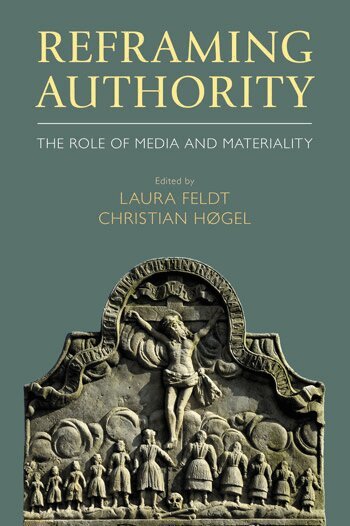
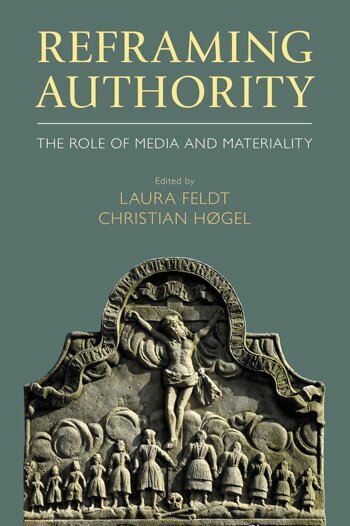
Questions of authority are perennial. Authority has been and still is a key topic in many studies of history, society, literature, and religion, just as it is a key issue in contemporary societies. In spite of the scholarly attention, authority continues to have an elusive quality. Reframing Authority provides new perspectives by focusing on the role of materiality and media for questions of authority, as well as on the changing roles of authority historically and cross-culturally. The volume argues that forms of mediation and materiality are crucial in any constitution, contestation, or transformation of authority. New understanding of authority can be gained by focusing on materiality and media in situations where authority is created, contested, or transformed in different historical eras and cultures. As the in-depth historical case studies show, authority is dependent upon a range of media and materiality forms - objects, paraphernalia, spaces and spatial practices, visual culture, literary forms, technologies, and bodies. Thus, authority is vulnerable and in need of continual maintenance, as struggles against, negotiations of, and transformations within authority constellations demonstrate. Reframing Authority demonstrates the fundamental relational nature of authority, makes a contribution to broader debates in the human sciences and offers a long historical perspective, ranging from ancient Rome and Christianity, to medieval literature, the early modern, modern, and contemporary eras in Asia, the Middle East, Western Europe, Mexico and the US.
402 kr
Skickas inom 5-8 vardagar
Questions of authority are perennial. Authority has been and still is a key topic in many studies of history, society, literature, and religion, just as it is a key issue in contemporary societies. In spite of the scholarly attention, authority continues to have an elusive quality. Reframing Authority provides new perspectives by focusing on the role of materiality and media for questions of authority, as well as on the changing roles of authority historically and cross-culturally. The volume argues that forms of mediation and materiality are crucial in any constitution, contestation, or transformation of authority. New understanding of authority can be gained by focusing on materiality and media in situations where authority is created, contested, or transformed in different historical eras and cultures. As the in-depth historical case studies show, authority is dependent upon a range of media and materiality forms - objects, paraphernalia, spaces and spatial practices, visual culture, literary forms, technologies, and bodies. Thus, authority is vulnerable and in need of continual maintenance, as struggles against, negotiations of, and transformations within authority constellations demonstrate. Reframing Authority demonstrates the fundamental relational nature of authority, makes a contribution to broader debates in the human sciences and offers a long historical perspective, ranging from ancient Rome and Christianity, to medieval literature, the early modern, modern, and contemporary eras in Asia, the Middle East, Western Europe, Mexico and the US.
2 096 kr
Skickas inom 10-15 vardagar
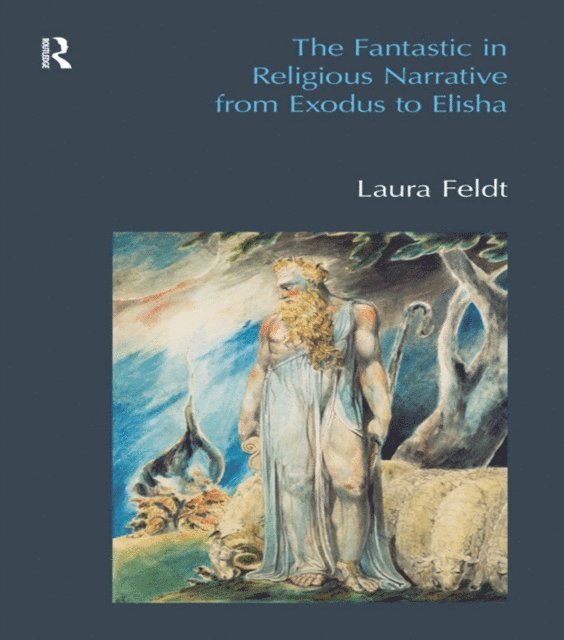
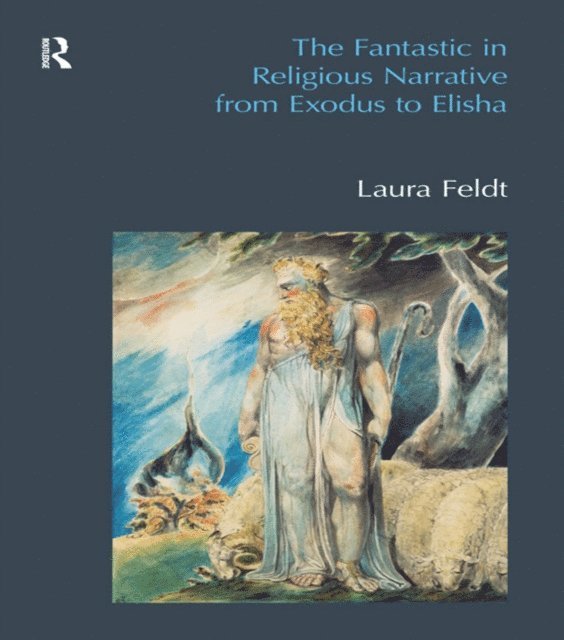
The Fantastic in Religious Narrative from Exodus to Elisha argues that perspectives drawn from literary-critical theories of the fantastic and fantasy are apt to explore Hebrew Bible religious narratives. The book focuses on the narratives' marvels, monsters, and magic, rather than whether or not the stories depict historical events. The Exodus narrative (Ex 1-18) and a selection of additional Hebrew Bible narratives (Num 11-14, Judg 6-8, 1 Kings 17-19, 2 Kings 4-7) are analysed from a fantasy-theoretical perspective. The 'fantasy perspective' helps to make sense of elements of these narratives that - although prominently featured in the stories - have previously often been explained by being explained away. These case studies can illuminate Hebrew Bible religion and offer wider perspectives on religious narrative generally. In light of the fantasy-theoretical approach, these Hebrew Bible stories - with the Exodus narrative at the centre - read not as foundational stories, affirming triumphantly and unambiguously the bond between the deity, his people, and their territory, but rather as texts that harbour and even actively encourage ambiguity and uncertainty, not necessarily prompting belief, orientation, and a sense of meaningfulness, but also open-ended reflection and doubt. The case studies suggest that other religious narratives, both in and beyond the Judaic tradition, may also be amenable to interpretation in these terms, thus questioning a dominant trend in myth studies. The results of the analyses lead to a discussion of the role of ambiguity, uncertainty, and transformation in religious narrative in broader perspective, and to a questioning of the emphasis in the study of religion on the capacity of religious narrative for founding and maintaining institutions, orienting identity, and defending order over disorder. The book suggests the wider importance of incorporating destabilisation, disorientation, and ambiguity more strongly into theories of what religious narrative is and does.
573 kr
Skickas inom 10-15 vardagar
The Fantastic in Religious Narrative from Exodus to Elisha argues that perspectives drawn from literary-critical theories of the fantastic and fantasy are apt to explore Hebrew Bible religious narratives. The book focuses on the narratives' marvels, monsters, and magic, rather than whether or not the stories depict historical events. The Exodus narrative (Ex 1-18) and a selection of additional Hebrew Bible narratives (Num 11-14, Judg 6-8, 1 Kings 17-19, 2 Kings 4-7) are analysed from a fantasy-theoretical perspective. The 'fantasy perspective' helps to make sense of elements of these narratives that - although prominently featured in the stories - have previously often been explained by being explained away. These case studies can illuminate Hebrew Bible religion and offer wider perspectives on religious narrative generally. In light of the fantasy-theoretical approach, these Hebrew Bible stories - with the Exodus narrative at the centre - read not as foundational stories, affirming triumphantly and unambiguously the bond between the deity, his people, and their territory, but rather as texts that harbour and even actively encourage ambiguity and uncertainty, not necessarily prompting belief, orientation, and a sense of meaningfulness, but also open-ended reflection and doubt. The case studies suggest that other religious narratives, both in and beyond the Judaic tradition, may also be amenable to interpretation in these terms, thus questioning a dominant trend in myth studies. The results of the analyses lead to a discussion of the role of ambiguity, uncertainty, and transformation in religious narrative in broader perspective, and to a questioning of the emphasis in the study of religion on the capacity of religious narrative for founding and maintaining institutions, orienting identity, and defending order over disorder. The book suggests the wider importance of incorporating destabilisation, disorientation, and ambiguity more strongly into theories of what religious narrative is and does.