Christian Hogel – författare
Visar alla böcker från författaren Christian Hogel. Handla med fri frakt och snabb leverans.
3 produkter
3 produkter
Inbunden, Engelska, 2018
1 160 kr
Skickas inom 5-8 vardagar
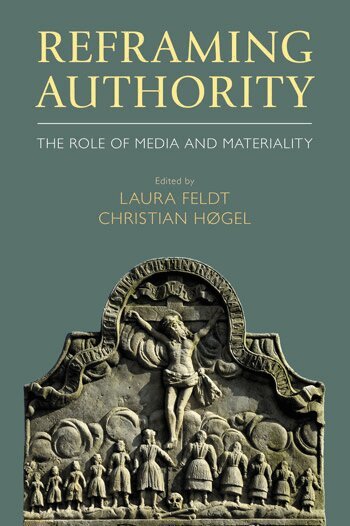
Questions of authority are perennial. Authority has been and still is a key topic in many studies of history, society, literature, and religion, just as it is a key issue in contemporary societies. In spite of the scholarly attention, authority continues to have an elusive quality. Reframing Authority provides new perspectives by focusing on the role of materiality and media for questions of authority, as well as on the changing roles of authority historically and cross-culturally. The volume argues that forms of mediation and materiality are crucial in any constitution, contestation, or transformation of authority. New understanding of authority can be gained by focusing on materiality and media in situations where authority is created, contested, or transformed in different historical eras and cultures. As the in-depth historical case studies show, authority is dependent upon a range of media and materiality forms - objects, paraphernalia, spaces and spatial practices, visual culture, literary forms, technologies, and bodies. Thus, authority is vulnerable and in need of continual maintenance, as struggles against, negotiations of, and transformations within authority constellations demonstrate. Reframing Authority demonstrates the fundamental relational nature of authority, makes a contribution to broader debates in the human sciences and offers a long historical perspective, ranging from ancient Rome and Christianity, to medieval literature, the early modern, modern, and contemporary eras in Asia, the Middle East, Western Europe, Mexico and the US.
Häftad, Engelska, 2018
397 kr
Skickas inom 5-8 vardagar
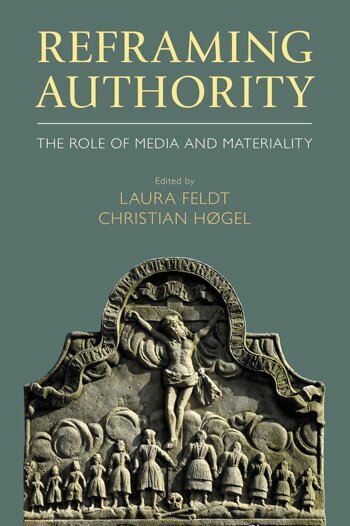
Questions of authority are perennial. Authority has been and still is a key topic in many studies of history, society, literature, and religion, just as it is a key issue in contemporary societies. In spite of the scholarly attention, authority continues to have an elusive quality. Reframing Authority provides new perspectives by focusing on the role of materiality and media for questions of authority, as well as on the changing roles of authority historically and cross-culturally. The volume argues that forms of mediation and materiality are crucial in any constitution, contestation, or transformation of authority. New understanding of authority can be gained by focusing on materiality and media in situations where authority is created, contested, or transformed in different historical eras and cultures. As the in-depth historical case studies show, authority is dependent upon a range of media and materiality forms - objects, paraphernalia, spaces and spatial practices, visual culture, literary forms, technologies, and bodies. Thus, authority is vulnerable and in need of continual maintenance, as struggles against, negotiations of, and transformations within authority constellations demonstrate. Reframing Authority demonstrates the fundamental relational nature of authority, makes a contribution to broader debates in the human sciences and offers a long historical perspective, ranging from ancient Rome and Christianity, to medieval literature, the early modern, modern, and contemporary eras in Asia, the Middle East, Western Europe, Mexico and the US.
E-bok
PDF, Engelska, 2015477 kr
Läs direkt efter köp
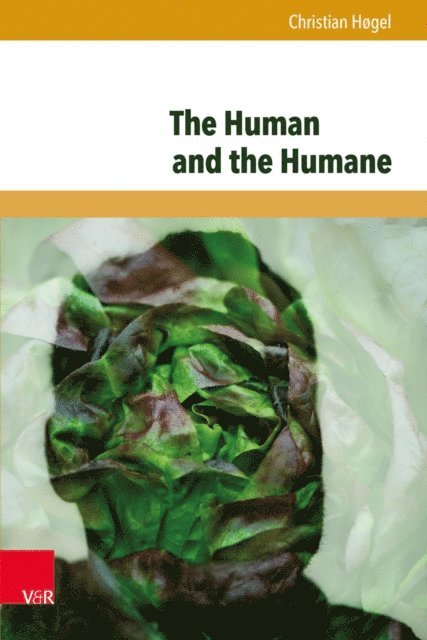
In times of conflicts and crises, an argument insisting on the humane is commonly heard. In wars, voices demanding a humane treatment of prisoners – as decreed by the Geneva Convention – will be raised. Opposition to social injustice may be framed in a collected call for a humane society. Even educational systems may insist on having a humane perspective among its leading causes. Words referring to man – humane, but also humanistic, humanitarian, even humanity – thus take on status of ideals for mankind. Man, in common and legal speech, thus becomes the conceptual marker of his own perfection. The subject of this book is the early history of this linguistic feature and in particular its argumentative use, from its starting point till early modern times.