Laura S. Brown - Böcker
Visar alla böcker från författaren Laura S. Brown. Handla med fri frakt och snabb leverans.
9 produkter
9 produkter
975 kr
Skickas inom 3-6 vardagar
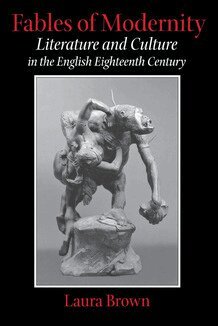
Fables of Modernity expands the territory for cultural and literary criticism by introducing the concept of the cultural fable. Laura Brown shows how cultural fables arise from material practices in eighteenth-century England. These fables, the author says, reveal the eighteenth-century origins of modernity and its connection with two related paradigms of difference—the woman and the "native" or non-European.The collective narratives that Brown finds in the print culture of the period engage such prominent phenomena as the city sewer, trade and shipping, the stock market, the commercial printing industry, the "native" visitor to London, and the household pet. In connecting imagination and history through the category of the cultural fable, Brown illuminates the nature of modern experience in the growing metropolitan centers, the national consequences of global expansion, the volatility of credit, the transforming effects of capital, and the domestic consequences of colonialism and slavery.
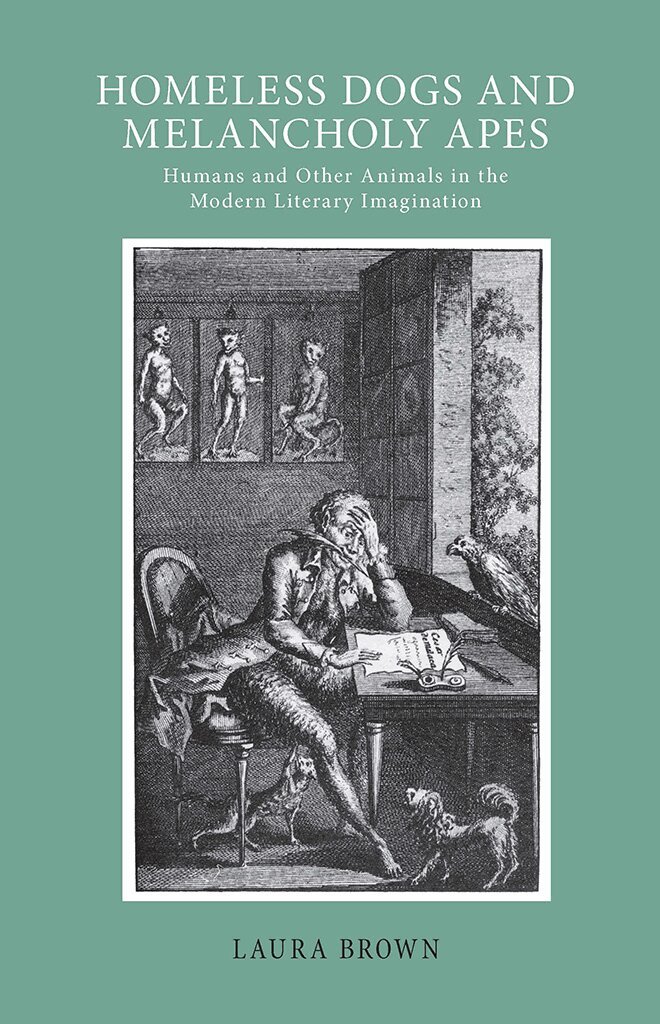
Homeless Dogs and Melancholy Apes
Humans and Other Animals in the Modern Literary Imagination
Inbunden, Engelska, 2010
1 777 kr
Skickas inom 10-15 vardagar
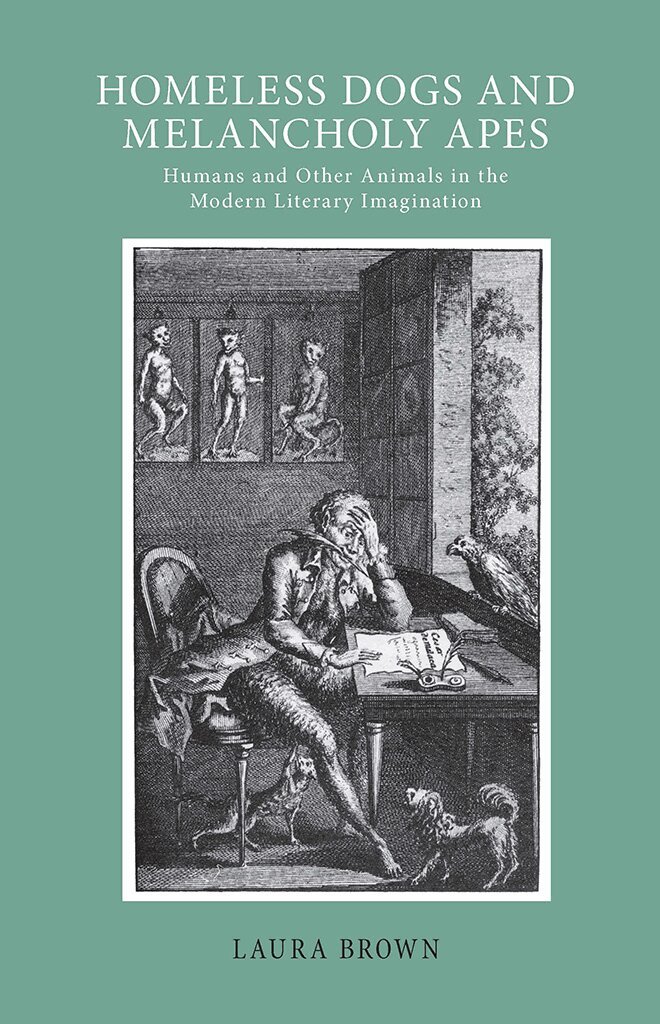
In eighteenth-century England, the encounter between humans and other animals took a singular turn with the discovery of the great apes and the rise of bourgeois pet keeping. These historical changes created a new cultural and intellectual context for the understanding and representation of animal-kind, and the nonhuman animal has thus played a significant role in imaginative literature from that period to the present day. In Homeless Dogs and Melancholy Apes, Laura Brown shows how the literary works of the eighteenth century use animal-kind to bring abstract philosophical, ontological, and metaphysical questions into the realm of everyday experience, affording a uniquely flexible perspective on difference, hierarchy, intimacy, diversity, and transcendence.Writers of this first age of the rise of the animal in the modern literary imagination used their nonhuman characters—from the lapdogs of Alexander Pope and his contemporaries to the ill-mannered monkey of Frances Burney's Evelina or the ape-like Yahoos of Jonathan Swift—to explore questions of human identity and self-definition, human love and the experience of intimacy, and human diversity and the boundaries of convention. Later literary works continued to use imaginary animals to question human conventions of form and thought. Brown pursues this engagement with animal-kind into the nineteenth century—through works by Mary Shelley, Charles Dickens, and Elizabeth Barrett Browning—and into the twentieth, with a concluding account of Paul Auster's dog-novel, Timbuktu. Auster's work suggests that—today as in the eighteenth century—imagining other animals opens up a potential for dissonance that creates distinctive opportunities for human creativity.
Ends of Empire
Women and Ideology in Early Eighteenth-Century English Literature
Häftad, Engelska, 1993
328 kr
Skickas inom 10-15 vardagar
In this bold and provocative book, Laura Brown explores the representation of women in English literature from the Restoration to the fall of Walpole—a time during which an expansionist economic system was consolidated, a fertile ideology advocating a benevolent and progressive imperialism took root, and the slave trade was institutionalized. In this period, she maintains, the image of the female not only played a leading role in literary culture but also profoundly affected mercantile capitalist ideology.After critical scrutiny of the traditional and revisionist positions in previous approaches to eighteenth-century studies, Brown examines the "feminization of ideology" in relation to notions of racial difference in Benn's Oroonoko and in works by Defoe and Swift. Chapters on the "she-tragedy" and on the writings of Pope focus on images of female sexuality and their relationship to violence against women, to female dressing and identity, and to contemporary notions of aesthetics, as well as to capitalism, commodification, and imperialism.Redefining issues central to the interpretation of eighteenth-century literature, Ends of Empire will be important reading for students and scholars in the fields of eighteenth-century studies, literary theory and literary history, women's studies, Marxist criticism, and cultural and intellectual history.
420 kr
Skickas inom 10-15 vardagar
Fables of Modernity expands the territory for cultural and literary criticism by introducing the concept of the cultural fable. Laura Brown shows how cultural fables arise from material practices in eighteenth-century England. These fables, the author says, reveal the eighteenth-century origins of modernity and its connection with two related paradigms of difference—the woman and the "native" or non-European.The collective narratives that Brown finds in the print culture of the period engage such prominent phenomena as the city sewer, trade and shipping, the stock market, the commercial printing industry, the "native" visitor to London, and the household pet. In connecting imagination and history through the category of the cultural fable, Brown illuminates the nature of modern experience in the growing metropolitan centers, the national consequences of global expansion, the volatility of credit, the transforming effects of capital, and the domestic consequences of colonialism and slavery.
479 kr
Skickas inom 7-10 vardagar
In this second edition of her popular book, Laura S. Brown reviews the history, theory, empirical basis, and practice of feminist therapy, a groundbreaking approach that not only listens to, but privileges, the voices and experiences of those who have been defined as "other" by dominant cultures.Feminist therapy has evolved significantly from its early days. Originally it functioned primarily as a corrective against the sexist approaches of the era, whereas now it has become a sophisticated, postmodern, technically integrative model of practice that uses the analysis of gender, social location, and power as a primary strategy for comprehending human difficulties. Feminist therapy is no longer just for women-it has grown to encompass work with women, men, children, families, and larger systems.New to this edition is an updated discussion of the sociopolitical environment for women and other marginalized groups, updated research, and more inclusive terminology and discussion of transgender and nonbinary individuals.
775 kr
Skickas inom 7-10 vardagar
This book offers a critical examination of the field of trauma work using a decolonial lens, recentering narratives and approaches to healing in a more inclusive, culturally responsive way than that offered by dominant Eurocentric approaches. As trauma is a universal experience, a colonized paradigm for responding to trauma re-introduces problematic dynamics of domination and subjugation that are inimical to healing. Decolonizing Trauma Healing offers a new paradigm for how psychologists and other mental health providers can learn to properly understand and work with people whose lives, psyches, and souls have been damaged by exposure to trauma.Dr. Laura S. Brown introduces her decolonial, humble, culturally responsive (DHCR) model of trauma healing practice. It urges readers to abandon the concept of cultural competence and other approaches that maintain a Eurocentric perspective, in favor of a decolonial method that re-centers the sufferer's lived experience, with an understanding of the subtle ways in which the colonial mindset underlies the causes of trauma as well as our traditional conception of trauma healing. As a member of a colonized and marginalized culture, as well as in her work as a trauma healer, Dr. Brown serves as an inspiration for readers who want to understand why the traditional approach to trauma care has been insufficient, and all those who are ready to do the work needed to bring the field to a new level of clarity and rigor.
Homeless Dogs and Melancholy Apes
Humans and Other Animals in the Modern Literary Imagination
Häftad, Engelska, 2017
343 kr
Skickas inom 10-15 vardagar
In eighteenth-century England, the encounter between humans and other animals took a singular turn with the discovery of the great apes and the rise of bourgeois pet keeping. These historical changes created a new cultural and intellectual context for the understanding and representation of animal-kind, and the nonhuman animal has thus played a significant role in imaginative literature from that period to the present day. In Homeless Dogs and Melancholy Apes, Laura Brown shows how the literary works of the eighteenth century use animal-kind to bring abstract philosophical, ontological, and metaphysical questions into the realm of everyday experience, affording a uniquely flexible perspective on difference, hierarchy, intimacy, diversity, and transcendence.Writers of this first age of the rise of the animal in the modern literary imagination used their nonhuman characters—from the lapdogs of Alexander Pope and his contemporaries to the ill-mannered monkey of Frances Burney's Evelina or the ape-like Yahoos of Jonathan Swift—to explore questions of human identity and self-definition, human love and the experience of intimacy, and human diversity and the boundaries of convention. Later literary works continued to use imaginary animals to question human conventions of form and thought. Brown pursues this engagement with animal-kind into the nineteenth century—through works by Mary Shelley, Charles Dickens, and Elizabeth Barrett Browning—and into the twentieth, with a concluding account of Paul Auster's dog-novel, Timbuktu. Auster's work suggests that—today as in the eighteenth century—imagining other animals opens up a potential for dissonance that creates distinctive opportunities for human creativity.
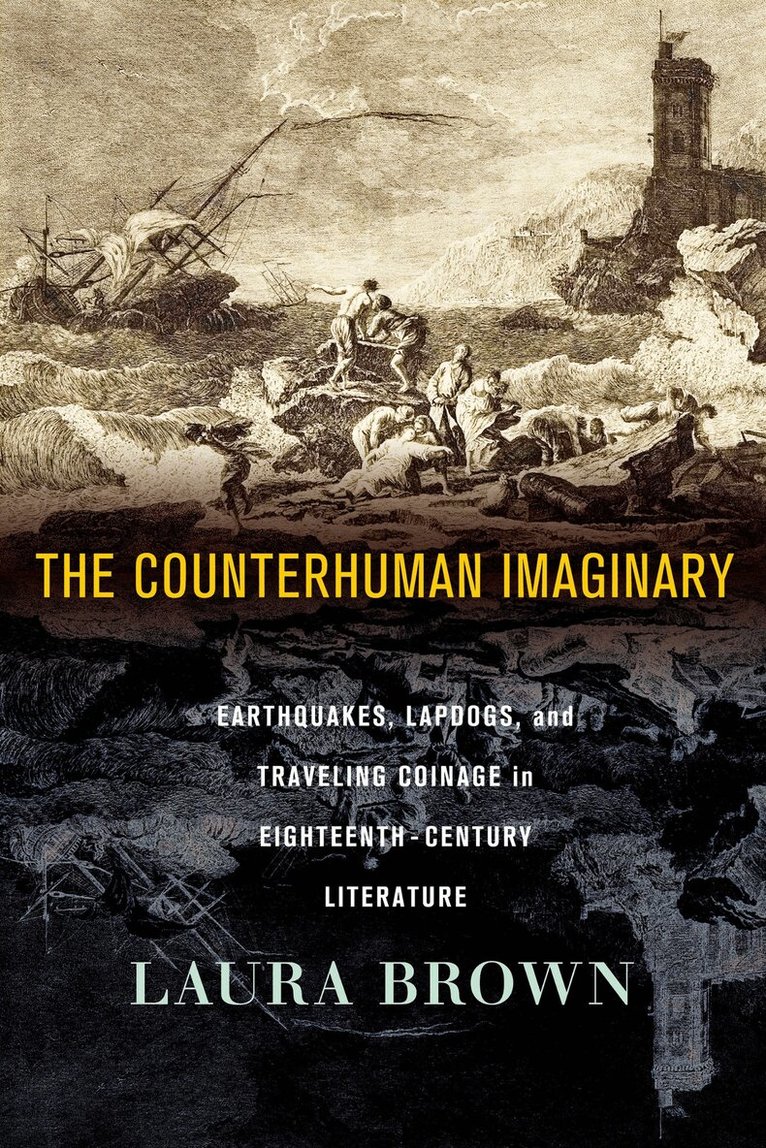
Counterhuman Imaginary
Earthquakes, Lapdogs, and Traveling Coinage in Eighteenth-Century Literature
Inbunden, Engelska, 2023
1 777 kr
Skickas inom 10-15 vardagar
The Counterhuman Imaginary proposes that alongside the historical, social, and institutional structures of human reality that seem to be the sole subject of the literary text, an other-than-human world is everywhere in evidence. Laura Brown finds that within eighteenth-century British literature, the human cultural imaginary can be seen, equally, as a counterhuman imaginary—an alternative realm whose scope and terms exceed human understanding or order.Through close readings of works by Daniel Defoe, Jonathan Swift, and Alexander Pope, along with lapdog lyrics, circulation narratives that give agency to inanimate objects like coins and carriages, and poetry about the Lisbon earthquake of 1755, Brown traces the ways presence and power of the nonhuman—weather, natural disasters, animals, even the concept of love—not only influence human creativity, subjectivity, and history but are inseparable from them. Traversing literary theory, animal studies, new materialism, ecocriticism, and affect theory, The Counterhuman Imaginary offers an original repudiation of the centrality of the human to advance an integrative new methodology for reading chaos, fluidity, force, and impossibility in literary culture.
Counterhuman Imaginary
Earthquakes, Lapdogs, and Traveling Coinage in Eighteenth-Century Literature
Häftad, Engelska, 2023
267 kr
Skickas inom 10-15 vardagar
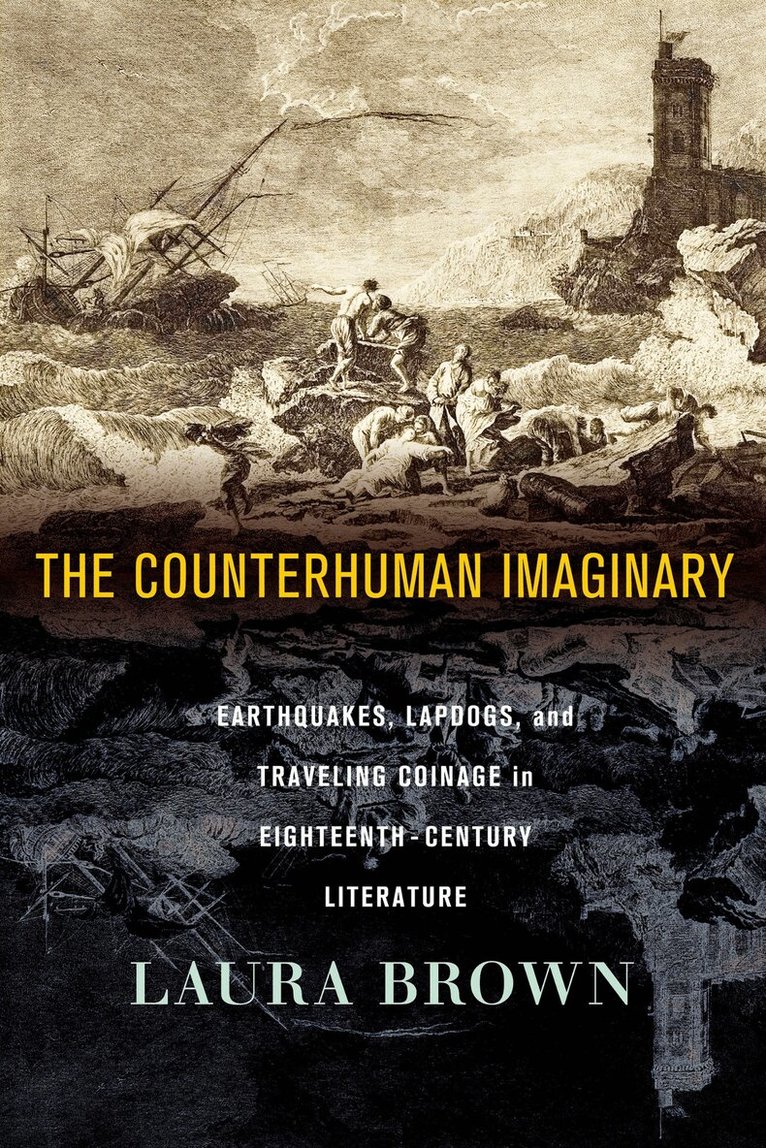
The Counterhuman Imaginary proposes that alongside the historical, social, and institutional structures of human reality that seem to be the sole subject of the literary text, an other-than-human world is everywhere in evidence. Laura Brown finds that within eighteenth-century British literature, the human cultural imaginary can be seen, equally, as a counterhuman imaginary—an alternative realm whose scope and terms exceed human understanding or order.Through close readings of works by Daniel Defoe, Jonathan Swift, and Alexander Pope, along with lapdog lyrics, circulation narratives that give agency to inanimate objects like coins and carriages, and poetry about the Lisbon earthquake of 1755, Brown traces the ways presence and power of the nonhuman—weather, natural disasters, animals, even the concept of love—not only influence human creativity, subjectivity, and history but are inseparable from them. Traversing literary theory, animal studies, new materialism, ecocriticism, and affect theory, The Counterhuman Imaginary offers an original repudiation of the centrality of the human to advance an integrative new methodology for reading chaos, fluidity, force, and impossibility in literary culture.