• Fri frakt över 249 kr
  • •
  • Snabba leveranser
  • •
  • Billiga böcker
Kundservice

Du är på sajten för privatpersoner.

Företag, bibliotek eller offentlig verksamhet?

Du handlar på classic.bokus.com, där alla dina funktioner finns intakta.
Till classic.bokus.com
Bokus logotyp. Gå till startsidan.
  • Erbjudanden
  • Nyheter
  • Student
  • Topplistor
  • Barn & ungdom
  • Bokus Play
  • E-böcker
  • Pocketböcker
  • Spel & pussel

10% rabatt på allt med kod: NYSTART10 →

Sidfot

Mina sidor

    Hjälp

    • Kundservice
    • Vanliga frågor och svar
    • Frakt och leverans
    • Retur vid ångerrätt
    • Reklamera vara
    • Betalning
    • Köpvillkor
    • Allmänna villkor
    • Information om webbplatsens tillgänglighet

    Om Bokus

    • Om oss
    • Pressrum
    • För studenter
    • För företag
    • För bibliotek och offentlig verksamhet
    • För leverantörer
    • Hållbarhet

    Populärt

    • Aktuella erbjudanden
    • Presentkort
    • Studentlitteratur
    • Nya böcker
    • Topplistor
    • Signerade böcker
    • Engelska böcker

    Inspiration

    • Boktips
    • BookTok
    • Populära bokserier
    • Barnbokskaraktärer
    • Populära författare
    Logotyp för Bokus
    Följ oss på Facebook (extern länk)Följ oss på Instagram (extern länk)Följ oss på YouTube (extern länk)Följ oss på TikTok (extern länk)
    bokus @ CookiesAnpassa cookiesIntegritetspolicyKöpvillkor
    Till Citymail hemsida (extern länk)Till Budbee hemsida (extern länk)Till Postnord hemsida (extern länk)Till Schenker hemsida (extern länk)Till Early Bird hemsida (extern länk)Till Walleys hemsida (extern länk)
    1. Medicin
    2. Andra medicinska specialiteter
    3. Klinisk psykologi

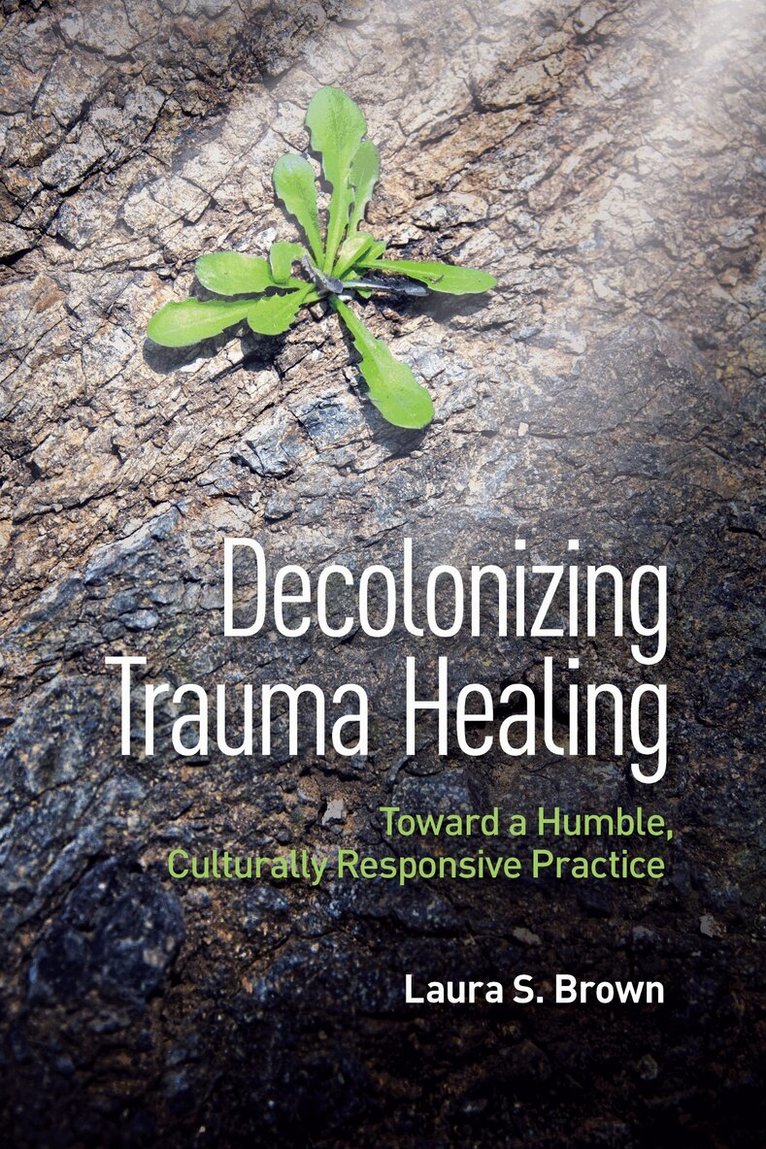
    Decolonizing Trauma Healing

    Toward a Humble, Culturally Responsive Practice

    AvLaura S. Brown

    Häftad, Engelska, 2024

    810 kr

    Beställningsvara. Skickas inom 5-8 vardagar. Fri frakt över 249 kr.

    Beskrivning

    This book offers a critical examination of the field of trauma work using a decolonial lens, recentering narratives and approaches to healing in a more inclusive, culturally responsive way than that offered by dominant Eurocentric approaches. As trauma is a universal experience, a colonized paradigm for responding to trauma re-introduces problematic dynamics of domination and subjugation that are inimical to healing. Decolonizing Trauma Healing offers a new paradigm for how psychologists and other mental health providers can learn to properly understand and work with people whose lives, psyches, and souls have been damaged by exposure to trauma.Dr. Laura S. Brown introduces her decolonial, humble, culturally responsive (DHCR) model of trauma healing practice. It urges readers to abandon the concept of cultural competence and other approaches that maintain a Eurocentric perspective, in favor of a decolonial method that re-centers the sufferer's lived experience, with an understanding of the subtle ways in which the colonial mindset underlies the causes of trauma as well as our traditional conception of trauma healing. As a member of a colonized and marginalized culture, as well as in her work as a trauma healer, Dr. Brown serves as an inspiration for readers who want to understand why the traditional approach to trauma care has been insufficient, and all those who are ready to do the work needed to bring the field to a new level of clarity and rigor.

    Produktinformation

    • Utgivningsdatum:2024-11-12
    • Mått:152 x 229 x 22 mm
    • Vikt:534 g
    • Format:Häftad
    • Språk:Engelska
    • Antal sidor:387
    • Förlag:American Psychological Association
    • ISBN:9781433840630

    Utforska kategorier

    • Klinisk psykologi inom Medicin
    • Olycksfalls- och akutmedicin inom Medicin

    Mer om författaren

    Laura S. Brown, PhD, ABPP, has practiced trauma work in Seattle, Washington, living on unceded Duwamish land, since 97 . A speaker and author on decolonial, liberatory, intersectional feminist therapy theory and practice, she offers workshops and trainings to professionals around the world as well as for the general public on such topics as trauma work, self-care for trauma workers, cultural responsivity, and the ethical challenges of this work. She is the past-president of the APA Division of Trauma Psychology.

    Recensioner i media

    Brown has wrestled with the daunting task of finding language to illuminate what is almost entirely invisible-the prevailing social conditions we are immersed in that promote and foster trauma and traumatization. Those of us in the trauma field are just as submerged in these frameworks as anyone else, blinding us and radically limiting our effectiveness. That Brown took on this challenge in the first place is nothing less than heroic. That she succeeds is awe-inspiring amp hellip and, for those who dare to listen to her, powerfully mind-expanding. - Steven N. Gold, PhD, Professor Emeritus, Nova Southeastern University, Fort Lauderdale, FL; licensed clinical psychologist in independent practice, Plantation, FL; author of Contextual Trauma Therapy and Not Trauma Alone; Editor-in-Chief of the APA Handbook of Trauma Psychology Brilliant! This book is for everyone interested in healing trauma. Laura S. Brown delivers a powerhouse in decolonizing trauma therapy. - Lillian Comas-Díaz, PhD, Clinical Professor, Department of Psychiatry and Behavioral Sciences, George Washington University, Washington, DC Kudos to Dr. Laura Brown for her manifesto, Decolonizing Trauma Healing: Toward a Humble, Culturally Responsive Practice, in which she builds and expands upon her 4 years amp rsquo worth of scholarship, clinical and forensic practice, activism, and lived experience in trauma psychology. This book integrates a vast amount of information. It is a call to approach healing interactions with suffering individuals in a more humble, person-centered, and culturally responsive way that centralizes the traumatizing impact of social pathologies associated with colonization. Although as Dr. Brown recognizes, not all will agree with her approach, her ideas deserve close attention as they have the potential to move the frontiers and establish new methods of trauma psychology. - Christine A. Courtois, PhD, ABPP, Delaware Licensed Psychologist and Board-Certified Counseling Psychologist; author of Healing the Incest Wound: Adult Survivors in Therapy; coauthor of Treatment of Complex Trauma: A Sequenced, Relationship-Based Approach In this gorgeously written book, Laura S. Brown first exposes the ways the practice of trauma therapy despite good intentions-has so often colluded with the oppressive and colonizing forces inherent in the harm of trauma. Then she offers an alternative approach for healers, one that humbly and repeatedly examines the political, intersectional, existential, and neurobiological realities that are inextricably linked to trauma harm and trauma healing. Once you start reading you won amp rsquo t want to put it down, because Decolonizing Trauma Healing is deliciously eloquent, brilliant, wise, and teeming with authenticity and compassion. - Jennifer Joy Freyd, PhD, Professor Emerit, Psychology, University of Oregon, Eugene

    Innehållsförteckning

    • AcknowledgmentsIntroduction: We Meet AgainChapter : Introducing the Decolonial, Humble, Culturally Responsive ModelChapter 2: An Expansive Decolonial Paradigm for TraumaChapter 3: Decolonizing Trauma HealingChapter 4: Where We amp rsquo ve Come From: The Heritage of Decolonial HealingChapter 5: Decolonial Understandings of the Traumagenic Effects of Social PathologiesChapter : Exploring Intersectional Identities in DHCR Trauma HealingChapter 7: Decolonizing the Constructs and Myths of Safety, Part IChapter 8: Decolonizing Myths of Safety, Part IIChapter 9: Stories of Unknowing and What Follows When We Know: Getting Closer to SafeChapter : Intersectionalities and Trauma: Risk and Capacities in the Face of Social Pathologies and Relational HarmChapter : Exploring and Decolonizing the Intersectional Identities of Suffering PeopleChapter 2: Criteria for a Decolonial, Humble, Culturally Responsive Practice of Trauma Healing: Making the GradeChapter 3: Aren amp rsquo t There Already Some DHCR Trauma Healing Methodologies? And What Can We Learn from Them?ReferencesIndexAbout the Author