Lauren E. Talalay - Böcker
Visar alla böcker från författaren Lauren E. Talalay. Handla med fri frakt och snabb leverans.
5 produkter
5 produkter
Deities, Dolls, and Devices
Neolithic Figurines from Franchthi Cave, Greece, Fascicle 9, Excavations at Franchthi Cave, Greece
Häftad, Engelska, 1993
529 kr
Skickas inom 10-15 vardagar
Talalay reports on a small body of figurines (24 figurines and 21 fragments) recovered during excavations at Franchthi Cave and at the nearby open-air settlement along the present shoreline. She also reexamines the theoretical and methodological foundations of scholarship in the field of figurine studies. A thorough and pathfinding study of the most important body of figurines from southern Greece, this book will be especially valuable to specialists in prehistoric Greece and to all scholars interested in early representations of the human figure in prehistoric art and in the significance of these representations to the members of early human communities. The book also makes a contribution to the growing body of literature on gender in early societies with a critical evaluation of the uses of evidence in addressing gender issues.
Del 13 - Kelsey Museum Publication
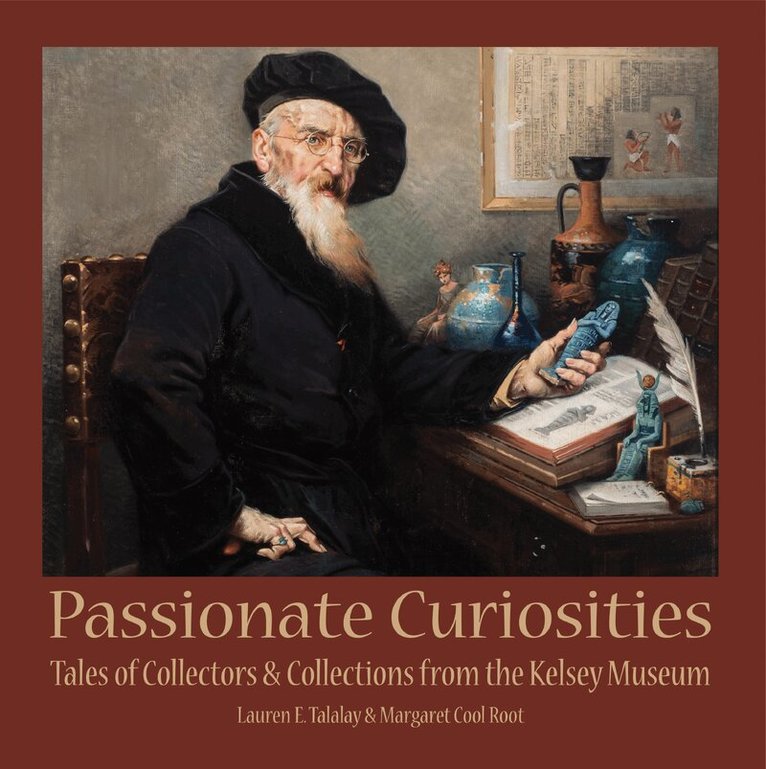
Passionate Curiosities
Tales of Collectors & Collections from the Kelsey Museum
Häftad, Engelska, 2015
486 kr
Skickas inom 5-8 vardagar
Passionate Curiosities explores the collections held in the University of Michigan's Kelsey Museum of Archaeology through the lens of the people whose intellectual interests, financial backing, and social networks brought artefacts to Ann Arbor from the 1880s to the 1990s. The purchases and expeditions shaped the Museum's internationally recognized antiquities from the ancient civilizations of Greece, Rome, North Africa, Egypt, and the Near East, extensive photographic documentation of these regions from the early 1900s, and significant assemblages of early Christian and Islamic visual culture. All of these are reflected in this lavishly illustrated volume. An intriguing array of personalities - from archaeologists, missionaries, and diplomats to industrialists, bankrollers, and inventors - weave through the book. They include Ernst Herzfeld, the eminent Orientalist who helped forge antiquities legislation in Iran; Luigi Cesnola, the rapacious harvester of Cypriot sites; Esther Van Deman, the pioneering feminist and scholar of Roman construction techniques; and Samuel Goudsmit, the renowned nuclear physicist and avid Egyptologist. World-famous dealers who established standards in antiquities connoisseurship also appear. Readers will encounter Edgar J. Banks, a swashbuckling purveyor of Mesopotamian antiquities and entrepreneur of biblical documentary films; Maurice Nahman, the "lion of Cairo"; and the colourful members of the Tano dealer dynasty in Egypt.
Del 18 - Kelsey Museum Publication
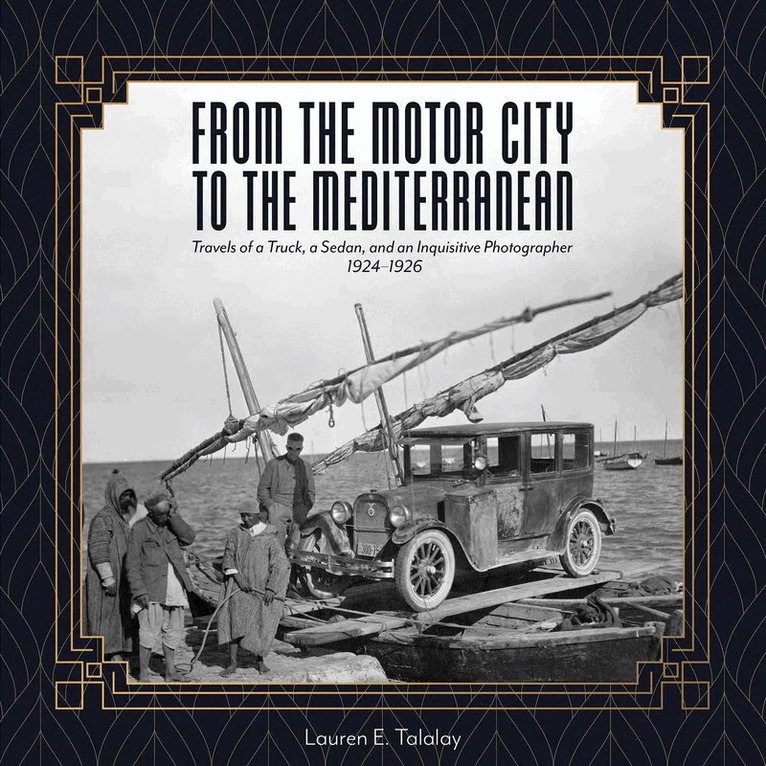
From the Motor City to the Mediterranean
Travels of a Truck, a Sedan, and an Inquisitive Photographer, 1924-1926
Häftad, Engelska, 2025
421 kr
Skickas inom 3-6 vardagar
From 1924 to 1926, archaeologists from the University of Michigan roamed the Middle East and North Africa in two vehicles donated by Dodge to assist in pioneering archaeological projects. Driven and maintained by expedition photographer George R. Swain, these vehicles—a truck and sedan—navigated uncharted deserts, perilous mountains, and road-less terrains, bringing their passengers into contact with both the ancient past and the people living around its historic remains. From the Motor City to the Mediterranean transports readers into the heart of one man's journey alongside these intrepid vehicles. Using Swain's fascinating photographs and letters—some published here for the first time—author Lauren E. Talalay skillfully reconstructs his archaeological adventures of the 1920s, taking us to places rarely seen by the outside world during a decade of major social change after the Great War.
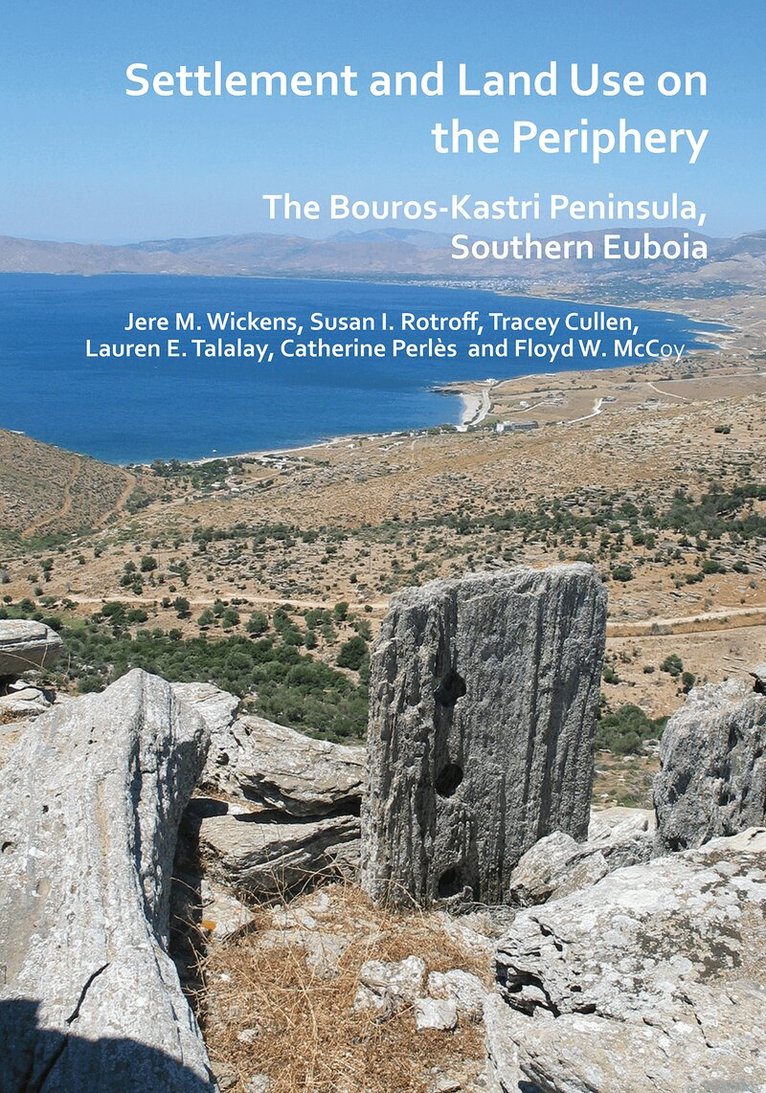
Settlement and Land Use on the Periphery
The Bouros-Kastri Peninsula, Southern Euboia
Häftad, Engelska, 2018
486 kr
Skickas
The Bouros-Kastri peninsula at the south-eastern tip of the Greek island of Euboia has previously been overlooked in the archaeological literature. This survey by the Southern Euboea Exploration Project, conducted under the aegis of the Canadian Institute in Greece, now provides a wealth of intriguing information about fluctuations in long-term use and habitation in this part of the Karystia. While the peninsula is agriculturally poor, its coast is blessed with several small coastal inlets and one important ancient port, Geraistos. These provide access to vital maritime routes and connect the peninsula to Athens and other Aegean ports. The survey revealed modest use of the peninsula during the Neolithic and Early Bronze Age; it was then virtually abandoned for the following two and a half millennia. Occupation resumed in the Late Archaic–Early Classical period, followed by near desertion in the 3rd century BC of all but some coastal sites, a resurgence of activity in the Late Roman period, and modest use in Byzantine and Ottoman times. The authors analyse the ways in which the peninsula's use was connected to that of the main urban centre at Karystos, and how the peninsula and the greater Karystia were integrated into the political, economic, and cultural spheres of Athens and the broader region.
1 346 kr
Skickas inom 5-8 vardagar
The results of two related fieldwork projects are presented: a brief salvage excavation at Plakari (a Final Neolithic site near the modern town of Karystos) and a survey of prehistoric sites on the Paximadi peninsula (the western arm of the Karystos bay), both located in southern Euboea. These ventures were part of the larger mission of the Southern Euboea Exploration Project (SEEP), a multidisciplinary research program dedicated to the study of the Karystian past and which maintained a presence in southern Euboea for over 25 years. These projects have found that, contrary to what archaeologists once believed, southern Euboea was hardly an uninhabited and isolated region in prehistory. The inhabitants actively participated in the expanded maritime and social landscape that characterized the later Neolithic and Early Bronze Age in the Aegean, taking part in exchange networks of stone, ceramics, marble figurines and vessels, and possibly agricultural goods and metalwork.