Laurence Paul Hemming - Böcker
Visar alla böcker från författaren Laurence Paul Hemming. Handla med fri frakt och snabb leverans.
9 produkter
9 produkter
694 kr
Skickas inom 5-8 vardagar
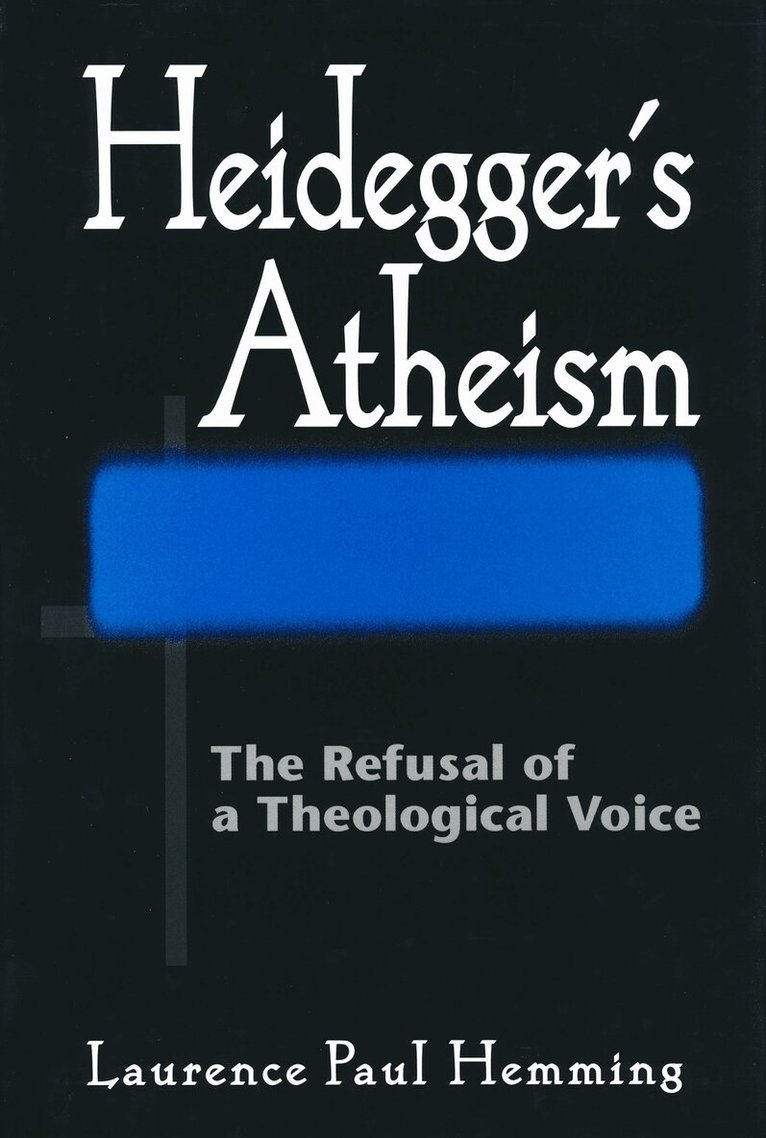
Heidegger's Atheism explains what Heidegger meant when he said that all philosophy is atheistic. This unique book traces the development of his explanation of philosophy as a methodological atheism, and relates it to his reading of Aristotle, Aquinas, and Nietzsche. A predominant issue throughout this study is Heidegger's pursuit of an answer to the question: How did God get into philosophy? Laurence Paul Hemming discusses a wide range of topics in this comprehensive volume, including the influence of Heidegger on theologians like Bultmann, Rahner, and Ott; the central themes of Being and Time; Heidegger's political decisions and involvement with National Socialism; and Jean-Luc Marion's reading of Heidegger. Hemming also provides an in-depth analysis of Heidegger's turn or Kehre. He addresses how Heidegger's understanding of das Ereignis, the event, relates both to his view of atheism and to the way he appropriated Nietzsche's proclamation of the death of God. Heidegger's Atheism also attempts to trace new possibilities in the relationship between theology and philosophy in Heidegger's critique of metaphysics. Hemming argues that Heidegger criticizes the tradition of metaphysics from Aristotle and Plato through Nietzsche and Hegel because it traces a particular understanding of being in relation to God—even when that God is announced as dead. In contrast, Heidegger sees the task of philosophy as the self-understanding of human existence, and claims philosophy offers no definitives regarding what God humanity might encounter. Consequently, Hemming argues, Heidegger's atheism is an implicit critique of theology. Yet, Hemming also contends Heidegger's work resonates with the concerns of Christian faith, especially the Catholic tradition. Heidegger's Atheism offers radical and challenging conclusions about most of the recent British and American readings of Heidegger. Sure to provoke much debate and discussion, Heidegger's Atheism is essential for anyone with an interest in Heidegger.
Restoring Faith in Reason
A New Translation of the Encyclical Letter of Pope John Paul II
Häftad, Engelska, 2002
450 kr
Skickas inom 5-8 vardagar
This volume provides an English translation of the papal encyclical "Fides et Ratio", considered to be one of the two or three most important and influential papal letters ever to have been written. This book also includes a commentary on the Letter by James McEvoy, and essays about the Letter's main themes by Roman Catholic and Greek Orthodox theologians. The latter evaluate the Letter's importance and show how it has shaped the modern study of philosophy and theology. This book provides the Latin text with accompanying English-language (facing page) translation. It should be of interest to: scholars and students of the philosophy of religion and of Roman Catholic doctrine; students of modern theology; Catholic clergy; and some educated lay people interested in dogmatics.
576 kr
Skickas inom 10-15 vardagar
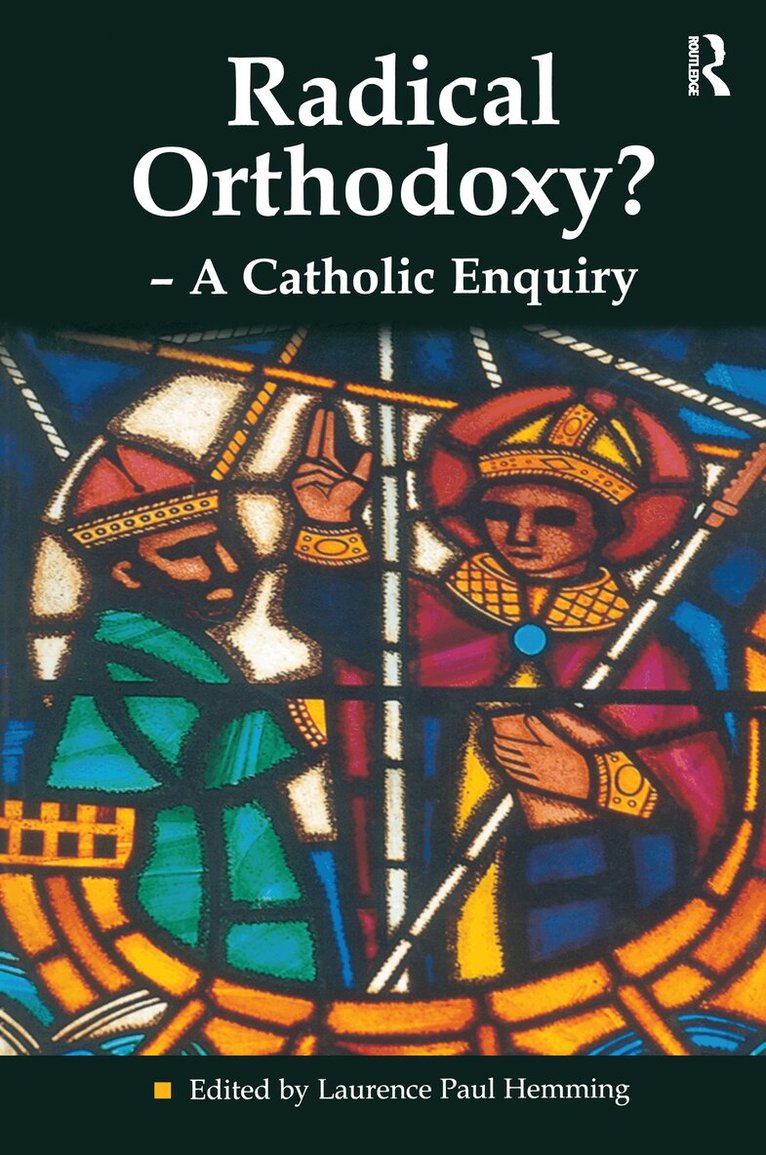
Radical Orthodoxy? A Catholic Enquiry is essential reading for anyone seeking to understand 'Radical Orthodoxy', or be in critical dialogue with it. John Milbank, Catherine Pickstock and Graham Ward, the three principal exponents of Radical Orthodoxy, each enter into dialogue with theologians from the Catholic tradition - a tradition with whose sources and current researches Radical Orthodoxy claims to have much in common. The Introduction explores the issues and tensions involved in Radical Orthodoxy's dialogue with Catholic theology, and David Burrell offers an important evaluation of Radical Orthodoxy in the context of North America. In the first dialogue John Milbank presents one of the clearest expositions of the Radical Orthodoxy programme to date; Fergus Kerr's reply discusses this programme in the wider context of post-war Catholic debate. Catherine Pickstock explores the work of Aquinas to show how Radical Orthodoxy is appropriating the work of past theological giants, and in reply Laurence Hemming asks what questions remain in that process. Graham Ward, Oliver Davies and Lucy Gardner debate the challenges facing contemporary theology, both from the past and the postmodern present. James Hanvey's provocative conclusion opens the way to future debate. Challenging, yet accessibly written, this book represents an important milestone in the critical reception of Radical Orthodoxy. Shedding new light on contemporary issues and current theological enquiry, this book offers important insights to students of theology and those training for ministry, clergy and informed lay people, and everyone who wants to make sense of one of the most demanding yet important debates currently taking place.
372 kr
Skickas inom 11-20 vardagar
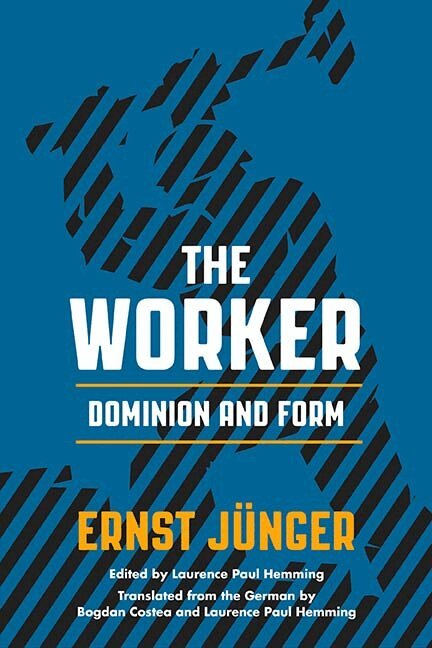
Written in 1932, just before the fall of the Weimar Republic and on the eve of the Nazi accession to power, Ernst Jünger’s The Worker: Dominion and Form articulates a trenchant critique of bourgeois liberalism and seeks to identify the form characteristic of the modern age. Jünger’s analyses, written in critical dialogue with Marx, are inspired by a profound intuition of the movement of history and an insightful interpretation of Nietzsche’s philosophy.Martin Heidegger considered Jünger “the only genuine follower of Nietzsche,” singularly providing “an interpretation which took shape in the domain of that metaphysics which already determines our epoch, even against our knowledge; this metaphysics is Nietzsche's doctrine of the ‘will to power.’” In The Worker, Jünger examines some of the defining questions of that epoch: the nature of individuality, society, and the state; morality, justice, and law; and the relationships between freedom and power and between technology and nature.This work, appearing in its entirety in English translation for the first time, is an important contribution to debates on work, technology, and politics by one of the most controversial German intellectuals of the twentieth century. Not merely of historical interest, The Worker carries a vital message for contemporary debates about world economy, political stability, and equality in our own age, one marked by unsettling parallels to the 1930s.
1 288 kr
Skickas inom 10-15 vardagar
Written in 1932, just before the fall of the Weimar Republic and on the eve of the Nazi accession to power, Ernst Jünger’s The Worker: Dominion and Form articulates a trenchant critique of bourgeois liberalism and seeks to identify the form characteristic of the modern age. Jünger’s analyses, written in critical dialogue with Marx, are inspired by a profound intuition of the movement of history and an insightful interpretation of Nietzsche’s philosophy.Martin Heidegger considered Jünger “the only genuine follower of Nietzsche,” singularly providing “an interpretation which took shape in the domain of that metaphysics which already determines our epoch, even against our knowledge; this metaphysics is Nietzsche's doctrine of the ‘will to power.’” In The Worker, Jünger examines some of the defining questions of that epoch: the nature of individuality, society, and the state; morality, justice, and law; and the relationships between freedom and power and between technology and nature.This work, appearing in its entirety in English translation for the first time, is an important contribution to debates on work, technology, and politics by one of the most controversial German intellectuals of the twentieth century. Not merely of historical interest, The Worker carries a vital message for contemporary debates about world economy, political stability, and equality in our own age, one marked by unsettling parallels to the 1930s.
274 kr
Skickas inom 10-15 vardagar
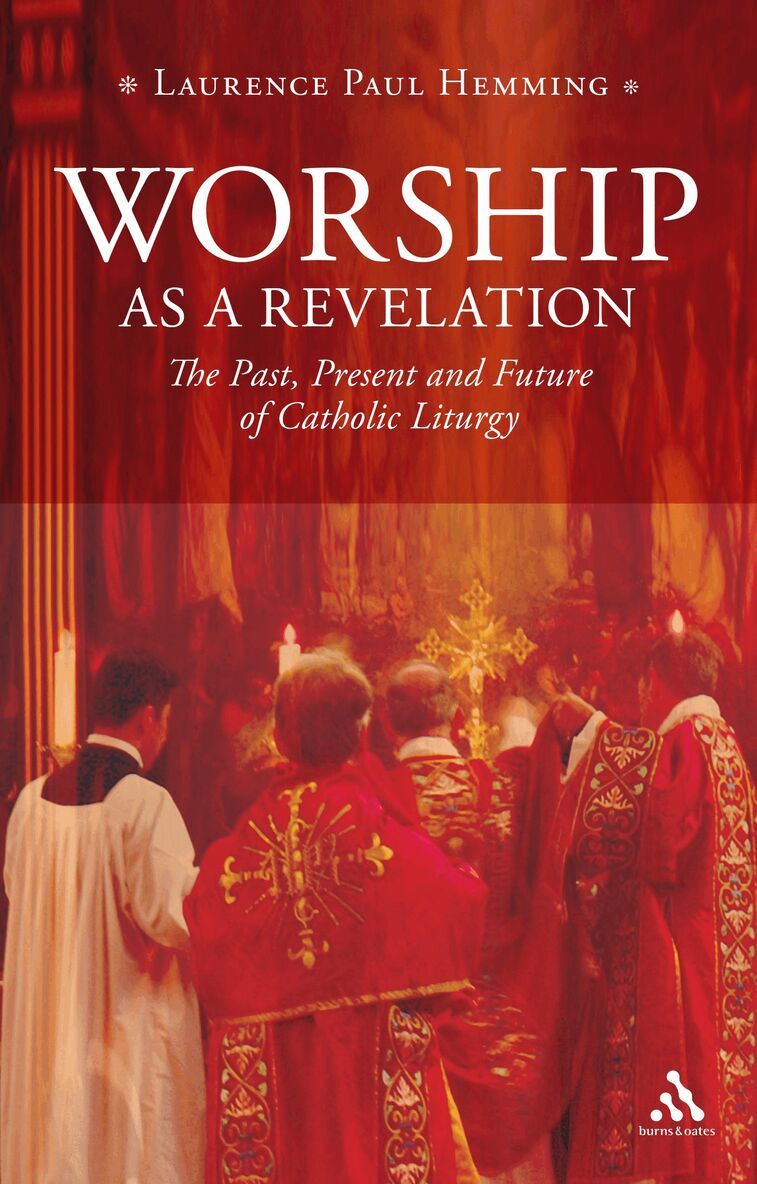
A probing study on the history and meaning of the liturgy that also questions how Christian worship will change in the future.The publication by Benedict XVI of the motu proprio has put the question of the historyand meaning of the liturgy back into centre stage, not just for catholics but for many other christians as well. Dr. Hemming seeks to provide an intelligent background to the Pope's decision, addressing himself to a number of questions about the nature and character of catholic worship that opens a much wider historical discussion which will inform and persuade a wide audience. The chapter on liturgy and revelation is the turning point in the book and shows how an understanding of time that is presumed in all modern philosophical thought, is challenged by the understanding of divine self-revelation. This then forces us to ask what our relation to liturgical events are and how we experience them. Hemming advocates a `high` theology of the liturgy with the profoundest understanding of the spiritual and the enigma of faith.How will Christian worship change now, asks the author in his concluding chapter? He offers a sketch of what may happen in the coming decades, long after the Papacy of Benedict XVI.
2 705 kr
Skickas inom 10-15 vardagar
Radical Orthodoxy? A Catholic Enquiry is essential reading for anyone seeking to understand 'Radical Orthodoxy', or be in critical dialogue with it. John Milbank, Catherine Pickstock and Graham Ward, the three principal exponents of Radical Orthodoxy, each enter into dialogue with theologians from the Catholic tradition - a tradition with whose sources and current researches Radical Orthodoxy claims to have much in common. The Introduction explores the issues and tensions involved in Radical Orthodoxy's dialogue with Catholic theology, and David Burrell offers an important evaluation of Radical Orthodoxy in the context of North America. In the first dialogue John Milbank presents one of the clearest expositions of the Radical Orthodoxy programme to date; Fergus Kerr's reply discusses this programme in the wider context of post-war Catholic debate. Catherine Pickstock explores the work of Aquinas to show how Radical Orthodoxy is appropriating the work of past theological giants, and in reply Laurence Hemming asks what questions remain in that process. Graham Ward, Oliver Davies and Lucy Gardner debate the challenges facing contemporary theology, both from the past and the postmodern present. James Hanvey's provocative conclusion opens the way to future debate. Challenging, yet accessibly written, this book represents an important milestone in the critical reception of Radical Orthodoxy. Shedding new light on contemporary issues and current theological enquiry, this book offers important insights to students of theology and those training for ministry, clergy and informed lay people, and everyone who wants to make sense of one of the most demanding yet important debates currently taking place.
1 964 kr
Skickas inom 10-15 vardagar
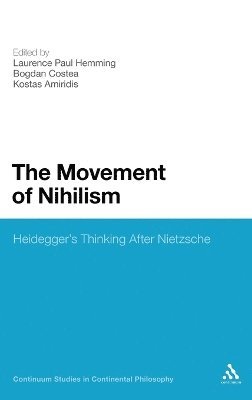
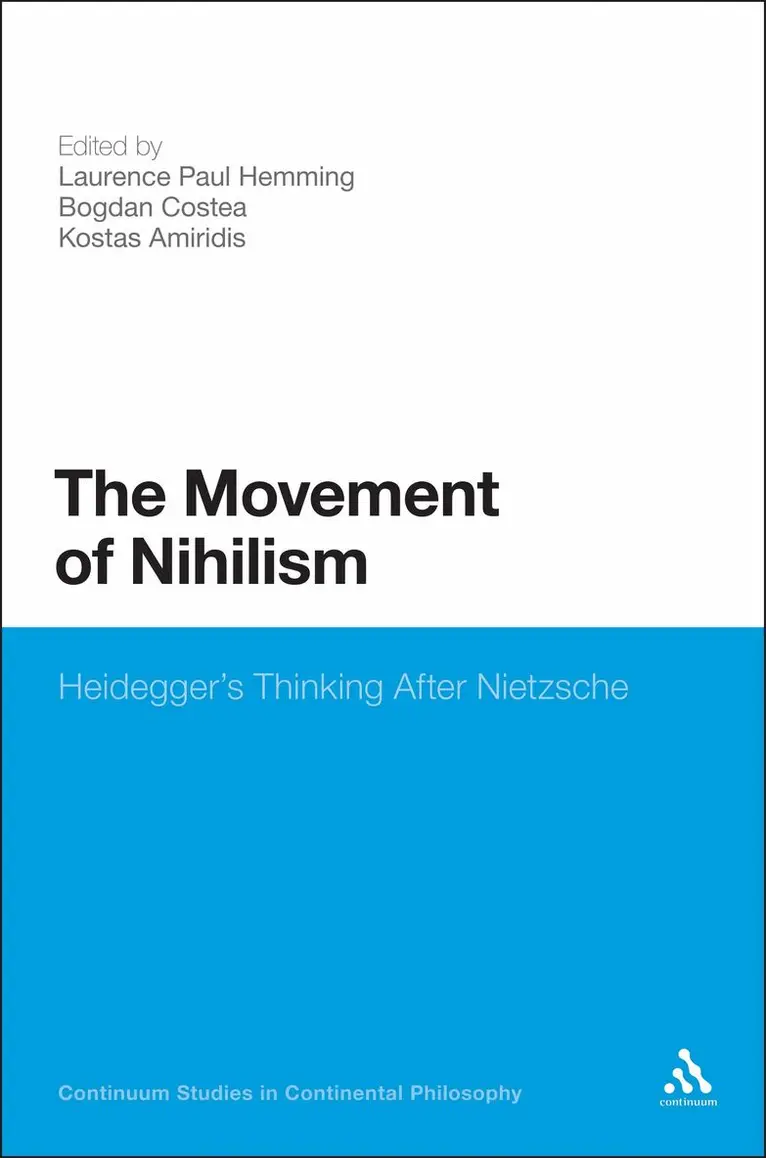
When Nietzsche announced the advent of nihilism in 1887/88, he argued that he was sketching the history of the next two centuries. For some time now, he wrote, our whole European culture has been moving as toward catastrophe : restlessly, violently, headlong, like a river that want to reach the end, that no longer reflects, that is afraid to reflect. Can we gain a ground for reflection upon our own condition? Can we heed Nietzsche's warning? Can we respond to the challenge? In this book, eleven newly commissioned essays from leading scholars offer an attempt to grasp Nietzsche's prescience through Heidegger's critique of it; attempting to think through the philosophical consequences of the last century in reading the signs of our own condition. The book also provides and fascinating and unique discussion of some of the lesser-known texts of the later Heidegger.
528 kr
Skickas inom 10-15 vardagar
When Nietzsche announced 'the advent of nihilism' in 1887/88, he argued that he was sketching 'the history of the next two centuries': 'For some time now', he wrote, 'our whole European culture has been moving as toward catastrophe [...]: restlessly, violently, headlong, like a river that want to reach the end, that no longer reflects, that is afraid to reflect.'Can we gain a ground for reflection upon our own condition? Can we heed Nietzsche's warning? Can we respond to the challenge? In this book, eleven newly commissioned essays from leading scholars offer an attempt to grasp Nietzsche's prescience through Heidegger's critique of it; attempting to think through the philosophical consequences of the last century in reading the signs of our own condition. The book also provides and fascinating and unique discussion of some of the lesser-known texts of the later Heidegger.