Laurent Mannoni - Böcker
Visar alla böcker från författaren Laurent Mannoni. Handla med fri frakt och snabb leverans.
3 produkter
3 produkter
434 kr
Skickas inom 5-8 vardagar
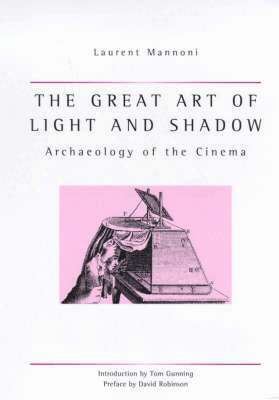
Widely regarded by historians of the early moving picture as the best work yet published on pre-cinema, The Great Art of Light and Shadow: Archaeology of the Cinema throws light on a fascinating range of optical media from the twelfth century to the turn of the twentieth. First published in French in 1994 and now translated into English, Laurent Mannoni's account projects a broad picture of the subject area now known as 'pre-cinema'.Starting from the earliest uses of the camera obscura in astronomy and entertainment, Mannoni discusses, among many other devices, the invention and early years of the magic lantern in the seventeenth century, the peepshows and perspective views of the eighteenth century, and the many weird and wonderful nineteenth-century attempts to recreate visions of real life in different ways and forms. This fully-illustrated and accessible account of a strange mixture of science, magic, art and deception introduces to an English-speaking readership many aspects of pre-cinema history from other European countries.
485 kr
Skickas inom 3-6 vardagar
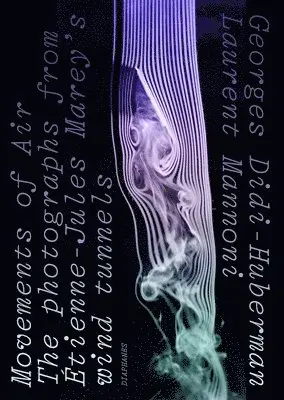
Two important essays on Étienne-Jules Marey published for the first time in English alongside his breathtaking images of moving air and smoke.Featuring more than one hundred and fifty photographs and images, Movements of Air reprints the breathtaking pictures of Étienne-Jules Marey—images captured between 1899 and 1901 during his scientific experiments with moving air and smoke—and complements them with essays by Georges Didi-Huberman and Laurent Mannoni. Mannoni begins by reflecting on Marey’s experimental approach. As the founder of the “graphic method,” Marey was also the developer of an aerodynamic wind tunnel. His experiments’ photographs of fluid motion introduced a whole world of movements and turbulences, and fluids, and influenced generations of scientists and artists alike. Didi-Huberman expands on the philosophical debates surrounding these aesthetically and technically instructive images. Even though Marey’s main interest was graphic information, Didi-Huberman shows us how the flow of all things drew this ingenious experimenter to a photographic practice that creates drags, streaks, expansions, and visual dances. Marey’s wind tunnel photographs were also themselves causes of turbulence in the history of images. The artists Dombois and Oeschger explore these “graphical” vortices of the last 120 years, providing at the end of the book a collage from historical and contemporary material interlaced with their own image-making in Dombois’s wind tunnel at the Zurich University of the Arts.
851 kr
Kommande
Presenting a never-before-published treasure of film history: a visual diary made by the set designers of F.W. Murnau's seminal classic of silent cinema Faust.The Faust Bible: The Making of F.W. Murnau’s Masterpiece brings to light an astounding, recently-unearthed artefact of film history: a visual diary dedicated to the making of a towering classic of silent cinema. This new book stunningly recreates, in full, a collection of set photography, original illustrations, and behind the scenes images carefully compiled by the film’s set designer inside a prop Bible on the set of Faust (1926). Published in association with the Cinémathèque Française, The Faust Bible offers an unparalleled window into the making of F.W. Murnau’s marvel of German Expressionist cinema. One of the most influential and pioneering silent-era filmmakers, F.W. Murnau was known for his private film sets, reluctant to share the secrets of his mastery of light and shadow. But for this final film shot in Germany before his relocation to Hollywood, he was gifted a remarkable memento from the production—a collection of photographs and illustrations documenting the making of the film almost step by step, inside a prop Bible. Compiled by the film’s set designer Robert Herlth, the astounding visual diary housed approximately 400 original images. The Faust Bible recreates, in full, this stunning artefact of film history. Through a vast array of stills and sketches, the audacious skill at the heart of Murnau’s production—innovative practical effects, lavish costuming and set design, detailed storyboarding— is showcased, bringing the film to life on the printed page.