Laurent Meijer - Böcker
Visar alla böcker från författaren Laurent Meijer. Handla med fri frakt och snabb leverans.
7 produkter
7 produkter
1 625 kr
Skickas inom 10-15 vardagar
Progress in Cell Cycle Research is a new annual series designed to be the source for up-to-date research on this rapidly expanding field. Review articles by international experts examine various aspects of cell division regulation from fundamental perspectives to potential medical applications. Researchers as well as advanced undergraduate and graduate students in cell biology, biochemistry, and molecular biology will benefit from this series.
1 625 kr
Skickas inom 10-15 vardagar
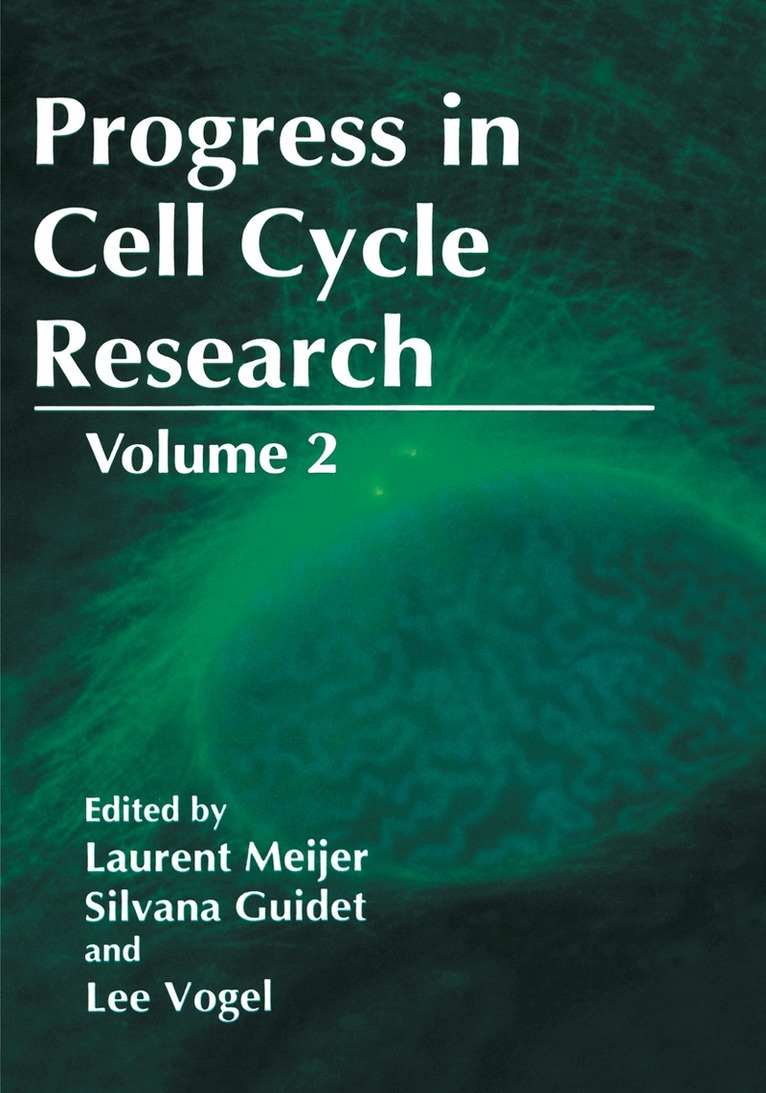
Now in its second year, Progress in Cell Cycle Research was conceived to serve as an up to date introduction to various aspects of the cell division cycle. Although an annual review in any field of scientific investigation can never be as current as desired, especially in the cell cycle field, we hope that this volume will be helpful to students, to recent graduates considering a de1liation in subject and to investigators at the fringe of the cell cycle field wishing to bridge frontiers. An instructive approach to many subjects in biology is often to make comparisons between evolutionary distant organisms. If one is willing to accept that yeast represent a model primitive eukaryote, then it is possible to make some interesting comparisons of cell cycle control mechanisms between mammals and our little unicellular cousins. By and large unicellular organisms have no need for intracellular communication. With the exception of the mating phenomenon in S. cerevisiae and perhaps some nutritional sensing mechanisms, cellular division of yeast proceeds with complete disregard for neighbourly communication. Multicellular organisms on the other hand, depend entirely on intracellular communication to maintain structural integrity. Consequently, elaborate networks have evolved to either prevent or promote appropriate cell division in multicellular organisms. Yet, as described in chapter two the rudimentary mechanisms for fine tuning the cell division cycle in higher eukaryotes are already apparent in yeast.
1 578 kr
Skickas inom 10-15 vardagar
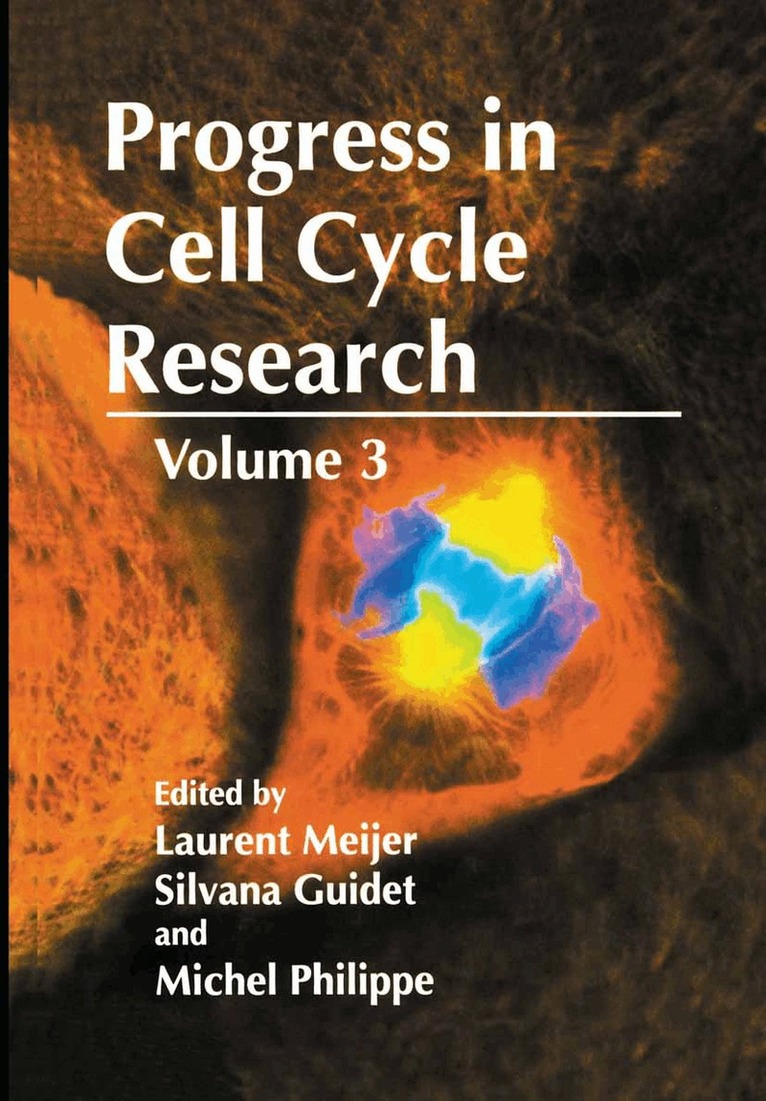
The "Progress in Cell Cycle Research" series has been conceived to serve as a collection of reviews on various aspects of a fast growing biology field, the cell division cycle. These reviews do not pretend to cover all aspects of cell cycle regulation and mechanisms but rather focus on a few topics of particular interest in the recent literature. This third volume starts with a broad overview of the diversity of ways by which viruses subdue their host cell cycle (chapter 1). Of particular interest in this area is the case of HN which has recently been extensively investigated (chapter 2). Although most of our understanding of cell cycle regulation derives from work performed in yeast and animal cells, plant models, reviewed in chapter 3 for one of the best studied example, Arabidopsis, are starting to contribute significantly to the cell cycle general picture. In mammals, the regulation of cell division of two types of tissues, the intestine (chapter 4) and the developing muscle (chapter 5) are investigated in an interesting physiological context. Cell division is accompanied by a number of morphological changes. One of them, organelle transport, is starting to be better understood (chapter 6). The next few chapter summarise our knowledge of some essential regulators of the cell cycle. A still intriguing enzyme, casein kinase 2, is reviewed in detail in chapter 7. Some of the most studied cell cycle regulators are certainly the CKI's, cyclin-dependent kinases inhibitors (chapter 8).
852 kr
Skickas inom 10-15 vardagar
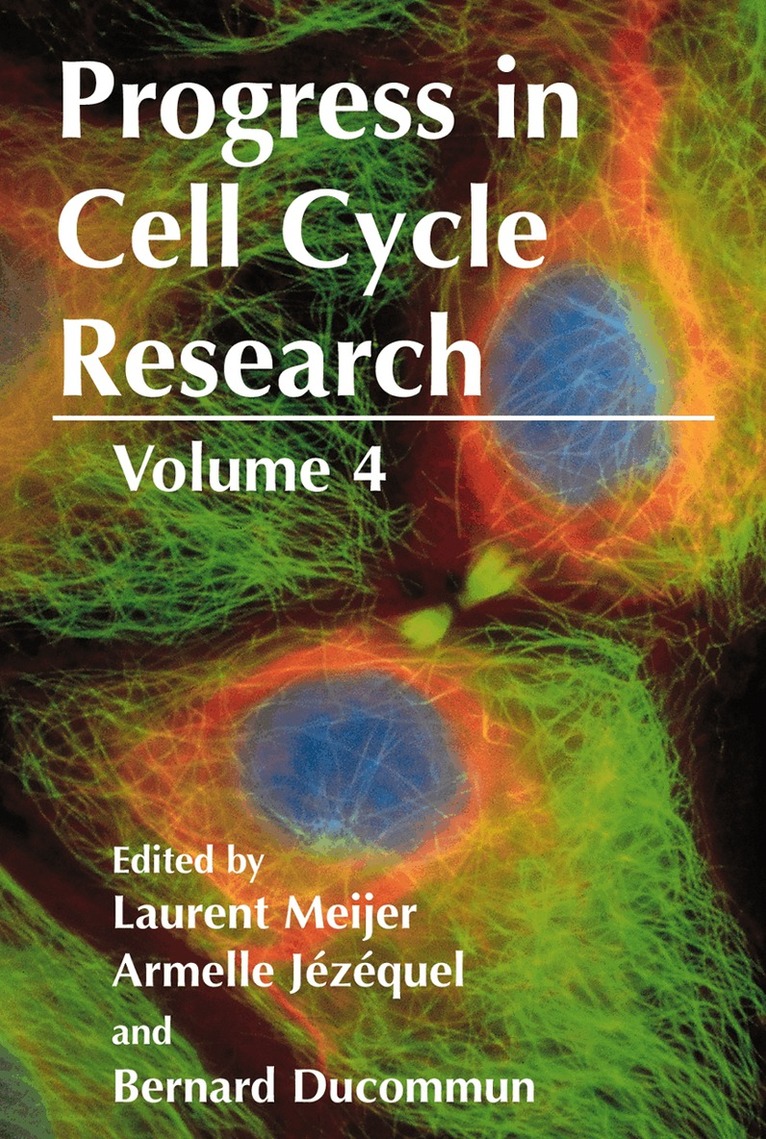
This series is dedicated to serve as a collection of reviews on various aspects of the cell division cycle, with special emphasis in less studied aspects. This fourth volume starts with a review of RAS pathways and how they impinge on the cell cycle (chapter 1). In chapter 2, an overview is presented of the links between cell anchorage - cytoskeleton and cell cycle progression. A model of the G1 control in mammalian cells is provided in chapter 3. The role of histone acetylation and cell cycle control is described in chapter 4. Then follow a few reviews dedicated to specific cell cycle regulators: the 14-3-3 protein (chapter 5), the cdc7/Dbf4 protein kinase (chapter 6), the two products of the p16/CDKN2A locus and their link with Rb and p53 (chapter 7), the Pho85 cyclin-dependent kinases in yeast (chapter 9), the cdc25 phosphatase (chapter 10), RCC1 and ran (chapter 13). The intriguing phosphorylation-dependent prolyl-isomerization process and its function in cell cycle regulation are reviewed in chapter 8.Our current knowledge of the molecular mechanisms of cell cycle regulation has greatly benefited from the use of oocyte maturation, a unique but diverse cellular process investigated in a large variety of models reviewed in chapter 11. The cross-talks between MAP kinase and cdc2/cyclin B in oocytes have been particularly well understood in Xenopus (chapter 12). More and more data show the interference of viral proteins with the mammalian cell cycle (see review in chapter 1 of Progress in Cell Cycle Research!). One such example, the HTLV-1 tax protein, is described in chapter 14. Our knowledge of the cell cycle is spreading to protozoan parasites, as nicely reviewed in chapter 15, and this may have great therapeutic consequences. Quite fascinatingly, the cell cycle is regulated by the circadian rhythm, from unicellular organisms (chapter 16) to man (chapter 17). The use of cell-cycle-specific treatments in cancer therapy may greatly benefit from understanding and use of the links between the cycle and the rhythm. Major advances have been recently made in the identification of the molecular actors regulating the circadian rhythm.We anticipate that some cell cycle and circadian rhy regulators will soon be found to be connected. The treatment of cancer (and other cell-cycle-related diseases) will also obviously benefit from a better understanding of the connections between cell cycle and apoptosis (chapter 18). As more and more `cell cycle drugs' are being discovered, their use as anticancer drugs is being extensively investigated; they are reviewed in chapter 19. The discovery of cell cycle regulators in the brain of Alzheimer's disease patients leaves us with the idea that cell cycle studies, initially supported by the antitumour purpose, may have applications in quite unexpected fields.
552 kr
Skickas inom 10-15 vardagar
The "Progress in Cell Cycle Research" series is dedicated to serve as a collection of reviews on various aspects of the cell division cycle, with special emphasis on less studied aspects. We hope this series will continue to be helpful to students, graduates and researchers interested in the cell cycle area and related fields. We hope that reading of these chapters will constitute a "point of entry" into specific aspects of this vast and fast moving field of research. As PCCR4 is being printed several other books on the cell cycle have appeared (ref. 1-3) which should complement our series. This fourth volume of PCCR starts with a review on RAS pathways and how they impinge on the cell cycle (chapter 1). In chapter 2, an overview is presented on the links between cell anchorage -cytoskeleton and cell cycle progression. A model of the Gl control in mammalian cells is provided in chapter 3. The role of histone acetylation and cell cycle contriol is described in chapter 4. Then follow a few reviews dedicated to specific cell cycle regulators: the 14-3-3 protein (chapter 5), the cdc7/Dbf4 protein kinase (chapter 6), the two products of the pI6/CDKN2A locus and their link with Rb and p53 (chapter 7), the Ph085 cyclin-dependent kinases in yeast (chapter 9), the cdc25 phophatase (chapter 10), RCCI and ran (chapter 13). The intriguing phosphorylation dependent prolyl-isomerization process and its function in cell cycle regulation are reviewed in chapter 8.
1 625 kr
Skickas inom 10-15 vardagar
The "Progress in Cell Cycle Research" series has been conceived to serve as a collection of reviews on various aspects of a fast growing biology field, the cell division cycle. These reviews do not pretend to cover all aspects of cell cycle regulation and mechanisms but rather focus on a few topics of particular interest in the recent literature. This third volume starts with a broad overview of the diversity of ways by which viruses subdue their host cell cycle (chapter 1). Of particular interest in this area is the case of HN which has recently been extensively investigated (chapter 2). Although most of our understanding of cell cycle regulation derives from work performed in yeast and animal cells, plant models, reviewed in chapter 3 for one of the best studied example, Arabidopsis, are starting to contribute significantly to the cell cycle general picture. In mammals, the regulation of cell division of two types of tissues, the intestine (chapter 4) and the developing muscle (chapter 5) are investigated in an interesting physiological context. Cell division is accompanied by a number of morphological changes. One of them, organelle transport, is starting to be better understood (chapter 6). The next few chapter summarise our knowledge of some essential regulators of the cell cycle. A still intriguing enzyme, casein kinase 2, is reviewed in detail in chapter 7. Some of the most studied cell cycle regulators are certainly the CKI's, cyclin-dependent kinases inhibitors (chapter 8).
1 625 kr
Skickas inom 10-15 vardagar
Now in its second year, Progress in Cell Cycle Research was conceived to serve as an up to date introduction to various aspects of the cell division cycle. Although an annual review in any field of scientific investigation can never be as current as desired, especially in the cell cycle field, we hope that this volume will be helpful to students, to recent graduates considering a de1liation in subject and to investigators at the fringe of the cell cycle field wishing to bridge frontiers. An instructive approach to many subjects in biology is often to make comparisons between evolutionary distant organisms. If one is willing to accept that yeast represent a model primitive eukaryote, then it is possible to make some interesting comparisons of cell cycle control mechanisms between mammals and our little unicellular cousins. By and large unicellular organisms have no need for intracellular communication. With the exception of the mating phenomenon in S. cerevisiae and perhaps some nutritional sensing mechanisms, cellular division of yeast proceeds with complete disregard for neighbourly communication. Multicellular organisms on the other hand, depend entirely on intracellular communication to maintain structural integrity. Consequently, elaborate networks have evolved to either prevent or promote appropriate cell division in multicellular organisms. Yet, as described in chapter two the rudimentary mechanisms for fine tuning the cell division cycle in higher eukaryotes are already apparent in yeast.