Inbunden, Engelska, 1999
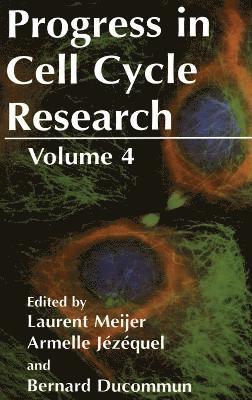
Progress in Cell Cycle Research
Av Laurent Meijer, Armelle Jezequel, Laurent Meijer, Armelle Jezequel, Bernard Ducommun
875 kr
Beställningsvara. Skickas inom 10-15 vardagar. Fri frakt över 249 kr.
Beskrivning
This series is dedicated to serve as a collection of reviews on various aspects of the cell division cycle, with special emphasis in less studied aspects. This fourth volume starts with a review of RAS pathways and how they impinge on the cell cycle (chapter 1). In chapter 2, an overview is presented of the links between cell anchorage - cytoskeleton and cell cycle progression. A model of the G1 control in mammalian cells is provided in chapter 3. The role of histone acetylation and cell cycle control is described in chapter 4. Then follow a few reviews dedicated to specific cell cycle regulators: the 14-3-3 protein (chapter 5), the cdc7/Dbf4 protein kinase (chapter 6), the two products of the p16/CDKN2A locus and their link with Rb and p53 (chapter 7), the Pho85 cyclin-dependent kinases in yeast (chapter 9), the cdc25 phosphatase (chapter 10), RCC1 and ran (chapter 13). The intriguing phosphorylation-dependent prolyl-isomerization process and its function in cell cycle regulation are reviewed in chapter 8.Our current knowledge of the molecular mechanisms of cell cycle regulation has greatly benefited from the use of oocyte maturation, a unique but diverse cellular process investigated in a large variety of models reviewed in chapter 11. The cross-talks between MAP kinase and cdc2/cyclin B in oocytes have been particularly well understood in Xenopus (chapter 12). More and more data show the interference of viral proteins with the mammalian cell cycle (see review in chapter 1 of Progress in Cell Cycle Research!). One such example, the HTLV-1 tax protein, is described in chapter 14. Our knowledge of the cell cycle is spreading to protozoan parasites, as nicely reviewed in chapter 15, and this may have great therapeutic consequences. Quite fascinatingly, the cell cycle is regulated by the circadian rhythm, from unicellular organisms (chapter 16) to man (chapter 17). The use of cell-cycle-specific treatments in cancer therapy may greatly benefit from understanding and use of the links between the cycle and the rhythm. Major advances have been recently made in the identification of the molecular actors regulating the circadian rhythm.We anticipate that some cell cycle and circadian rhy regulators will soon be found to be connected. The treatment of cancer (and other cell-cycle-related diseases) will also obviously benefit from a better understanding of the connections between cell cycle and apoptosis (chapter 18). As more and more `cell cycle drugs' are being discovered, their use as anticancer drugs is being extensively investigated; they are reviewed in chapter 19. The discovery of cell cycle regulators in the brain of Alzheimer's disease patients leaves us with the idea that cell cycle studies, initially supported by the antitumour purpose, may have applications in quite unexpected fields.
Produktinformation
- Utgivningsdatum: 1999-12-01
- Mått: 156 x 234 x 17 mm
- Vikt: 544 g
- Format: Inbunden
- Språk: Engelska
- Serie: Progress in Cell Cycle Research
- Antal sidor: 260
- Förlag: Kluwer Academic Publishers Group
- ISBN: 9780306463051
Utforska kategorier
Betyg & recensioner
0 recensioner
Inga recensioner tillgängliga.