Laury Sarti - Böcker
Visar alla böcker från författaren Laury Sarti. Handla med fri frakt och snabb leverans.
8 produkter
8 produkter
2 009 kr
Skickas inom 3-6 vardagar
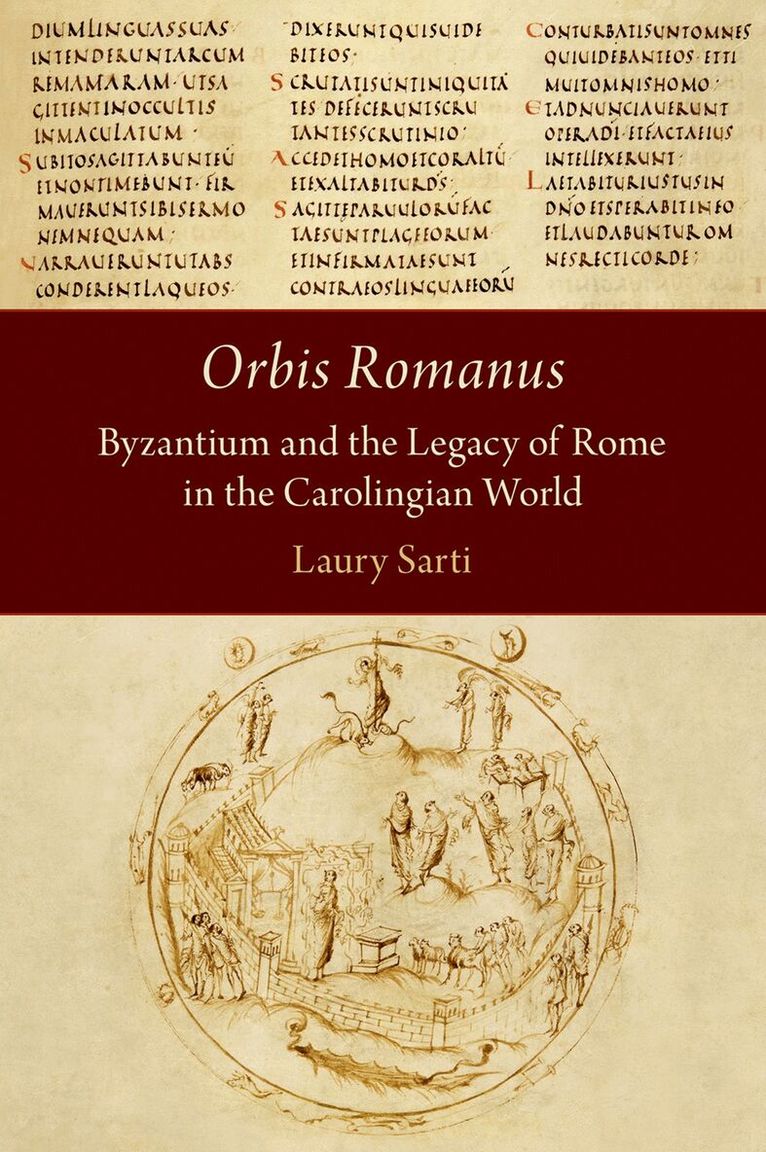
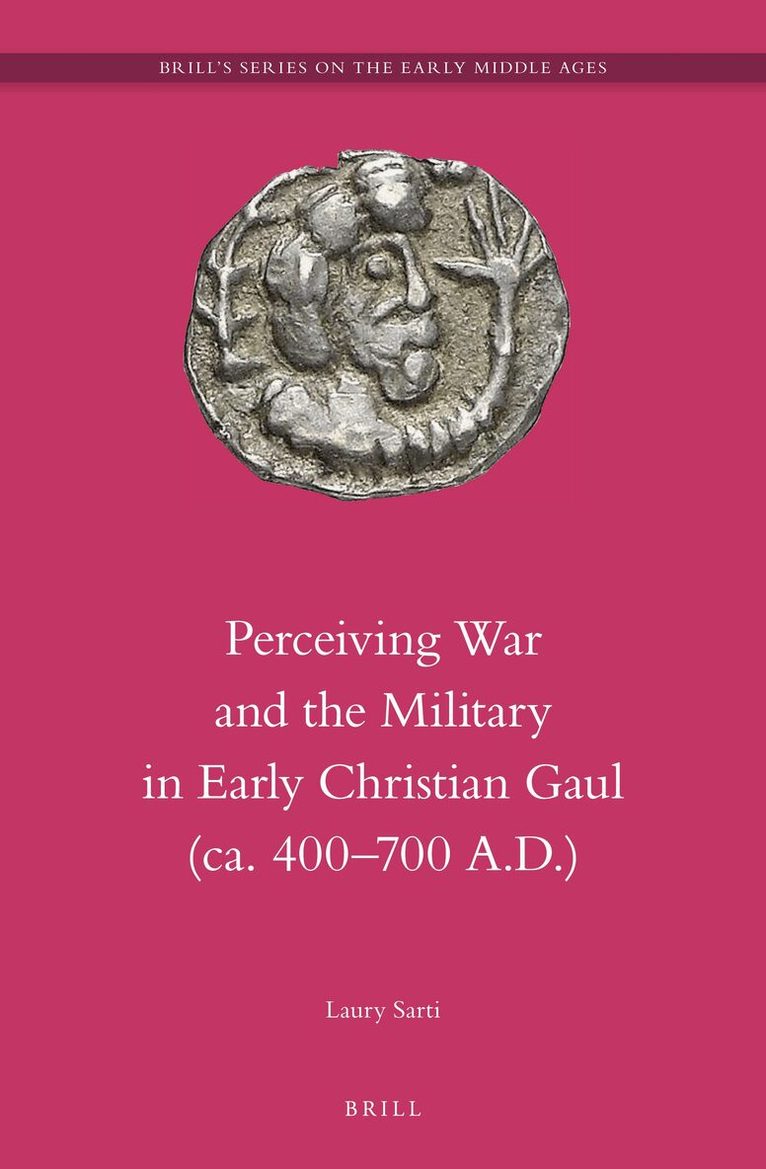
How did the medieval Frankish world relate to the orbis Romanus? Although this term is only sporadically attested in the early medieval evidence, Laury Sarti makes use of it to designate the sum of what may have been understood, from a western medieval perspective, as characteristic of or belonging to the Roman world. She argues that, although the Roman empire mainly persisted in the east beyond the fifth century, the orbis Romanus was not limited to Byzantium. The medieval west had emerged from that same Roman imperial tradition, and it retained some notable Roman characteristics and features even after it ceased to belong to the empire."The Byzantines acknowledged that the Franks had their share in the Roman world, which they conceived as a connatural people."In this book, Sarti challenges the caesura between a Roman and a post-Roman west by arguing that the Carolingian world, ruled by the Franks, still belonged to the multi-ethnic orbis Romanus.Instead of relying upon intense connectivity to the Byzantine east, which had ceased by the sixth century, ongoing Frankish participation in Roman identity emanated from the significance attributed to the Roman heritage. The Frankish kingdoms had emerged from the Roman world with a large Roman population and continuity on virtually every level of society, including governance, law, the Church and Christian belief, language, and culture. Although the Franks never designated themselves as Romans, Sarti demonstrates how Frankish Romanness--defined by the imperial past, the Byzantine present, and markedly western Roman characteristics--remained a constitutive feature of Frankish identity. While the Frankish relation to the Byzantine empire is more difficult to grasp, western and eastern notions of Romanness had common origins, and both implied a genuinely Christian understanding of Roman identity. When the Franks revived western emperorship through Charlemagne, the Roman and Christian elements were implemented as essential features of its conception.The book touches on a wide range of topics, including notions of empire, the connectivity between the Frankish kingdoms and Byzantium, mutual perceptions of Roman identities, the role of the Church and religious controversies, the reception of Antiquity, the use of and significance attributed to Greek and Latin, and Roman culture in the west. Its conclusions--which challenge basic assumptions about the Carolingian period--and its up-to-date discussion of the evidence and research will be of interest to students and scholars alike.
346 kr
Skickas inom 7-10 vardagar
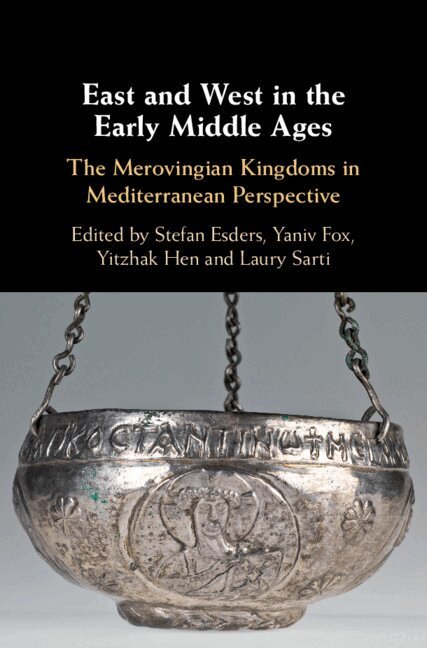
From their crystallisation in the late fifth century to their ultimate decline in the eighth, the Merovingian kingdoms were a product of a vibrant Mediterranean society with both a cultural past and a dynamic and ongoing dialogue between the member communities. By bringing together the scholarship of historians, archaeologists, art historians, and manuscript researchers, this volume examines the Merovingian world's Mediterranean connections. The Franks' cultural horizons spanned not only the Latin-speaking world, but also the Byzantine Empire, northern Europe, Sassanid Persia, and, after the seventh century, a quickly ascendant Islamic culture. Traces of a constant movement of people and cultural artefacts through this world are ubiquitous. As simultaneous consumers, adapters, and disseminators of culture, the degree to which the Merovingian kingdoms were thought to engage with their neighbours is re-evaluated as this volume analyses written accounts, archaeological findings and artefacts to provide new perspectives on Merovingian wide-ranging relations.
1 499 kr
Skickas inom 7-10 vardagar
From their crystallisation in the late fifth century to their ultimate decline in the eighth, the Merovingian kingdoms were a product of a vibrant Mediterranean society with both a cultural past and a dynamic and ongoing dialogue between the member communities. By bringing together the scholarship of historians, archaeologists, art historians, and manuscript researchers, this volume examines the Merovingian world's Mediterranean connections. The Franks' cultural horizons spanned not only the Latin-speaking world, but also the Byzantine Empire, northern Europe, Sassanid Persia, and, after the seventh century, a quickly ascendant Islamic culture. Traces of a constant movement of people and cultural artefacts through this world are ubiquitous. As simultaneous consumers, adapters, and disseminators of culture, the degree to which the Merovingian kingdoms were thought to engage with their neighbours is re-evaluated as this volume analyses written accounts, archaeological findings and artefacts to provide new perspectives on Merovingian wide-ranging relations.
1 271 kr
Skickas inom 5-8 vardagar
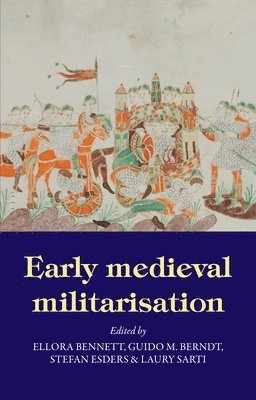
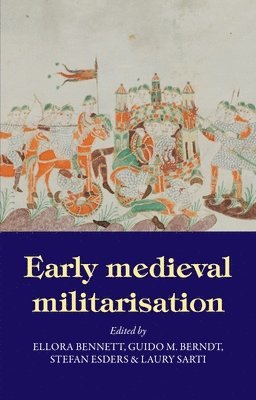
The societies of ancient Europe underwent a continual process of militarisation, and this would come to be a defining characteristic of the early Middle Ages. The process was neither linear nor mono-causal, but it affected society as a whole, encompassing features like the lack of demarcation between the military and civil spheres of the population, the significance attributed to weapons beyond their military function and the wide recognition of martial values. Early medieval militarisation assembles twenty studies that use both written and archaeological evidence to explore the phenomenon of militarisation and its impact on the development of the societies of early medieval Europe. The interdisciplinary investigations break new ground and will be essential reading for scholars and students of related fields, as well as non-specialists with an interest in early medieval history.
356 kr
Skickas
The societies of ancient Europe underwent a continual process of militarisation, and this would come to be a defining characteristic of the early Middle Ages. The process was neither linear nor mono-causal, but it affected society as a whole, encompassing features like the lack of demarcation between the military and civil spheres of the population, the significance attributed to weapons beyond their military function and the wide recognition of martial values. Early medieval militarisation assembles twenty studies that use both written and archaeological evidence to explore the phenomenon of militarisation and its impact on the development of the societies of early medieval Europe. The interdisciplinary investigations break new ground and will be essential reading for scholars and students of related fields, as well as non-specialists with an interest in early medieval history.
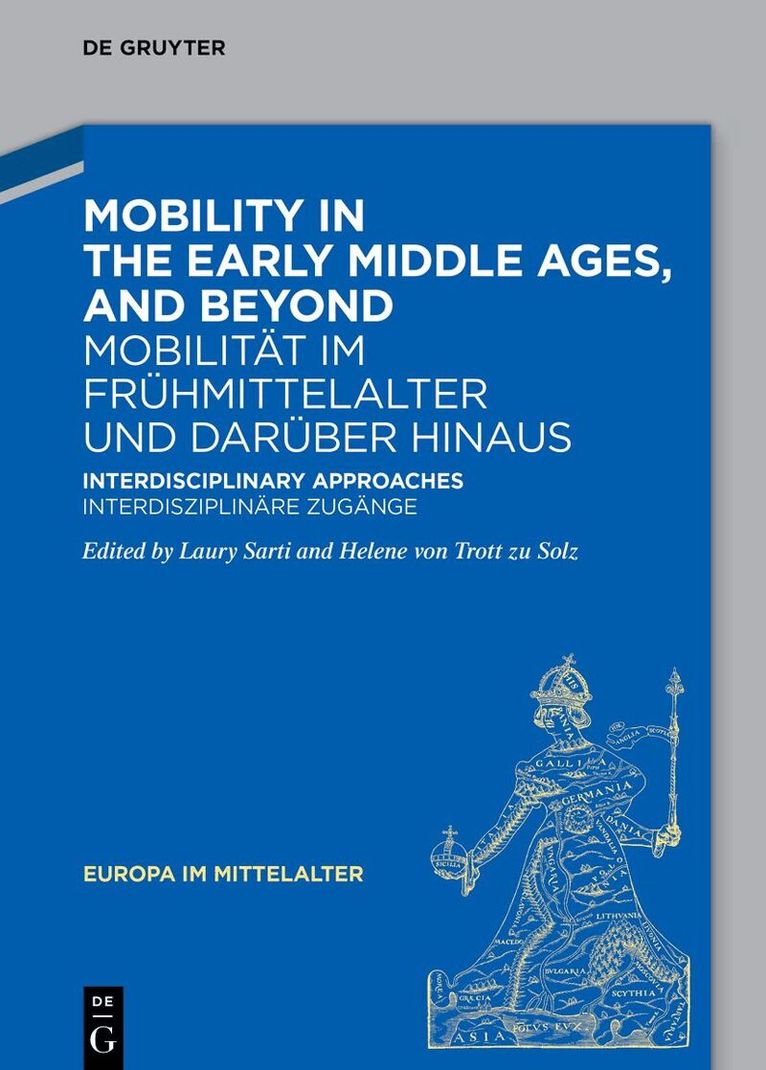
Mobility in the Early Middle Ages, and Beyond – Mobilität im Frühmittelalter und darüber hinaus
Interdisciplinary Approaches – Interdisziplinäre Zugänge
Inbunden, Engelska, 2025
1 814 kr
Skickas inom 3-6 vardagar
Das Reisen in der Vormoderne war grundsätzlich mit Fragen und Ungewissheit verbunden. Das Fehlen detaillierter Wegekarten zwang Reisende sich ihren Weg mit Hilfe von Itineraren, topographischen Merkmalen wie den Straßen- und Flussläufen, den Bergen, oder den Sternen, die Wegbeschreibungen von Dritten und der Hilfe Ortskundigen zu erschließen. Jeder Versuch, die frühmittelalterliche Mobilität und die damit verbundenen Vorgänge zu untersuchen, ist durch wenige Schriftzeugnisse beschränkt. Im Zentrum des methodisch ausgerichteten Aufsatzbandes steht die Frage, wie sich frühmittelalterliche Mobilität über die ausdrücklich in den Schriften enthaltenen Angaben hinaus untersuchen lässt. Welche Möglichkeiten bieten neueste archäologische, digitale und naturwissenschaftliche Methoden um die Rahmenbedingungen von Mobilität und das Wissen, das ein Reisender benötigte, zu erschließen? Inwiefern lassen sich die Motive und Notwendigkeiten hinter der Mobilität durch prosopographische Studien und Netzwerkanalysen nachvollziehen und ergänzen? Ein besseres Verständnis für die Rahmenbedingungen frühmittelalterlicher Mobilität lässt die individuellen sowie kollektiven Leistungen, die jede Form des Austauschs einforderte, in ihrem Gesamtkontext zu erfassen.
281 kr
Skickas inom 3-6 vardagar
Del 145 - Medieval Mediterranean
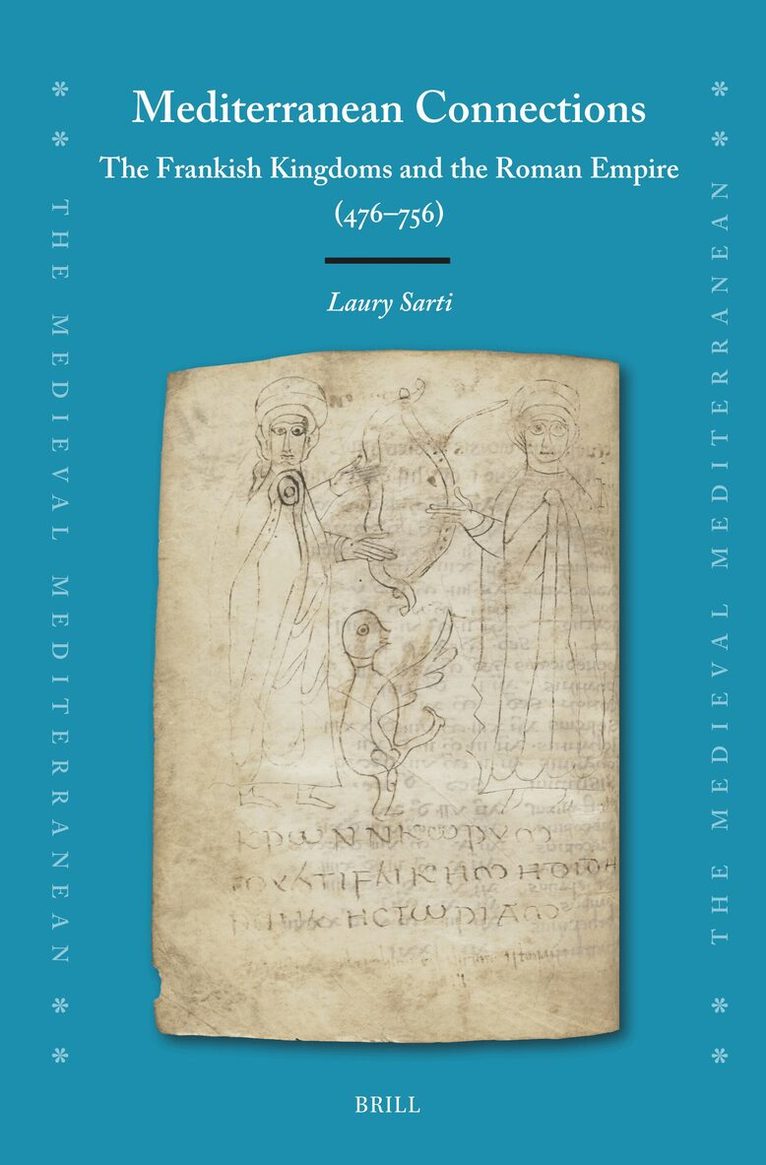
Mediterranean Connections: The Frankish Kingdoms and the Roman Empire (476–756)
Inbunden, Engelska, 2025
2 329 kr
Skickas inom 3-6 vardagar
This monograph challenges the idea that Roman imperial authority in the West ended in 476. It shows how the Frankish realm maintained ties to the empire, with real separation only emerging in the late sixth century.Tracing enduring Frankish-Byzantine diplomacy, shared identities, religious controversy, and trade into the seventh century, it reveals a landscape of continued exchange rather than abrupt decline. Including previously overlooked sources, the study offers a new perspective on Frankish identity, imperial affiliation, and the evolving relationship between Rome, the empire, and the Merovingians from the fifth to the eighth century.