Yaniv Fox - Böcker
Visar alla böcker från författaren Yaniv Fox. Handla med fri frakt och snabb leverans.
11 produkter
11 produkter
635 kr
Skickas inom 10-15 vardagar
The Mediterranean and its hinterlands were the scene of intensive and transformative contact between cultures in the Middle Ages. From the seventh to the seventeenth century, the three civilizations into which the region came to be divided geographically – the Islamic Khalifate, the Byzantine Empire, and the Latin West – were busily redefining themselves vis-à-vis one another. Interspersed throughout the region were communities of minorities, such as Christians in Muslim lands, Muslims in Christian lands, heterodoxical sects, pagans, and, of course, Jews. One of the most potent vectors of interaction and influence between these communities in the medieval world was inter-religious conversion: the process whereby groups or individuals formally embraced a new religion. The chapters of this book explore this dynamic: what did it mean to convert to Christianity in seventh-century Ireland? What did it mean to embrace Islam in tenth-century Egypt? Are the two phenomena comparable on a social, cultural, and legal level? The chapters of the book also ask what we are able to learn from our sources, which, at times, provide a very culturally-charged and specific conversion rhetoric. Taken as a whole, the compositions in this volume set out to argue that inter-religious conversion was a process that was recognizable and comparable throughout its geographical and chronological purview.
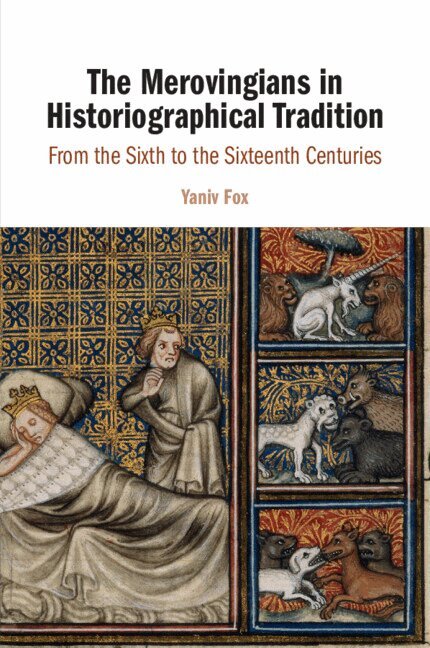
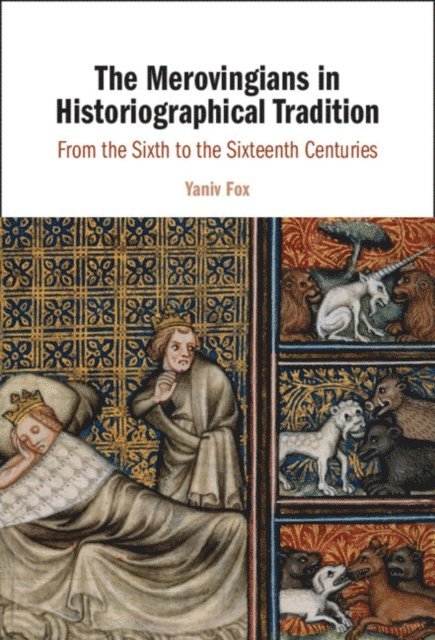
The Merovingians in Historiographical Tradition
From the Sixth to the Sixteenth Centuries
Inbunden, Engelska, 2023
1 295 kr
Skickas inom 7-10 vardagar
The Merovingian centuries were a foundational period in the historical consciousness of western Europe. The memory of the first dynasty of Frankish kings, their origin myths, accomplishments, and failures were used by generations of chroniclers, propagandists, and historians to justify a wide range of social and political agendas. The process of curating and editing the source material gave rise to a recognizable 'Merovingian narrative' with three distinct phases: meteoric ascent, stasis, and decline. Already in the seventh-century Chronicle of Fredegar, this tripartite model was invoked by a Merovingian queen to prophesy the fate of her descendants. This expert commentary sets out to understand how the story of the Merovingians was shaped through a process of continuous historiographical adaptation. It examines authors from across a millennium of historical writing and analyzes their influences and objectives, charting the often-unexpected ways in which their narratives were received and developed.
The Merovingians in Historiographical Tradition
From the Sixth to the Sixteenth Centuries
Häftad, Engelska, 2025
462 kr
Skickas inom 7-10 vardagar
The Merovingian centuries were a foundational period in the historical consciousness of western Europe. The memory of the first dynasty of Frankish kings, their origin myths, accomplishments, and failures were used by generations of chroniclers, propagandists, and historians to justify a wide range of social and political agendas. The process of curating and editing the source material gave rise to a recognizable 'Merovingian narrative' with three distinct phases: meteoric ascent, stasis, and decline. Already in the seventh-century Chronicle of Fredegar, this tripartite model was invoked by a Merovingian queen to prophesy the fate of her descendants. This expert commentary sets out to understand how the story of the Merovingians was shaped through a process of continuous historiographical adaptation. It examines authors from across a millennium of historical writing and analyzes their influences and objectives, charting the often-unexpected ways in which their narratives were received and developed.
346 kr
Skickas inom 7-10 vardagar
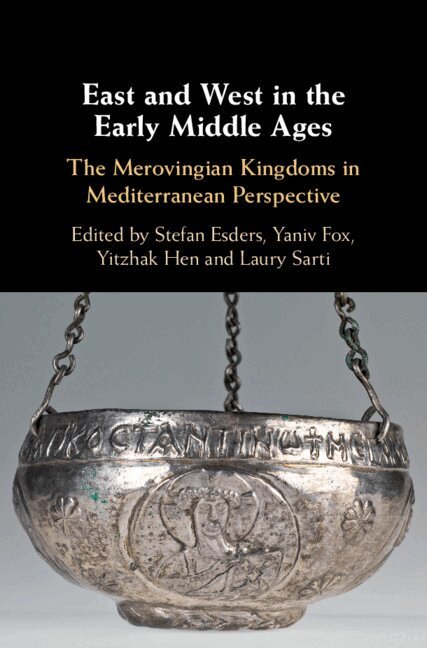
From their crystallisation in the late fifth century to their ultimate decline in the eighth, the Merovingian kingdoms were a product of a vibrant Mediterranean society with both a cultural past and a dynamic and ongoing dialogue between the member communities. By bringing together the scholarship of historians, archaeologists, art historians, and manuscript researchers, this volume examines the Merovingian world's Mediterranean connections. The Franks' cultural horizons spanned not only the Latin-speaking world, but also the Byzantine Empire, northern Europe, Sassanid Persia, and, after the seventh century, a quickly ascendant Islamic culture. Traces of a constant movement of people and cultural artefacts through this world are ubiquitous. As simultaneous consumers, adapters, and disseminators of culture, the degree to which the Merovingian kingdoms were thought to engage with their neighbours is re-evaluated as this volume analyses written accounts, archaeological findings and artefacts to provide new perspectives on Merovingian wide-ranging relations.
749 kr
Kommande
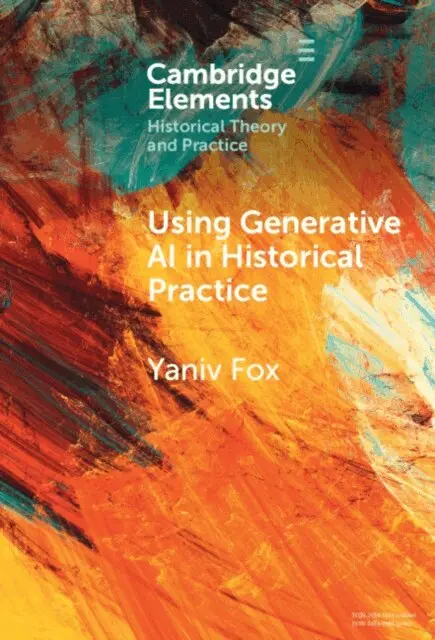
'Using Generative AI in Historical Practice' argues that generative models are reshaping historical scholarship. Rejecting medium - and long -term speculation, it focuses on near-term practice: how historians can use AI now to augment their research through context-aware dialogue, semantic search, network visualization, multimodal source analysis, and code-assisted workflows. It details methods for context management, task design, and response structure, while warning against cognitive offloading and model bias. While it offers a variety of novel methodologies, the book insists on the indispensability of human agency and taste. Case studies range from Augustine of Hippo to early cinematography, demonstrating the possibilities and limits of generative AI. It concludes with a call to historians to engage with the technology critically and productively, reimagining AI-assisted scholarship without surrendering disciplinary standards and aims.
241 kr
Kommande
'Using Generative AI in Historical Practice' argues that generative models are reshaping historical scholarship. Rejecting medium - and long -term speculation, it focuses on near-term practice: how historians can use AI now to augment their research through context-aware dialogue, semantic search, network visualization, multimodal source analysis, and code-assisted workflows. It details methods for context management, task design, and response structure, while warning against cognitive offloading and model bias. While it offers a variety of novel methodologies, the book insists on the indispensability of human agency and taste. Case studies range from Augustine of Hippo to early cinematography, demonstrating the possibilities and limits of generative AI. It concludes with a call to historians to engage with the technology critically and productively, reimagining AI-assisted scholarship without surrendering disciplinary standards and aims.
Del 98 - Cambridge Studies in Medieval Life and Thought: Fourth Series
Power and Religion in Merovingian Gaul
Columbanian Monasticism and the Frankish Elites
Inbunden, Engelska, 2014
1 431 kr
Skickas inom 7-10 vardagar
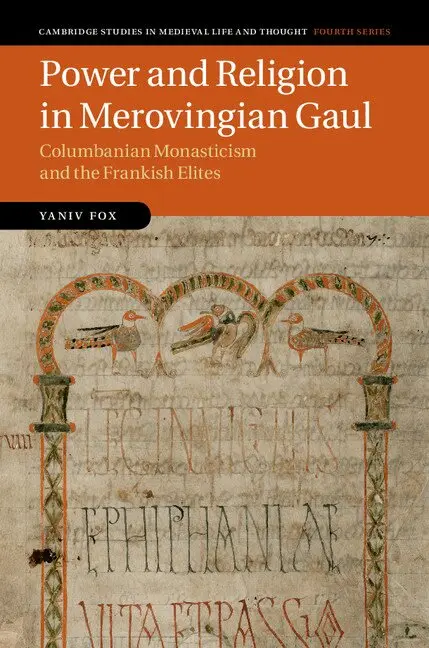
This study is the first to attempt a thorough investigation of the activities of the Columbanian congregation, which played a significant role in the development of Western monasticism. This was a new form of rural monasticism, which suited the needs and aspirations of a Christian elite eager to express its power and prestige in religious terms. Contrary to earlier studies, which viewed Columbanus and his disciples primarily as religious innovators, this book focuses on the political, economic, and familial implications of monastic patronage and on the benefits elite patrons stood to reap. While founding families were in a privileged position to court royal favour, monastic patronage also exposed them to violent reprisals from competing factions. Columbanian monasteries were not serene havens of contemplation, but rather active foci of power and wealth, and quickly became integral elements of early medieval statecraft.
1 499 kr
Skickas inom 7-10 vardagar
From their crystallisation in the late fifth century to their ultimate decline in the eighth, the Merovingian kingdoms were a product of a vibrant Mediterranean society with both a cultural past and a dynamic and ongoing dialogue between the member communities. By bringing together the scholarship of historians, archaeologists, art historians, and manuscript researchers, this volume examines the Merovingian world's Mediterranean connections. The Franks' cultural horizons spanned not only the Latin-speaking world, but also the Byzantine Empire, northern Europe, Sassanid Persia, and, after the seventh century, a quickly ascendant Islamic culture. Traces of a constant movement of people and cultural artefacts through this world are ubiquitous. As simultaneous consumers, adapters, and disseminators of culture, the degree to which the Merovingian kingdoms were thought to engage with their neighbours is re-evaluated as this volume analyses written accounts, archaeological findings and artefacts to provide new perspectives on Merovingian wide-ranging relations.
Del 98 - Cambridge Studies in Medieval Life and Thought: Fourth Series
Power and Religion in Merovingian Gaul
Columbanian Monasticism and the Frankish Elites
Häftad, Engelska, 2018
523 kr
Skickas inom 7-10 vardagar
This study is the first to attempt a thorough investigation of the activities of the Columbanian congregation, which played a significant role in the development of Western monasticism. This was a new form of rural monasticism, which suited the needs and aspirations of a Christian elite eager to express its power and prestige in religious terms. Contrary to earlier studies, which viewed Columbanus and his disciples primarily as religious innovators, this book focuses on the political, economic, and familial implications of monastic patronage and on the benefits elite patrons stood to reap. While founding families were in a privileged position to court royal favour, monastic patronage also exposed them to violent reprisals from competing factions. Columbanian monasteries were not serene havens of contemplation, but rather active foci of power and wealth, and quickly became integral elements of early medieval statecraft.
2 238 kr
Skickas inom 10-15 vardagar
The Mediterranean and its hinterlands were the scene of intensive and transformative contact between cultures in the Middle Ages. From the seventh to the seventeenth century, the three civilizations into which the region came to be divided geographically – the Islamic Khalifate, the Byzantine Empire, and the Latin West – were busily redefining themselves vis-à-vis one another. Interspersed throughout the region were communities of minorities, such as Christians in Muslim lands, Muslims in Christian lands, heterodoxical sects, pagans, and, of course, Jews. One of the most potent vectors of interaction and influence between these communities in the medieval world was inter-religious conversion: the process whereby groups or individuals formally embraced a new religion. The chapters of this book explore this dynamic: what did it mean to convert to Christianity in seventh-century Ireland? What did it mean to embrace Islam in tenth-century Egypt? Are the two phenomena comparable on a social, cultural, and legal level? The chapters of the book also ask what we are able to learn from our sources, which, at times, provide a very culturally-charged and specific conversion rhetoric. Taken as a whole, the compositions in this volume set out to argue that inter-religious conversion was a process that was recognizable and comparable throughout its geographical and chronological purview.
1 333 kr
Skickas inom 5-8 vardagar