• Fri frakt över 249 kr
  • •
  • Snabba leveranser
  • •
  • Billiga böcker
Kundservice

Du är på sajten för privatpersoner.

Företag, bibliotek eller offentlig verksamhet?

Du handlar på classic.bokus.com, där alla dina funktioner finns intakta.
Till classic.bokus.com
Bokus logotyp. Gå till startsidan.
  • Erbjudanden
  • Student
  • Topplistor
  • Barn & ungdom
  • Bokus Play
  • E-böcker
  • Ljudböcker
  • Pocketböcker
  • Spel & pussel

Upp till 25% på utvalda nyheter →

Sidfot

Mina sidor

    Hjälp

    • Kundservice
    • Vanliga frågor och svar
    • Frakt och leverans
    • Retur vid ångerrätt
    • Reklamera vara
    • Betalning
    • Köpvillkor
    • Allmänna villkor
    • Information om webbplatsens tillgänglighet

    Om Bokus

    • Om oss
    • Pressrum
    • För studenter
    • För företag
    • För bibliotek och offentlig verksamhet
    • För leverantörer
    • Hållbarhet

    Populärt

    • Aktuella erbjudanden
    • Presentkort
    • Studentlitteratur
    • Nya böcker
    • Topplistor
    • Signerade böcker
    • Engelska böcker

    Inspiration

    • Boktips
    • BookTok
    • Populära bokserier
    • Barnbokskaraktärer
    • Populära författare
    Logotyp för Bokus
    Följ oss på Facebook (extern länk)Följ oss på Instagram (extern länk)Följ oss på YouTube (extern länk)Följ oss på TikTok (extern länk)
    bokus @ CookiesAnpassa cookiesIntegritetspolicyKöpvillkor
    Till Citymail hemsida (extern länk)Till Budbee hemsida (extern länk)Till Postnord hemsida (extern länk)Till Schenker hemsida (extern länk)Till Early Bird hemsida (extern länk)Till Walleys hemsida (extern länk)
    1. Historia och arkeologi
    2. Historia
    3. Europas historia

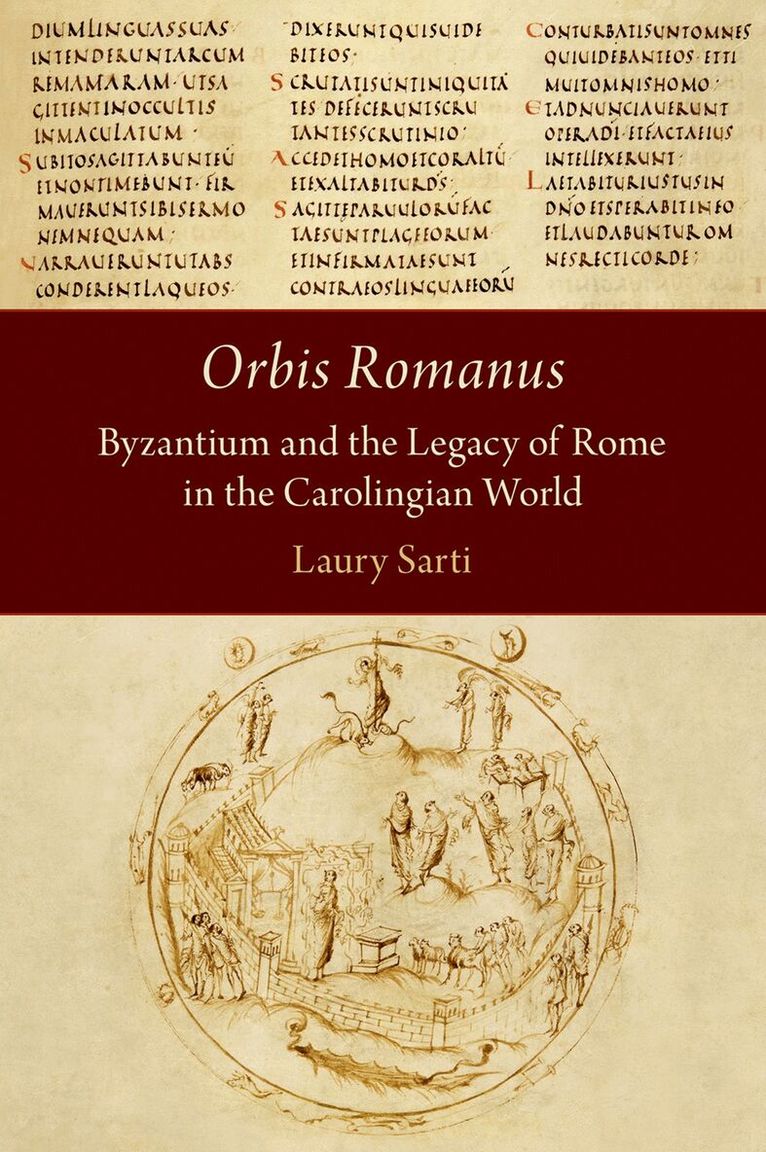
    Orbis Romanus

    Byzantium and the Legacy of Rome in the Carolingian World

    AvLaury Sarti

    Inbunden, Engelska, 2024

    2 099 kr

    Beställningsvara. Skickas inom 3-6 vardagar. Fri frakt över 249 kr.

    Beskrivning

    How did the medieval Frankish world relate to the orbis Romanus? Although this term is only sporadically attested in the early medieval evidence, Laury Sarti makes use of it to designate the sum of what may have been understood, from a western medieval perspective, as characteristic of or belonging to the Roman world. She argues that, although the Roman empire mainly persisted in the east beyond the fifth century, the orbis Romanus was not limited to Byzantium. The medieval west had emerged from that same Roman imperial tradition, and it retained some notable Roman characteristics and features even after it ceased to belong to the empire."The Byzantines acknowledged that the Franks had their share in the Roman world, which they conceived as a connatural people."In this book, Sarti challenges the caesura between a Roman and a post-Roman west by arguing that the Carolingian world, ruled by the Franks, still belonged to the multi-ethnic orbis Romanus.Instead of relying upon intense connectivity to the Byzantine east, which had ceased by the sixth century, ongoing Frankish participation in Roman identity emanated from the significance attributed to the Roman heritage. The Frankish kingdoms had emerged from the Roman world with a large Roman population and continuity on virtually every level of society, including governance, law, the Church and Christian belief, language, and culture. Although the Franks never designated themselves as Romans, Sarti demonstrates how Frankish Romanness--defined by the imperial past, the Byzantine present, and markedly western Roman characteristics--remained a constitutive feature of Frankish identity. While the Frankish relation to the Byzantine empire is more difficult to grasp, western and eastern notions of Romanness had common origins, and both implied a genuinely Christian understanding of Roman identity. When the Franks revived western emperorship through Charlemagne, the Roman and Christian elements were implemented as essential features of its conception.The book touches on a wide range of topics, including notions of empire, the connectivity between the Frankish kingdoms and Byzantium, mutual perceptions of Roman identities, the role of the Church and religious controversies, the reception of Antiquity, the use of and significance attributed to Greek and Latin, and Roman culture in the west. Its conclusions--which challenge basic assumptions about the Carolingian period--and its up-to-date discussion of the evidence and research will be of interest to students and scholars alike.

    Produktinformation

    • Utgivningsdatum:2024-08-29
    • Mått:155 x 226 x 33 mm
    • Vikt:748 g
    • Format:Inbunden
    • Språk:Engelska
    • Antal sidor:412
    • Förlag:OUP USA
    • ISBN:9780197746523

    Utforska kategorier

    • Europas historia inom Historia och arkeologi
    • Forntidens historia inom Historia och arkeologi
    • Litteraturvetenskap inom Skönlitteratur

    Mer om författaren

    Laury Sarti is Senior Lecturer in Medieval History at the University of Freiburg, with research focusing on military history, Mediterranean connectivity, and physical mobility. She is the author of Westeuropa zwischen Antike und Mittelalter and Perceiving War and the Military in Early Christian Gaul (400-700).

    Recensioner i media

    Laury Sarti's fascinating new book forces us to reassess the attitudes of both Franks and Byzantines to the Roman past-and the Roman present-in the Carolingian period. We gain a greater understanding of what Rome meant to them, and how this fitted with the nature and meaning of the complex network of relations between the two political systems across the ninth century.

    Innehållsförteckning

    • List of IllustrationsPreface Chapter I - Introduction Chapter II - Imperium in the Carolingian World Chapter III - Contacts and Exchanges Chapter IV - The Present in the Past Chapter V - Greek and "Roman" Language Chapter VI - Identity and Distinction Chapter VII - Orthodoxy and the Oikumene Chapter VIII - "Roman" Culture Chapter IX - Conclusion BibliographyIndex