Lawrence Sirovich - Böcker
Visar alla böcker från författaren Lawrence Sirovich. Handla med fri frakt och snabb leverans.
11 produkter
11 produkter
299 kr
Skickas inom 3-6 vardagar
456 kr
Skickas inom 3-6 vardagar
462 kr
Skickas inom 10-15 vardagar
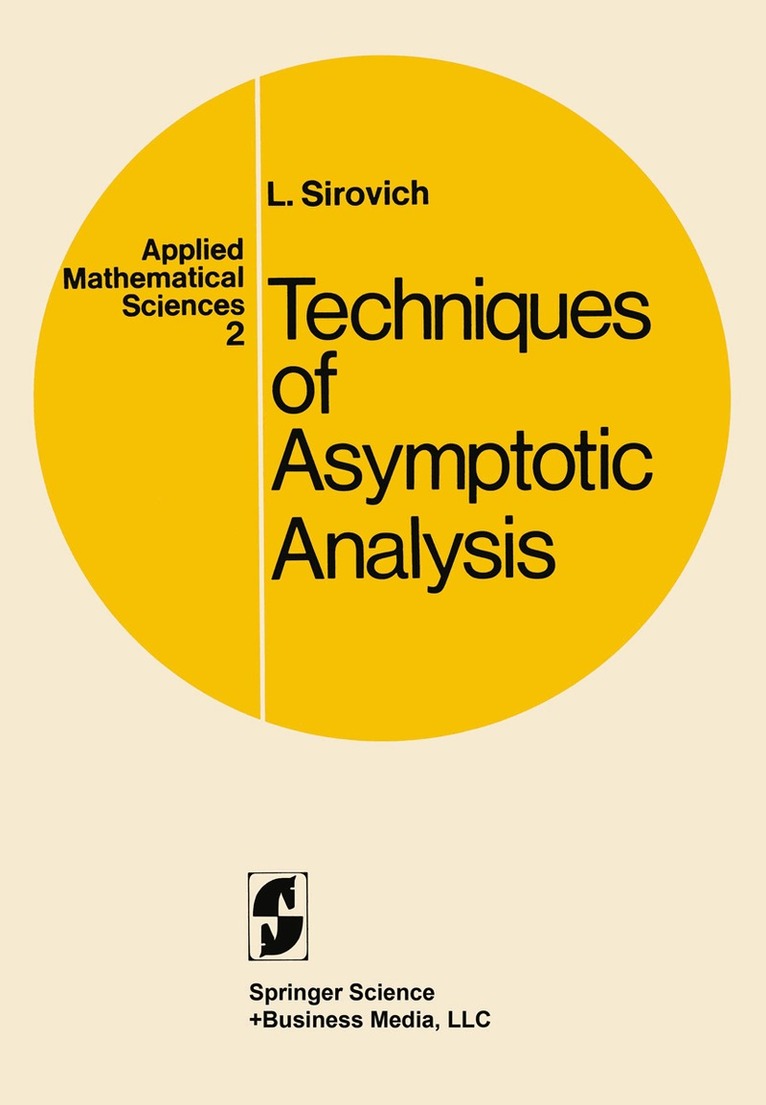
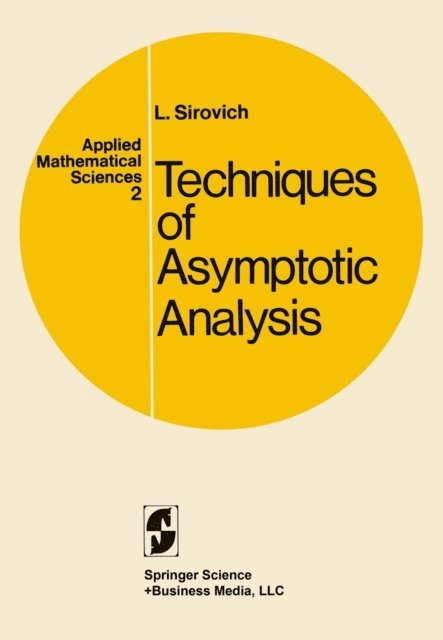
These notes originate from a one semester course which forms part of the "Math Methods" cycle at Brown. In the hope that these notes might prove useful for reference purposes several additional sections have been included and also a table of contents and index. Although asymptotic analysis is now enjoying a period of great vitality, these notes do not reflect a research oriented course. The course is aimed toward people in applied mathematics, physics, engineering, etc., who have a need for asymptotic analysis in their work. The choice of subjects has been largely dictated by the likelihood of application. Also abstraction and generality have not been pursued. Technique and computation are given equal prominence with theory. Both rigorous and formal theory is presented --very often in tandem. In practice, the means for a rigorous analysis are not always available. For this reason a goal has been the cultivation of mature formal reasoning. Therefore, during the course of lectures formal presentations gradually eclipse rigorous presentations. When this occurs, rigorous proofs are given as exercises or in the case of lengthy proofs, reference is made to the Reading List at the end.
536 kr
Skickas inom 10-15 vardagar
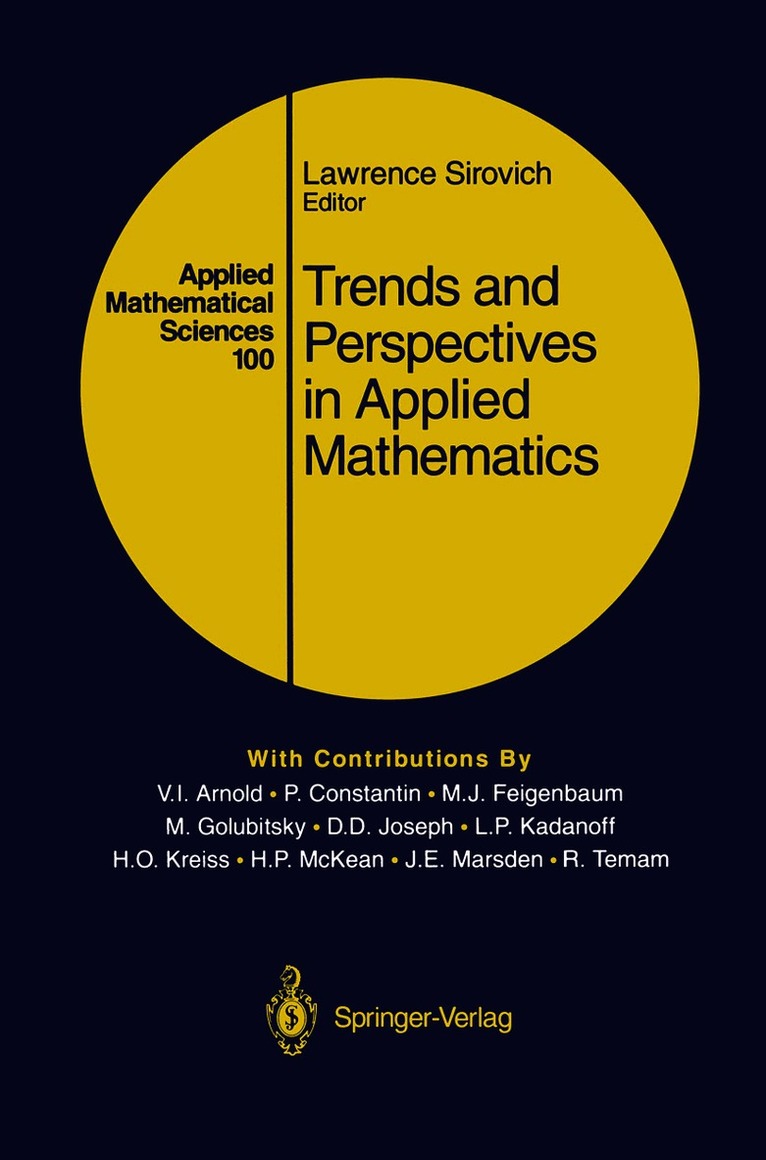
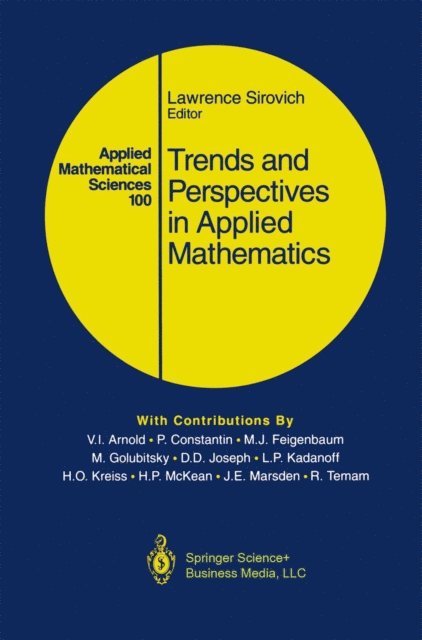
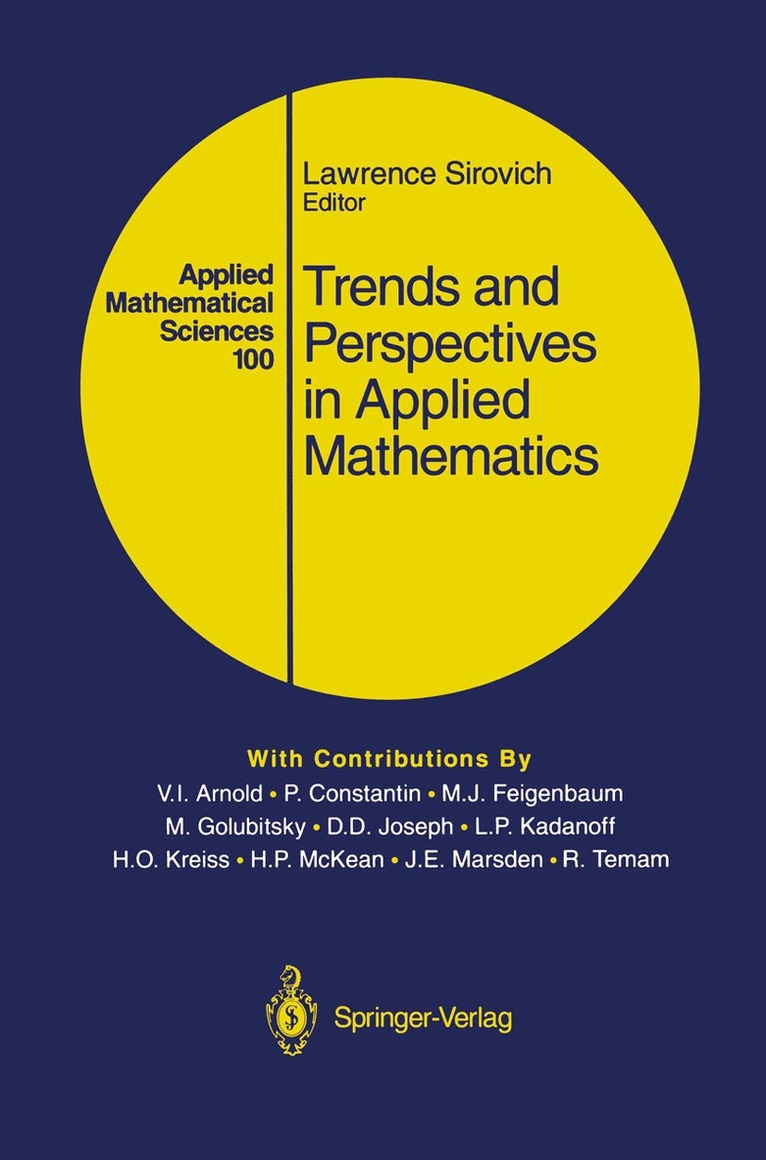
This marks the 100th volume to appear in the Applied Mathematical Sci ences series. Partial Differential Equations, by Fritz John, the first volume of the series, appeared in 1971. One year prior to its appearance, the then mathematics editor of Springer-Verlag, Klaus Peters, organized a meeting to look into the possibility of starting a series slanted toward applications. The meeting took place in New Rochelle, at the home of Fritz and Char lotte John. K.O. Friedrichs, Peter Lax, Monroe Donsker, Joe Keller, and others from the Courant Institute (previously, the Institute for Mathemat ical Sciences) were present as were Joe LaSalle and myself, the two of us having traveled down from Providence for the meeting. The John home, a large, comfortable house, especially lent itself to the informal, relaxed, and wide-ranging discussion that ensued. What emerged was a consensus that mathematical applications appeared to be poised for a period of growth and that there was a clear need for a series committed to applied mathematics. The first paragraph ofthe editorial statement written at that time reads as follows: The mathematization of all sciences, the fading of traditional scientific boundaries, the impact of computer technology, the growing importance of mathematical-computer modeling and the necessity of scientific planning all create the need both in education and research for books that are introductory to and abreast of these developments.
906 kr
Skickas inom 10-15 vardagar
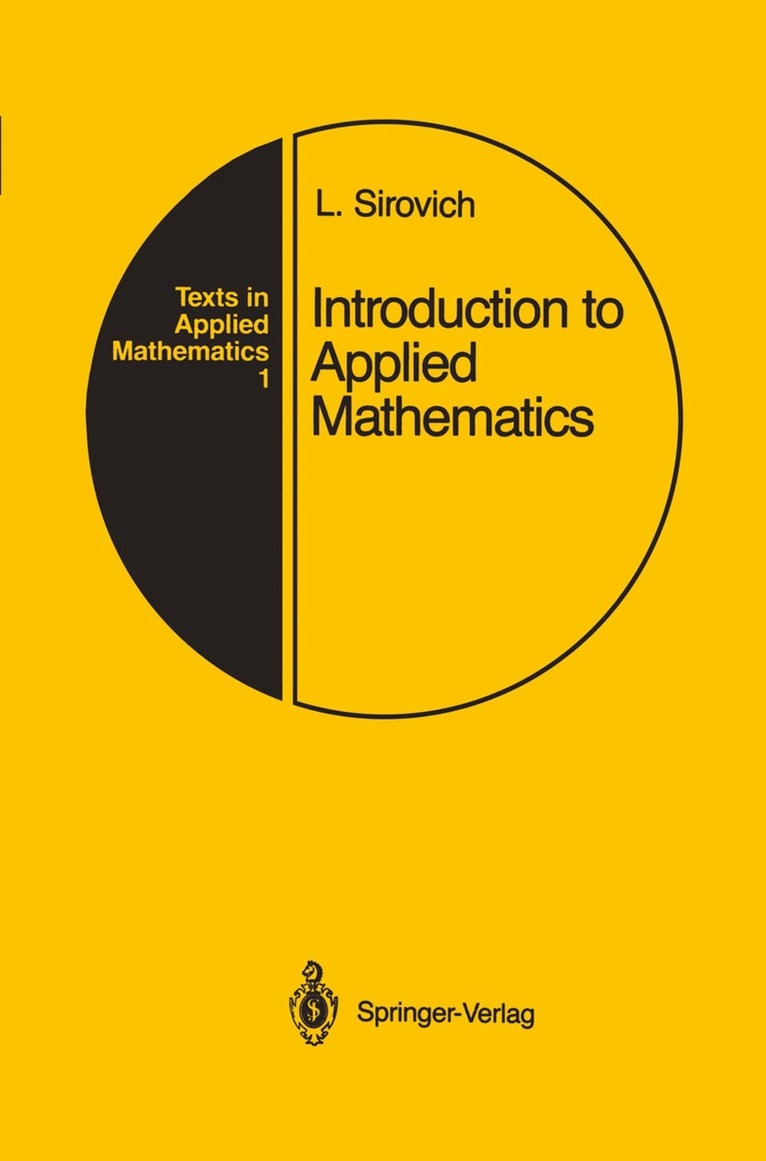
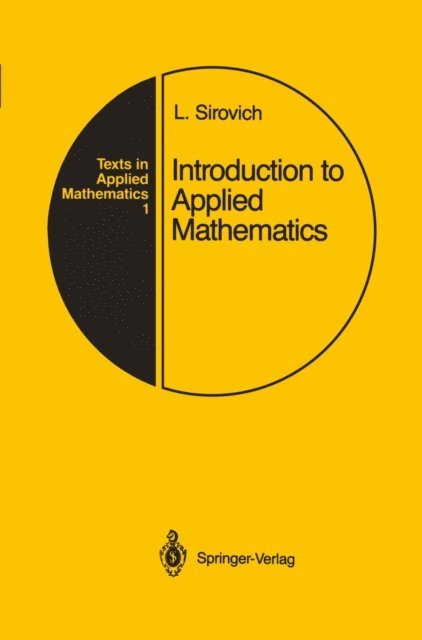
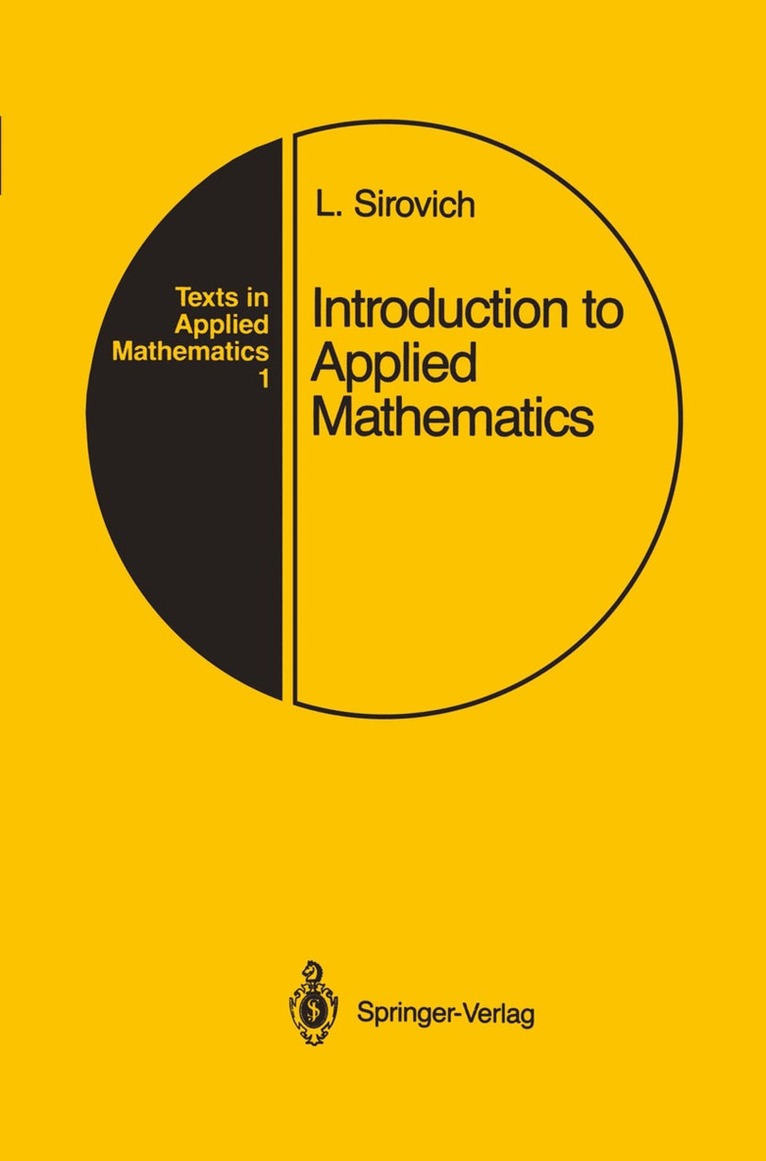
From the Preface: "The material in this book is based on notes for a course which I gave several times at Brown University. The target of the course was juniors and seniors majoring in applied mathematics, engineering and other sciences. My basic goal in the course was to teach standard methods, or what I regard as a basic "bag of tricks". In my opinion the material contained here, for the most part, does not depart widely from traditional subject matter. One such departure is the discussion of discrete linear systems. Besides being interesting in its own right, this topic is included because the treatment of such systems leads naturally to the use of discrete Fourier series, discrete Fourier transforms, and their extension, the Z-transform. On making the transition to continuous systems we derive their continuous analogues, viz., Fourier series, Fourier transforms, Fourier integrals and Laplace transforms. A main advantage to the approach taken is that a wide variety of techniques are seen to result from one or two very simple but central ideas. Above all, this course is intended as being one which gives the student a "can-do" frame of mind about mathematics. Students should be given confidence in using mathematics and not be made fearful of it. I have, therefore, forgone the theorem-proof format for a more informal style. Finally, a concerted effort was made to present an assortment of examples from diverse applications with the hope of attracting the interest of the student, and an equally dedicated effort was made to be kind to the reader."
339 kr
Skickas inom 5-8 vardagar
177 kr
Skickas inom 5-8 vardagar
251 kr
Skickas inom 3-6 vardagar
536 kr
Skickas inom 10-15 vardagar
This marks the 100th volume to appear in the Applied Mathematical Sci ences series. Partial Differential Equations, by Fritz John, the first volume of the series, appeared in 1971. One year prior to its appearance, the then mathematics editor of Springer-Verlag, Klaus Peters, organized a meeting to look into the possibility of starting a series slanted toward applications. The meeting took place in New Rochelle, at the home of Fritz and Char lotte John. K.O. Friedrichs, Peter Lax, Monroe Donsker, Joe Keller, and others from the Courant Institute (previously, the Institute for Mathemat ical Sciences) were present as were Joe LaSalle and myself, the two of us having traveled down from Providence for the meeting. The John home, a large, comfortable house, especially lent itself to the informal, relaxed, and wide-ranging discussion that ensued. What emerged was a consensus that mathematical applications appeared to be poised for a period of growth and that there was a clear need for a series committed to applied mathematics. The first paragraph ofthe editorial statement written at that time reads as follows: The mathematization of all sciences, the fading of traditional scientific boundaries, the impact of computer technology, the growing importance of mathematical-computer modeling and the necessity of scientific planning all create the need both in education and research for books that are introductory to and abreast of these developments.
1 064 kr
Skickas inom 10-15 vardagar
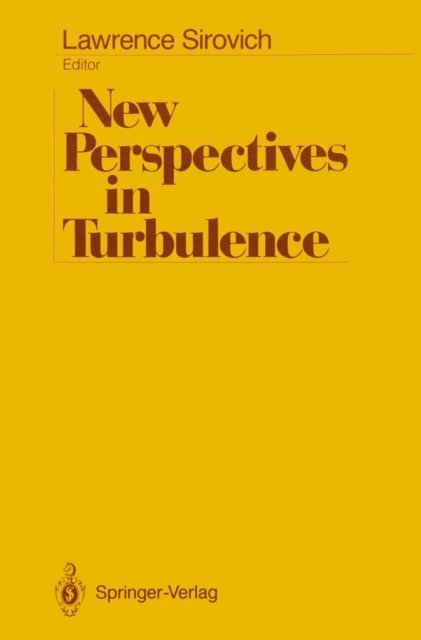
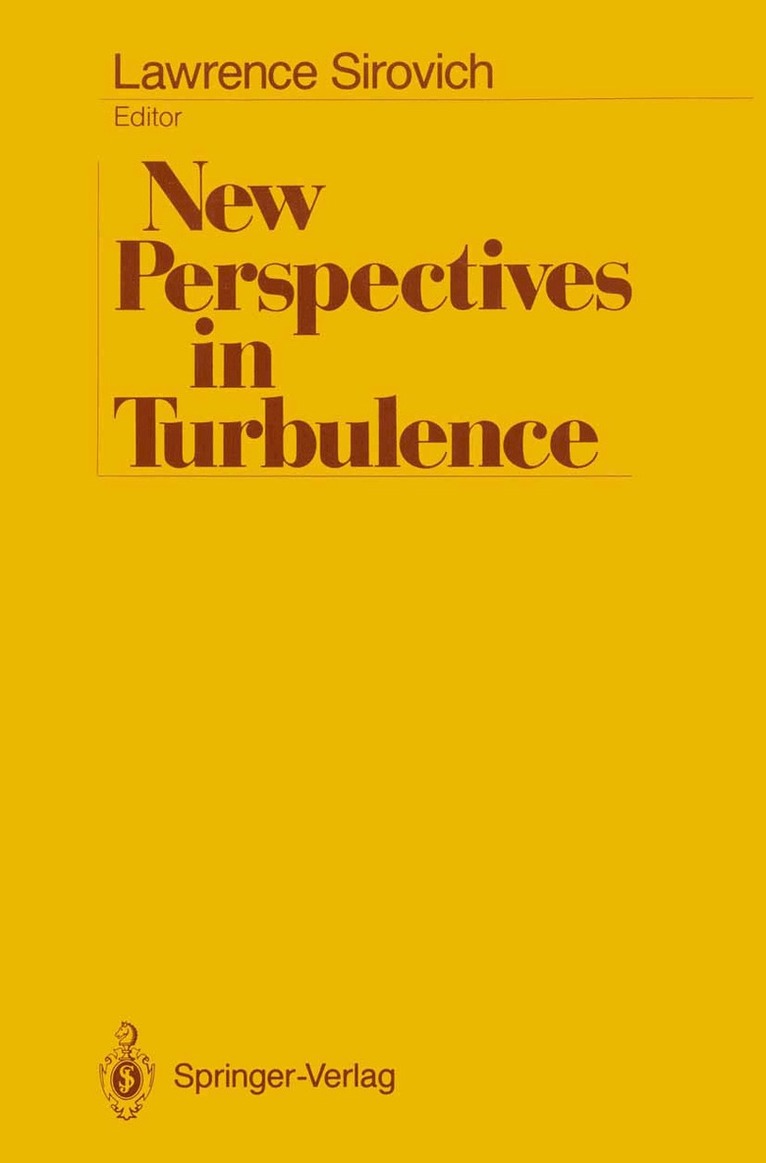
This collection of articles has its origin in a meeting which took place June 12-15, 1989, on the grounds of Salve Regina College in Newport, Rhode Island. The meeting was blessed by beautiful, balmy weather and an idyllic setting. The sessions themselves took place in Ochre Court, one of the elegant and stately old summer cottages for which Newport is acclaimed. Lectures were presented in the grand ballroom overlooking the famous Cliff Walk and Block Island Sound. Counter to general belief, the pleasant surroundings did not appear to encourage truancy or in any other way diminish the quality of the meeting. On the contrary, for the four days of the meeting there was a high level of excitement and optimism about the new perspectives in turbulence, a tone that carried over to lively dinner and evening discussions. The participants represented a broad range of backgrounds, extending from pure mathemat ics to experimental engineering. A dialogue began with the first speakers which cut across the boundaries and gave to the meeting a mood of unity which persisted.
641 kr
Skickas inom 10-15 vardagar
From the Preface: "The material in this book is based on notes for a course which I gave several times at Brown University. The target of the course was juniors and seniors majoring in applied mathematics, engineering and other sciences. My basic goal in the course was to teach standard methods, or what I regard as a basic "bag of tricks". In my opinion the material contained here, for the most part, does not depart widely from traditional subject matter. One such departure is the discussion of discrete linear systems. Besides being interesting in its own right, this topic is included because the treatment of such systems leads naturally to the use of discrete Fourier series, discrete Fourier transforms, and their extension, the Z-transform. On making the transition to continuous systems we derive their continuous analogues, viz., Fourier series, Fourier transforms, Fourier integrals and Laplace transforms. A main advantage to the approach taken is that a wide variety of techniques are seen to result from one or two very simple but central ideas. Above all, this course is intended as being one which gives the student a "can-do" frame of mind about mathematics. Students should be given confidence in using mathematics and not be made fearful of it. I have, therefore, forgone the theorem-proof format for a more informal style. Finally, a concerted effort was made to present an assortment of examples from diverse applications with the hope of attracting the interest of the student, and an equally dedicated effort was made to be kind to the reader."