Lawrence Sullivan – författare
Visar alla böcker från författaren Lawrence Sullivan. Handla med fri frakt och snabb leverans.
5 produkter
5 produkter
1 520 kr
Skickas inom 10-15 vardagar
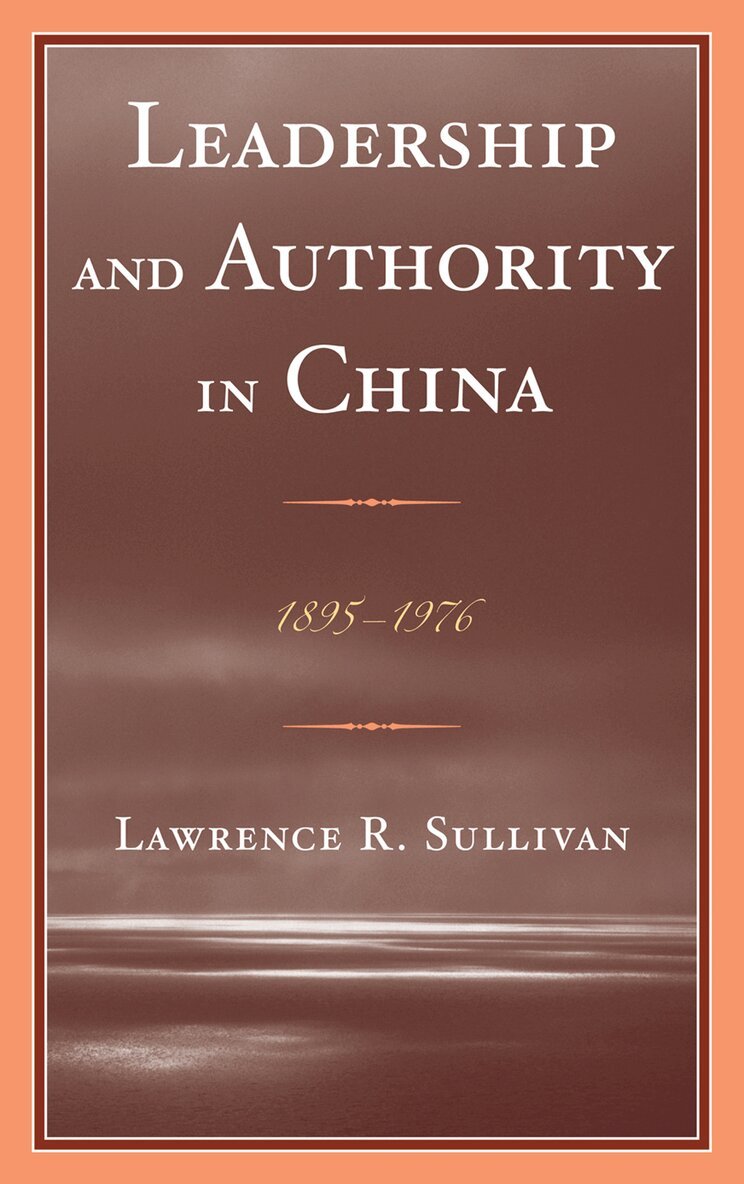
This volume presents elite conflicts and political controversies in China from 1895 to 1978 as rooted in two diametrically opposed visions of leadership and political authority: a radical, charismatic model that instills absolute authority in the single leader whose "will" guides the polity and whose "word" is the basis of policy formulation, versus an institutional model in which authority inheres in organization and where “collective” leadership and decision-making govern the political realm. The former model in modern Chinese history entailed a "leader principle" and personality cult that began with Sun Yatsen and Chiang Kaishek in the Nationalist Party (KMT) and reached its peak with the leadership cult of Chinese Communist Party (CCP) Chairman Mao Zedong, especially during the 1966-1976 Great Proletarian Cultural Revolution. The latter model with its emphasis on “collective leadership” (jiti lingdao) and "administrative rationalism" began as a reaction among early members of the CCP against the promotion of the Sun and Chiang leadership cults and became a central governing principle in the Communist Party that served as official leadership doctrine beginning with the formation of the Party in 1921.While tensions over leadership issues were relatively muted in the pre-1949 period and early 1950s of CCP history as an apparent "compromise" was reached in which from 1943 onward a cult of the leader was promoted for propaganda purposes but with collegial decision-making governing inner Party decision-making, the mid-to-late 1950s saw this "compromise" among the top leadership come under increasing strain and finally break down. Devoted to a fundamentally different vision of a "socialist" China from other top leaders on a number of economic, social, and political fronts, Mao Zedong pushed his domination of the policy process that ultimately provoked a wholesale assault on the CCP apparatus throughout the country while the leader cult reached mythic proportions during the Cultural Revolution. Confronted by the possibility of civil war and generally opposed to the takeover of the polity by the radical Gang of Four led by his wife Jiang Qing, by the mid-1970s the aging great leader acquiesced to the rebuilding of the CCP along traditional, "institutional" lines.
764 kr
Skickas inom 10-15 vardagar
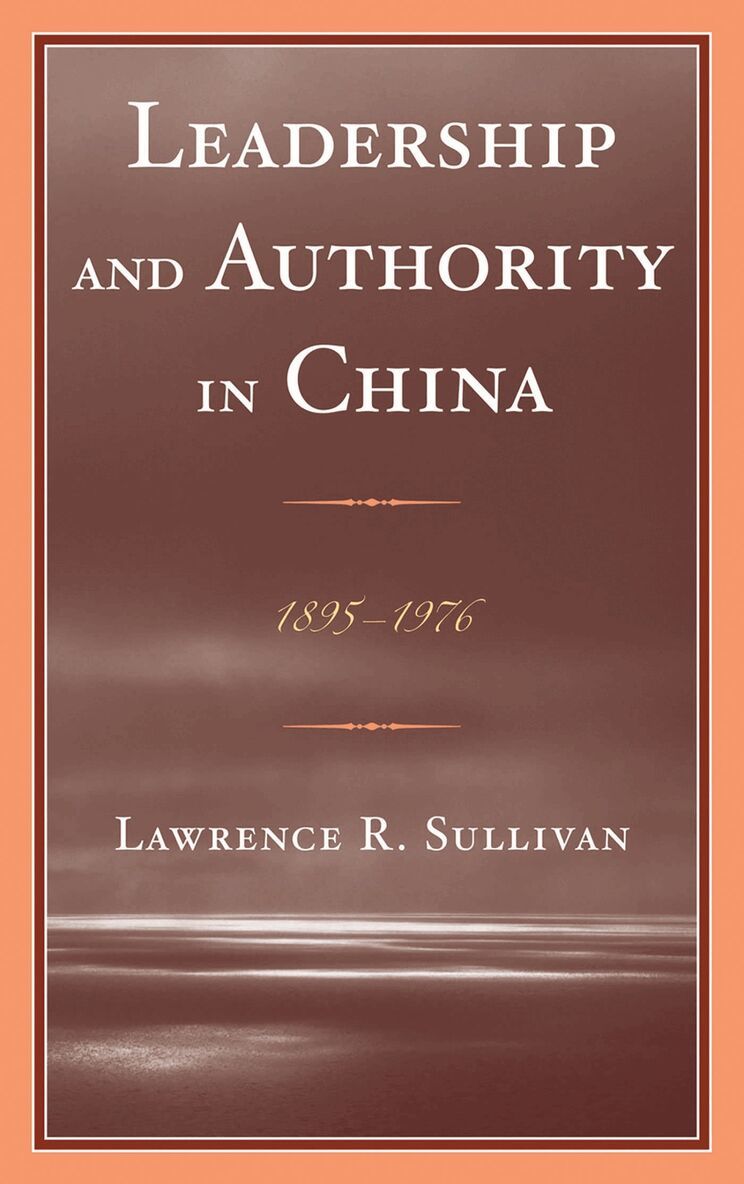
This volume presents elite conflicts and political controversies in China from 1895 to 1978 as rooted in two diametrically opposed visions of leadership and political authority: a radical, charismatic model that instills absolute authority in the single leader whose "will" guides the polity and whose "word" is the basis of policy formulation, versus an institutional model in which authority inheres in organization and where “collective” leadership and decision-making govern the political realm. The former model in modern Chinese history entailed a "leader principle" and personality cult that began with Sun Yatsen and Chiang Kaishek in the Nationalist Party (KMT) and reached its peak with the leadership cult of Chinese Communist Party (CCP) Chairman Mao Zedong, especially during the 1966-1976 Great Proletarian Cultural Revolution. The latter model with its emphasis on “collective leadership” (jiti lingdao) and "administrative rationalism" began as a reaction among early members of the CCP against the promotion of the Sun and Chiang leadership cults and became a central governing principle in the Communist Party that served as official leadership doctrine beginning with the formation of the Party in 1921.While tensions over leadership issues were relatively muted in the pre-1949 period and early 1950s of CCP history as an apparent "compromise" was reached in which from 1943 onward a cult of the leader was promoted for propaganda purposes but with collegial decision-making governing inner Party decision-making, the mid-to-late 1950s saw this "compromise" among the top leadership come under increasing strain and finally break down. Devoted to a fundamentally different vision of a "socialist" China from other top leaders on a number of economic, social, and political fronts, Mao Zedong pushed his domination of the policy process that ultimately provoked a wholesale assault on the CCP apparatus throughout the country while the leader cult reached mythic proportions during the Cultural Revolution. Confronted by the possibility of civil war and generally opposed to the takeover of the polity by the radical Gang of Four led by his wife Jiang Qing, by the mid-1970s the aging great leader acquiesced to the rebuilding of the CCP along traditional, "institutional" lines.
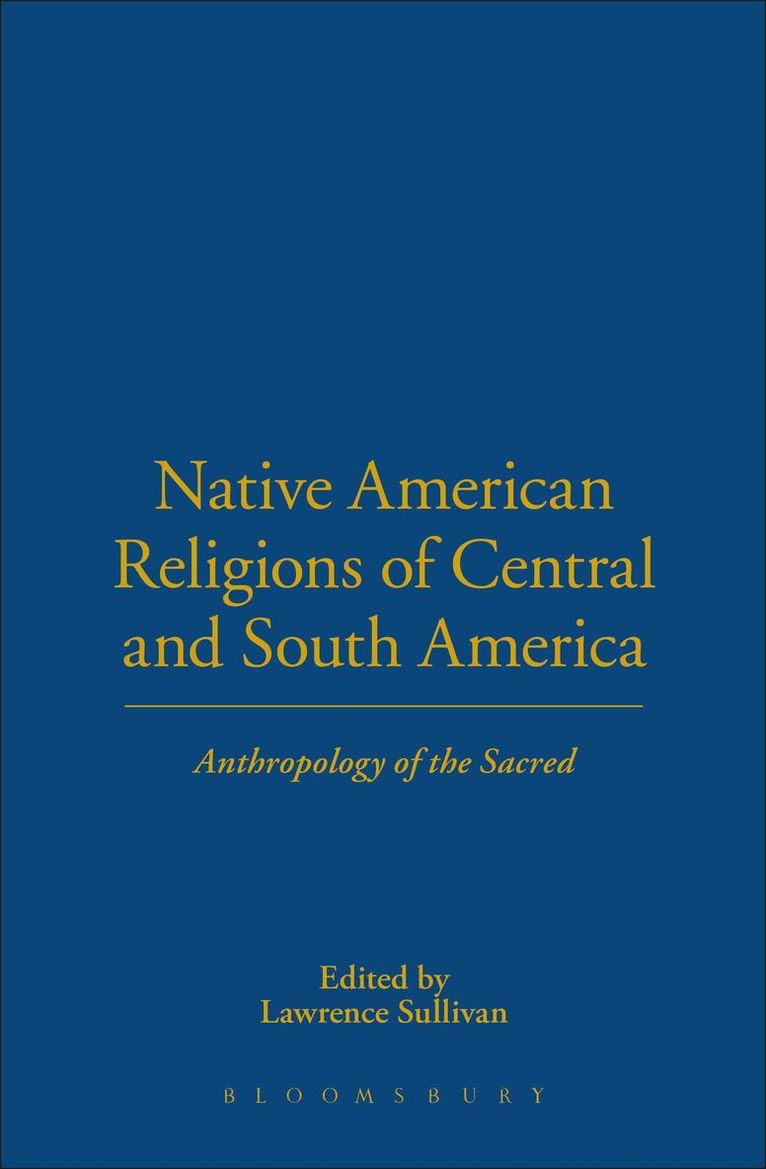
Native American Religions of Central and South America
Anthropology of the Sacred
Inbunden, Engelska, 2002
1 572 kr
Skickas inom 10-15 vardagar
This text provides descriptions and interpretations of religious ideas, its aim is to illustrate something of the range of religious beliefs and practices through cases that are exemplary. The first part describes the religious views of the Aztec, Maya and Inca, dating to the time before contact with Europeans. The rest of the text treats contemporary cases from the major cultural-geographic areas of Latin America. Whether the focus is on myth, architecture, ritual celebrations or shamanic practice, each essay provides a religious profile of the culture in question.
381 kr
Skickas inom 10-15 vardagar
This volume contains insightful essays on significant spiritual moments in eight different Native American cultures: Absaroke/Crow, Creek/Muskogee, Lakota, Mescalero Apache Navajo, Tlingit, Yup'ik, and Yurok.
134 kr
Skickas inom 7-10 vardagar
During the long years of civil strife in China the Nationalist authorities amassed extensive materials on their Communist adversaries. Now stored in government institutions on Taiwan, these materials are an excellent source for the study of the Chinese Communist movement. Among them is the Bureau of Investigation Collection (BIC), which holds over 300,000 volumes of primary documents on the Chinese Communist movement. The purpose of Chinese Communist Materials is, without any attempt at comprehensive listing of the Bureau’s holdings, to give scholars a representative description of the collection, to point out its implications for research, and suggest new areas for research at the Bureau in the fields of political science and history [1, 4].