Leah Hochman – författare
Visar alla böcker från författaren Leah Hochman. Handla med fri frakt och snabb leverans.
6 produkter
Re-forming Judaism: Moments of Disruption in Jewish Thought
Av Stanley M. Davids, Leah Hochman
Häftad, 2023
362 kr
Lägg i varukorg
Ugliness of Moses Mendelssohn
Aesthetics, Religion & Morality in the Eighteenth Century
Av Leah Hochman
Häftad, 2018
852 kr
Lägg i varukorg
The Ugliness of Moses Mendelssohn examines the idea of ugliness through four angles: philosophical aesthetics, early anthropology, physiognomy and portraiture in the eighteenth-century. Highlighting a theory that describes the benefit of encountering ugly objects in art and nature, …
Ugliness of Moses Mendelssohn
Aesthetics, Religion & Morality in the Eighteenth Century
Av Leah Hochman
Inbunden, 2014
2513 kr
Lägg i varukorg
The Ugliness of Moses Mendelssohn examines the idea of ugliness through four angles: philosophical aesthetics, early anthropology, physiognomy and portraiture in the eighteenth-century. Highlighting a theory that describes the benefit of encountering ugly objects in art and nature, …
Ugliness of Moses Mendelssohn
Aesthetics, Religion & Morality in the Eighteenth Century
Av Leah Hochman
E-bok, 2014
1004 kr
Lägg i varukorg
The Ugliness of Moses Mendelssohn examines the idea of ugliness through four angles: philosophical aesthetics, early anthropology, physiognomy and portraiture in the eighteenth-century. Highlighting a theory that describes the benefit of encountering ugly objects in art and nature, …
Ugliness of Moses Mendelssohn
Aesthetics, Religion & Morality in the Eighteenth Century
Av Leah Hochman
E-bok, 2014
983 kr
Lägg i varukorg
The Ugliness of Moses Mendelssohn examines the idea of ugliness through four angles: philosophical aesthetics, early anthropology, physiognomy and portraiture in the eighteenth-century. Highlighting a theory that describes the benefit of encountering ugly objects in art and nature, …
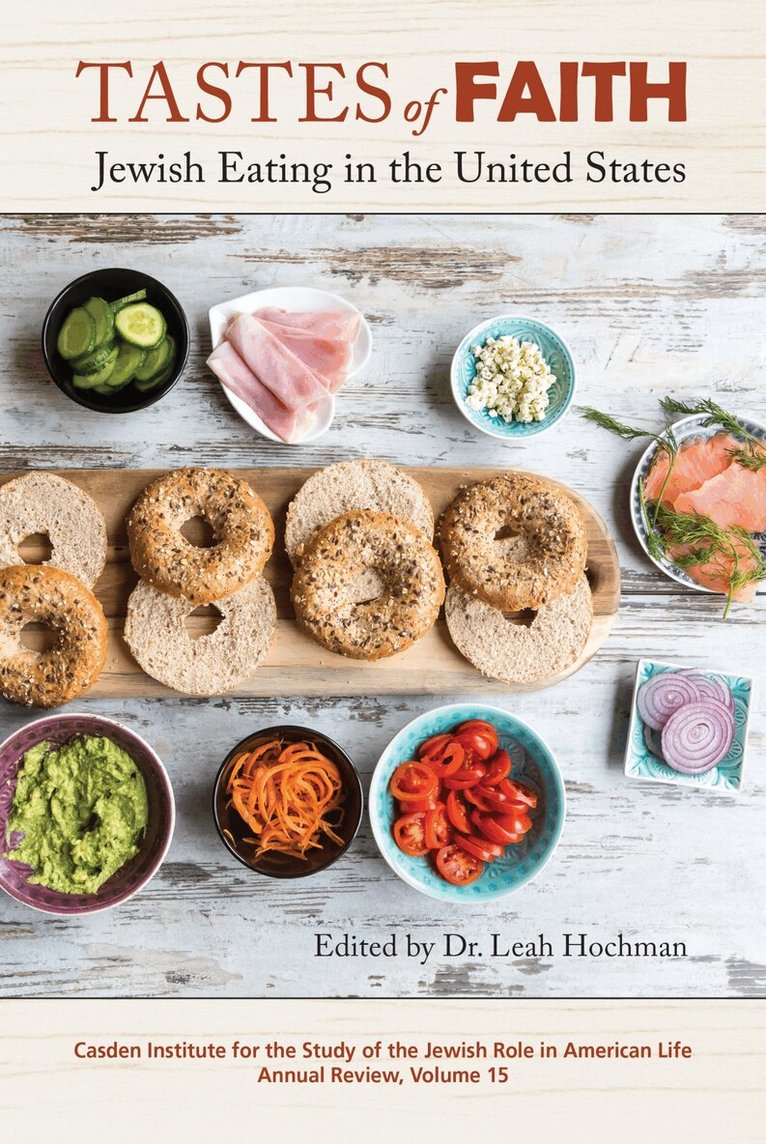
Tastes of Faith
Jewish Eating in the United States
Av Leah Hochman
Inbunden, 2017
292 kr
Lägg i varukorg
“Tell me what you eat, and I will tell you what you are,” wrote the eighteenth-century French politician and musician Jean Brillat-Savarin, giving expression to long held assumptions about the role of food, taste, and eating in the construction of cultural identities. Foodways—the cultural, …