
Lebogang Seale – författare
Visar alla böcker från författaren . Handla med fri frakt och snabb leverans.
2 produkter
2 produkter

Häftad, Engelska, 2024
196 kr
Skickas
Do you see that big tree on our right?” asked Isaac, as soon as we had crossed the river. “Wellington used to have lunch and rest there when he was ploughing the fields. It was him, Jambren, and Monyebere. Sometimes they would work until late in the evening or through the night, by tractor lights.” With that single mention of Jambren’s name, Isaac had triggered what became an animated, lengthy conversation about the many Afrikaner farmers in the Letaba-Mooketsi valley and how our land was taken away. Their names were popular in the region, so much so that you could swear there was something otherworldly about them. There was Jambren’s brother Rossi (Stephanus Ross Pohl), their father Thununu (Stephan Montaque Pohl), as well as Fresi (Fritz de Beer) and Jako (a Mr. Duvenage).’ This is the Seale family story, about the travails of lifting themselves out of the morass of poverty and deprivation land dispossession has created. As the name suggests, this book is a heart-breaking account of the impact of South Africa’s failing and flailing land reform on ordinary people desperate for restorative justice – in this case it is the author’s ancestral land. It reveals that not only is the ideal of land reform in South Africa a criminal failure and monumental disappointment, but more than that, it is a betrayal. The Restitution of Land Rights Act of 1994, and especially Section 25 of the Constitution, specifically affirmed an individual’s right to land restitution. As such, there were great expectations that the Natives Land Act of 1913 and other subsequent legislation that formalised land dispossession would be reversed. However, as we have seen, land reform in South Africa has been painfully slow and complex. Lebogang Seale’s extraordinary story is told through the voices of his family and community members. They reveal the pain of living and working on white people’s farms, the same land which had been stolen from their family. They describe the struggle of battling bureaucracy and the endless time they have devoted to trying to reclaim their ancestral land. The community that this book focuses on were among the first to lodge their land claim in December 1998, the earliest date communities could make such a claim post-liberation. Tragically, however, after almost a quarter of a century since the community lodged their claim, they have nothing to show for it. Policy models on land reform keep changing as their elders are dying and those in the twilight of their lives still cling precariously to the hope that they might yet taste the fruits of their birthright before they pass on.
Häftad, Engelska, 2019
220 kr
Tillfälligt slut
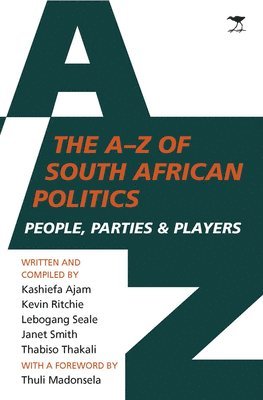
Puzzled by the difference between a coalition and confidence-and-supply? Confused about how McKinsey, Trillian and a bunch of corrupt individuals at Eskom fleeced the utility? Don't know your Nhlapo Commission from your Moerane Commission? The third edition of Jacana's popular guide has all the information you need to navigate your way through our complex political scene. With more than 300 entries covering important terms, events, policies, groups and individuals, it's an excellent source of current and historical data. Highlighting the power brokers and stars as much as those who are on their way down or captured, this valuable quick research tool is for anyone interested in where South Africa is at - and why. What are the links between the Auditor-General and the Asset Forfeiture Unit? Why do Black Twitter and its political influencers matter? Who are the diehard reds, and who switched from communism to capitalism? Who goes by the nickname of "Mkhuluwa" (old man), and who as "His Excellency"? South Africa is the only African country that is a member of the G20, but which bright minds represent it there and in other international arenas? The country is highly-ranked in platinum, palladium and gold output, but which are the trade unions and who are the revolutionary leaders fighting on behalf of workers? You'll find those answers here too. Everything you should know, starting with the shack-dwellers' movement, Abahlahi baseMjondolo, and ending at Jacob Zuma, is inside. And as a bonus, there's a quiz at the end to test your head. The A-Z of South African politics was compiled and written by newspaper editor and former investigative journalist Kashiefa Ajam, former editor of three newspapers and award-winning journalist Kevin Ritchie, former newspaper editor and award-winning journalist Lebogang Seale, former newspaper editor and award-winning author Janet Smith and top news editor and award-winning journalist Thabiso Thakali.